Wondershare EdrawMind
MindMap Gallery How companies position themselves in the market
How companies position themselves in the market
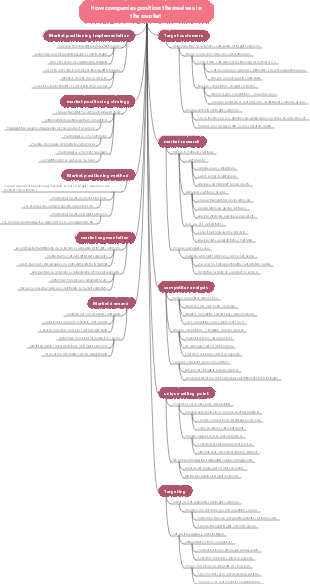
Enterprise market positioning means that the enterprise determines the target market and target customers in the market, and develops marketing strategies such as products, pricing, promotions and channels suitable for the market through specific market strategies to meet customer needs and achieve competitive advantage. Through market positioning, companies can understand the needs and competition of the target market, clarify the competitive advantages of products and target customers, and formulate more targeted marketing strategies. Market positioning can also help companies increase market share and profitability, while establishing corporate brand image and enhancing consumer recognition and loyalty to corporate products or services.
Edited at 2022-05-09 16:26:42
- Calendrier Annuel
Ce calendrier annuel, créé avec EdrawMax, présente une disposition claire et organisée des mois de janvier à décembre. Chaque mois est affiché dans un cadre distinct, montrant les jours de la semaine et les dates correspondantes. Les weekends (samedis et dimanches) sont mis en évidence pour une meilleure visibilité. Ce format est idéal pour la planification et l'organisation des activités tout au long de l'année, offrant une vue d'ensemble rapide et facile à consulter.
- 2026 Quarterly Calendar Overview
This quarterly calendar overview for 2026, created with EdrawMax, presents a structured and colorful layout of the entire year divided into four quarters. Each quarter is displayed in a separate column, showcasing the months within that quarter in a clear grid format. The days of the week are labeled, and each date is marked within its respective cell, allowing for easy identification of dates across the year. This calendar is an excellent tool for long-term planning, providing a comprehensive view of the year at a glance.
- Weekly Calendar 2026
This weekly calendar for 2026 is designed using EdrawMax to provide a detailed and organized view of each week, starting from January. The left side features a mini monthly calendar for quick reference, highlighting the current week in yellow. Below it, there's a section for weekly goals to help prioritize tasks. The main area is a time-grid from 6:00 AM to 12:00 AM, divided into half-hour slots, allowing for precise scheduling of daily activities throughout the week. This layout is ideal for managing a busy schedule efficiently.
How companies position themselves in the market
- Calendrier Annuel
Ce calendrier annuel, créé avec EdrawMax, présente une disposition claire et organisée des mois de janvier à décembre. Chaque mois est affiché dans un cadre distinct, montrant les jours de la semaine et les dates correspondantes. Les weekends (samedis et dimanches) sont mis en évidence pour une meilleure visibilité. Ce format est idéal pour la planification et l'organisation des activités tout au long de l'année, offrant une vue d'ensemble rapide et facile à consulter.
- 2026 Quarterly Calendar Overview
This quarterly calendar overview for 2026, created with EdrawMax, presents a structured and colorful layout of the entire year divided into four quarters. Each quarter is displayed in a separate column, showcasing the months within that quarter in a clear grid format. The days of the week are labeled, and each date is marked within its respective cell, allowing for easy identification of dates across the year. This calendar is an excellent tool for long-term planning, providing a comprehensive view of the year at a glance.
- Weekly Calendar 2026
This weekly calendar for 2026 is designed using EdrawMax to provide a detailed and organized view of each week, starting from January. The left side features a mini monthly calendar for quick reference, highlighting the current week in yellow. Below it, there's a section for weekly goals to help prioritize tasks. The main area is a time-grid from 6:00 AM to 12:00 AM, divided into half-hour slots, allowing for precise scheduling of daily activities throughout the week. This layout is ideal for managing a busy schedule efficiently.
- Recommended to you
- Outline