MindMap Gallery 1.4 Education and human development
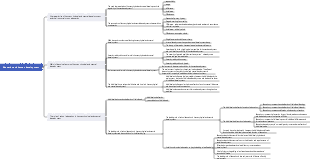
This is a mind map about 1.4 Education and Human Development. It organizes the main content and logical structure of the chapter. It is helpful for the understanding and memory of knowledge points and is suitable for exam review!
Edited at 2024-03-31 13:52:57Avatar 3 centers on the Sully family, showcasing the internal rift caused by the sacrifice of their eldest son, and their alliance with other tribes on Pandora against the external conflict of the Ashbringers, who adhere to the philosophy of fire and are allied with humans. It explores the grand themes of family, faith, and survival.

This article discusses the Easter eggs and homages in Zootopia 2 that you may have discovered. The main content includes: character and archetype Easter eggs, cinematic universe crossover Easter eggs, animal ecology and behavior references, symbol and metaphor Easter eggs, social satire and brand allusions, and emotional storylines and sequel foreshadowing.
[Zootopia Character Relationship Chart] The idealistic rabbit police officer Judy and the cynical fox conman Nick form a charmingly contrasting duo, rising from street hustlers to become Zootopia police officers!
Avatar 3 centers on the Sully family, showcasing the internal rift caused by the sacrifice of their eldest son, and their alliance with other tribes on Pandora against the external conflict of the Ashbringers, who adhere to the philosophy of fire and are allied with humans. It explores the grand themes of family, faith, and survival.
This article discusses the Easter eggs and homages in Zootopia 2 that you may have discovered. The main content includes: character and archetype Easter eggs, cinematic universe crossover Easter eggs, animal ecology and behavior references, symbol and metaphor Easter eggs, social satire and brand allusions, and emotional storylines and sequel foreshadowing.
[Zootopia Character Relationship Chart] The idealistic rabbit police officer Judy and the cynical fox conman Nick form a charmingly contrasting duo, rising from street hustlers to become Zootopia police officers!
1.4 Education and human development
Overview of individual physical and mental development
The concept of physical and mental development
The direct purpose of education: to promote human physical and mental development
Personal physical and mental development
Refers to the continuous change process of an individual as a complex whole in the entire life process from the beginning to the end of life, especially the process of the individual's physical and mental characteristics changing to a positive aspect.
drivers of physical and mental development
endogenous theory
Emphasizes the inner needs derived from the person himself, and the sequence of physical and mental development is determined by the physical and mental maturity mechanism
Representative figures of our country
Mencius
"Benevolence, justice, propriety, and wisdom are not imposed on me from outside, but are inherent in me." "Everything is prepared for me."
Representatives of the West
Socrates' "midwifery"
Rousseau: “Everything that comes from the hand of the Creator is good.”
Hall: "An ounce of genetics is worth a ton of education."
Freud: "Human sexual instinct is the most basic natural instinct."
Gesell: "Emphasis on the decisive role of mature mechanisms in human development."
Twins climbing stairs experiment
Wilson: "Gene replication is the essential force that determines all human behavior."
Galton: the originator of "pseudo-eugenics"
endogenous view
Endogenous theory focuses on people's internal needs and the internal development mechanism of the human body, but ignores the impact of external factors on individuals and the individual's subjective initiative
Theory of Foreign Affairs
It is also one-sided to rely mainly on external forces and emphasize the value of education while ignoring the individual's internal development mechanism.
Representative of our country
Xunzi: "The nature of human beings today is to love benefits and be obedient, so they strive for life and give in and perish."
Western Representative
Locke: "The theory of a blank slate" - the human mind is like a blank slate. It has no content and can be scribbled and drawn at will. All development comes from the day after tomorrow.
Watson: Give me a dozen healthy babies
Wrong view: Locke - the omnipotence of education
Convergence theory (two-factor theory)
Development equals the sum of heredity and environment
multi-factor interaction theory
also called joint action theory
Factors and functions affecting physical and mental development
genetics
concept
Heredity is the material prerequisite for individual development
effect
Genetic quality provides physiological prerequisites and possibilities for human development, but it does not determine human development.
Differences in genetic quality are one of the causes of individual differences among individuals
The maturity of genetic predisposition restricts the level and stage of physical and mental development. Gesell proved the "mature power theory" through the twin ladder experiment
representative of genetic determinism
Hall, Galton
environment
Related remarks: "If you are surrounded by hemp, you will not be able to straighten yourself. If the white sand is in nirvana, it will be black with it." - The role of environment
Representatives of environmental determinism
Locke, Watson, Xunzi
educate
School education plays a leading role in human development
The unique function of school education in influencing human development
Conditions for education to play a leading role
education's own situation
The own situation of education is the basis and prerequisite for education to play a leading role
Mobilizing people’s subjective initiative
family environment effects
social development status
omnipotence of education
Kant
Kant believed that the reason why people become human is entirely the result of education.
Watson
A dozen able-bodied children modified at will
Representative: Hervii, France
Educational omnipotence theorists generally ignore or deny the role of genetic quality and human subjective initiative in human development, and regard social environment and education as the decisive factors affecting human development.
individual subjective initiative
concept
Human subjective initiative is also called the initiative of consciousness. It is the unique ability and role of human beings to reflect and transform the world.
three levels
The first level: physiological activities
The second level: psychological activities
The most basic of which is awareness activities
The highest level is social practice activities
effect
Individual initiative is the inner driving force of human development
The individual subjective initiative shown in the interaction between the individual and the environment is the decisive factor that promotes individual development from a potential possible state to a realistic state.
Characteristics and rules of individual physical and mental development
sequentiality
concept
Sequence of physical and mental development: From birth to adulthood, children's physical and mental development is a continuous process from low-level to high-level, from quantitative change to qualitative change, which is sequential.
theory
Piaget’s theory of epistemogenesis; Kohlberg’s theory of moral cognitive development
Two developments
physical development
psychological development
stage
concept
Stage refers to the different overall characteristics and main contradictions of physical and mental development displayed by individuals at different ages, and they face different development tasks.
Education must adapt to the stage, age, characteristics and main contradictions of the physical and mental development of the younger generation
Imbalance
Performance
same development speed
Unbalanced development in different aspects
critical period
Austrian physiologist Lorenz studied the phenomenon of imprinting in young birds
During the critical period, individuals are particularly sensitive to certain stimuli. By adapting to the influence of the environment, certain behaviors are acquired more easily and develop faster. Training in a certain aspect can achieve the best results.
But if the critical period is missed, the training effect will be reduced and may never be compensated.
complementarity
individual differences