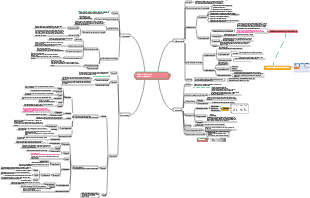
MindMap Gallery Immune system and immune response
Summary of the immune system, including types of immunity, four major functions of immunology, immune organs, immune cells, immune molecules, etc.
Edited at 2023-12-13 17:49:47Avatar 3 centers on the Sully family, showcasing the internal rift caused by the sacrifice of their eldest son, and their alliance with other tribes on Pandora against the external conflict of the Ashbringers, who adhere to the philosophy of fire and are allied with humans. It explores the grand themes of family, faith, and survival.
This article discusses the Easter eggs and homages in Zootopia 2 that you may have discovered. The main content includes: character and archetype Easter eggs, cinematic universe crossover Easter eggs, animal ecology and behavior references, symbol and metaphor Easter eggs, social satire and brand allusions, and emotional storylines and sequel foreshadowing.
[Zootopia Character Relationship Chart] The idealistic rabbit police officer Judy and the cynical fox conman Nick form a charmingly contrasting duo, rising from street hustlers to become Zootopia police officers!
Avatar 3 centers on the Sully family, showcasing the internal rift caused by the sacrifice of their eldest son, and their alliance with other tribes on Pandora against the external conflict of the Ashbringers, who adhere to the philosophy of fire and are allied with humans. It explores the grand themes of family, faith, and survival.
This article discusses the Easter eggs and homages in Zootopia 2 that you may have discovered. The main content includes: character and archetype Easter eggs, cinematic universe crossover Easter eggs, animal ecology and behavior references, symbol and metaphor Easter eggs, social satire and brand allusions, and emotional storylines and sequel foreshadowing.
[Zootopia Character Relationship Chart] The idealistic rabbit police officer Judy and the cynical fox conman Nick form a charmingly contrasting duo, rising from street hustlers to become Zootopia police officers!
Immune system and immune response
Immunity (immune) is the sum of biological effects produced by the body in the process of identifying "self" and excluding "others")
type of immunity
nonspecific immunity
definition
It is acquired genetically and is not specific to specific antigens. It is a natural immunity.
The defense function gradually formed by individuals during the long-term germline development and evolution process
Features
Congenital, no specialness, no memory, quick but weak effect
Main mechanism
physical barrier
Skin and mucous membranes, blood-brain, blood-fetal barrier
chemical barrier
Local secretion of inhibitory and bactericidal substances in the skin and mucous membranes
biological barrier
Non-specific effector cells and effector molecules
specific immunity
definition
Produced by exposure to an antigenic determinant during ontogeny and occurs only for that specific antigenic determinant
Features
Acquired, specific, memorable, slow but strong effect
Four major functions of immunology
1. Immune defense
The body's immune protection against foreign microorganisms and their toxins
The response is too strong or lasts too long→hypersensitivity reaction
Low or absent response → immunodeficiency disease
2. Immune self-stabilization
The immune system achieves relatively stable immune system function through regulatory networks
Abnormality in homeostasis → autoimmune disease
3. Immune surveillance
The function of the immune system to recognize and eliminate aberrant and mutated cells
Abnormal immune surveillance function → tumor development or persistent viral infection
4. Immune regulation
immune organ
central immune organ
The place where immune cells occur, differentiate, and mature
marrow
Hematopoietic organs: the birthplace of various blood cells and immune cells
The place where B cells develop, differentiate, and mature
Thymus
1. The thymus is the place where T cells differentiate and mature.
2. Secrete thymus hormones and cytokines
3. Immune regulatory function
4. Establish self-tolerance and maintain immune homeostasis
peripheral immune organs
Where immune cells colonize and occur
Lymph nodes
Filtration: a place where T and B lymphocytes settle and increase their value
generate specific immune response
spleen
Filtration function: Lymphocyte settlement, value-added place
generate specific immune response
Synthetic secretory effects: such as complement, cytokines
immune response immune response
definition
After the body's immune system is stimulated by antigens, lymphocytes specifically recognize antigen molecules and undergo activation, proliferation, differentiation or anergy and apoptosis, thereby exhibiting certain biological effects.
basic stage
Identify the induction phase
Activation, proliferation, differentiation stages
Effect stage
process
T cell mediated immune response
1. Recognition of antigens by T cells
Binding of TCR to antigen peptide_MHC complex
APC uptake
APC processes, processes, and presents antigens
2. T cell activation, proliferation, and differentiation
Th cell activation requires dual signal stimulation
1. The first signal of activation (antigen-specific signal))
2. Activation of the second signal (Co-stimulation signal))
3. Cytokines
3. Immune effects produced by T cell activation
1. Cytotoxic effect mediated by CD8 CTL
2. CD4 Th1 cells mediate DTH
3. CD4 Th2 cells assist B cells in producing antibodies
B cell mediated humoral immune response
Thymus-dependent antigen (TD_Ag) response)
BCR directly recognizes the B cell epitope of the antigen and transmits specific recognition signals (activation signal 1)) by Iga and Igβ.
The co-stimulatory molecule interaction between activated Th2 and B cells (CD40L/CD40) provides activation signals to B cells 2)
Thymus-independent antigen (TI_Ag) response)
This response is not restricted by MHC, does not require APC and Th assistance, does not respond again, and occurs early.
TI-1 antigen activates B cells
TI_2 antigen directly activates B cells
primary immune response
A specific antigen stimulates the body for the first time, with low output and short maintenance time. The antibodies produced are mainly IgM type, with low affinity and low specificity.
immune response again
After the initial response, the same antigen is stimulated again. The antibody yield is high and the maintenance time is long. The antibodies produced are mainly IgG type, with high affinity and high specificity.
immune molecules
Factors produced by body cells, related to immune response, secreted into body fluids or present on the surface of cell membranes
membrane surface immune factors
Mainly include membrane surface antigen receptors, major histocompatibility antigens, leukocyte differentiation antigens and adhesion molecules
humoral immune molecules
Mainly include antibodies, complement and cytokines
Immune Cells
Functional unit that performs immune response
1. Immune active cells
T cell surface markers and their functions
TCR_CD3 complex
It relies on the polypeptide region of TCR to recognize and bind the antigen peptide_MHC complex, and relies on CD3 to transmit signals into cells.
CD4 and CD8 molecules
It is related to the MHC restriction of T cell recognition of antigen and the recognition of TCR_CD complex constitutes dual recognition.
Classification according to the function of T cells
Helper T cell Th
Delayed type hypersensitivity T cell TDTH
suppressor T cells
Cytotoxic T cells Tc
B cell surface markers
BCR complex
composition
Membrane surface Ig (BCR) and Iga, Igβ
effect
mIg V region specifically recognizes antigen
Iga, Igβ transduces the signal of mIg specific recognition of antigen
Natural killer cells (NK))
NK cell function
Causes target cell death through release of perforin and granulosa
Kills target cells by releasing tumor necrosis factor TNF
NK cells are lymphocytes
Mainly distributed in peripheral blood and spleen, it has the function of killing target cells without prior sensitization and without the participation of other auxiliary cells or molecules.
2. Antigen presenting cells APC
Function
APC can process, uptake, process antigen and present antigen information to T cells
Binding to membrane proteins between lymphocytes is the initiating factor for lymphocyte activation, proliferation, and effects.
composition
1. Dendritic cells
2. Mononuclear phagocyte system (MPS))
3, B cells
AntigenAg
concept
Substances that can specifically bind to lymphocyte antigen receptors (TCR/BCR), stimulate the body's immune system to produce a specific immune response, and can specifically bind to corresponding immune response products
characteristic
1. Immunogenicity
Characteristics of stimulating the body's immune response
2. Antigenicity
The ability to specifically bind to antibodies or effector T cells
conditions that constitute an antigen
1. Foreign body properties of antigens
Foreignness is at the heart of immunogens: non-existent self, altered self, substance untouched by the embryonic immune system
2. Certain physical and chemical properties
Molecular weight, certain chemical composition, molecular conformation and accessibility
3. Other factors
In addition, it is also controlled by genetic factors and related to the way in which antigens enter the body.
Antigen specificity
Consistency or pertinence between substances
cross reactioncross reactiong
In addition to reacting specifically with its corresponding antigen (or antibody), an antibody (or antigen) can sometimes react with other antigens (antibodies))
AntigenAb
definition
Globulin that is produced by antigen-stimulated B cells to transform into plasma cells and can specifically bind to the corresponding antigen. It has immune function and is also called an antibody.
Immunoglobulin Ig
Globulins with antibody activity or structures similar to antibodies are called immunoglobulins
Function
Activate complement IgM, Ig1-3 → activate the classical complement pathway
Binds to FCR on cell surface
conditioning effect
Antigen-dependent cell-mediated cytotoxicity
Mediates type I hypersensitivity reactions
Crosses the placenta and mucous membranes
IgG crosses the placenta