 Wondershare EdrawMind
MindMap Gallery 1F411000 Water conservancy and hydropower engineering survey and design
- 24
1F411000 Water conservancy and hydropower engineering survey and design
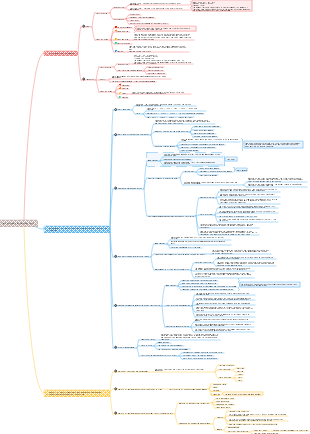
Water conservancy and hydropower practice for first-level construction engineers, all the content in Chapter 1, among which the case points are marked in orange, and Xu focuses on memory. The other blue marked knowledge points are objective questions. You can just read them when doing the questions. Follow me and I will update others. Come on with all the chapter knowledge and other test notes!
Edited at 2023-12-09 17:38:55
- Valentine's Day marketing campaign
This Valentine's Day brand marketing handbook provides businesses with five practical models, covering everything from creating offline experiences to driving online engagement. Whether you're a shopping mall, restaurant, or online brand, you'll find a suitable strategy: each model includes clear objectives and industry-specific guidelines, helping brands transform traffic into real sales and lasting emotional connections during this romantic season.
- 30 Creative Ideas for Valentine's Day
This Valentine's Day map illustrates love through 30 romantic possibilities, from the vintage charm of "handwritten love letters" to the urban landscape of "rooftop sunsets," from the tactile experience of a "pottery workshop" to the leisurely moments of "wine tasting at a vineyard"—offering a unique sense of occasion for every couple. Whether it's cozy, experiential, or luxurious, love always finds the most fitting expression. May you all find the perfect atmosphere for your love story.
- Milano Cortina 2026 Ice Hockey Schedule
The ice hockey schedule for the Milano Cortina 2026 Winter Olympics, featuring preliminary rounds, quarterfinals, and medal matches for both men's and women's tournaments from February 5–22. All game times are listed in Eastern Standard Time (EST).
1F411000 Water conservancy and hydropower engineering survey and design
- Valentine's Day marketing campaign
This Valentine's Day brand marketing handbook provides businesses with five practical models, covering everything from creating offline experiences to driving online engagement. Whether you're a shopping mall, restaurant, or online brand, you'll find a suitable strategy: each model includes clear objectives and industry-specific guidelines, helping brands transform traffic into real sales and lasting emotional connections during this romantic season.
- 30 Creative Ideas for Valentine's Day
This Valentine's Day map illustrates love through 30 romantic possibilities, from the vintage charm of "handwritten love letters" to the urban landscape of "rooftop sunsets," from the tactile experience of a "pottery workshop" to the leisurely moments of "wine tasting at a vineyard"—offering a unique sense of occasion for every couple. Whether it's cozy, experiential, or luxurious, love always finds the most fitting expression. May you all find the perfect atmosphere for your love story.
- Milano Cortina 2026 Ice Hockey Schedule
The ice hockey schedule for the Milano Cortina 2026 Winter Olympics, featuring preliminary rounds, quarterfinals, and medal matches for both men's and women's tournaments from February 5–22. All game times are listed in Eastern Standard Time (EST).
- Recommended to you
- Outline
1F411000 Water conservancy and hydropower engineering survey and design
1. Water conservancy and hydropower survey
1. Use of measuring instruments
1||| Level
Classification
By precision
Ordinary level: National third and fourth class ordinary level measurement
Precision level: National first and second class precision level measurement
Model: DS05, DS1, DS3, DS10. D means: geodetic survey; S means: level; The number indicates the accuracy of the instrument. For example, 3 indicates that the accidental error in the height difference measured per kilometer round trip is plus or minus 3mm.
by structure
Slight level
Automatic leveling instrument
laser level
Digital level (also known as electronic level)
Steps for usage
Set up instruments
rough leveling
Adjust the three foot screws to center the circular level bubble, which is called rough leveling
Focus and aim
Parallax must be eliminated by first adjusting the eyepiece focusing screw to see the crosshairs clearly, and then continue to carefully turn the objective lens focusing screw until the ruler image coincides with the crosshair plane.
Precise leveling
reading
When the bubble of the level tube is in the center, immediately read the level on the level stick according to the middle wire of the cross hair. Readings retain four digits
2||| Theodolite
Classification
By precision
DJ05, DJ1, DJ2, DJ6 and DJ10 D stands for: geodetic survey J stands for: theodolite The number indicates the accuracy of the instrument, and “05” indicates that the error in one measurement direction observation does not exceed ±0.5″ (seconds)
Dial scale and reading method
vernier theodolite
optical theodolite
Electronic theodolite
effect
Angle measurement: horizontal angle measurement and vertical angle measurement
Low precision measurement: sight distance measurement
Steps for usage
centering
Leveling
Sight
Steps: Focus the eyepiece; Aim roughly at the target; Focus the objective lens; Aim the target accurately.
reading
2. Requirements for water conservancy and hydropower construction surveying
1||| basic knowledge
Elevation: The 1985 national elevation datum is used as the unified datum for calculating elevation.
scale
Large scale: 1: 500, 1: 1000, 1: 2000, 1: 5000, 1: 10000 [ten thousand]
Medium scale: 1: 25,000, 1: 50,000, 1: 100,000 [one hundred thousand]
Small scale: 1: 250000, 1: 500000, 1: 1000000 [millions]
2||| Basic work of construction setting out
Preparation of stakeout data: Before stakeout, the stakeout data should be calculated based on the design drawings and relevant data and the control point results used.
Method of setting out the plane position
right angle intersection method
polar coordinate method
angle intersection method
distance intersection method
Elevation staking method
Leveling method: parts where the error is required to be no more than ±10mm
Photoelectric ranging trigonometric elevation method
Analytical Trigonometric Elevation Method
sight distance method
When using a theodolite instead of a level for engineering stakeout, the distance between the stakeout point and the elevation control point must not be greater than 50m.
3||| Excavation engineering survey
main content
Original topographic map and original section map measurement of the excavation area
Excavation contour point stakeout
Excavation completed topography, cross-section measurement and engineering quantity calculation
case point
Detailed stakeout of excavation work
Instructions
polar coordinate method
Angiometric forward intersection method
basic method
rear resection method
Distance measurement can be performed according to conditions and accuracy requirements
Measured by the sight distance method, the sight distance length should not be greater than 50m. For pre-splitting blasting stakeout, sight distance method should not be used.
Measured by the parallax method, the normal length of the endpoint should not be greater than 70m.
Section measurement and engineering quantity calculation
Drawing selection
Before starting the excavation project, the original cross-section or topographic map of the excavation area must be measured
During the excavation process, the receiving section or topographic map should be measured regularly
After the excavation project is completed, the completed cross-section or completed topographic map must be measured as the basis for settlement of project quantities.
Scale selection
The scale of cross-section and topographic maps can be between 1:200 and 1:1000 according to the purpose and project location.
For the completed excavation topographic map or cross-sectional view of the main buildings, 1:200 should be used;
The closing chart is preferably 1:500 or 1:200
For large-scale earth and rock cover excavation and collection, 1:1000 can be used
In the calculation of excavation engineering quantities, the area calculation method can be analytical method or graphical method (integrator).
When the difference between two independent measurements of the excavation work volume in the same area is less than 5% (rock) and 7% (earthwork), the middle value can be taken as the final value.
4||| Mold erection and architectural layout
main content
Measure and set the molding or filling outline points of various buildings
Check the shape and position of erected formwork and prefabricated (embedded) parts
Calculate the amount of filling work
Inspection requirements for building model setting out points
The difference between the setting out and checking points should not be greater than 1.4m (m is the error in the measurement and setting out of the contour points)
Measurement of filling project quantities
Calculate selection
The foundation location should be calculated based on the foundation excavation as-built drawing.
The parts above the foundation can be calculated directly based on the geometric dimensions of the hydraulic design drawings and the average elevation of the measured parts.
The amount of earth and stone filling should be calculated based on the actual measured dividing lines of various filling materials.
If the difference between two independent measurements of the same project is less than 3% of the volume, the middle value can be taken as the final value.
5||| External deformation monitoring during construction
main content
Landslide observation in construction areas
High slope excavation stability monitoring
Observation of Horizontal Displacement and Subsidence of Cofferdam
Temporary foundation settlement (rebound) and crack monitoring
The accuracy of the base point for deformation observation shall not be less than four decimal places.
Point selection and embedding
The base point must be established on stable bedrock outside the deformation zone.
At least one group of base points for vertical displacement must be laid out, with each group having no less than three fixed points.
The measuring point should be firmly combined with the deformation body.
Landslide measuring points should be located in the axis direction with large sliding amount and fast sliding speed and in the landslide front area.
Observation points for cracks in mountains or buildings should be buried on both sides of the crack.
Observation method selection
Landslide and high slope stability monitoring adopts intersection method
Horizontal displacement monitoring adopts sight line method (movable target method and small angle method)
For vertical displacement observation (settlement observation), the horizontal observation method should be used.
6||| As-built measurement
Completion survey
During the filling process of core wall, sloping wall and dam shell of earth and stone dam, every second layer of materials must be measured and the edge line measured and drawn into a chart for reference upon completion.
Cause of error
human reasons;
The reason for the instrument;
The influence of external environment.
Classification and characteristics of errors
System error: changes according to certain rules;
Accidental error: no regular changes;
Gross error: Carelessness or interference.
3. Analysis of water conservancy and hydropower engineering geology and hydrogeological conditions
1||| Geological structures and earthquakes
Geological structures are classified according to structural morphology
inclined structure
fold structure
anticline
syncline
fault structure
joints
split
fault
2||| Analysis of Engineering Geological Conditions of Slope
Classification of slope deformation and damage
relaxation crack
Creep
collapse
landslide
The most widely distributed and most harmful
3||| Analysis of engineering geological problems in soil foundation pits
Measures to prevent slope instability
Set a reasonable slope
Slope protection
Foundation pit support
lower water table
Foundation pit dewatering and drainage
Purpose
Increase slope stability
For slopes with fine sand and silt soil layers, prevent the occurrence of quicksand and piping.
For clay soil foundation pits with underlying pressurized aquifers, prevent the bottom of the foundation pit from rising
Keep the foundation pit soil dry to facilitate construction
method
Mingpao method
Artificial precipitation
Light well point
Suitable for small permeability coefficient
Tube well point precipitation
2. Classification of water conservancy and hydropower projects
1. Classification determination process
(1) Temporary hydraulic structures
(2) permanent hydraulic structures
2. Rules and Regulations
(1) Water conservancy and hydropower project grading index table
(2) Permanent hydraulic structure level
Main rules
special rules
The reservoir dam is a level 2 or level 3 permanent hydraulic structure according to the above regulations. If the dam height exceeds the index in the table below, its level can be raised by one level.
The barrage gate is rated as Level 2 and Level 3 according to the table. When the verified flood flow through the gate is greater than 5000m^3/s and 1000m^3/s respectively, the building level can be raised by one level.
Flood standards cannot be raised
(3) Beware of Engineering Level
The level of permanent hydraulic structures of flood diversion channels (channels), flood diversion and flood control gates should be no lower than the level of permanent hydraulic structures of the embankments where they are located.
(4) Temporary hydraulic structure level
(5) flood standards
Flood standards during reservoir dam construction period
Flood standards for dam body after blockage by diversion and release structures of reservoir projects
(6) Seismic fortification standards for water conservancy and hydropower projects
3. Reasonable service life and durability of water conservancy and hydropower projects
1. basic definition
(1) Reasonable service life of a hydraulic structure: after it is completed and put into operation, it can be used safely according to the designed function under normal operation and specified maintenance conditions.
(2) Building durability: The ability of a building to maintain its suitability and safety within a reasonable service life under the environmental effects determined by the design and the specified maintenance and use conditions.
2. Reasonable service life of the project
(1) Reasonable service life of water conservancy and hydropower projects (unit: years)
(2) Reasonable service life of various permanent hydraulic structures in water conservancy and hydropower projects (unit: years)
(3) The reasonable service life of gates in Level 1 and Level 2 permanent hydraulic structures should be 50 years, and the reasonable service life of gates in other levels of permanent hydraulic structures should be 30 years.
3. Durability design requirements
(1) The erosion environment in which hydraulic structures are located is divided into five categories:
(2) Thickness of concrete cover for steel bars: the minimum distance from the concrete surface to the outer edge of the nominal diameter of the steel bar (including longitudinal bars, stirrups and distribution bars)
The design value of the concrete protective layer thickness should not be less than the nominal diameter of the steel bar
Not less than 1.25 times the maximum particle size of coarse aggregate
Require
4. Structural stress conditions and main design methods of hydraulic buildings
1. Classification of hydraulic structures
(1) Water-retaining structures: such as various dams and sluices, embankments, seawalls, etc.
(2) River regulation buildings: They are buildings used to improve the flow conditions of rivers, adjust the effect of river flow on the river bed and river banks, and protect the bank slopes from erosion by waves and currents in reservoirs and lakes, such as groynes, dams, and diversion banks. , bottom protection and bank protection, etc.
(3) Classification of permanent buildings
Main buildings: dams, water discharge buildings, water conveyance buildings and power plant buildings, etc.
Secondary buildings: retaining walls, diversion walls, working bridges and bank protections that will not affect the operation of major buildings and equipment after the accident.
(4) Temporary buildings refer to buildings used during project construction, such as cofferdams, diversion tunnels, diversion open channels, etc.
2. Structural loads of hydraulic buildings
(1) Permanent load: Including the self-weight of the structure, the self-weight of permanent equipment, ground stress, surrounding rock pressure, earth pressure, prestressed anchor load, and siltation pressure.
No changes or only slight changes over time
(2) Variable loads: including hydrostatic pressure, external water pressure, uplift pressure, dynamic water pressure, wind load, snow load, ice pressure, frost heave force, wave pressure, floor live load, platform live load, bridge machine load, gate opening Shutdown load, temperature load, grouting load, soil void water pressure, mooring force, impact force, etc.
(3) 3. Accidental loads: including hydrostatic pressure, earthquake loads, etc. during flood verification.
3. Structural stress analysis of typical hydraulic buildings
(1) Gravity dams rely on their own weight to maintain stability
(2) A sluice is a low-head hydraulic structure that can regulate water levels and control flow.
4. Anti-sliding stability analysis of hydraulic structures
(1) Gravity dam instability generally occurs at the contact surface between the dam bottom and bedrock.
5. Stress Analysis of Hydraulic Buildings
(1) Strength and stability are two important aspects that indicate the safety of a building. Usually includes internal forces, stresses, deformations, displacements and cracks.
(2) The methods of gravity dam stress analysis can be summarized into two categories: theoretical analysis and model testing.
(3) Commonly used theoretical analysis methods include the mechanics of materials method and the finite element method.
(4) There are three methods for stress analysis of arch dams: theoretical analysis, structural model testing and prototype observation.
(5) Theoretical analysis methods mainly include pure arch method, arch-beam load-sharing method, finite element method and shell theory method.
6. Seepage analysis of hydraulic structures
(1) The main contents of seepage analysis include: determining the seepage pressure, determining the seepage slope (or flow rate); determining the seepage amount.
(2) For earth-rock dams, the location of the infiltration line should also be determined.
5. Application of building materials in water conservancy and hydropower projects
1. Building material type
(1) Chemical property classification
inorganic materials
Air-hardening cementitious materials
Can only harden in air: lime, gypsum and water glass
Hydraulic cementitious materials
Hardens not only in air but also better in water: cement
metallic material
organic material
Asphalt materials, plant materials and synthetic polymer materials
(2) Material source
natural building materials
Earth materials, sand and gravel, asbestos, wood, etc. and their simply collected and processed finished products
artificial materials
Lime, cement, asphalt, metal materials, geosynthetic materials, high molecular polymers
2. Application conditions of building materials
(1) Earth and stone materials for dam construction
Earth and stone materials for earth dam (body) shell
The soil materials of homogeneous earth dams are sandy clay and loam, and their permeability coefficient should not be greater than 1×10 ^-4cm/s
Earth and stone materials for anti-seepage body
Clay, sandy loam, loam, clay soil and other materials
Stones for drainage facilities and masonry slope protection
Blocks, gravel, and pebbles can be used, but weathered rocks are not suitable.
(2) Geosynthetics
Geosynthetic materials include four major categories: geotextiles, geomembranes, geocomposites, and geospecial materials.
Geosynthetic materials used as reinforcements are divided into different structural needs: geogrids, geotextiles, geostrips and geocells, etc.
(3) building stone
Igneous rocks: granite, diorite, gabbro, diabase and basalt
Sedimentary rocks: limestone and sandstone
Metamorphic rocks: gneiss, marble and quartzite
(4) cement
Adaptation
For external concrete in areas where water levels change and for concrete on overflow surfaces washed by water flow, Portland cement, ordinary Portland cement, and Portland dam cement should be given priority, and pozzolanic Portland cement should be avoided.
For concrete with frost resistance requirements, Portland cement, ordinary Portland cement, and Portland dam cement should be used first, and air-entraining agents or plasticizers should be added to improve the frost resistance of the concrete. When environmental water and sulfate attack occur, sulfate-resistant Portland cement should be preferred.
No cement
For concrete inside large-volume buildings, priority should be given to slag Portland dam cement, slag Portland cement, fly ash Portland cement, pozzolanic Portland cement, etc. to meet the requirements of low thermal properties.
For concrete located in water and underground, slag Portland cement, fly ash Portland cement, pozzolanic Portland cement, etc. should be used.
With cement
Cement inspection requirements
Manufacturer's factory quality certificate
Factory name
Variety
power level
Date of manufacture
Compressive strength
Stability
28d strength certificate
Those who have any of the following circumstances should be retested and used according to the retest results
Cement for use in load-bearing structural works, without factory certifier
Storage for more than 3 months (fast hardening cement for more than 1 month)
Those who are unclear about the factory name, variety, strength grade, date of manufacture, compressive strength and stability of the cement or have doubts about the quality
Imported cement
(5) cement mortar
fluidity
Commonly used to express sinking degree. The sinking degree is the depth to which the standard cone sinks in the mortar.
Water retention
Water retention can be expressed by the bleeding rate, and the degree of stratification is an indicator that is often used in engineering.
Mortar with a degree of delamination greater than 2cm is prone to bleeding and should not be used. Therefore, the delamination degree of the mortar is preferably 1 to 2cm.
(6) BS
Mix ratio
Plasma-to-bone ratio (W)
Expression of water consumption per unit volume of concrete
Water to cement ratio (W/C)
Comparison between water and cement usage
sand rate
Comparative relationship between the amount of sand and gravel
Cement quality index
Workability
Fluidity, cohesiveness, water retention
According to the slump, the concrete mixture is divided into
Low plasticity concrete (slump 10~40mm)
Plastic concrete (slump 50~90mm
Fluid concrete (slump 100~150mm)
High fluidity concrete (slump ≥160mm)
strength
Compressive strength
The compressive strength of concrete is determined by making the concrete mixture into a standard cube specimen with a side length of 15cm, and curing it to 28 days under standard curing conditions (temperature 20℃±2℃, relative humidity above 95%), according to the standard Compressive strength of concrete cube specimens (in MPa) determined by the determination method
tensile strength
Generally about 10% of the corresponding compressive strength
Durability
Impermeability
The anti-permeability grades are divided into: W2, W4, W6, W8, W10, W12, etc., which means that the concrete can withstand water pressure of 0.2, 0.4, 0.6, 0.8, 1.0, 1.2MPa without water seepage.
Frost resistance
(The compressive strength decreases by no more than 25% and the quality loss does not exceed 5%)
Frost resistance grades are divided into: F50, F100, F150, F200, F250 and F300, etc.
Concrete requirements for different parts
aggregate
Fine aggregate of concrete: aggregate with a particle size between 0.16 and 5mm.
Coarse sand (F·M=3.7~3.1)
Medium sand (F·M=3.0~2.3)
Fine sand (F·M=2.2~1.6)
Extra fine sand (F·M=1.5~0.7)
Coarse aggregate for concrete: Aggregate with a particle size greater than 5 mm.
Extra large stone (150~80mm or 120~80mm)
Large stone (80~40mm)
Medium stone (40~20mm)
Small stone (20~5mm)
other
Require
Should not exceed 2/3 of the clear spacing of steel bars
1/4 of the minimum side length of the component section
1/2 the thickness of plain concrete slab
Classification
①When the maximum particle size is 40mm, it is divided into two levels: D_20 and D_40
②When the maximum particle size is 80mm, it is divided into three levels: D_20, D_40 and D_80
③When the maximum particle size is 150 (120) mm, it is divided into four levels: D_20, D_40, D_80, D_150 (D_120)
concrete admixtures
Admixtures that improve the workability of concrete, including water reducing agents, air entraining agents, and pumping agents
Admixtures that adjust the setting time and hardening properties of concrete include accelerating agents, early strength agents, and retarders.
Admixtures that improve the durability of concrete include air-entraining agents, waterproofing agents, rust inhibitors, curing agents, etc.
Concrete construction quality control
1) Quality testing and control of raw materials
2) Detection and control of mixed concrete quality
3) Concrete detection and control during pouring
Concrete slump testing should be carried out on the warehouse surface at least twice per shift.
4) Detection of hardened concrete
① Physical methods (ultrasonic, ray, infrared) detect cracks, pores and elastic modulus coefficients, etc.
② Drill holes and press water, and conduct various tests such as compression resistance, tensile resistance, and impermeability on the core samples.
③Drill holes to take samples, and conduct tests after processing the core samples.
④ Observe changes in various properties of the building using instruments (thermometers, joint gauges, piezometers, stress strain gauges, steel bar gauges, etc.) buried in the hydraulic structure.
5) Concrete construction quality assessment
First, whether the design strength has sufficient guarantee rate;
The second is whether the uniformity of strength is good.
Standards for assessment of concrete construction quality
(7) construction steel
Classification
Hot rolled plain round steel bar
Hot rolled ribbed steel bars
Cold drawn and hot rolled steel bars
Cold rolled ribbed steel bars
Waste heat treatment steel bars
Cold rolled twisted steel bar
steel wire
index
The basic indicators are elongation and cold bending properties
There are four main indicators for quality inspection of steel bars with physical yield point: yield strength, ultimate strength, elongation and cold bending performance.
Ultimate strength, elongation and cold bending properties of steel bars without physical yield point
Mechanical properties
Tensile properties (tensile yield strength, tensile ultimate strength, elongation), hardness and impact toughness, etc.; process properties include welding performance and cold bending performance
test
Have a factory quality certificate or test report, and each bundle (coil) of steel bars should be hung with a sign. The sign should be marked with the manufacturer, production date, brand, product batch number, specification, size, etc.
During the inspection, 60 tons of steel bars of the same furnace (batch) number and the same specification and size are considered as one batch. Randomly select 2 steel bars that have passed external quality inspection and diameter measurement, and take a tensile test piece and a cold bending test piece from each for inspection. Two or more test pieces for the same purpose are not allowed to be taken from the same steel bar. When sampling steel bars, the ends of the steel bars must be cut off by 500mm before taking samples. The tensile inspection items include three indicators: yield point, tensile strength and elongation. If any of the indicators does not meet the regulations, the tensile inspection item is deemed to be unqualified. There should be no cracks, peeling or breaks in the cold-bent specimen after bending.
Reinforcing steel bars with unknown steel numbers must be inspected and passed before they can be used. The number of test pieces taken during inspection shall not be less than 6 groups
3. Green building materials
Recyclable and reusable building materials, high-strength and durable building materials, green parts and components, green decoration materials, water-saving and energy-saving building materials
4. hydraulic fiber concrete
Concrete with steel fibers or synthetic fibers as reinforcement
Hydraulic steel fiber concrete can use carbon steel fiber, low alloy steel fiber or stainless steel fiber, etc.
Hydraulic fiber concrete mixing
Hydraulic fiber concrete should use a forced mixer, and the mixing volume at one time should not be greater than 80% of the rated mixing volume of the mixing equipment. Hydraulic fiber concrete should be mixed dry first and then wet. If necessary, the cloth can be dispersed
Allowable deviation of raw material measurement (by mass, %)
Hydraulic fiber concrete pouring and maintenance
The pouring method of hydraulic fiber concrete should ensure the uniform distribution of fibers and the continuity of the structure; within the specified continuous pouring area, the pouring construction must not be interrupted, and water must not be added during the pouring process. When using the pumping process, equipment with higher power should be selected; when using the spraying process, the wet spraying method should be used.
Quality inspection
Raw material quality inspection
Steel fibers of the same variety and specifications used in the same project shall be counted as one inspection batch for every 20t, and any less than 20t shall be counted as one inspection batch. Different batches or non-continuous supply of steel fibers that are less than one inspection lot shall be treated as one inspection lot.
The steel fiber sampling inspection items should include: fiber appearance, size, tensile strength, bending performance and impurity content.
Synthetic fibers of the same variety and specifications used in the same project shall be counted as one inspection batch for every 10 tons, and if less than 10 tons are used, one inspection batch shall be counted. Different batches or non-continuous supply of synthetic fibers that are less than one inspection lot shall be treated as one inspection lot.
The sampling inspection items for synthetic fibers should include: fiber appearance, size, breaking strength, initial modulus, elongation at break and alkali resistance.
Mix and pour quality inspection
The segregation and bleeding inspection of the hydraulic fiber concrete mixture should be sampled at the pouring site, and should be no less than 2 times per shift.
Concrete quality inspection
The quality inspection of hydraulic fiber concrete is mainly based on the compressive strength of the design age; the normal fiber concrete is based on the compressive strength of the 150mm cube specimen under standard curing conditions, and the sprayed fiber concrete is based on the compressive strength of the large plate specimen that has completed standard curing. The processed 100mm cube shall prevail. The sampling of hydraulic fiber concrete specimens is mainly done at the machine mouth. Each group of concrete specimens should be sampled and produced in the same storage hopper or transport compartment.
6. Hydraulic load, seepage analysis, flow patterns and energy dissipation methods
1. hydraulic load
Hydrostatic pressure
Durable design conditions, the normal storage level (or flood control high water level) of the reservoir is used upstream
For accidental design conditions, the calibrated flood level of the reservoir is used upstream.
raise pressure
Uplift pressure = buoyancy force (water depth downstream) + seepage pressure (water level difference between upstream and downstream)
2. Seepage analysis
Seepage analysis of earth-rock dam
Determine the location of the invasion line
Determine the main parameters of seepage analysis—seepage velocity and gradient
Determine the seepage amount
content
permeability coefficient
determining factors
Soil particle shape, size, uneven coefficient and water temperature
test methods
Empirical method, indoor measurement method, field measurement method
Calculation formula
K=(QL)/(AH)
Q—actually measured flow rate (m3/s);
A—cross-sectional area of soil sample passing through seepage (m2);
L—height of soil sample through seepage (m);
H—measured head loss (m)
Penetration deformation
Pipe surge
The fine particles in non-cohesive soil move along the pore channels between coarse particles or are taken out by seepage, causing the formation of pores in the soil layer and the generation of concentrated water inrush.
Piping first starts from the seepage escape point and then gradually develops upstream. The hydraulic slope when individual fine particles in the soil begin to move within the pores under the action of seepage is called critical slope.
Flow soil
The phenomenon of simultaneous movement of particle groups in non-cohesive soil
Phenomenons such as uplift, fracture and floating of clay soil occur
The phenomenon of flowing soil mainly occurs at the seepage outlet of clay soil and relatively uniform non-cohesive soil.
Contact washout
contact loss
Engineering measures to prevent penetration and deformation
One is to improve the structural properties of rock and soil and improve its ability to resist penetration deformation.
Usually only used in rock masses
The other type is to take measures to cut off the seepage water in the rock (soil) body or reduce the permeability ratio drop of the seepage water in the rock (soil) body to make it less than the allowable ratio drop.
Set up horizontal and vertical anti-seepage bodies to increase the length of the seepage path, reduce the seepage slope or intercept the seepage flow
Set up drainage ditches or pressure relief wells to reduce the seepage pressure at the downstream seepage opening, and eliminate seepage water in a planned manner
For areas where piping is likely to occur, a filter layer should be laid to intercept fine particles that may be carried away by seepage.
For areas where flow soil is likely to occur, the cover weight at the seepage outlet should be increased. A reverse filter layer should also be laid between the cover weight and the protective layer.
The most reliable method is to build a seepage-proof wall in the permeable soil layer
Inverse filter layer and transition layer
The anti-filtration layer can function as a transition layer, but the transition layer may not necessarily meet the anti-filtration requirements.
Require
Prevent the protected soil from seepage and deformation
The permeability is greater than that of the protected soil, and the seepage water can be discharged smoothly.
Will not be blocked by fine-grained soil and fail
3. Water flow patterns and energy dissipation methods
flow pattern
Constant flow and unsteady flow
Constant flow: water flow that does not change over time
Unsteady flow: water flow that changes with time
Uniform flow and non-uniform flow
Uniform flow: The streamlines of water flow are straight lines parallel to each other.
Non-uniform flow: The streamlines of the water flow are not parallel straight lines.
Laminar and turbulent flow
Laminar flow: The liquid particles in each flow layer move in an orderly manner without mixing with each other.
Turbulent flow: The liquid particles in each flow layer form vortices and mix with each other during the flow process.
Rapid and slow current
Rapid flow: When the water flow encounters an obstacle, it only causes local changes in the water surface, and this change does not propagate upstream.
Slow flow: When the water flow encounters an obstacle, the interference of the obstacle on the water flow can be propagated upstream.
Energy dissipation and anti-collision methods
Underflow energy dissipation
It mainly relies on the strong turbulence, shearing and mixing between the surface roll generated by hydraulic jump and the bottom mainstream Mostly used in drainage buildings with low water head, large flow rate and poor geological conditions. Water gates basically adopt this energy dissipation method.
Promote current and dissipate energy
Also known as the nose bridge, there are two types: continuous type and differential type. Suitable for high and medium dams on hard rock foundations
Surface flow energy dissipation
Use the nose ridge to lift the mainstream of the high-speed water flow to the downstream water surface The high-velocity mainstream is located on the surface It is suitable for medium and low head projects where the tail water is deep, the flow rate changes range is small, the water level changes is small, or there are requirements for ice removal and drifting wood. Generally no need for protection
dissipate force and dissipate energy
It is suitable for situations where the tail water is deep, the flow rate change range is small, the water level changes is small, or there are requirements for ice and driftwood removal. Generally no need for protection
Water cushion energy dissipation
Use the water cushion formed by the downstream water depth to consume water flow energy
Air hedging energy dissipation
The water jets from both sides create a collision in the air, consuming energy.