MindMap Gallery Medical Immunology—Chapter 5 Complement System
Reference textbook for notes: The fifth edition of "Medical Immunology and Pathogenic Microbiology (TCM)" published by Science Press. The complement system has regulatory, active, bactericidal, immune, viral and inflammatory mediator effects. It is an important function in the body. Effector systems and effect amplification systems of biological effects.
Edited at 2023-12-07 18:37:49Avatar 3 centers on the Sully family, showcasing the internal rift caused by the sacrifice of their eldest son, and their alliance with other tribes on Pandora against the external conflict of the Ashbringers, who adhere to the philosophy of fire and are allied with humans. It explores the grand themes of family, faith, and survival.

This article discusses the Easter eggs and homages in Zootopia 2 that you may have discovered. The main content includes: character and archetype Easter eggs, cinematic universe crossover Easter eggs, animal ecology and behavior references, symbol and metaphor Easter eggs, social satire and brand allusions, and emotional storylines and sequel foreshadowing.
[Zootopia Character Relationship Chart] The idealistic rabbit police officer Judy and the cynical fox conman Nick form a charmingly contrasting duo, rising from street hustlers to become Zootopia police officers!
Avatar 3 centers on the Sully family, showcasing the internal rift caused by the sacrifice of their eldest son, and their alliance with other tribes on Pandora against the external conflict of the Ashbringers, who adhere to the philosophy of fire and are allied with humans. It explores the grand themes of family, faith, and survival.
This article discusses the Easter eggs and homages in Zootopia 2 that you may have discovered. The main content includes: character and archetype Easter eggs, cinematic universe crossover Easter eggs, animal ecology and behavior references, symbol and metaphor Easter eggs, social satire and brand allusions, and emotional storylines and sequel foreshadowing.
[Zootopia Character Relationship Chart] The idealistic rabbit police officer Judy and the cynical fox conman Nick form a charmingly contrasting duo, rising from street hustlers to become Zootopia police officers!
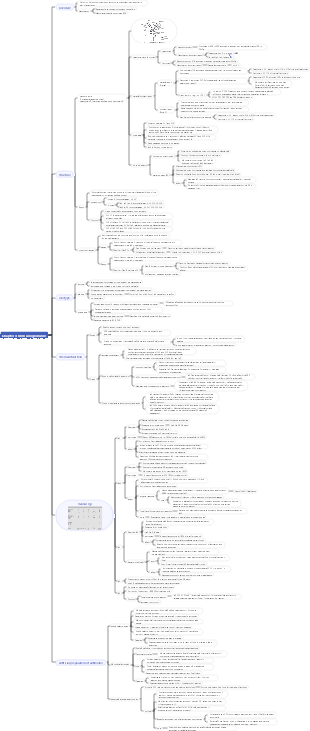
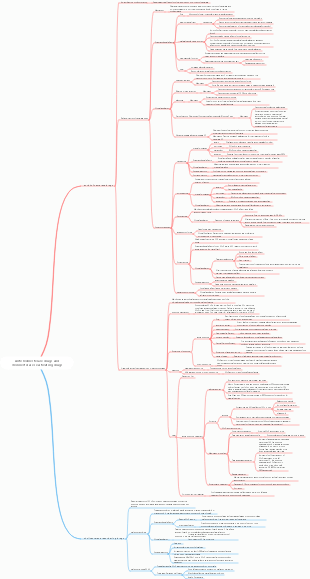
Chapter 5 Complement System
Overview
definition
Existing site: humans, vertebrates, serum, tissue fluid
Properties: A group of proteins with enzymatic activity after activation
Inactive → activator → cascade enzymatic hydrolysis reaction of a series of serine proteases
Composition and naming
composition
inherent ingredients
include
Classical activation pathway: C1 (C1q, C1r, C1s), C4, C2
Lectin activation pathway: MBL, FCN, MBL-related serine protease
Bypass pathway: B factor, D factor
Common components of the three pathways: C3; common terminal pathways C5, C6, C7, C8, and C9
Exist: plasma, body fluids
Significance: Basic component involved in complement activation/activation cascade
regulatory protein
include
Soluble: C1 inhibitor, factor I, C4 binding protein (C4bp), factor H, S protein
Membrane binding: membrane cofactor protein, pro-decay factor, membrane reaction lysis inhibitory factor
Significance: The key enzyme that regulates the complement activation pathway → regulates the intensity and scope of complement activation
complement receptor
include
CR1~CR5, C3aR, C5aR, C4aR
Exist: Different cell membrane surfaces
Significance: mediates the biological effects of complement active fragments/regulatory proteins
name
In order of discovery: C1→C9
Alternative pathway starting components: "capital letter factors": D factor, P factor, B factor
Complement regulatory proteins: named according to function: C1 inhibitor, pro-decay factor, C4-binding protein
Cleaved fragments after complement activation: "Symbol of this component lowercase English letters": C3a, C3b...
Generally, a represents a small fragment; b represents a large fragment (opposite for C2)
Some large fragments (b) can be cleaved again→C4c, C4d
Components/complexes with enzymatic activity: draw a line above the symbol:
Inactivated complement: “i” before symbol: iC3b
Biosynthesis
Synthesis time: early embryonic development; reaches adult level in 3-6 months
Serum: complement protein = 5-6% total protein
Synthetic source: liver cells, macrophages
Special case
Infection, acute phase of tissue damage, inflammatory state→Complement↑
Mechanism: acute phase pro-inflammatory cytokines → promote liver/monocyte macrophage complement gene transcription and expression
Physical and chemical properties
Globulin (mostly beta globulin, a few alpha/gamma globulin)
Complement protein = 10% globulin: C3>……>D factor
Unstable properties
Heat sensitive: inactivated at 56°C for 30 minutes Easily deactivated at room temperature
Complement specimen storage: <-20℃
Ultraviolet light, mechanical shock, some additives
activation pathway
bypass pathway
Activator
Components that provide a contact surface/protective environment for complement activation: certain bacteria, endotoxins, zymosan, dextran, condensed IgG4 and IgA
activation process
C3 → C3a, part of C3b (liquid phase) A small amount of C3b binds to the solid phase → binds to self cells (factor I, H factor, MCP is inactivated) binds to “foreign self” (continues to activate) → (Mg2) B factor, D factor → Ba ( Liquid phase), Bb (binds C3b) → alternative pathway C3 convertase (more stable binding to P factor) → C3b↑ → activates the alternative pathway again (feedback amplification mechanism); alternative pathway C3 convertase → alternative pathway C5 conversion Enzyme → cleave C5 → [the same as the classic pathway]
significance
The body’s defense mechanism in the early stages of infection
The main effect amplification mechanism of complement
Lectin pathway
Activator
Pathogens expressing special sugar structures on their surface
Special sugar structure: mannose, fucose, N-acetylglucosamine, etc. are terminal residues
Examples: Bacteria, fungi, parasites, certain viruses
activation process
MBL FCN activator in plasma → MASP activation → complement cascade enzymatic reaction
Plasma MBL FCN Special glycosyl groups on the surface of pathogens→MASP-1 MASP-2 activation
Activated MASP-2 → cleave C4 C2 → C3 convertase → [Same as the classic pathway]
Activated MASP-1 (weak effect) → cleave C3 → alternative pathway C3 convertase → alternative pathway positive feedback↑
Classical approach
Activators and Conditions
Activator: immune complex IC (depends on antibody formation)
Activation conditions
[1 C1q] binds [≥2 Ig molecules Fc]
A single IgM contains 5 Fcs and can activate C1q
A single IgG contains 1 Fc, ≥2 adjacent IgG bridges → activate C1q
Unknown mechanism: heparin, polynucleotide and other polymer molecules, liposomes, C-reactive protein
activation process
identification stage
Antigen Antibody → Antibody Fc exposes complement binding site C1q → C1q is activated
C1q More than two Fc→C1r cleavage activation→→Activate C1s (serine protease activity)
activation stage
C1s enzymatically hydrolyzes C4 and C2→C3 convertase→enzymatically hydrolyzes C3→C5 convertase
C3 convertase
C5 convertase
Mg2 exists
C4→C4a and part of C4b are inactivated in the liquid phase, and a small number of C4b IC→survive
C2→C2b liquid phase inactivation, C2a C4b→C3 convertase
C3→C3a (liquid phase inactivation) C3b→part of C3b C3 convertase→C5 convertase
membrane attack phase
Formation of MAC (membrane attack complex) → cell lysis
C5 C5 convertase → C5a (liquid phase - inflammatory mediator) C5b → C5b C6, C7 → C5b67 (membrane lipid bilayer) → C8 → C5b678 → 12-15 C9 → MAC
MAC mechanism of action
MAC is inserted into the membrane → local phospholipid bilayer destruction → “leak spots”/hydrophilic pores penetrating the membrane → soluble small molecules and ions (flood out of the cell, lethal amounts of Ca2 rush into the cell) Protein macromolecules ( Stagnated in the cell)→Change in cell osmotic pressure→swelling and rupture
significance
In the middle and late stages of infection/resistance to pathogen re-invasion
Correlation and comparison of the three major approaches
New pathways in recent years: properdin pathway, proteolytic pathway
regulating factors
Intrinsic components regulate themselves
Complement fragments are extremely unstable (self-limiting factor)
C3 C5 convertase does not bind downstream substrate → decays
C4b C3b C5b binds to solid phase → classical pathway activated
Alternative pathway C3 convertase Specific cell/particle surface → stable
The role of regulatory proteins
Regulate complement activation mode
Key links in regulating the complement activation pathway: C3 convertase, MAC formation
Classification
Solubility
C1 inhibitor (C1-INH)
Inhibition of spontaneous activation of C1: C1-INH C1 complex
Inhibit C1r/C1s activity / inactivate C1s: C1-INH activated C1r/C1s
Inhibits MASP activity (regulates lectin pathway)
C4 binding protein (C4bp)
C4bp, C2a competition C4b→C4b2a↓ (assembly ↓ decomposition ↑)
Factor I (C4bp promotion) → C4b hydrolysis↑
I factor
serine protease activity
Factor I C4b→C4c, C4d (inactivated)
Factor I (factor H, CR1 auxiliary) C3b→iC3b
H factor
Inhibition of C3bBb assembly: competition with B/Bb for C3b
P factor
Positive regulation of alternative pathway activation pathway: P factor C3bBb→C3bBb half-life ↑↑↑→cleaved C3↑↑↑
membrane bound
Complement receptor 1 (CR1=CD35)
C4b2a assembly ↓, disassembly ↑: competing with C2a C4b
Promote factor I to hydrolyze C4b and C3b
Decay-promoting factor (DAF=CD55)
Inhibition of C3bBb assembly: competition with B/Bb for C3b
Inhibits C4b2a assembly: competes with C2a for C4b
Membrane cofactor protein (MCP=CD46)
Promote factor I degradation of C3b and C4b: bind to cell surface C3b and C4b
C8 binding protein (C8bp)
Interfering with C8 and C9 binding
Membrane reactive lysis inhibitor (MIRL)
Inhibits MAC formation: blocks C7C8 from binding to C5b6
Biological effects and clinical significance
Biological effects
Complement-dependent cytotoxicity (CDC): cytolytic, bacteriolytic, antiviral
Complement activation → MAC → transmembrane hydrophilic channel → target cell lysis
Conditioning effect (antibacterial, fungal)
Bacteria/other particles Complement fragments Phagocyte complement receptor →phagocytosis
Complement fragments: C3b C4b iC3b C3d C3dg
Complement receptor: CR1 CR3
Inflammatory response (C3a, C5a)
Chemotaxis
local inflammation
C3a, C5a G protein-coupled receptors → phagocytes migrate and aggregate to the inflammatory site → inflammatory response↑
adaptive immunity
Accelerate the migration of ingested antigen APC to lymph nodes
Anaphylatoxin-like effects
C3a, C5a → activate mast cells, basophil degranulation → release vasoactive mediators (histamine, etc.) → telangiectasia, vascular permeability ↑, phagocytes enter the local area → local inflammation
High concentration → similar to anaphylactic shock
Other effects
organ smooth muscle contraction
Induces vascular endothelial cells to express adhesion molecules
C5a→phagocytic cells adhere to vascular endothelium↑→move to the foreign body site→phagocytic ability↑
C5a→Promote the expression of CR1 and CR3 in phagocytes→Pathogen elimination↑
Clear immune complexes
Complement IgFc segment
→Ig spatial conformation changes →inhibition of binding to neoantigen epitopes →IC↓
Complement interferes with Fc segment interactions → dissolves deposited IC
immune adhesion
IC complement→activation: antibody-C3b-red blood cells, platelets CR1 CR3→circulation to liver and spleen→phagocytosis by phagocytes
biological significance
Connecting innate and adaptive immunity
Innate immunity: MBL pathway, bypass pathway → cytotoxicity, opsonization, inflammatory mediator action → anti-infection
adaptive immunity
Antibodies → Classical pathway → Anti-infection
Antigen presentation, activation and proliferation of immune cells, exerting immune effect
Immune homeostasis, memory
Recognize and bind apoptotic cells → act on phagocyte surface receptors → remove apoptotic cells
Follicular dendritic cells CR1 and CR2 → IC is fixed in the germinal center → induces and maintains memory B cells
Interacts with other enzyme systems
Other protease systems: coagulation system, fibrinolytic system, kinin system
Co-dependencies: serine protease domain, multicomponent cascade protease cleavage
Example: C1-INH
Regulate C1 enzyme activity
Inhibits kallikrein, plasma plasmin, coagulation factors VI and VII
Abnormalities and Diseases
congenital defects in complement components
can occur in
Intrinsic components of complement, regulatory proteins, complement receptors
Performance
Complement activation ↓ → susceptibility to pathogens
IC clearance disorder→autoimmune disease
Regulatory protein defects → abnormal complement activation → disease
C1-INH↓→hereditary angioedema
HRF↓→paroxysmal nocturnal hemoglobinuria
Altered complement content (caused by other disease states)
Increased content
Acute infectious inflammation, tumors
C4 C3 C9↑ (2-3 times)
Thyroiditis, acute rheumatic fever, myocardial infarction
Total complement↑
→Inflammatory reaction↑↑
content decreased
Severe hepatitis, cirrhosis
Synthesis ↓
Severe infection, IIIII hypersensitivity reaction
Consumption↑↑
→Recurrent, difficult-to-control infections
Related disease prevention and treatment
Congenital (hereditary) defects→anti-infection, correction of complement defects
abnormal complement activation
→C1-INH, CR1 regulates activation
→Anti-C5a antibody: inhibits complement activation/corresponding fragment activity
→C5a antagonist: blocks the activation of the corresponding receptor