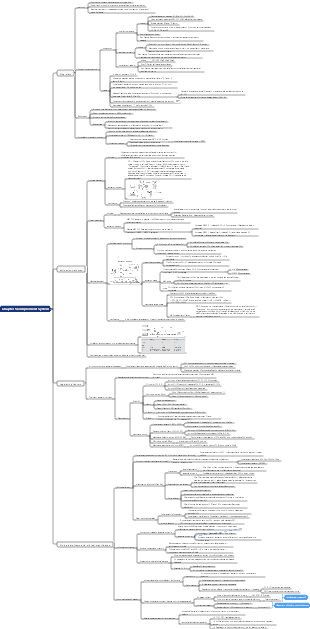
MindMap Gallery Medical Immunology—Chapter 4 Immunoglobulins
Explain the basic content of immunoglobulin Ig from the aspects of immunoglobulin structure, serotyping, main functions, various characteristics and functions, artificial preparation, etc., and draw a thinking guide based on the fifth edition textbook of "Medical Immunology and Pathogenic Microbiology" picture.
Edited at 2023-11-29 22:27:16This is a mind map about bacteria, and its main contents include: overview, morphology, types, structure, reproduction, distribution, application, and expansion. The summary is comprehensive and meticulous, suitable as review materials.

This is a mind map about plant asexual reproduction, and its main contents include: concept, spore reproduction, vegetative reproduction, tissue culture, and buds. The summary is comprehensive and meticulous, suitable as review materials.
This is a mind map about the reproductive development of animals, and its main contents include: insects, frogs, birds, sexual reproduction, and asexual reproduction. The summary is comprehensive and meticulous, suitable as review materials.
This is a mind map about bacteria, and its main contents include: overview, morphology, types, structure, reproduction, distribution, application, and expansion. The summary is comprehensive and meticulous, suitable as review materials.
This is a mind map about plant asexual reproduction, and its main contents include: concept, spore reproduction, vegetative reproduction, tissue culture, and buds. The summary is comprehensive and meticulous, suitable as review materials.
This is a mind map about the reproductive development of animals, and its main contents include: insects, frogs, birds, sexual reproduction, and asexual reproduction. The summary is comprehensive and meticulous, suitable as review materials.
Chapter 4 Immunoglobulins
Overview
Definition: A globulin with antibody activity or a chemical structure similar to that of an antibody
Classification
Secreted slg: antibodies in blood and tissue fluid
Membrane type mlg: constitutes BCR
structure
basic structure (Y-shaped tetrapeptide chain) Heavy chain*2 Interchain disulfide bond Light chain*2
Heavy chain and light chain
heavy chain
basic component
Composed of 450 to 550 amino acid residues, with a molecular mass of 50 to 75kDa
Classification (constant region)
Heavy chains: μ, δ, γ, α and ε
Ig: IgM, IgD, IgG, IgA and IgE
light chain
Basic composition: 210 amino acid residues, molecular mass about 25kDa
Classification (constant region)
Kappa, lambda type Ig
κ:λ≈2:1
variable/constant region
variable region (V area)
Approximately 110 amino acid sequences near the N-terminus of heavy and light chains
Heavy chain: VH--accounting for 1/4 or 1/5 of the total heavy chain
Light chain: VL--1/2 of the total light chain
Each chain V region has 3 CDRs (hypervariable region/complementary determining region)
Heavy chain CDR Light chain CDR=Ig antigen binding site
Monomeric Ig→2 antigen binding sites Dimeric IgA→4 antigen binding sites Pentameric IgM→10 antigen binding sites
Framework region (FR)
=V region-3*CDR: The amino acid composition and sequence are relatively difficult to change and play a role in stabilizing spatial conformation.
VH/VL: FR1, FR2, FR3 and FR4 4 skeleton regions
constant region (Zone C)
The number and type of amino acids, their arrangement order, and the area where sugar content is stable
Same species, different individuals, same type of Ig→same C region antigen specificity→Ig isotype antigen
Part: Carboxyl terminus of the peptide
Heavy chain: CH--accounting for 3/4 or 4/5 of the total heavy chain
Light chain: CL--1/2 of the total light chain
hinge area
Location: between CH1 and CH2
Composition characteristics: Proline residue ↑→Hydrogen bond ↓→Easy to stretch and bend→Easy to change the distance between Y-shaped arms→Both arms bind BCR at different positions at the same time
Binding process: antigen + antibody → allostery between CH1 and CH2 of Ig molecule → exposure of complement binding site of Ig
Easily degraded: sensitive to proteases
IgM, IgE without hinge region
other ingredients
Connecting chain (J chain)
Cysteine-rich polypeptide chain; synthesized by plasma cells
Function: Connect monomeric Ig into multimers
Monomer without J chain: IgD, IgE, IgG Polymers: IgA (dimer), IgM (pentamer)
secretory patch (SP)
Alias: secretory component (SC)
Glycopeptide chain; synthesized and secreted by mucosal epithelial cells
Effect: non-covalently binds to IgA dimer, SP-IgA dimer → secretory IgA (sIgA)
effect
Mediates IgA transfer from submucosal → mucosal epithelial cells → mucosal surface
Protect sIgA from protease degradation (slow down the degradation time, SP is degraded first)
Ribbon
Structural domain: the tertiary structure of the protein (repeated folding of the peptide chain + intrachain disulfide bonds)
composition
L chain: 2 functional areas—VL, CL
H chain
IgG, IgD, IgA: 4 functional areas—VH CH1 CH2 CH3
IgM, IgE: 5 functional areas—VH CH1 CH2 CH3 CH4
Function
V region specifically recognizes and binds antigens
CL CH1: Ig genetic marker → there are differences in amino acids between different individuals
CH2 of IgG and CH3 of IgM: complement binding site → initiates the classical complement pathway; CH2 of IgG: related to crossing the placental barrier
CH3 of IgG, CH2 and CH3 of IgE: Cytophilic → binds to Fc receptors on a variety of cell surfaces
hydrolysis fragment
Significance: Study the structure and function of Ig; isolate and purify Ig specific functional fragments
papain
Point of action: near the N-terminus of the disulfide bond between the two heavy chains in the IgG hinge region
Effect: Ig→Fab*2 Fc
Fab: Antigen-binding fragment
Can bind antigen; no agglutination/precipitation reaction
Fc fragment: crystallizable fragment
Unable to bind antigen; = CH2, CH3 functional regions of IgG
Pepsin
Point of action: near the C-terminal side of the disulfide bond between the two heavy chains in the IgG hinge region
Effect: Ig→F(ab')2 multiple pFc'
F(ab')2: Antigen-binding fragment
Can bind 2 antigens; has agglutination/precipitation reaction
Function: Block cell surface receptors (Fc is not required to mediate downstream effects)
pFc fragment: degraded and has no effect
serotype
Isotype
Ig antigen specificity shared by individuals of the same species
Isotype epitope: located in the C region of the Ig molecule
allotype
Differences in Ig immunogenicity between individuals of the same species
Coding genes: same locus, co-dominant
Gm of IgG; Am of IgA; Em of IgE; kappa light chain Km
individual mark
unique type
Antigen specificity of V regions of different Ig molecules in the same individual
Allogeneic, allogeneic, autologous→specific immune response→idiotypic antibody (AId)
Determining factors: amino acid sequence and configuration of VL VH hypervariable region
Idiotypic antigenic epitope=idiotope
Each Fab of Ig molecule contains 5-6 unique bits
Presence: secretory Ig; BCR; TCR
The main function
Zone V
Specific recognition and binding of antigens
CDR specifically binds to the antigenic epitope → binding is specific and reversible
V region binds antigen → activates B cell clones and initiates B cell immune response
In vivo: Inhibit bacterial adhesion, neutralize viruses, neutralize toxins → immune defense
In vitro: agglutination, precipitation reaction → immunological detection
Area C
activate complement
Classic pathway: IgG1~3, IgM antigen→antigen-antibody complex→antibody configuration change→exposure of CH2 and CH3 functional region complement binding sites→C1q→activation of the classical pathway
Alternative pathway: activated by condensates of IgG4, IgA, and IgE
Binds to cell surface Fc receptors
conditioning effect
Opsonin (antibody, complement) granular antigen surface (bacteria) → phagocytes phagocytose granular antigen↑
Examples: IgG Fab bacterial antigen, Fc phagocyte Fc receptor → mediates opsonization of phagocytes
ADCC (antibody-dependent cell-mediated cytotoxicity)
IgG Fab target cell (tumor, infected cells...) antigen, Fc killing effector cell (NK cell, neutrophil) surface Fc receptor → effector cell kills target cells↑
Mediates type I hypersensitivity reactions
Fc segment of IgE IgE Fc receptor (mast cells, basophils) → cell desensitization; the same allergen enters the body → specific binding of IgE to sensitized cells → cell degranulation → release of biologically active mediators (histamine, etc.) →Class I hypersensitivity reaction
Through the placenta and mucous membranes
IgG nascent Fc receptor (FcRn, located on the surface of maternal trophoblast cells in the placenta) → IgG is transferred into the trophoblast cells → cells are effluxed and enters the fetal blood circulation → the fetus passively acquires specific immunity
IgA Fc Polymeric immunoglobulin receptor (pIgR, expressed on the basal surface of mucosal epithelial cells) → Mucosal cell transport body → Mucosal surface-pIgR cleavage → sIgA is located on the mucosal surface (SP delays IgA degradation)
Various Igs
IgG
Overview
Plasma cells (spleen, lymph nodes) synthesize and secrete
Existence form: single body
Half-life: 20-30 days
Subclasses: IgG1 IgG2 IgG3 IgG4
Synthesis time: begins 3 months after birth
distributed
Serum 50% (accounting for 70% of total Ig in serum), extracellular fluid 50%
effect
Anti-infection: Neutralizes exotoxin toxicity
Immune response: IgG1-3 forms immune complexes; activates complement through the classical pathway (bacteria, cytolysis); opsonization; ADCC effect
Infant's natural passive immunity: can cross the placenta
Pathology: Multiple autoantibodies ∈ IgG → participate in autoimmune reactions; IIIII hypersensitivity reactions
IgM
Overview
Another name: Macroglobulin (the largest among the 5 types of Ig molecules)
Existing form: pentamer (10 antigen binding sites)
Monomeric expression form: membrane protein (BCR)
distributed
In serum (accounting for 5%-10% of total serum Ig)
effect
Antimicrobial: Antigen binding site ↑ → Strong binding to pathogens → Highly effective antimicrobial antibodies
Anti-infection: Neutralizes toxins and viruses
immune response
Classic pathway activates complement → hemolysis, bacteriolysis, agglutination (1000 times stronger than IgG)
Lack of IgM → fatal sepsis
time
Early onset of infection → Early diagnosis of infectious diseases
Appears in the late embryonic stage of ontogeny and does not pass through the placenta → Newborn umbilical cord blood IgM = infection by a certain pathogenic microorganism
Type II and III hypersensitivity reactions
Patients with macroglobulinemia and systemic lupus erythematosus have high IgM
other
Rheumatoid factor, cold agglutinin, natural blood group antibodies
IgA
Serotype IgA
Synthesis by plasma cells (lymph nodes enter the bone marrow after activation and differentiation)
Existence form: single body
Half-life: 5-6 days
distributed
In serum (accounting for 10% of total Ig in serum)
effect
Antibacterial, antitoxin, antiviral (mycoplasma, certain fungi)
Specific binding to tissue antigens →prevents the induction of inflammation and autoimmune responses
Secretory IgA (sIgA)
Plasma cells (lamina propria of mucosa: respiratory tract, digestive tract, urogenital tract)
exist
Part: exocrine fluid (colostrum, tears, gastrointestinal fluid, bronchial secretion fluid)
Form: Dimer (J-chain linked) SP (epithelial cells) → sIgA
effect
Inhibit adhesion, neutralize toxins and viruses, mediate ADCC → the body’s mucosa defends against infection
Passive immunity of newborns: colostrum route-breastfeeding
IgD
The content in serum is low, <1% of Ig in serum, and the half-life is 2.8 days.
mIgD: B cell development, differentiation and maturation marker
IgE
Produced by: plasma cells (lamina propria), late ontogeny
Distribution: low content, <0.002% of total serum Ig
Function
Type I hypersensitivity reaction
IgE CH2, CH3 FcεR Ⅰ (mast cells, basophils) → Promote cell degranulation to release bioactive mediators → Type Ⅰ hypersensitivity reaction
antiparasitic immunity
Artificial preparation of antibodies
polyclonal antibodies
Multiple antigenic epitopes → Multiple B cell clone activation → Antibodies containing multiple epitopes
Preparation method: Antigen immunized animals → serum specific antibodies
Main sources: animal immune serum, convalescent patient serum, vaccinated people
Usage: prevention, treatment, clinical diagnosis of infectious diseases
Polyclonal antibodies → other individuals (short-term immunity ↑, neutralizing toxins) = passive immunity
Features
Advantages: wide source, easy to prepare
Disadvantages: low specificity, easy to cross-react, difficult to prepare in large quantities
Monoclonal antibodies
Single B cell clone → homologous antibody that recognizes the same epitope
Technical principles
Mouse splenocytes (specific B cells) myeloma cells (immortal proliferation) → hybridoma - massive expansion and immortality
use
Antigen detection: tumor antigens, cell surface antigens and receptors, hormones, neurotransmitters, cytokines...
Tumor localization diagnosis, immune-guided therapy: mAb radioactive substance/anticancer drug/toxin conjugation
Preventing and treating organ transplant rejection: anti-T cell mAbs
Features
Advantages: high purity, high specificity, high potency, little or no cross-reaction, and can be mass produced
Disadvantages: mouse-derived mAb → hypersensitivity reaction
genetically engineered antibodies
Principle: DNA recombination protein engineering technology
Cutting, splicing and modifying Ig→new type of antibody
include
Human-mouse chimeric antibody: mouse antibody V region, human antibody C region → mouse-derived specificity, affinity ↑ human low immunogenicity ↓, antibody type conversion
Modified antibody (humanized antibody): mouse CDR, remaining human Ig part → Immunogenicity ↓↓
Small molecule antibody: Fab/Fv (VH VL)/single peptide chain → immunogenicity ↓, penetrating property ↑
Bispecific antibodies: two different antigen binding sites
For example, anti-CD3 tumor-targeting antibodies → recruit T cells to approach tumor cells
(Potential) Uses: Cancer, chronic inflammatory skin diseases, autoimmune diseases, neurodegeneration, bleeding disorders, infections
other
Fv antibodies, single chain antibodies, small molecule antibodies, phage antibodies, intracellular antibodies