 Wondershare EdrawMind
MindMap Gallery Information Management-Introduction to Archives
- 15
Information Management-Introduction to Archives
This is a mind map about information management-an introduction to archival science, including archival regulations and archival professional ethics, archival institutions, archival undertakings and their composition, etc.
Edited at 2023-12-04 20:27:02
- Avatar Character Relationship Chart
Avatar 3 centers on the Sully family, showcasing the internal rift caused by the sacrifice of their eldest son, and their alliance with other tribes on Pandora against the external conflict of the Ashbringers, who adhere to the philosophy of fire and are allied with humans. It explores the grand themes of family, faith, and survival.
- Zootopia 2 Easter Egg
This article discusses the Easter eggs and homages in Zootopia 2 that you may have discovered. The main content includes: character and archetype Easter eggs, cinematic universe crossover Easter eggs, animal ecology and behavior references, symbol and metaphor Easter eggs, social satire and brand allusions, and emotional storylines and sequel foreshadowing.
- Zootopia 2 Character Relationship Chart
[Zootopia Character Relationship Chart] The idealistic rabbit police officer Judy and the cynical fox conman Nick form a charmingly contrasting duo, rising from street hustlers to become Zootopia police officers!
Information Management-Introduction to Archives
- Avatar Character Relationship Chart
Avatar 3 centers on the Sully family, showcasing the internal rift caused by the sacrifice of their eldest son, and their alliance with other tribes on Pandora against the external conflict of the Ashbringers, who adhere to the philosophy of fire and are allied with humans. It explores the grand themes of family, faith, and survival.
- Zootopia 2 Easter Egg
This article discusses the Easter eggs and homages in Zootopia 2 that you may have discovered. The main content includes: character and archetype Easter eggs, cinematic universe crossover Easter eggs, animal ecology and behavior references, symbol and metaphor Easter eggs, social satire and brand allusions, and emotional storylines and sequel foreshadowing.
- Zootopia 2 Character Relationship Chart
[Zootopia Character Relationship Chart] The idealistic rabbit police officer Judy and the cynical fox conman Nick form a charmingly contrasting duo, rising from street hustlers to become Zootopia police officers!
- Recommended to you
- Outline
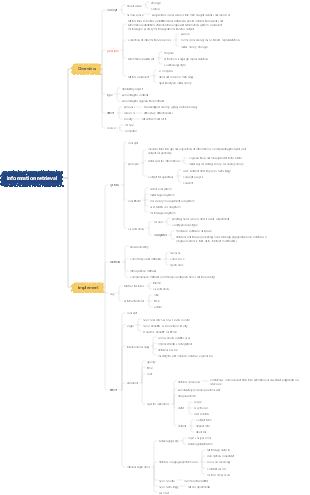
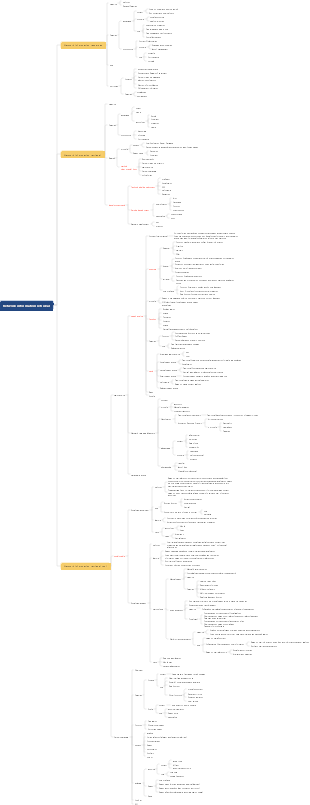

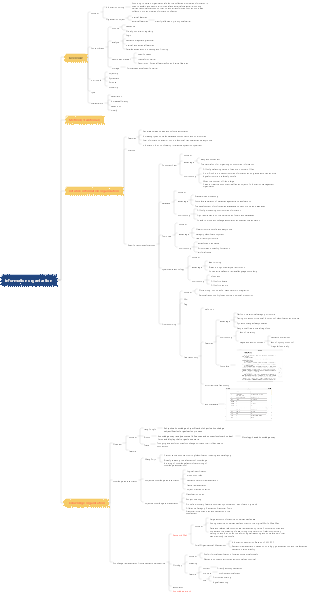

Introduction to Archival Science
Chapter 1 Archive Concept and Archive Phenomenon
1. Definition and analysis of archives
1.The definition and essence of archives
⑴Definition
Archives: Solidified information with a clear and definite original record function that is directly formed by social organizations and individuals in past social practice activities.
⑵Essence
Archives are essentially original records of social life. That is, original recordability is the essential characteristic of archives.
2. Understanding of the definition of archives
⑴Sociality
Archives are directly formed by people in social activities, not products of nature.
⑵Historic
From a tense perspective, the archive is something that has already been formed, rather than something that is being formed or has not yet been formed.
⑶Certainty
Archive content information is clear and certain, and exists attached to a certain material carrier.
⑷Original recordability
Archives are original information records directly formed by people in social activities, and have a direct original recording effect on past social activities.
3. The actual existence form of archives and its formation process
⑴Existence form of files
It refers to the specific form of existence in reality. Mainly documents, but also a large number of non-clerical information records.
⑵The formation process of archives
It refers to the process of documents in various forms from being produced to being formally preserved as archives and functioning as archives.
"Intentional and unintentional production, intentional processing and preservation"
4. Understanding the authenticity and reliability of archives
⑴If the contents of the archives are free from inaccuracies, distortions, and forgeries, then they are the most authentic and reliable among all kinds of information that record the same historical facts.
⑵ Archives contain inaccuracies, distortions, forgeries and even falsifications. This objective fact is precisely recorded, solidified and shown to the world by the existence form of archives. It still has another meaning. Authenticity and reliability.
2. The relationship between archives and related things
1. Archives and information
⑴Contact
Species concept and genus concept: Archive information is a form of existence of information, and archives are an important information resource in human society.
⑵Difference
Status: Archives are the most authentic, reliable, authoritative and credentialed native information resources.
2. Archives and Documents
⑴Contact
The relationship is close and complex. The connotations are different, but the denotations overlap in a large area.
⑵Difference
①The essence and core connotation are different: non-original records of information can also become documents.
② Documents pay attention to historical and cultural value, and archives also pay attention to practical use value.
③The literature content is generally more systematic and complete, while the archives include a large number of fragmentary and sporadic records.
3. Archives and documents
⑴Contact
A direct conversion relationship in actual form. Logically, the connotations are different and the denotations overlap.
⑵Difference
①The actual form of archives includes not only documents but also non-documents. Only some documents with strong original records, high reference value and completed document processing procedures can be converted into files.
②Essentially different: original recordability is not the essence of documents. Documents are essentially information transmission tools for people to deal with and solve practical and specific affairs problems. Communication is mainly spread in space and is mandatory.
4. Archives and Books
⑴Contact
The relationship is relatively close and there are similarities in management.
⑵Difference
① Essentially different: Books are essentially the crystallization of systematic knowledge.
② Different social functions: Archives are used to solve practical problems in reality and understand and study historical facts. Books are used to learn systematic knowledge and cultivate character.
② The characteristics of the intersection parts are different: the knowledge in the archive content is unsystematic knowledge fragments. The historical records in the book content are not direct original records, but processed and refined systematic knowledge.
5. Archives and information
⑴Contact
In reality, it is the closest and has the closest relationship. The extensions overlap in large areas, and the extension of the data is larger than that of the files.
⑵Difference
① Data is a relative and highly dynamic concept, and its extension is extremely broad. All relevant information that has a certain value for people to study and solve a certain problem can be called data. Archives do not have the relativity and dynamics of data.
② Archives can be viewed and used as data, but data cannot be viewed and used as archives.
6. Archives and cultural relics
⑴Contact
The connotation is the closest. There is some overlap in connotation. All have historical and cultural value.
⑵Difference
①Important archives can be used as cultural relics collection because they have both original recording and historical and cultural functions. However, most cultural relics cannot become archives, because most cultural relics are practical items and the content of recorded historical information is unclear and unclear.
②The clarity and certainty of the content information is the fundamental difference between the two. Only physical objects with text on them can become physical files and be collected by the archives department.
3. Types of files
1. Official files and private files (Public and private, attributes that form the field)
⑴Official archives: refers to the archives formed by people in their official activities, and the main subjects of their formation are public agencies or other social organizations.
⑵Private archives: refers to archives formed in people's private lives, and the main subjects of their formation are individuals.
2. Historical archives and current archives (Sooner or later time of formation and function)
⑴Historical archives: refers to archives that were formed earlier, are farther away from the present, and mainly play a historical and cultural role.
⑵Current archives: refers to archives that were formed relatively recently, are relatively close to the present time, and mainly serve the purpose of reality check.
3. Clerical archives, scientific and technological archives and specialized archives (common application)
⑴ Documentary archives: actually refers to administrative archives, that is, an archive category directly formed in the administrative management activities of society. Its essence is to highlight the dominant position of administrative or political archives in the archives family.
⑵Science and technology archives: refer to scientific and technological documents with certain preservation value that are directly formed by people in science and technology and production activities. It is also an important archive category in the archive family, such as drawings, design briefs, scientific research reports, etc.
⑶Specialized archives: It is a general term for an organic system composed of various specialized documents that people select and preserve through creative labor to organize and examine them. (Special documents refer to various carrier types with relatively stable language types and recording purposes that are produced and used by agencies, enterprises, institutions and other social organizations in order to achieve relevant functional goals when engaging in certain professional activities. Data and information records, such as accounting files, personnel files, litigation files, etc.)
4. Archives after the founding of the People's Republic of China, revolutionary historical archives and old regime archives (administrative management perspective)
⑴ Archives after the founding of the People's Republic of China: Also known as the archives of the People's Republic of China period, they refer to the state-owned archives formed in China after the founding of the People's Republic of China on October 1, 1949.
⑵Revolutionary historical archives: Also known as revolutionary regime archives, they refer to state-owned archives formed by the Communist Party of China and its military, political power, enterprises, institutions, societies and other social organizations and individuals before the founding of the People's Republic of China.
⑶Old regime archives: refers to all archives owned by the state except for revolutionary historical archives before the founding of the People's Republic of China.
5. New carrier files (audio-visual or audio-visual files) and electronic files (electronic files)
Chapter 2 The Origin of Archives
1. The Origin of Archives
1. Various theories on the origin of archives
⑴Text is a necessary condition for generating files.
⑵The emergence of writing and country is an indispensable condition for the production of archives.
⑶ Records formed by original recording methods are archives, such as knotting, engraving, drawings, etc.
2. Origin of Chinese Archives
3. Origin of foreign archives
2. The evolution of archive forms
1. Ancient Chinese archives before the use of paper
Oracle bone archives, epigraphic archives, slip archives, silk archives
2. Ancient foreign archives before the use of paper
Stone archives, clay tablet archives, papyrus archives, parchment archives, wax tablet archives, metal archives, palm leaf archives and birch bark archives.
3. Paper files, audio-visual files and electronic files
⑴Paper files
The emergence of paper promoted the first revolution in archival media. The number of archives has increased, and archives management has become more scientific and standardized.
⑵Audio and video files
Audiovisual archives: Also known as audiovisual archives or audiovisual archives, they refer to archives that record sounds or images formed by institutions and individuals in various social activities.
⑶Electronic documents/archives
Electronic files: refers to files generated in digital devices and environments, stored in digital form on disks, tapes, optical discs and other carriers, relied on computer and other system equipment to read and process, and can be transmitted on communication networks.
Chapter 3 The Value and Function of Archives
1. Overview of the value and role of archives
Archive value: refers to the usefulness of archives to the country, social organizations or individuals. It is the category of the relationship between the subject and the object.
2. The value form of archives
(1) Credential value and intelligence value
1. Voucher value
⑴Overview
Archives are the authentic evidence of history, and its certifiable characteristic constitutes one of the basic values of archives, the voucher value.
⑵Specific performance
①The documentary value of archives is the most basic characteristic that makes archives different from other kinds of information. Archives are conclusive original materials and historical records. They can become a basis for examining, researching and dealing with issues, evidence for identifying legal rights, obligations and responsibilities, and a tool for political struggle, diplomatic struggle and educating the people.
②The reason why archives have documentary value is determined by the content and formal characteristics of the archive formation process and its results. First of all, looking at the content of the archives, it was transformed from documents that were directly used at that time. It objectively records past historical situations and is convincing historical evidence. Secondly, judging from the formal characteristics of the archives, the documents retain real historical marks. These original marks and original data become the mark of the originality and authenticity of the archives.
2.Intelligence value
⑴Overview
Archives are records of facts, knowledge and experience. Its reliable, extensive and referential characteristics constitute another basic value of archives, the information value.
⑵Specific performance
① Archives record the facts and processes of historical activities, and record people’s thinking processes in various activities, so they can provide people with interconnected, systematic, and extensive intelligence information.
②The information value of archives is reflected in archive collections at different levels. Firstly, it is reflected in the archival materials of an archive or even the National Archives Network, secondly, it is reflected in the unit combination of a certain number of documents, and thirdly, it is reflected in different manuscripts of the same document or the revised ink of the same manuscript.
(2) Realistic value and long-term value
1. Realistic value
The actual value of archives can also be called the current value, which refers to the usefulness of archives to actual social practice activities.
2. Long-term value
The long-term value of archives means that the timeliness of archives value can be extended to the distant future and can meet the needs of users from all aspects of society for a long time.
(3) Value to the creator and value to society
1. The first value of the document
The first value of a document is the value of the document to the agency where it was formed. It is the original value of the document, including administrative value, legal value, financial value and execution value.
2. The second value of the document
The secondary value of documents is the value of documents to other agencies and individual users, also known as subordinate value or archival value, including evidence value and intelligence value.
3. The role of files
1. Administrative role
Archives are true records of institutions and social organizations at all levels performing their functions and engaging in management activities. These records are effective for the staff of the institution, region and even the country to keep track of their comings and goings and maintain the continuity of policies, systems, order, and working methods. nature and the scientific nature of decision-making, and has an irreplaceable role as evidence and reference. This role can be called a governance role or an administrative role.
2.Business role
Archives can play an important role as evidence and reference in every business field, becoming the information support and guarantee for business activities. Archives record the relevant situations, results, experiences and lessons learned about the operation and development of various industries. They are the records of past business activities and the conditions for continuing business activities.
3. Cultural role
The cultural role of archives mainly refers to the fact that archives are a precious spiritual and cultural wealth created by human beings, and the various functions they play in the accumulation, dissemination, development and progress of human social culture. Archives are the concentrated expression of national culture, the accumulation of historical culture, the means of historical and cultural inheritance, and the basis of cultural innovation.
4. Legal effects
The legal role of archives refers to the evidentiary role played by archives in resolving disputes, handling cases and other activities. The legal role is an important manifestation of the value of archives documents. On the one hand, the legal role of archives is very prominent in political, military, economic, diplomatic struggles, and settlement of territorial disputes. On the other hand, the legal role of archives in safeguarding the legitimate rights and interests of the country, the collective, and individuals is also very prominent.
5Educational role
Among the many materials for social education, archives have become important materials for publicity and education due to their unique historical, intuitive and primitive nature. Archives are an important educational resource. They feature first-hand original materials whose authenticity is beyond doubt, making them irresistibly persuasive and appealing.
4. Laws and conditions for realizing the value of archives
(1) The expansion law of archive value
1 Overview
Because archives have the characteristics of original recordability, uniqueness of content and version, etc., the value of archives can be expanded and developed. Its expansion has a certain regularity, which can be called the expansion law of archives value.
2. Specific performance
⑴The expansion of archive value due to the expansion of value subjects
This refers to the gradual expansion of the number of people who may have a relationship with archives over time, and the broadening of the scope of archives users and their needs, resulting in the expansion of value. The main reasons for the expansion of archival value subjects are:
①First, the role of archives has expanded from the organizational structure to the whole society. According to the law of archives formation, after the archives are formed, for a period of time, as a necessary condition for the work and production activities of the agency, the target of its function is mainly the agency. After a period of time, the current role of archives will gradually fade or even end, and its long-term value and comprehensive role will break through the scope of the organization where it is formed, and the utilization needs of all aspects of society will be highlighted. The scope of users has expanded from archives forming agencies to the whole society. The subject of archives value has broken through various initial restrictions and formed rich and diverse value forms.
②Second, the degree of confidentiality of files is decreasing. Some files have a certain degree of confidentiality and are classified into different levels such as top secret, confidential, secret, etc. The degree of confidentiality of archives is essentially a question of the scope and degree of utilization of the archives. The confidentiality of archives is not static and changes over time and as conditions change. Some files remain confidential after several years, some files become less confidential over time, and some lose their confidentiality. Generally speaking, it is a general trend that the confidentiality of files gradually weakens and decreases. The gradual reduction of the confidentiality of archives indicates that the scope of archives users will be expanded after the relaxation of restrictions, which will inevitably lead to a wider realization of the value of archives.
⑵Expansion of value due to changes in the nature of archives functions
The usefulness of archives to users is multifaceted, and these uses do not appear at the same time. As time goes by and conditions change, not only the scope of users expands, but the nature of the archives also changes, presenting Show the diversity characteristics of archive value.
① Generally speaking, at the beginning of its formation, archives mainly played an administrative or business role. With the end of the current period, the role of archives gradually expanded from simple administrative and business information support to science, culture, education, justice, leisure, etc. every aspect.
②The expansion of the role of archives means that archives can not only be used for corresponding activities, but can also play a variety of roles, some of which even exceed the expectations of the archives creators. This increases the areas, forms and possibilities for archival value realization.
3. Function
Understanding the law of archive value expansion has a scientific guiding role in handling the relationship between current and long-term, local and whole, confidentiality and openness in archives management. The specific manifestations are as follows:
⑴First, correctly understand the service direction and functional positioning of the unit’s internal archival institutions and public archives. On the one hand, the internal archives organization must serve the unit and promote the realization of the value of archives to the creators themselves. At the same time, it must actively accumulate archives with long-term use value and create conditions for the realization of the social value of archives; public archives must take various measures to Expand the scope to the general public and promote the expansion of archives value.
⑵Second, determine the reasonable filing and transfer time of archives, and establish a reasonable collection structure to adapt to the characteristics and requirements of archive value realization in different periods.
⑶Third, in the archives appraisal work, analyze the value of archives from a comprehensive, historical, and developmental perspective to avoid one-sidedness.
⑷Fourth, adhere to the correct concept of confidentiality, adopt corresponding confidentiality measures for files with confidentiality requirements, and formulate and implement a system for declassification and declassification. According to changes in the objective actual situation, timely adjust the file confidentiality level, downgrade and declassify, expand Utilization scope.
⑸Fifth, establish a service concept, actively open archives in accordance with the law, promote the transformation of archives work from closed and semi-closed to open, develop archives information resources more reasonably and extensively, serve all aspects of society, and study the development of archives in different periods. Function areas, and promote the reasonable expansion of archive value in a timely manner.
(2) The law of limitation of archive value
1 Overview
The timeliness of archive value means that the usefulness of archives to society is time-limited. Some archives are valuable to users within a certain period of time. After this time limit is exceeded, the value is reduced or lost. This law can be called the time efficiency of archive value.
2. Specific performance
⑴The timeliness of the relationship between files and user needs.
①The timeliness of different types of files has different characteristics.
② From the perspective of the value subject, some needs of users are also time-sensitive. If the archives cannot meet the needs of users in a timely manner, the value of some archives will become invalid or meaningless.
⑵ Timeliness of archive value form.
① Archives have various value forms, and these functions are often played out in different time periods. For example, at the beginning of its formation, archives were mainly used for administrative and business functions, but later shifted to other functions such as science and culture.
② The ebb and flow of different functions shows that archives can form different values in response to different user needs at different times. Social political, economic, and cultural conditions also have a direct impact on the realization of the value of different forms of archives. While archivists understand this changing trend, they should also grasp the time and stages of change to prevent missing the best opportunity to realize certain values.
3. Function
Understanding the timeliness law of archives value will help archivists understand the impact of time on the value of archives with dialectical thinking, correctly judge the timeliness of different archives, develop information resources without losing the opportunity, actively provide utilization, and prevent them from being used in a timely manner. of files that have lost some or all of their value because they were provided too late.
(3) Conditions for realizing the value of archives
1.Social environment
Social systems, relevant national regulations, policies, political and economic situations, etc. have a great restriction on the demand for archives utilization and the extent to which archives institutions may provide archives, thus having a direct impact on the formation and realization of archives value relationships.
2. Social archive awareness
The level of people's understanding of archives and the general understanding of archives in society can be called "social archive awareness". The degree to which people demand archives and the extent to which archival work can meet the demand are closely related to social awareness of archives. The impact of social archives awareness on the realization of archives value mainly lies in three aspects: archives utilization needs, archives utilization policies and archives service concepts.
3. File management level
The level of archives management directly affects the archives management department's ability to provide archives services and meet social needs, as well as the possibility for users to obtain the required archives information. Therefore, improving the level of archives management, in-depth development of archives information resources, and providing high-quality and efficient utilization services are important conditions for promoting the realization of archives value.
Chapter 4 Archives and its composition
1. Contents of archival work
Overview
Archives work: Broadly speaking, it includes archives management work, archives administrative work, archives education work, archives scientific research work, archives publicity work, archives international cooperation and exchange work, etc. Archives work in the narrow sense is archives management work, and archives work in the broad sense is archival undertakings.
(Archives business: A business system composed of archives (office) work, administrative management work, etc., with the purpose of managing and developing archival resources and serving various social undertakings.)
(1) File management work
1. Meaning
Archives management work: refers to the work of managing archives using scientific principles and methods to serve various undertakings of the party and the country. Its basic contents include: receipt and collection of archives, sorting, identification, storage, cataloging and retrieval, editing and research, statistics and utilization services.
2.Basic content
⑴ Archives collection work
In order to solve the contradiction between the decentralized formation and centralized utilization of archives, the collection of archives was formed.
⑵Archival work
In order to resolve the contradiction between the chaos of archives and the systematic requirements for management and utilization, the work of organizing archives was formed.
⑶Authentication work of archives
In order to ensure that archives with preservation value can be preserved with priority and play their maximum role to meet the needs of social utilization, the appraisal work of archives has been formed.
⑷Archives storage
In order to solve the contradiction between the limited natural life span of archives and the long-term utilization needs of society, the preservation of archives has been formed.
⑸ Cataloging and retrieval of archives
In order to solve the contradiction between the one-way linear arrangement of the archives collection system and the diverse and changing utilization needs of society, and to provide means for searching archives, archive cataloging and retrieval work has been formed.
⑹ Archive editing and research work
In order to meet the diverse and extensive needs of the society for the use of archives, it is necessary to research archives and compile and publish various archive reference materials, which forms the editing and research work of archives.
⑺Statistical work of files
In order to understand the basic situation of archives work, analyze the regularity of archives work, and improve the level of archives management, it is necessary to conduct quantitative observation and analysis research on the status of archives and archives management, which forms the statistical work of archives.
⑻ Utilization of files
In order to meet the actual needs of society for the use of archives, it is necessary to provide archival materials to users through various methods, which forms the provision, utilization and service of archives.
(2) Archives administrative work
1. Meaning
Archives administrative work: It is an activity that aims at the needs of various national undertakings and carries out overall planning, organization and coordination, unified systems, supervision and guidance of national and local archives work. The purpose of archives administration is to continuously adjust the internal and external relationships of the archives system, promote the development of the archives, and serve the national economy and social development.
2. Main content
With the archives administration department as the organization and coordination center, we train and improve the administrative capabilities and levels of archives staff, administer according to law, complete planning formulation, unified systems, administrative supervision, organizational coordination, business guidance and consulting services through investigation and research and strengthen management. tasks, improve the efficiency of archives administration, thereby promoting the improvement of the overall level of archives undertakings.
(3) Archives education work
1. The history and current situation of archives education in my country
Archives education is an important part of the archives undertaking. The construction of the archives undertaking requires the development of archives education and the cultivation of professional talents.
① my country’s archives education began in the 1930s and achieved certain development in the 1940s. In 1934, the private Wuchang Wenhua Library College established a special teaching chair in archives management, marking the birth of archives education in my country. In 1946, the private Chongshi Archives School was founded in Chongqing.
②After the founding of the People's Republic of China, with the support of the party and the government, with the development of our country's archives industry, archives education has also achieved rapid development. The attempts of various types of archives education such as archives specialist classes and archives training classes have made pioneering explorations for the creation of archives education in New China.
③On November 15, 1952, the Central Committee of the Communist Party of China and the Government Affairs Council jointly made a decision to approve the establishment of a specialized archives class at Renmin University of China, which marked the formal establishment of archives education in New China.
④After entering the 1980s, with the development of my country’s archives industry, my country’s archives education has entered a stage of large-scale and substantial development. Since its development, our country has basically formed a multi-level, multi-channel and relatively reasonable national archives education network system.
2. Archival education structure
⑴The structure of archives education refers to the various factors of archives education and their interrelationships. The purpose of archival education is to cultivate various archival professionals at different levels and levels. The archival education structure is a multi-level, multi-series composite structure.
⑵From a macro perspective, my country's archives education system generally includes four parts: higher education, secondary education, on-the-job continuing education and social education.
① Archives higher education: It is the core part of archives education in my country. Archives higher education in our country is the main way to cultivate mid-to-high-level archives research talents, archives management talents, information development talents and archives management talents. It includes three educational levels: graduate students, undergraduate students and junior college students.
② Archives secondary education: It is the main way to train junior archives managers and technical personnel. It is an important part of the archives education system in our country. There are two main types of schools: secondary vocational schools and vocational schools.
③ Archives on-the-job education: It is an education to improve archives professional knowledge for those who are already engaged in archives work. It includes two aspects, one is continuing education for personnel who have received archival professional education, and the other is training for archival personnel who have not received archival professional education.
④ Archives social education: It refers to promoting archives knowledge to all aspects of society and enhancing society’s awareness of archives. This type of archival education can be carried out in various ways, such as holding archival exhibitions and writing various popular books.
(4) Archives publicity work
1. Meaning
Archives publicity: It is the process of disseminating information and ideas about archives work to people, thereby affecting people's behavior. Specifically, it is a kind of public opinion guidance and public opinion supervision that promotes the laws and policies of the party and the state on archival work to the majority of archivists, provides ideological education to them, and publicizes archives and archival work to the society, so as to enhance social awareness of archives. work.
2.Content
Publicity archives, publicity archives work, publicity archives personnel
3.Form
Oral propaganda, use of mass media, archive display and exhibition, archive professional newspapers and periodicals, archive website.
(5) Archives science and technology research work
1. Meaning
Archival science and technology research work: referred to as archival scientific research, is a creative work that studies and refines the perceptual materials of archival work practice into rational results through investigation, observation, experiment, comparison, analysis and other means.
2. Main content
①Basic theoretical research on archival science
It includes the understanding of archival things, the rational revelation of the laws of archival work, and the theoretical exploration of the development of archival undertakings.
②Research on applied theories of archival science
It mainly focuses on the study of basic management theories such as archive collection, identification, storage, cataloging and retrieval, and compilation and research.
③Research on applied technology of archival science
The core content is the research on archive construction and protection technology and the research on modern archives management technology.
(6) International cooperation and exchange of archives
form
Participate in activities of international archives organizations, exchanges and cooperation in bilateral archives work between countries, and international archives academic exchanges and cooperation, etc.
2. Basic principles of archival work
1 Overview
Article 5 of the 1987 Archives Law stipulates: "Archival work shall implement the principles of unified leadership and hierarchical management, maintain the integrity and security of archives, and facilitate the use of all aspects of society." This is a form of national law that determines the basic principles of archives work in our country. in principle.
2.Content
(1) The principle of unified leadership and hierarchical management of national archives work (core)
Unified leadership and hierarchical management are both determined by our country’s socialist system and an objective need for the development of archives work. It is the organizational principle and management system of our country’s archives work. Its specific content includes three aspects:
⑴First, national archives are centrally managed by various levels and types of archives storage institutions in accordance with regulations.
Different management methods must be adopted for archives with three different ownerships (namely, state-owned, collective-owned and individual-owned) in accordance with the relevant provisions of the Archives Law.
① Archives formed by state agencies, state-owned enterprises and public institutions must be transferred regularly to the archives agency or archives staff of the unit in accordance with regulations for centralized and unified management. At the same time, files that need to be kept for a long time should be transferred to relevant archives on a regular basis in accordance with regulations.
② Archives that need long-term preservation by central government agencies and organizations should be transferred to the Central Archives; archives that need long-term preservation by local agencies and organizations at all levels should be transferred to local comprehensive archives at all levels; some new-type carrier archives or more professional archives Archives shall be kept by relevant professional archives in accordance with relevant national regulations.
③ Collectively owned and individually owned files that are of preservation value to the country and society or that should be kept confidential shall be properly kept by the file owner.
⑵Second, national archives work is under the leadership of people's governments at all levels and managed by archives administrative agencies at all levels in a unified, hierarchical and professional manner.
① Unified management refers to the national archives administration agency being in charge of national archives work.
② Hierarchical management refers to the fact that the archives administrative departments of people's governments at or above the county level are responsible for the archives work within their own administrative regions.
③Sub-professional management refers to the central professional competent authorities guiding and supervising the archival work of this system under the guidance of the national archives administrative agency.
⑶Third, implement unified management of party and government archives and party and government archives work.
Unify the party's archival work and the government's archival work, and implement a system under the direct leadership of party committees at all levels.
(2) Maintaining the integrity and security of files (means)
Maintaining the integrity and security of archives is a basic requirement for archival work. Only by maintaining the integrity and security of archives can the true historical appearance of the party and the country be maintained, and the role of archives be fully utilized.
⑴Maintain the integrity of files
The integrity of archives includes two aspects: complete collection of archive materials and systematic organization.
① Complete collection means that all archives with preservation value should be collected as completely as possible to achieve the completeness of archives with preservation value for a unit, a system, a region, or even the entire country.
②Organization system means that all archives with preservation value must form an organically connected whole according to its formation rules, so as to comprehensively reflect the process and original appearance of certain social activities subjects engaging in social activities.
⑵Maintain the security of files
The security of archives includes two aspects: the physical security of the archives and the security of the content of the archives.
①Maintaining the physical security of archives means taking relevant management and technical measures to protect archives from damage and extend the life of archives as much as possible.
②Maintaining the content security of files means implementing strict management of confidential files and files that need to be controlled within the scope of use, to ensure that confidential files are not lost, leaked, or spread beyond the scope.
(3) Facilitate use by all aspects of society (purpose)
Facilitating the use of archives by all sectors of society and meeting society's needs for archives are the fundamental purposes of archives work. It is an important standard for testing the effectiveness of archives work and an important condition for ensuring the development of archives work.
3. Management system of archives undertakings
1. Basic types of archives management systems
Archives management system: refers to the system and organizational system of archives management, including the establishment of archives administrative departments and their affiliations, division of authority, etc. From a global perspective, according to the relationship between central and local archives agencies, archives management systems can generally be divided into two basic types: decentralized and centralized.
⑴Decentralized archives management system
Decentralized system means that local archives agencies in some countries do not accept the leadership, guidance and supervision of central archives agencies. Most of the countries that adopt decentralized systems are federal countries. Decentralized systems mainly include: British style, Swiss style, American style and other forms.
⑵Centralized archives management system
Centralization means that local archives agencies in some countries accept the leadership, guidance and supervision of central archives agencies. The main forms of centralization include Chinese, French and Swedish.
2. Development and changes of my country’s archives management system
The archives management system of New China has undergone several reforms and changes. The main characteristics of the changes in the archives management system are: the gradual transition of the archives management system from decentralized management to a centralized and unified management system. The centralized management system is also constantly improving. among.
Chapter 5 Archives Institutions
1. Public Archives
my country's archives can be mainly divided into three categories: national archives at all levels, professional archives (including specialized archives and departmental archives), and enterprise and institution archives.
(1) National Archives
1. Historical Archives
⑴The First Historical Archives of China (mainly preserves the archives of the central agencies of the Ming and Qing Dynasties)
⑵The Second Historical Archives of China (mainly preserves the archives of the central agencies of various political regimes during the Republic of China)
2. Comprehensive Archives
⑴Overview
Comprehensive Archives: Generally affiliated to the party and government at all levels, it collects and preserves archives formed by the party and the state in all aspects of management activities. It can be divided into two types: central-level and regional-level comprehensive archives. There are many comprehensive archives, which are the main body of my country’s national archives and archival undertakings.
⑵Properties
The National Comprehensive Archives of my country is the management department that uniformly maintains the archives of the Party and government agencies. It is both a party institution and a state institution.
The scientific and cultural nature of the comprehensive archives is mainly reflected in:
① First, from the perspective of the objects of archives management, it manages records of political, economic, military, cultural, scientific and technological activities in history, and is an important historical and cultural heritage and spiritual and cultural wealth.
② Judging from the activity methods and work results of the archives, the work of the archives is a research work. Carry out scientific management of archives, conduct a series of studies, participate in the compilation of history, compile various research results, and provide archives utilization through various methods.
③From the perspective of the functions of archives, it not only shoulders the important task of scientific management of archives, but also devotes itself to social service work, playing an important role in prospering national cultural undertakings, promoting social progress and building socialist spiritual civilization.
⑶Basic responsibilities
Centralize and unify the archives and related materials that the party and the country need to keep for a long time, maintain the true face of history, and serve the actual socialist modernization construction and the long-term needs of history.
⑷Specific/basic tasks
① First, receive and collect files and related materials with long-term and permanent preservation value from various agencies, groups and their affiliated units at the same level, and manage them scientifically;
②Second, actively carry out the utilization of archival materials through various methods;
③Third, participate in the compilation of history and journals.
(2) Professional Archives
1.Basic meaning
Professional archives: refers to archives set up by the state to specifically manage the archives formed in a certain aspect or a special professional and technical activity. Its specific meaning can be reflected not only in its professional functions, but also in the special content and form of the archives carrier. Judging from the establishment of professional archives in my country, there are national professional archives, local professional archives and professional archives established by a certain professional system.
2. Type
⑴Special carrier archives
At present, my country has established photo archives, film archives and other special carrier archives.
⑵Urban Construction Archives
Urban construction archives are a type of professional archives that was established earlier among my country's science and technology professional archives and has developed rapidly in recent years. It is a professional archives that combines regional characteristics and professional characteristics.
⑶Department Archives
Departmental archives refer to the type of archives set up to store certain types of specialized files within a certain professional system.
2. Internal archives organization
Overview
Internal archives agency: mainly refers to an archives agency established within a certain agency or organization to keep the files formed by the unit and mainly provide services to the unit. From the perspective of its main body, there are two main types: enterprise archives and archives rooms.
(1) Corporate Archives
1. Meaning
The corporate archives is an archive that collects and manages the corporate archives.
⑴Corporate archives have the general attributes of archives.
⑵The corporate archives collects and manages the corporate archives.
⑶The corporate archives mainly serve the enterprise.
2.Features
⑴Comprehensive
The corporate archives is the base for storing the corporate archives. There are many types of archives formed in enterprise management work, including party, government, industrial and corps document archives, scientific and technological archives, accounting archives, business management archives, production technology management archives, etc. The contents of the collection are comprehensive.
⑵Professionality
In the composition of corporate files, scientific and technological files account for a huge proportion. The corporate archives mainly work around scientific and technological archives with outstanding professionalism. At the same time, the professional characteristics of corporate archives also differ depending on the type of enterprise.
3. Functions
⑴ As a member of the national archives network system, the corporate archives must store and preserve corporate archives, serve as a utilization center for corporate archives information, provide services to the enterprise and all aspects of society, and provide services to the national archives on a regular or irregular basis in accordance with relevant regulations. archives of national and local importance.
⑵ Responsible for the collection, organization, identification, storage and statistics of the company's files. In order to realize the purpose of archival information serving enterprise management, corporate archives should manage archival information, establish a complete archival retrieval system, and strive to modernize archival management.
⑶Compile and research archival information and develop archival information resources. The corporate archives' service targets are mainly internal, but also external. To this end, corporate archives should selectively compile and research archival information in response to changes in corporate management activities to provide services for the smooth development of corporate management activities; they should also edit and publish corporate archives and historical materials to meet the needs of all aspects of society.
⑷Propaganda and education functions. By holding archives exhibitions, we promote the production, operation, scientific and technological development, etc., thereby enhancing the archives awareness of enterprise managers and society.
4. Establishment of corporate archives
⑴Enterprises that set up archives must be large or above enterprises and enterprise groups.
⑵The establishment of corporate archives must take into account the basic conditions of corporate archives work.
⑶The corporate archives should be an internal organization of the enterprise in terms of organizational structure, and the funds should be settled by the enterprise itself.
⑷ When setting up corporate archives, we can consider the integrated management of archives, books, and information materials to achieve comprehensive development and utilization of information resources.
(2) Archives room
1. Meaning
Archives Room: It is an internal organization for each organization to uniformly preserve and manage its own archives. It is an integral part of the entire organization and is a professional organization for organization management and research and consultation. From the perspective of national archives work, the archives office is the most common, largest, and most basic business organization in the national archives work organization system.
2. Nature
⑴The archives office is the internal organizational structure of the agency.
The work of the archives office of the agency is an integral part of the work of the agency. It is a professional organization established by the agency to meet its own needs of archives management. It is engaged in the organization and management of the archives work within the unit and the storage, provision and utilization of archives. From this point of view, the archives office is dependent on this agency.
⑵The archives room is a transitional institution for preserving archives
In the interests of the country and society as a whole, and in order to make archives a shared wealth for society and to be well kept, archives offices also have the obligation to transfer archives to the National Archives. Therefore, archives generally cannot become a base for permanent archives storage, and can only be a transitional and intermediate archives institution in archives storage.
⑶The main task of the archives is to serve the institution.
The sources of archives files are limited to this institution, and the composition of the collection files is single. Judging from the value form of the files stored in the archives room, they are generally still in the first value stage, and they still have a strong practical effect on the daily management of the agency. Therefore, the service direction, service objects, and service scope of the archives must be basically limited to the interior of the agency.
3. Function
⑴On the one hand, the archives office is a department with a staff and consulting role within the agency. It is an assistant in the work of the agency, providing necessary archival information support for agency management and agency functional activities. Therefore, archives work is an integral part of the work of the agency, a necessary condition for improving the efficiency and quality of the work of the agency, and an important means for the continuation of the management work and business functions of the agency.
⑵On the other hand, the archives office is the foundation of national archives work. The archives office of the government is the source of continuous replenishment of national archives. The completeness and continuous accumulation of national archives first depend on the archives office. In the national archives work organization system, the archives office is the first place where archives are utilized and play a large-scale practical role after they are formed. ; The archives room is a transitional institution that preserves archives with long-term value in advance. It creates conditions for archives work.
4. Task
⑴Basic tasks
Centrally and uniformly manage all archives of various categories and carriers formed by various departments of the agency, serve the various tasks of the agency, and accumulate archives and historical materials for the party and the country.
⑵Specific tasks
① Provide guidance and supervision on the archiving of documents and materials by the agency’s clerical department or business department
Agencies at all levels should establish and improve the archiving system for documents and materials. All documents and materials with preservation value generated during the work activities of the agency should be sorted and filed by the clerical department or business department, and filed regularly in the agency archives. The agency archives office is responsible for guiding and supervising the archiving of documents and materials of the agency.
② Responsible for the management of all files and related information of the unit, and actively organize the provision of information for use
The Archives Office is the department that stores, processes and transmits archival information of the agency. It is responsible for the collection, sorting, identification, storage and statistical work of archives, and compiles necessary archive retrieval tools and reference materials to serve the various management activities of the agency. Scientific management of archives is the basic work of the archives office, and providing archives information services to the agency is the basic starting point of the archives office work.
③Regularly transfer files with long-term preservation value to the archives
Archives work is the foundation of archives work. The completeness, value, organization quality, and storage status of the files transferred by the archives directly affect the collection construction of the archives and the accumulation and protection of national cultural heritage. Therefore, doing a good job in the archives office plays a very important role in accumulating national archive information resources and maintaining the true face of history.
5.Type
⑴General archives room
The general archives room is also usually called the agency archives room and the document archives room, which is mainly responsible for the management of the party, government, labor and league document files of the agency.
⑵Technology Archives
Science and Technology Archives refers to a specialized archival institution that stores science and technology archives.
⑶Audio and Video Archives Room
This is an archive room for special media such as films, photos, and videotapes.
⑷Personnel Archives Room
Usually attached to the personnel management department or organizational department within the agency, some are also called cadre or employee archives.
⑸Comprehensive Archives Room
This is a comprehensive archives management organization established by the agency to uniformly manage various general archives, specialized archives and special carrier archives formed by the agency.
⑹Joint Archives Room
Some agencies in the same area, especially in the same town, join together to set up an archives agency, which is responsible for preserving and managing the archives generated by these agencies. This agency is usually a joint archives office, or an archives service center.
⑺Archive Information Center
It is a unified information management entity established on the basis of the original library organization, archives organization or intelligence organization. This organizational form facilitates the establishment of computer management systems and the implementation of modern management. It is also conducive to the joint development and utilization of information resources.
3. Archives administration agencies
1 Overview
Archives administrative agencies: such as archives bureaus and divisions at all levels, are the departments of the party and the state that guide and manage archives work. Since my country's party and government archives work is under unified management, archives administrative agencies at all levels are both party agencies and state agencies.
2.Basic Responsibilities
Under the principle of unified management of party and government archives work, we are responsible for managing national archives affairs in a hierarchical and responsible manner, and supervising, inspecting and guiding national archives work.
3. Specific tasks
⑴ Formulate rules and methods for archives work, establish a national archives work system, and formulate a development plan for archives work.
⑵ Guide and supervise the archival work of various agencies, troops, groups, enterprises, and public institutions; plan and prepare for the construction of archives, and guide the work of the archives in business.
⑶Research and review the principles and standards related to archive preservation value and archive retention period, and supervise and review the destruction issues of relevant archives.
⑷ Organize and guide the exchange of archival work experience, professional education of archival cadres, and archival scientific research.
⑸ Organize and participate in international exchanges of archival work.
4. Interrelationships between archival institutions
Archives rooms, archives offices and archives bureaus are the three basic types of archives institutions in my country.
⑴The superior archives administration agency has a relationship of business guidance and supervision over the lower-level archives administration agencies;
⑵The archives administrative agency has a business guidance and supervision relationship with archives business agencies such as archives and archives rooms at the same level;
⑶ There is a file handover relationship between the agency archives room and the archives office;
⑷ There is no affiliation between archives (rooms) at all levels and types, but there is a certain degree of collaboration.
4. New archival institutions
(1) Document Center
1. Meaning
Document center: It is a socialized, intensive and professional archives management institution. Its setting is generally not affiliated with a document forming unit like an archives room, but is established by region and system between document forming units. A transitional archives management institution between local comprehensive archives.
2.Background
The Document Center was first born in the United States during World War II. During World War II, the volume of documents in U.S. government agencies expanded rapidly, which greatly increased the burden of document management, resulting in a large number of documents that were not properly maintained in an organized and systematic manner. With the advocacy and assistance of the archives industry, the U.S. military department created a new type of document management organization - the Document Center, which centrally stores documents that are rarely used but must be kept for a period of time in specialized warehouses with lower costs. . my country's first documentation center was established in Yongjing County, Gansu Province, my country in 1988.
3.Characteristics
⑴The document center is mainly a physical management organization. Judging from existing practice, the main goal of the file center is to provide a high-efficiency, low-cost safe haven for a large number of dormant files. This determines that the main functions of the document center are:
① Receive and store documents from the forming agency into the document center;
② Provide fast and accurate document borrowing services to meet the needs of users;
③ Ensure document security and scientific management;
④ Dispose of documents according to the document disposal form formulated by the agency and approved by the archives, including destroying documents that no longer need to be preserved and transferring documents with permanent preservation value to the archives.
⑤The Document Center generally does not engage in research activities related to document content, which is a fundamental difference in function between it and archives.
⑵The document center is a socialized, intensive and professional archives management institution. The document center generally provides document management services for several joint agencies. Compared with the archives room, it has a larger scale and serves more customers. Due to its centralized funds, strong specialization, and high-quality personnel, the management capabilities and technical means of the document center are generally greater than those of an archives management agency established by an independent unit.
⑶The Document Center only has custody rights but no ownership rights for the dormant documents it maintains. The ownership of the documents still belongs to the organization that created them.
⑷The Document Center is an intermediate institution between the document creator and the archives, and it is responsible for both parties. As a transitional and intermediate archives management institution, the Document Center must first respect the interests and requirements of document creators, and at the same time shoulder the important task of accumulating archives for the archives.
⑸The document center can simultaneously undertake the functions of document management consulting and training. For example, it can provide suggestions and guidance on document management to joint agencies and non-joint agencies.
4.Type
⑴Government Document Center
This is a non-profit records management organization established with government funding to serve government agencies.
⑵Commercial Document Center
This is a for-profit archive management institution founded by relevant institutions and individuals. It provides modern document storage facilities, scientific document management and efficient document services to industrial and commercial enterprises or individuals.
(2) Archives storage center
1. Meaning
Archives storage center: refers to an institution established by the National Comprehensive Archives or other independent legal persons to provide paid archives storage services to various enterprises, social groups and individuals. It mainly accepts the storage of archives formed by state-owned and non-state-owned enterprises and bankrupt enterprises, social groups, and individuals in various activities such as work, production, business, and life, which do not have sufficient storage conditions and are too costly to equip with archives storage conditions.
2.Background
⑴First, in the reform of state-owned enterprises, state-owned enterprise archives are poorly managed and even have nowhere to go.
⑵Second, the file management of non-state-owned enterprises is mostly chaotic.
⑶Some social groups and individuals do not have sufficient conditions for archives preservation.
(3) Archives office
1. Meaning
Archives office: or archives consulting service company, is a commercial archives service organization that provides archives affairs services.
2.Background
⑴The volume of archives business has increased rapidly, especially the workload of archives supervision and guidance has greatly increased, and the archives administrative department is overwhelmed.
⑵ When considering staff establishment, relevant departments often ignore the workload and work surface of the archives administration department, and provide very little staff establishment.
⑶ The participation of archives department personnel in archives labor work will, to a certain extent, weaken the business guidance and supervision functions of the archives administrative department.
3. Service objects and service scope
⑴The service objects of archives offices are very wide, generally including national comprehensive archives at all levels in the administrative region, various agencies, groups, enterprises, institutions, townships, villages and individual citizens.
⑵The business scope of the archives office is mainly to provide guidance and consultation on archives business and provide various archives service services, such as the organization and binding of archives; the copying, recording, and printing of various archive catalogs; the pasting and damage of archives; Archive rescue.
4. Nature
The archives office is an enterprise unit that operates independently, has independent accounting, and is responsible for its own profits and losses. The employment system generally adopts a combination of appointment system and temporary work system. Adopt an appointment system for a small number of archives professional and technical personnel, and use them to provide guidance and consultation on archives business. Other staff generally implement the temporary work system and mainly perform various labor services.
(4) Current Documentation Center
1. Meaning
Current Document Data Center: It can also be called the current document reading/opening center. It is a public archives that collects and centralizes current documents of government agencies. It takes government information disclosure as its basic task to facilitate all walks of life, especially ordinary citizens. Internal agencies that inquire and understand the government's current policies and regulations on various aspects of social affairs management.
2.Background
It is a new type of document management organization established to meet the needs of my country's government information disclosure and political civilization construction.
3. Operating organization and development prospects
⑴ Judging from the operation of the current document and information center, it mainly does the following basic work:
① First, collect and centralize a batch of current regulatory and policy documents or current document information related to user query requirements;
②The second is to review the boundaries between confidentiality and non-confidentiality of current documents on the basis of collecting and concentrating current documents, and determine the scope of current documents and service priorities for users to consult;
③Third, the current documents were published online, and user surveys and research were carried out to a certain extent.
⑵ Judging from the development of the current document and data center, the main problems that need to be further solved are:
①First, it is necessary to further confirm the legal status of the current document and information center;
②Second, it is necessary to establish a regular and mandatory mechanism for current document submission, collection and management to ensure that current document opening activities are carried out in a sustained and in-depth manner;
③The third is to formulate a reasonable, scientific and efficient open work system and management regulations, and clarify the rights and obligations in the current documents and materials;
④The fourth is to try to innovate current file open service methods and means.
Chapter Six Characteristics, Laws and Development of Archives Work
1. Characteristics, status and benefits of archival work
(1) Characteristics of archival work
The characteristics of archival work refer to the inherent stipulations that distinguish archival work from other things. In terms of its basic characteristics, archival work is a service-oriented, cultural, managerial, political and scientific work.
1. The service nature of archives work
Archival work promotes the development of productivity and social progress by providing archives to serve social practice activities. The special way in which archival work realizes its own value determines that it is a service work.
⑴Serviceability is one of the basic attributes of archives work and a basic factor for the survival and development of archives work. Specifically, agency archives work should serve to improve agency administrative efficiency, corporate archives work should serve to improve corporate management efficiency and enhance corporate competitiveness, and national archives work should serve the socio-economic, political, scientific, cultural and other aspects. In addition to providing basic services, it also provides services for the accumulation of national cultural heritage and the formation of information advantages.
⑵The serviceability of archives work is one of the objective attributes of archives work. As one of the social information service departments, archival work is the result of the needs of social division of labor and the development of human civilization. In the historical process of the continuous development of information socialization and social informatization, archival work has and will increasingly show its unique role.
2. Cultural nature of archives work
Archival work, especially the role of archives work in human society and culture, determines its strong social and cultural nature. Specifically, the cultural nature of archives work is reflected in:
⑴ Archives are an integral part of social culture, and archives play the role of preserving historical and cultural heritage. As a gathering place for social culture, archives collect archives with important cultural content. In a certain sense, archives play the role of cultural inheritance.
⑵ Archives play the role of disseminating social and cultural knowledge and information. Archives are a treasure house of human cultural wealth and must serve certain political, economic and cultural purposes at all stages of social history. The realization of the social and cultural service functions of archives is an important indicator of the contribution of archives to society.
⑶Archives play a social and cultural educational role. The archives preserved in archives are the crystallization of social and cultural processes and a kind of solidified history. They are reliable witnesses that reflect and maintain the true face of national history, are also an important channel for understanding national history, and are also vivid materials for patriotic education. Therefore, archives are a special position for social and cultural education.
⑷ Archives play a role in developing scientific culture. As an important part of scientific and cultural undertakings and the main body of archival work, archives should contribute to the advancement of social culture. To this end, it is necessary for archives to research and develop the scientific and cultural knowledge recorded in archives. This is the accumulation of archives. , the expansion and extension of the cultural communication function.
3. Management of archives work
Since the specific object of archival work, the archives themselves, have the essential attribute of original recordability, this determines that archival work should always take maintaining and confirming the originality of archives as its basic task. This core work content determines the nature and characteristics of archives work, thus making archives work different from other types of management work. Specifically, the management of archives work is mainly expressed at three levels:
⑴Archival work is a specialized business of managing archives. In a certain sense, archives work is essentially archives management work. The management object of archives work is archives, and the purpose of management is to develop archives information resources to serve the society.
⑵Archival work is an important part of information resource management. Information resource management is a human management activity that uses modern information technology as a means to implement planning, budgeting, organization, command, control, and coordination of information resources in order to ensure the effective utilization of information resources.
⑶Archival work is an integral part of social management activities. Judging from the archival work of specific departments and certain agencies and units, archival work is an integral part of certain management work. From the perspective of systems theory, archival work, a relatively independent management system, is located within larger management systems of different scales and levels.
4. The political nature of archival work
Archival work is a social phenomenon. In a class society, archival work embodies certain class relations and class interests.
⑴First of all, the service direction of archives work is a concentrated expression of the political nature of archives work. Archival work has always been controlled by a certain class and serves a certain social system and certain lines, principles, and policies.
⑵ Secondly, the degree of openness of archives work is also one of the manifestations of the political nature of archives work. The openness of archival work is reflected in many aspects such as the openness of archival institutions, the openness of archival information content, and the openness of archivists’ concepts. The level at which archival institutions serve the public, and whether the public can successfully utilize the required archival information when participating in the construction of democratic politics, etc., will, to a certain extent, affect the process and level of the construction of political civilization in our country.
⑶The confidentiality of archives work is also one of the manifestations of the political nature of archives work. The confidentiality of archival work is determined by the characteristics of the archives themselves and the interests of the country and the nation. A considerable part of the files involve political, military, economic and commercial secrets of the party and the country.
5. The scientific nature of archival work
Archival work is a scientific work, which is specifically reflected in:
⑴Archival work is a job that provides necessary conditions for scientific research and scientific management. Modern scientific research, whether it is natural science or social science research, requires the use of archival materials. Modern scientific management activities must use archival information as an important basis for analyzing management status and predicting management development.
⑵ The practice of archival work contains special laws and rich scientific content. Due to the unique attributes of archives, archives formation and management have their own characteristics. Therefore, in archives work, it is necessary to study and analyze the laws of archives management and form a characteristic theory to guide archives work. The document life cycle theory, archive identification theory, archive classification theory, source principle and post-storage theory that have been formed in archives work are extremely rich in content, which also distinguishes archives work from other types of information management work.
⑶Archival work should make extensive use of the contents of modern management science and the achievements of information technology. The impact of modern management science on archives work is mainly reflected in: first, new changes in management organizations and management methods may trigger new developments in the basic theories of archives; second, the scientific organization and management of archives work also requires the application of modern management science. theories and methods. Moreover, archival work's reliance on information technology is also increasing, and new achievements and new methods of information technology will be widely used in many specific areas of archival work.
(2) The status of archival work
Archival work is an important undertaking to safeguard the true history of the party and the country, and is an indispensable link in the various construction undertakings of the party and the country.
⑴ Archives are original records reflecting the practical activities of human society and witnesses of the history of human civilization. In this sense, archival work is an important cultural undertaking that inherits social memory and reproduces historical features.
⑵ Archives are important information resources and important resource conditions for realizing scientific management. Therefore, in the cause of national construction, especially in scientific prediction and scientific management, archival work sometimes plays a decisive role.
⑶ As an important part of information resources, archives are also an important production factor, intangible asset and social wealth. It is an indispensable resource condition for promoting economic development. Therefore, archival work is the basic work to improve production levels and promote economic development.
In short, in our country, for now, archival work should serve the construction of socialist material civilization and spiritual civilization; in the long run, archival work should contribute to the continuation and development of the history of Chinese civilization.
(3) Benefits of archival work
The effectiveness of archival work is the comparative relationship between society's investment in archival work and the extent to which the archives department effectively meets society's archival information needs. In other words, it is the relationship between the labor consumption of archival work and the results of labor. If the society invests in archives work to a certain extent, the greater the extent to which the archives department can meet the society's demand for archival information, the higher the efficiency will be; if the archival work effectively meets the society's demand for archival information to a certain extent, the less the society invests in the archives department, the higher the efficiency. The higher the efficiency. The characteristics of archival work efficiency are mainly reflected in:
1. Sociality
Archives work is a specialized job that provides archives to serve society. This nature stipulates that its benefits are social and public welfare. This is the most prominent feature of archives work benefits. In real life it behaves as:
⑴A considerable part of the archive information has the nature of public goods, and they belong to the category of public information services;
⑵ The investment in archives work is for the purpose of serving the society, and has extensive social nature in terms of funding sources. The benefits of investment in archives work are not reflected in the archives department itself, but in all aspects of society and among the vast number of users;
⑶ From the perspective of the way to achieve the effectiveness of archives work, it must rely on all sectors of society to make effective use of archives in the collection.
2. Concealment
Society's investment in the archives department is relatively clear, but the archives department's contribution to society, that is, the benefits it brings to society in the process of providing archives and serving society, is relatively vague. This contradiction between the clarity of investment and the ambiguity of benefits forms the hidden characteristic of archival work benefits. The main features of this concealment are:
⑴Archival work sometimes does not directly create value;
⑵From the perspective of the process of exerting the effectiveness of archives, it depends on the use of society and is passive and dependent;
⑶ From the perspective of the income objects invested in archives work, it is not mainly reflected in the archives department itself, but is included in various departments or archives users who use archives. The income from archives work is an indirect income;
(4) From the perspective of where the income from archival work is invested, due to the law of archival value expansion, the income from archival work is widespread and dispersed.
3. Hysteresis
This is mainly for the benefit cycle of archival work, that is, the benefits of archival work are delayed in time.
⑴ Since the archives are collected and opened for use, a time process is required (i.e., the opening lags);
⑵ There also needs to be a time process (i.e. effect lag) from the time files are first opened to being utilized and achieving actual results.
⑶ This causes society to often ignore the benefits of archives work, which affects society’s evaluation of archives work to a certain extent, and also has a certain negative impact on archives work to a certain extent.
In view of the above characteristics of archives work efficiency, in archives work, we should focus on the trends and requirements of social development, and seek effective ways to comprehensively improve the efficiency of archives work from the perspective of coordinated development, multi-faceted, and multi-level, and in archives work China attaches great importance to coordinating social public relations and strengthening the publicity of the benefits of archives work, thereby creating a good social environment for the healthy and sustainable development of archives work.
2. Development rules of archives work
As a social phenomenon, archival work itself is in the process of dynamic development and change with the continuation and development of history. Although there are many differences in archival work at home and abroad in ancient and modern times, in terms of organizational systems, principles and methods, the direction, objects and scope of archival services, archival work also shows a series of common characteristics and laws in the development process.
(1) The rules of differentiation and integration of archives work
1. Judging from the history of the development of archival work, for a long time, archival work was inseparable from clerical work, and was also inseparable from library and information work. This blurred and intertwined situation of paperwork, archival work, and library work lasted until the Republic of China. After the founding of the People's Republic of China, my country's archival work truly separated from paperwork and library work and developed into an independent work system.
2. With the continuous development and growth of archival work itself, especially the formation of the concept of archival information resources and the widespread use of information technology in archival work, the development of archival work is facing some new changes. These changes are mainly reflected in:
⑴Integrated document management
"Document management integration" refers to integrating the current document processing and archive management work in the agency into a management process that is both unified and divided, and both connected and differentiated.
⑵Integration of archives, books, and information management
From the perspective of general attributes, archives, libraries and information are all human knowledge wealth. They all have information attributes and knowledge attributes. They have many similarities in the basic methods of management. If they are comprehensively managed and jointly developed, they can be fully utilized. The three functions complement each other to achieve the purpose of information resource sharing. It can be said that the integration of archives, books, and information management is a worldwide trend.
3. As the above two integration trends become increasingly obvious, archival work, clerical work, library work, and information work will gradually achieve new integration on the basis of differentiation. This integration requires archival work, clerical work, and library and information work to achieve comprehensive management based on integration and penetration, thereby amplifying the functions of the information resource management system.
(2) Intelligent development rules of archives work
The law of intelligent development of archival work is highlighted in the changes in archival technology and equipment. All advanced means including telecommunications, microcopying, and audio-visual technology that are gradually promoted and applied in archives management with computers as the core are essentially materialized intelligence. The application of these materialized intelligences in archives management work is specifically reflected in the following aspects:
1. Use computers to automate file management
According to the information processing capabilities of computers and the practice of document processing in archives, libraries and information departments around the world, computers are currently mainly used in archives work management, archives cataloging and retrieval, archives warehouse management and archives department administrative management, etc. aspect.
2. Use computers and related technologies and modern communication technology to realize the digitization of documents and archive information resources and the networking of archive information transmission
⑴The key to the success of the construction of digital archives in my country is to use computers and related technologies to digitize paper archives and ensure the "dynamic search and organization" of digital archive information.
⑵ Based on the digitization of archival information resources, the use of relevant technologies can realize the network transmission of archival information and realize the retrieval and utilization of long-distance archival information, thus improving the social effect of archival work.
3. Improvement of archives miniaturization and archives protection technology
⑴Archival miniaturization can increase the storage density of archival information, reduce the archive volume, and is conducive to the protection of original archives. It can also use the combination of microfilm technology and computer technology to improve the retrieval level of archival information.
⑵ It is an important task of archival work to use advanced archive storage equipment and archive protection technology to minimize damage to archives by natural physical and chemical factors and extend the life of archives.
(3) The interactive rules between the development of archival work and changes in the social environment
Archival work has a universal and close connection with the social environment. The interactive rules between archival work and changes in the social environment are mainly reflected in: On the one hand, social environmental conditions affect and restrict the survival and development of archival work. On the other hand, in the process of participating in social affairs, archival work also contributes to changes in the social environment, especially the construction of social spiritual civilization and material civilization.
1. Social environmental factors affecting the survival and development of archives work
⑴Social material production and archival work
① Social material production activities constantly put forward new tasks and requirements for archives work, prompting the continuous improvement and perfection of archives work.
②The development of material production determines the basic material and technical conditions for archival work.
⑵Socio-economic and political system and archives work
①The socio-economic and political system determines the purpose and nature of archival work. Socialist economic and political relations determine that archival work serves the cause of socialism and the interests of the people.
②The socio-economic and political system determines the basic principles of archival work. The national system directly affects the archives management system, and the process and degree of political democratization in various countries affect and determine the degree of openness of archives.
⑶Scientific and cultural undertakings and archival work
① The prosperity of scientific culture has created more demands for archival information, thus putting forward new requirements for archival work.
②The development of scientific and cultural activities can promote the research and popularization of archival theory.
③The development of scientific and cultural undertakings can also provide new management concepts and scientific technologies for archives work, making archives work increasingly scientific and modern.
⑷Social archives awareness and archives work
Archives awareness is people’s level of understanding and sensitivity to archives and archives work. It reflects the entire society's understanding and attitude towards archives and archives work, and shows the importance attached to archives and archives work.
2. The social contribution of archival work and the public relations of archives departments
⑴The social contribution of archival work is concentrated in: accumulating data for the continuation and maintenance of social memory; providing necessary data for the development of national political, economic, scientific and cultural management activities, creating social and economic benefits, etc.
⑵In order to create a good social environment for the development of archival work, archives departments and archival workers must also establish a strong social awareness and carry out public relations activities.
①First, the expansion of the functions of archives administrative agencies requires good public relations. For archives administrative agencies, in order to effectively exercise their supervision, guidance and inspection functions, they must properly handle the relationship between superior and subordinate archives administrative agencies, archives administrative agencies and archives business agencies.
②Second, the scientific and cultural nature of archives determines that the archives department must establish good public relations. As a center for providing archives and historical materials for all aspects of society, archives must be based on enriching collections and optimizing the collection structure. Only by doing a good job in public relations can archives collect distinctive archival materials and collect personally owned archives into archives so that they can play a wider social role.
③Third, the expansion of agency archives business requires good social public relations. The grassroots archives business in our country has experienced a development process from scratch, from small to large. Some new characteristics have emerged in the grassroots archives business in our country. If the custody components are diversified, the collection of archives is institutionalized, and archives management is standardized, etc., this determines that the archives department must not only contact various institutions within the agency, but also form or form Contacting departments or personnel using archives involves public relations issues.
④ Fourth, the development of the archives industry in the new era requires establishing a good image of the archives department and carrying out public relations construction. Improving the ability and level of social services and expanding functions are the core content of public relations for archives work and the key to establishing a good social image of the archives department with public affinity.
(4) Social development rules of archives work
The social development rules of archival work are mainly as follows: with the expansion of the field of human social activities, the refinement of social division of labor and the improvement of social civilization, the sources and forms of archives are becoming increasingly widespread and diverse, archival information services are gradually socialized, and archives Management increasingly has broad social significance.
⑴The socialization of archives management means that archives are the common wealth of the whole society. Archives management is a common behavior of various organizations, institutions and individuals at all levels of society. Its purpose is to classify the archives of the whole society in different forms. Centralized control to form a social open management system.
⑵ The socialization of archives information services means that archives departments provide archives information to all aspects of society to the greatest extent and on the largest scale while ensuring that the fundamental interests of the country and individual citizens are not harmed. Specifically, the socialization of archival information services is mainly reflected in the following: First, archival work has a clear purpose of being oriented to society, and the development of all tasks must be conducive to the development and utilization of archival information resources. The second is to have an archives policy that is convenient for social use, so that users can use the required archives as conveniently as possible while maintaining confidentiality.
⑶The current document opening work that has appeared in our country in recent years is also one of the important manifestations of the social development law of archives work. In short, with social progress and people's deepening understanding of archival information, society's demand for information resource sharing will become stronger. Archivists should adapt to the laws of socialized development of archival work and unswervingly regard the socialization of archival information services as the development direction of archival work.
3. International cooperation and exchanges in archival work
(1) Basic forms of international cooperation in archival work
1. Participate in activities organized by the International Archives Council
The International Archives Council is an international archives professional organization. It was formally established in August 1950 and is headquartered in Paris, France. The State Archives Administration of my country has officially participated in the association since 1980 and is one of the Class A members of the association.
2. Establish bilateral archival work cooperation between countries
Establishing bilateral archival work cooperation relationships with some countries on the basis of reciprocity is an important form of developing friendly exchanges with external archives, exchanging archival work experience, and cooperating on relevant projects.
3. Carry out international academic exchange activities
Establishing international ties with archives academic groups, archives majors in colleges and universities, archives and other institutions, and carrying out international archives academic exchange activities, is an important aspect of the development of archives undertakings.
(2) Archival theoretical basis for collecting lost archives
1. Source principle or completeness principle
The principle of provenance is the basic principle for the organization and management of archives in the international archival community. Many countries have organized and managed their own archives according to this principle. When collecting lost archives and resolving international archive disputes, the integrity of the entire archive must be respected.
2. Principle of functional ownership
Archives are generated by functional subjects in the process of performing functional activities, and their ownership will be transferred with the transfer of functions. According to the principle of functional ownership, any country has the right to reclaim ownership of records necessary for the functioning of its administrative functions.
3. Principle of traceability of sovereignty
The concept of retrospective sovereignty was developed by the United Nations and allowed the scope of archival management of new countries to extend to the period prior to independence.
4. The principle of historical continuity
This principle stipulates that archives produced in a certain historical process of a country should become the collection of the national archives and be owned by the country.
(3) International progress in the return of archives to the original sovereign state
1. The first stage was from 1222 to 1954. It put forward the legal basis that other countries’ archival heritage should not be appropriated during wartime and must be returned to the original sovereign country after the war.
2. The second stage was from 1966 to 1978. It was proposed that archives are an important part of cultural property, and the method and theoretical issues of returning lost archives to the original sovereign country were solved.
The third stage was from 1980 to 1983, when international organizations were established to promote the return of lost archives to their original sovereign countries, and to study specific policy issues for the return.
(4) International conventions on the protection, ownership and inheritance of national archives
1.1954 Hague Convention, 1970 Paris Convention, 1983 Vienna Convention
2. The main characteristics of the “Three Conventions” (Characteristics of the international legal construction of archives)
⑴First, countries have strong sensitivity to the protection, ownership and inheritance of national archives.
⑵Second, international legislation on archives has gone through three stages, from protection to ownership, and then to inheritance.
⑶Third, the subject of international law, that is, the bearer of rights and obligations, is the state rather than the individual.
⑷ Fourth, when archival legislation is involved internationally, new knowledge and new perspectives on archives and archival work are often discussed or involved, which has research value in the theory and practice of archival science.
4. Archives information construction
(1) The meaning of archives information construction
Archives informatization construction: refers to the use of information technology to improve the modernization level of archives work, rethink the new situation, new principles and new theories of archives management, establish the basic framework and basic methods of archives management and archives services in the network environment, and realize the archival information Social services.
⑴The basic driving force for the construction of archives informatization is the extensive application of information technology in archives management.
⑵The stage goal of archives informatization construction is to improve the modernization level of archives work and establish the basic framework for archives management and services in the network environment.
⑶In the process of archives informatization construction, attention must be paid to rethinking the principles, theories and methods of archives management.
⑷The ultimate goal of archives information construction is to achieve socialized archives information services that are satisfactory to the public.
(2) Digitization of archival information
1. Meaning
Digitization of archival information: refers to the use of database technology, data compression technology, high-speed scanning technology and other technical means to systematically organize documents in traditional media such as paper documents, audio and video files and archived electronic files into files with an orderly structure Digital information base.
2.Principles
⑴Normative principles
All archival information must be digitized in accordance with specified technical requirements, text formats and working standards, adopting common standards wherever possible.
⑵Safety principles
In the process of digitizing archive information, it is necessary to ensure the safety of the original archives, ensure that the content of the digitized archive information matches the original archives, and ensure that the content of the archive information is not leaked.
⑶Benefits principle
The optimal archival information digitization solution should be selected based on full research, including selecting appropriate digital objects from massive archival information resources, selecting the optimal digital workflow, the most reasonable technical means, and the most appropriate digital processing facilities wait.
3. Content and form
⑴First, the digitization of archive directory information. Its goal is to create an archival catalog database. The key to doing this work well is to strictly standardize the description and indexing of archive information and scientifically select the archive catalog database structure.
⑵The second is the digitization of the full text information of the archives. The digitization of the full-text information of archives can use scanning and entry to store the full-text of the archives as image files page by page according to their original appearance, and compile directory indexes for them, or store the archives content in text format after OCR recognition, supplemented by two different full-text search databases. Way.
4. Main difficulties
⑴The technology for digitizing archival information is immature and uneconomical. At this stage, the main methods for digitizing information resources include keyboard entry and scanning. The main shortcomings of keyboard input are slow speed, low efficiency and high cost; scanning also has shortcomings such as low image quality, slow scanning speed and low Chinese character recognition rate.
⑵Digital object issues. There are a large number of archives preserved in archives, and different archival information has different values, different time limits for open utilization, and different levels of confidentiality. Archives must decide which archival information resources can be digitized, which ones do not need to be digitized or are on hold, and which ones should be digitized first.
⑶ Cooperation issues. Digitizing archival information is a practical problem faced by archival institutions at all levels. Each institution should reach a consensus on the selection of digital objects and build a system for the development and utilization of archival information resources in my country based on division of labor and cooperation.
(3) Archive website construction
1. Meaning
Archives website: It is a site established by archives institutions on the public information service network. It generally provides relevant archives services and carries out archives publicity in the form of a homepage. The construction of archives website is an important step in the construction of archives informatization. It is an important window for archives departments to contact society.
2. Function
⑴Service function.
One of the main purposes of establishing an archive website is to provide archive information query services to the public, so that archive users can quickly and conveniently query archive information through the Internet, and complete archive information transmission services through the Internet.
⑵Publicity function
Archives websites can become an effective tool for promoting the image of archives work, archives institutions and the archives profession, thereby further expanding the social influence of archives work and enhancing the archives awareness of the whole society.
⑶Communication function
Archives websites can establish user columns, close the relationship between archives departments and the public, and timely understand and grasp society's evaluation and requirements for archives work, thereby continuously improving the level of archives management and archives services.
3. Main content
⑴Archival work information
Including domestic and foreign archival work dynamic information, archival policy and regulatory information, archival education and scientific research information, etc.
⑵Archival institution information
Includes information such as the basic functions of the archives room and its management organization, department setup, routine services, contact methods and development plans.
⑶Archive resource information
It includes catalog information of digital archives in the collection, full-text information of the archives, special archive pictures and information, etc.
⑷Archive utilization service information
Including the service objects, service methods, service contents, service policies, etc. of the archives institution.
⑸Local characteristic cultural information
It mainly includes common knowledge of local history, customs, tourist attractions, etc.
4. Problems and solutions
⑴Problems: The goal is not clear enough, the information provided is not rich enough, and the access rate is low.
⑵ Countermeasures: Under the organization of the archives administrative department, set up leading websites, portal websites and model websites; gradually enrich online archive information; focus on the planning and design of archives website construction, and deploy specialized talents.
(4) Construction of digital archives
1. Meaning
Digital Archives: It uses network technology to interconnect digital archive information resources distributed in different archive institutions in a networked manner to provide timely utilization and realize the sharing of archive information resources. Its essence is to form an orderly information space and Information environment for resource sharing.
2.Features
⑴Features in the way of existence
The essence of digital archives is to dynamically search various archive information distributed throughout the computer communication network. Therefore, digital archives are not a physical entity, but an invisible information organization and utilization environment.
⑵Characteristics of operation mode
The operating mode of digital archives is networked access to archival information. Digital archives store digital archival information provided by various archival institutions. In this sense, various archival institutions are the basis for the existence of digital archives. .
⑶ Characteristics of functional positioning
In the construction of archival information resources, various archives should be based on the functional positioning of "ownership". Digital archives, on the other hand, focus on "access" in terms of functional positioning due to their main feature of dynamic search and connection of archive information resources distributed in various places. ("Owning" refers to the act of collecting archival information resources to meet the information needs of library users and even network users. "Access" refers to the act of searching and utilizing collection resources owned by archives institutions to meet users' archival needs.)
3. The relationship between digital archives and physical archives
⑴The collection files of the physical archives are the basis for the formation of the digital archives.
There are three elements in the formation of digital archives: users, archive information resources and communication networks. After the digital archives are built, archives of all types and levels should still strive to strengthen collection construction in order to provide the digital archives with rich archival information resource protection. At the same time, the originality, authenticity and reliability of the archival information provided by the digital archives must also be guaranteed by the relevant archives held in the physical archives.
⑵The emergence of digital archives has put forward new requirements for the collection construction of physical archives.
After the collection files in the physical archives are digitized and made available online, users can quickly search and utilize them remotely. This objectively requires physical archives to consciously integrate themselves into regional, professional, national and even global archive information networks when carrying out collection construction, so that the archive resources online in each archives have their own characteristics and do not overlap with each other. .
⑶Digital archives provide new management and service mechanisms for physical archives.
The physical archive adopts a physical, procedural and institutional management mechanism. The digital archives introduces logical and dynamic archival information resources and information management systems into the physical archives, constructs a virtual information environment in it, breaks the physical boundaries of the physical archives and its collections, and makes the archives a digital archive. A dynamic information system that can flexibly and conveniently search, select, and connect archive information resources on the Internet. It is this dynamic search connection mechanism that can greatly extend the archival information service capabilities of physical archives, thereby more effectively developing social services.
⑷The relationship between digital archives and physical archives is interdependent and mutually reinforcing.
Without a physical archive, a digital archive loses an important source of information; and vice versa. Without the information environment provided by digital archives, it would be impossible for physical archives to break through their original work limitations and achieve a wider range of archival information services. It can be seen that the construction of digital archives needs to be based on physical archives, and the construction of digital archives can also provide new opportunities for the further development of physical archives.
(5) Basic strategies for archives informatization construction
The construction of archives informatization is a dynamic development process based on the construction of archives networks, with the construction of archives information resources as the core, and with the goal of social sharing of archives information resources. In the specific process of organizing and implementing archives information construction, attention needs to be paid to strengthening the design and research of several strategies:
1. System improvement
⑴Archival information management system standards
① Digital archive information collection and storage standards: Digital archive information is an important resource base for archive information construction. Digital archive information generally comes from two sources. One is the electronic files and electronic archives formed along with the management process; the other is the digital transformation of paper archives. To this end, the construction of digital archive information collection standards focuses on the above two aspects.
② Archive information network standards: There are three types of archive information network construction, local area network (within a unit through the archives department), area network (between units) and wide area network (website or web page). The standardization of the archives department network architecture is the key to ensuring the rapid transmission and use of archives information.
③ Archive information management software standards: mainly reflected in the versatility and uniformity of application software. Generally speaking, large quantity, uneven quality, and different formats are the basic characteristics of my country's current archive information management software. Starting from the requirements of intensification and standardization effects and archival information sharing, archival information management software ultimately requires that it gradually become standardized, universal and unified.
⑵Archive information security standards
① From the specific content point of view, archival information security standards include several aspects such as archival information content security, archival information carrier security, archival recording method security and archival information network security.
②In view of the above specific content, it is very important to further formulate security standards for the archives industry on the basis of the country’s existing general standards.
⑶Archival business technical standards
①Business standards are specifications for the business processing of electronic documents and archives. They include terminology standards related to informatization construction, identification of resources, descriptions of digital archive file formats, metadata formats, object data formats and other standards.
②Technical standards and specifications include electronic files, archival data storage compression format data exchange standard specifications, data watermarking technical specifications and system software and hardware facility technical standards, etc.
2. Resource construction
The essence of archives informatization is to provide a new platform and space for the opening and development of archives information resources. Therefore, the orderly, standardized and characteristic construction of archival information resources has become an important link in the construction of archives informatization in accordance with the requirements of informatization. In the construction of archive information resources, the current issues that need attention are:
⑴ Determine the types of information included in the archives information goals.
In the construction of archives informatization, it is necessary not only to strengthen the construction of archives information resources, but also to strengthen the construction of a series of other information resources related to archives social services. Mainly includes: archive entities/retrieval/content/development/opening/education/policies and regulations/news/scientific research information, current file open information, etc.
⑵Co-construction of archive information database
The archive information database includes a directory database and a content database. From the perspective of resource construction, the essence of archival information digitization and archival information database construction is the process of rebuilding the archival information resource system. This archival information resource system has two characteristics: first, it is a digital information resource system; second, it is a system jointly constructed by the digital archival information resources of all archival institutions across the country, and is an integrated information resource system.
3. Strengthen management
⑴Establishment of information consultation and supervision mechanism
Informatization consulting supervision refers to a series of services in the process of informatization construction, in which relevant agencies, organizations or personnel provide preliminary consultation, informatization plan demonstration, selection of system integrators, and informatization quality control for archives informatization projects. This helps relevant departments complete some archive information projects with the best cost performance.
⑵Project management
Archive informatization is actually a dual process: one is the actual process of the informatization project; the other is the project management process. The process management of informationization is one of the important factors that determine its success or failure. The more important links in process management are feasibility analysis, information needs analysis, organizational function analysis, system design and implementation, etc.
⑶Plan formulation
There is a common problem of lack of medium and long-term planning in my country's informatization construction, and it is very necessary to strengthen the formulation of strategic planning. The formulation of archival informatization strategic planning must fully pay attention to the following factors: first, the complexity of informatization goals; second, the complexity of technical factors; third, consideration of political factors in informatization planning; fourth, attention to the characteristics of archival information resources; Fifth, the complexity of defining archival informatization requirements.
⑷Outsourcing management
In the process of archives informatization construction, the archives department can hand over some work to other organizations. The types of projects that can be outsourced by the archives department include: first, handing over the training and education of archives personnel to colleges and universities with faculty; second, implementing information technology outsourcing to varying degrees.
(4) Risk control
Archives information construction is a systematic project involving many factors, and there are a series of risks:
⑴Organizational risks
Archive informatization involves many departments. If the work between departments cannot be effectively coordinated, there may be conflicts, poor integration, and slow progress.
⑵Information security risks
The information security of archives informatization is represented by computer security, network security, communication security and information security. The main performance here is the security of file information content. The content security of archive information includes many aspects such as the security of original archives, security of archive digital conversion, storage security and utilization security.
⑶Intellectual property risks
Archive informatization will involve a series of intellectual property issues. This is highlighted by the digital property rights of archive information, the property rights of archive databases, the right of archive reproduction, and the intellectual property issues arising from links in the construction of archive websites.
Chapter 7 Archives Regulations and Archives Professional Ethics
1. Legal overview of archives work
1. Concept
Archives work laws: referred to as archives laws, refer to the prescriptive documents for the archives industry formulated by the highest authority of the country, including various legal codes of conduct on archives and archives work formulated by the National People's Congress and the Standing Committee of the National People's Congress. Its manifestation is the relevant provisions in the Archives Law and other laws.
2.Essence and characteristics
Archival laws, like other laws of the country, are a concentrated expression of the will of the ruling class. Our country’s archives laws are a concentrated expression of the will of the country and the people, and are basic behavioral norms that the entire society needs to strictly abide by. This is also the common essence of archives laws and other laws of the country.
⑴ Directness
Compared with other non-industry legislation, archives laws are direct in adjusting and regulating people's archives management and information development and utilization. Demonstrated obvious directness in solving and handling problems and conflicts in archives work.
⑵Concreteness
This refers to the specificity of the legal content of the archive. The Archives Law regulates the scope of state management of archives, state agencies and social organizations, citizens’ protection of archives, rights and obligations of using archives, the establishment and responsibilities of national archives agencies, the behavior of managing archives, the publication and utilization of archives, and archives management. and the handling of illegal activities during use have made more specific provisions than other laws.
⑶Comprehensive
Comprehensiveness refers to the means provided by archives laws to adjust behaviors related to archives and archives work. These means are not single, but include administrative means, educational means, criminal punishment means and other means. They are comprehensive. Features.
3. The relationship between archives laws and archives administrative regulations and administrative rules
⑴ Archives laws and archives administrative regulations
Archives law: It is a concentrated expression of the will of the country and the people in the field of archives work. It is a code of conduct formulated by the National People's Congress and its Standing Committee in accordance with the country's constitution and legislative procedures.
Administrative regulations: a general term for administrative normative documents formulated by the State Council in accordance with the Constitution and laws.
the difference
① The formulation entities are different: the formulation entity of archives laws is the National People’s Congress and its Standing Committee; while the formulation entity of archives administrative regulations is the State Council.
②Different binding forces: Archives law has extensive behavioral binding force. It is an important basis for the State Council to formulate archives administrative regulations and is also the source of our current common archives administrative regulations. In this regard, the formulation and implementation of archives administrative regulations must be based on the law.
③Different regulatory objects: The objects regulated by archives laws have general and universal characteristics; while the objects regulated by archives administrative regulations have specific and specialized characteristics.
connect
①First of all, the fundamental purposes of the formulation and implementation of the two are consistent. They are all intended to effectively standardize and adjust various relationships in the construction and development process of the archives industry, so as to facilitate the establishment and maintenance of the normal working order of the archives industry.
②Secondly, although archives laws are higher than archives administrative regulations, judging from the development history of the two, they are in a relationship of mutual influence and mutual promotion. Archives administrative regulations are one of the "sources of law" for formulating archives laws; the advent of archives laws also provides a solid legal basis for the scientific and reasonable formulation of administrative regulations, greatly reducing the subjective arbitrariness in the formulation of administrative regulations.
③Thirdly, archives laws and archives administrative regulations should be formulated and implemented within the framework provided by the Constitution and must not violate the basic principles stipulated in the Constitution.
⑵ Archives laws and archives administrative regulations
Administrative regulations: They are normative documents formulated by the ministries and commissions of the State Council, provinces, autonomous regions, municipalities directly under the Central Government, the cities where the people's governments of provinces and autonomous regions are located, and the people's governments of larger cities approved by the State Council, in accordance with the archives laws and archives administrative regulations. general name.
It can be seen that administrative regulations are subordinate to archives laws and archives administrative regulations, or they are the product of the concretization of archives laws and archives administrative regulations, and are more specific and operational. At present, there are a large number of archives administrative regulations, and the areas for adjustment are also very wide. They are an important aspect of the legal construction of our country's archives industry.
2. The formulation and main contents of the Archives Law
(1) Formulation and revision of the Archives Law
1. The social and ideological basis for formulating the Archives Law
The purpose of formulating the Archives Law is to protect the integrity and security of the country’s and nation’s archives, historical and cultural wealth, and to facilitate the development and utilization of archives information resources. This is also the common aspiration of the vast majority of our people. It can be seen that before the formulation of archives law, our country already had an extensive social and ideological foundation for creating archives laws.
2. The social practice basis for formulating the Archives Law
On the one hand, it is my country’s long-term experience in the construction of archives administrative regulations and administrative regulations, the experience of foreign archives legislation that can be used for reference, and the practical experience in the construction of other laws in my country; on the other hand, it is the practical experience in archives management and utilization. This provides a solid social practice foundation for the formulation of my country's archives law.
3. Organizational guarantee for formulating the Archives Law
As the highest archives administrative agency in the country, the State Archives Administration is responsible for formulating “national regulatory documents related to archives work.”
4.Amendment of the Archives Law
Passed on September 5, 1987, implemented on January 1, 1988; first revised on July 5, 1996; second revised on November 17, 2016; revised on June 20, 2020
(2) Main contents of the Archives Law
The Archives Law (revised in 2020) is divided into eight chapters and fifty-three articles. Including: general principles, archives institutions and their responsibilities, archives management, archives utilization and publication, archives information construction, supervision and inspection, legal responsibilities and by-laws.
3. Attributes, functions, implementation and modifications of the Archives Law
(1) Characteristics of the Archives Law
1. The "Archives Law" has a common feature of all national legislation - social nature
The Archives Law is not only legislation for state agencies and archives departments, but also legislation for the entire country and society. Its social nature is mainly reflected in the formulation of laws, the content of laws and the implementation of laws.
2. The Archives Law has a certain programmatic and creative nature
The relevant provisions in the Archives Law are concise, informative and creative. The programmatic principles and regulations have established forward goals for the development of my country's archives industry and are highly creative.
3. The democratic nature of the Archives Law
As the common cultural wealth of the country and nation, archives determine that the archives kept by archives must be opened to the society regularly and in batches to achieve due economic and social benefits. These provisions of the law are a kind of democratic right granted to the citizens by the state. Only when every natural person and legal person conscientiously abides by the obligations stipulated in the Archives Law can his or her democratic rights be protected by law.
4. Mandatory nature of the Archives Law
The Archives Law is a legal code of conduct that needs to be abided by by the society, and the state ensures its implementation through coercive force. The main manifestations of compulsion include: first, the protection of national archives. It requires state agencies, social organizations and citizens, while enjoying the right to manage and utilize archives, to assume the obligation to protect the security and integrity of national archives; secondly, the state has the responsibility for archives of national and social value that are owned by collectives and individuals. The right of first refusal, as well as the right of compulsory acquisition under special circumstances, and the right of requisition; thirdly, it is also reflected in the treatment and sanctions of perpetrators who violate prohibitive norms.
(2) The role of the Archives Law
1. The Archives Law is the legal guarantee for the construction and development of archives undertakings.
The "Archives Law" is a departmental law enacted to develop the archives industry in our country and ensure the smooth progress of the archives industry. It provides a principled basis for us to effectively adjust and deal with the basic contradictions and relationships in the field of archives work. Judging from the content of the Archives Law, it provides basic legal means to ensure the smooth progress of our country's archives work, maintain the integrity and security of national archives, and adjust the relationship between national institutions, collectives, and individuals in archival affairs.
2. The Archives Law is an important basis for the construction of my country’s archives laws and regulations system.
Judging from the construction practice of archives regulations in our country, the formulation of the "Archives Law" absorbed the essence of other relevant laws and regulations. However, when the "Archives Law" was completed and came into effect, it became the basis for us to formulate new archives laws and regulations. legal basis. In other words, in the future, when we formulate, revise, and abolish relevant administrative regulations, government regulations and other normative documents, we must use the Archives Law as the criterion.
3. The "Archives Law" is a powerful legal means to protect the archive wealth of national and social significance formed or preserved by my country's state agencies, social organizations and citizens.
The relevant provisions of the Archives Law provide basic and effective legal means for the archives administrative department to "administer according to law", effectively stop and punish various illegal activities, and protect the integrity and security of archives with national and social value.
4. The Archives Law is an effective tool to promote the development and utilization of my country’s archives information resources.
Chapter 4 of the "Archives Law" "Use and Publication of Archives", the opening period of archives, the working conditions and management of the use of archives, the use and management of unopened archives, the right to publish archives, the editing, publication and distribution of archives and historical materials, etc. Matters have been stipulated in a more principled manner. This provides basic legal protection for the development and effective utilization of archives information resources in our country's collections.
5. The "Archives Law" is the legal basis for strengthening my country's archives administration work.
To develop our country's national-scale archives undertakings, archives administrative work cannot be weakened. The management of archives depends on scientific archives administration and specific business activities. Therefore, people's governments at all levels must strictly abide by the Archives Law, strengthen the functions of archives administrative agencies, and strengthen administrative management in accordance with the law to ensure the healthy development of our country's archives industry.
(3) Implementation of the Archives Law
1. Implementation principles
⑴First, the implementation of the Archives Law must be based on facts and legal provisions as the criterion.
①Based on facts means that in the process of implementing the Archives Law, the handling of various disciplinary and illegal cases must be based on objective actual conditions.
② Taking the law as the criterion means that the executive body of the Archives Law must handle and resolve various cases related to archives and archives work in strict accordance with the provisions of the Archives Law and relevant national laws.
⑵Second, in implementing the Archives Law, the principle of equality before the law must be adhered to.
The meaning of this principle is that any unit or individual, regardless of their rank or social status, is equal before the Archives Law and national laws.
2. Implementation method
⑴Compliance with laws
This method means that agencies, organizations and citizens must consciously use archives laws to constrain and regulate their thoughts and behaviors. Since my country's Archives Law contains obligatory (consciously performed) legal norms and prohibitive (strictly observed) legal norms, it has different behavioral requirements for agencies, organizations, and citizens.
⑵Application of law
This method refers to the use of the Archives Law by state agencies and members of their organizations to solve various related practical problems. The application of laws is usually colloquially referred to as "enforcement." Obviously, the application of archives laws refers to the practical activities of archives laws and regulations used by state agencies, organizations and individual citizens to complete certain work tasks or achieve certain legal purposes in accordance with the rights, obligations and legal procedures stipulated in archives regulations.
⑶In addition to the above basic methods, there are also some specific methods:
① Formulate administrative penalty measures for archives management and other regulatory documents in accordance with the law to strengthen law enforcement.
② Strengthen cooperation with all relevant parties and strive for social support.
③ Strengthen publicity and education and enhance social awareness of archives.
(4) Improvement and modification of archives laws
1. Principles for amending the Archives Law
⑴Principle of cautious changes
Stability and certainty are one of the basic requirements of the law. In order to maintain the stability and seriousness of the law, the State Archives Administration has established the principle of "minor changes". Its specific meaning is: to affirm as much as possible the content that can be affirmed in the current Archives Law, and to try to affirm the content that can be changed or not. No changes should be made, and the content of law enforcement practice that requires legal improvement should be improved as much as possible. Prudent revision is the core idea of this revision principle.
⑵The principle of unity of principle and operation
The so-called unity of principle and operation means that the revised Archives Law should be concise and substantial, practical, unambiguous, and be able to provide basic behavioral norms and frameworks for "administration according to law" and "administration according to law". The construction and implementation of administrative regulations and government regulations have a real guiding and normative role; rather than requiring direct solutions to specific problems in practical operations.
⑶Systematic principle
The systematic principle means that when amending the Archives Law, the relationship between the Archives Law and corresponding administrative regulations and administrative regulations must be comprehensively considered, and attention must be paid to the coordination and cooperation with other laws and regulations. The revised "Archives Law" can reflect the principle, authority and scientific nature of a departmental law, and form an overall functionally optimized legal system together with archives administrative regulations, administrative regulations and other laws, so that it can have an impact on social life. Regulation has good system functionality.
2.Amendments to the Archives Law
4. Archives administrative regulations and administrative rules
(1) Concepts, categories and attributes of archives administrative regulations
1. Concept
Archives administrative regulations: refer to the normative documents on archives administration formulated by the State Council in accordance with my country's Constitution and laws. These include normative documents on national archives administration matters adopted by the plenary session or executive meeting of the State Council or issued with the approval of the State Council.
⑴ Archives administrative regulations must be formulated by the State Council or approved and promulgated by it. No other organization or individual has the right to formulate and publish such documents.
⑵ Archives administrative regulations are a normative document with universal binding force. It is formulated for a certain aspect of administrative management in the archives business, rather than an opinion on how to deal with a specific issue.
⑶ Archives administrative regulations are formulated in accordance with the relevant provisions of the Constitution and laws. Its content must conform to the spirit of the law and cannot conflict with the legal provisions.
2.Type
⑴Documents that make comprehensive and systematic provisions on archives administrative affairs. Such as the "Decision of the State Council on Strengthening National Archives Work", "Implementation Measures of the Archives Law of the People's Republic of China", etc.
⑵A document that partially stipulates a certain aspect of archives administrative work. Such as the "Regulations on Agency Archives Work" and "National Archives Establishment Principles and Layout Plan".
⑶A document that makes relatively specific provisions on a certain archives administrative work. Such as "Some Opinions on Opening Historical Archives" and so on.
3.Attributes
⑴General attributes of archives administrative regulations
① Authoritative and commanding
Archives administrative regulations, like the country's archives laws, are manifestations of the country's will and the unity of the country's will and the people's will. However, as far as the relationship between the formulator and the counterpart is concerned, it is still a relationship between power and obedience, command and obedience. The executor has no right to change the relevant provisions of archives policies and regulations based on his or her own subjective will.
② Directness and reality
The content of archives administrative regulations has obvious characteristics of directness and reality. It specifically stipulates the principles, basic principles, measures and means for the organization and management of archives work, and covers all aspects of the organization, coordination, command and management of archives work affairs. Therefore, it plays an important practical role and direct guiding significance in the construction and development of my country's archives industry.
③Stability and dynamics
Like other administrative regulations in the country, archives administrative regulations are constantly changing and developing in a relatively stable state. On the one hand, because the environment of archives work is constantly changing, this requires that the content of archives administrative regulations must be adjusted and changed; on the other hand, the internal operating mechanism of archives work will also undergo certain changes. It also requires changes in the content of archives administrative regulations.
⑵The particularity of archives administrative regulations
①The formulation of archives administrative regulations must conform to the special development laws and characteristics of archives and archives work.
The management of archives must emphasize the idea of an organism, the principle of centralized and unified management, and the principle of the entire archive. The formulation of any archives administrative regulations cannot violate these basic ideas and principles.
②The formulation of archives administrative regulations must have the characteristics of historical inheritance and development.
The inheritance of archives administrative regulations refers to the historical connection in content between relevant archives administrative regulations documents. The developmental nature of archives administrative regulations means that the content of the entire archives administrative regulations system should be constantly updated with the development of society and the progress of the times, eliminating the dross and selecting the essentials. In addition, archives administrative regulations must be based on archives laws and change and develop with the changes and development of archives laws.
(2) Concept, nature and type of archives administrative regulations
1. Concept
Administrative regulations generally include departmental regulations and local regulations.
Departmental regulations: is the general name for the normative documents formulated by various departments of the State Council within the scope of their authority in accordance with laws and administrative regulations. They are numerous in number and cover a wide range of areas of adjustment, making them an important source of administrative law.
Local regulations: It is the general term for the normative legal documents formulated by the people's governments of provinces, autonomous regions, municipalities directly under the Central Government, cities where the people's governments of provinces and autonomous regions are located, and larger cities established with the approval of the State Council in accordance with laws, administrative regulations, etc.
2. Nature
⑴Archives administrative regulations are subordinate to national laws and administrative regulations.
Archives administrative regulations cannot be equated with laws and administrative regulations on archives work, nor can they exceed laws and regulations in terms of content provisions. It is a normative document formulated and issued by the state's administrative agencies and relevant social departments and units in order to implement solutions, explain archives laws and regulations, and important policies.
⑵ Archives administrative regulations have general or specific applicability.
It is different from the specific administrative decisions or administrative rulings made by the national archives administration department and relevant government departments (because such documents only apply to specific people or specific facts.) Archives administrative regulations usually apply to certain areas of archival work, and certain owner or all facts of a type.
⑶Coordination and consistency among archives administrative regulations.
In the actual formulation of archives administrative regulations, the relevant administrative entities must pay attention to two aspects of the problem: first, there are conflicts in content, and contradictory regulations should be revised and improved in a timely manner; second, attention should be paid to the relationship between each other Administrative regulations are published in batches to avoid artificial conflicts between the old and new regulations due to time differences in publication, leaving people at a loss as to what to do.
⑷Compare the advantages of archives law
①The formulation procedure of archives administrative regulations is simpler than that of laws.
②However, the content of archives administrative regulations is professional.
③The provisions of archives administrative regulations are more clear and specific than the content of archives work laws.
⑸Difference from administrative decision
①The scope of application of archives administrative regulations is broader than specific administrative decisions.
②The temporal and spatial scope of the administrative effectiveness of archives administrative regulations is generally better than that of specific archives administrative decisions.
③The formulation procedures of archives administrative regulations are more formal and strict than specific archives administrative decisions.
3.Type
⑴Based on the formulation subject
Department regulations and local regulations.
⑵Based on content
①Legislative archives administrative regulations (~regulations formulated to create rights and obligations for administrative counterparts within the scope of their powers in accordance with national laws), such as "General Rules for Archives Work", "Notarized Archives Management Measures", "Shanghai Archives Management Measures" 》;
② Interpretative archives administrative regulations (~regulations that explain or explain all or part of the relevant archives laws in order to effectively enforce the law), such as the "Implementation Measures of the Archives Law of the People's Republic of China in Sichuan Province".
⑶Based on actual effectiveness and nature of implementation
Implementing regulations must be followed and implemented with reference to regulations.
5. Archives professional ethics
(1) The level and structure of archives professional ethics
⑴ Archives professional ethics have obvious levels and multiple regulations. It is mainly manifested in two aspects: the individual moral quality and the group moral quality of archivists.
⑵The individual moral quality of archivists consists of moral emotions, moral beliefs, moral understanding, moral will and moral habits.
⑶The group moral quality of archival workers is mainly composed of collective moral style and social moral environment. This group moral quality is a concentrated expression of the commonality of individual moral qualities.
(2) Characteristics of archives professional ethics
1. Distinctive professionalism
Archival professional ethics has its own specific content, which can clearly reflect the characteristics of this profession, thereby distinguishing archival professional ethics from other professional ethics. Such as being loyal to history, maintaining the true face of history, being loyal and trustworthy, keeping confidentiality, being rigorous and realistic, etc.
2. Concreteness of the way of existence
Professional ethics is a professional expression of the moral principles and moral norms of a certain society or class. Generally speaking, it is adapted to the specific environmental conditions of professional activities in a certain society. Under different social and historical conditions, different countries, and even different industries, archival professional ethics have specific regulations.
3. Continuity and inheritance of the formation process
Archival professional activities have the characteristics of historical inheritance. In a certain sense, in different social and historical periods, their professional social responsibilities, obligations, service methods, contents, means, etc. have many similarities. In different periods of social development, the professional psychology, work habits and moral requirements of archivists often have a certain degree of inheritance and continuity.
(3) The meaning and content of archives professional ethics
1. Meaning
Archives professional ethics: refers to the basic code of conduct that archivists should abide by when engaging in archival administration, archives storage and utilization services and other functional activities. It is an important component of the entire social professional ethics system. Like professional ethics in all walks of life, they all have distinct characteristics of the times and history, professionalism and specificity, sociality and class characteristics.
2.Content
1. Be loyal to one’s duties and dedicated to one’s job
The so-called devotion to duty means that archivists should fulfill their obligations to protect and manage archives and provide high-quality information services to archive users; the so-called dedication to work means that archives professionals should be committed to the construction and development of archives undertakings. Pour more love than the general public and devote yourself wholeheartedly to your job. Specifically, archivists should:
⑴First, protect the integrity and security of archives and related materials to ensure their reliability as historical evidence.
⑵Second, screen, identify and preserve archival documents and information from the perspectives of history, law, function, administration, etc., and use the principle of provenance effectively and reasonably to maintain the historical connection between documents.
⑶Third, archivists should protect the evidence role of archives when organizing, protecting and utilizing documents.
⑷Fourth, archivists should ensure the continuity of the information contained in the archives.
⑸Fifth, archivists should record their work activities and be able to defend their work.
2. Observe laws and strictly keep confidentiality
Archivists should keep the confidentiality of the information they manage, strengthen the concept of confidentiality, cultivate good confidentiality habits, and fight against various acts of confidentiality loss, leakage, and theft in the practice of archives management.
⑴ Archivists should pay attention to protecting the security of the country and the privacy of collectives and individual citizens.
⑵ Archivists should cherish the special trust given by the state and society, and in actual work, not take advantage of their positions to seek personal gain for themselves or others.
Archivists should consciously develop good professional confidentiality habits.
3. Be knowledgeable and make progress, and serve fairly
Improving the basic qualities of archivists in terms of knowledge, work ability and professionalism is not only a necessary condition for engaging in archival work, but also one of the main contents of the professional ethics of archivists.
⑴ Archivists should generally strive to possess four aspects of knowledge reserves, namely legal knowledge, professional theoretical knowledge, philosophical theoretical knowledge and modern management knowledge. At the same time, relevant archivists should also strive to learn modern information technology in order to adapt the archives industry to the needs of the rapid development of modern society.
⑵ Archivists should provide archival information as much as possible to serve archive users, that is, provide fair services to all legitimate users.
⑶ Archivists should promote the protection and utilization of world cultural heritage through cooperation with other professional staff.
(4) Archival professional ethics
The basic task of archival professional ethics cultivation is to internalize the principles and normative contents of archival professional ethics into the inner emotions and beliefs of archival workers and put them into archives management practice. The basic categories of archival professional ethics mainly include:
1. Archival professional ethical ideals and professional ethical obligations
⑴ The ideal of archives professional ethics requires archivists to fully reflect the interests of the country and the people in the wide range of social activities involved in archives management and utilization practices, strive to do their jobs well, and serve archives users and the country wholeheartedly, and contribute to the construction of the country. and strive for the cause of socialism with Chinese characteristics.
⑵ Archival professional ethics obligations refer to the archival work responsibilities that archival personnel should consciously perform under the control of certain moral concepts, moral ideals and moral responsibility in professional work activities. It is also the requirement of society, collectives or others for personal behavior. , as well as the professional responsibilities that individual archivists should bear towards the country and the people.
2. Archival professional ethics emotions and professional ethics behaviors
⑴ Archival professional ethics emotions mainly include two basic tasks: on the one hand, it is to form and enhance moral emotions that are consistent with the understanding of archives professional ethics; on the other hand, it is to form and enhance healthy and legitimate archival professional ethics emotions.
⑵ Only by paying attention to strengthening their own moral cultivation can archivists demonstrate good professional ethics in archival work practice, gain recognition from peers and other social members or groups, and gain the space for existence and development they deserve in society. .
3. Archival professional attitude and professional conscience
⑴Archival professional attitude refers to the basic labor attitude and service attitude of archival workers. It is one of the basic prerequisites for archivists to fulfill their professional obligations to society and users, and it is also a specific aspect of professional ethics.
⑵ Archival professional conscience refers to a kind of consciousness activity hidden deep in the hearts of archival workers. It is a relatively strong sense of professional responsibility and a belief that uses this sense of professional responsibility as a criterion to evaluate one's words and deeds.
4. Professional honor and professional dignity of archival work
⑴Archival professional honor, as a measure of professional responsibility and professional conscience, is the relevant evaluation made by archivists on the social value of archives.
⑵Professional dignity is archivists’ self-awareness of social and moral values. It is reflected not only in the respect of society or others for the archival profession, but also in the archivist's own self-esteem, self-love, self-improvement, self-confidence and self-reliance towards the archival profession.
Chapter 8 Archives Work Standards and Standardization
1. Overview of archives work standards
1. Meaning
Archival work standards: a general term for various standards that are formulated or revised based on repetitive things and concepts in the field of archival work. It is a common criterion and basis that relevant units and individuals in archival work should abide by.
2.Type
⑴According to the nature of standards: management standards and technical standards
At present, most of the standards formulated by my country and international archives work organizations are technical standards, such as the "Archival Description Rules", "Electronic Document Archiving and Management Standards", etc.
⑵According to the actual legal effect of standards: mandatory standards and recommended standards
Mandatory standards refer to standards that ensure the security of national archives wealth and standards that are enforced by the state through laws and administrative regulations; other standards are recommended standards.
⑶ Degree of relevance according to standards: formal standards and reference standards
Formal standards refer to standards that are directly related to archives and archives management among the archives work standards; reference standards refer to the relevant work standards developed by other industries that have to be used for reference because there are currently no formal standards to follow.
⑷According to the scope of application of the standard: international standards, regional standards, national standards, professional or industry standards, enterprise standards, etc.
①International standards refer to standards that have been formulated by international authoritative organizations and are generally recognized and adopted internationally.
② Regional standards, also known as international regional standards, refer to standards that are only applicable to a certain region of the world and have been adopted by world regional standardization organizations.
③National standards refer to standards that are of great significance to the national economy and technological development and must be unified nationwide.
④ Professional standards (industry standards) refer to standards approved and issued by professional competent departments and unified within the scope of that department.
⑤Enterprise standards refer to technical standards adhered to within the enterprise.
3. Attributes (Characteristics)
⑴There are special regulations for the formulation and review or approval of standards.
⑵Standards have fixed codes and uniform formats.
⑶Archival work standards are the common basis for document management and archives management. They have legal effect under certain conditions and have certain behavioral binding force.
(4) Archives work standards are highly timely and are based on the practical level of archives work at a certain historical stage. As archival work practices develop and new technologies and methods are adopted, standards need to be constantly revised, supplemented, replaced or abolished.
⑸The content of the standard is relatively specific. An archives work standard generally only solves a practical problem, and the text must be accurate and concise.
⑹ Standards are implemented in different scopes according to their different types and levels, and have strong operability.
⑺ Most of the archives work standards are recommended standards, and various local departments have greater flexibility when adopting standards.
4.Function
⑴Coordinating role
Because the targets of archival work standards are repetitive and diverse, in order to make a certain aspect of work advanced, reasonable and feasible as a whole, it must be based on the relevant standards and regulations that have been formulated. Standardize control.
⑵ Simplification effect
After adopting the document integrated management model, some repetitive work contents that were performed separately in the past when file management and archives management were separated can be simplified by formulating relevant management standards to simplify the redundant, repetitive, and low-function work links. The overall functions of the document integrated management system are improved, and the performance is improved and optimized.
⑶Unification and optimization function
Using archival work standards, one or more scientific, advanced, and reasonable methods can be determined through optimization of two or more conceptual expressions, technical indicators, work processes, and working methods for objects of the same nature in the field of files and archival work. , indicators, processes, etc., thereby improving the efficiency of the entire archival work.
2. The meaning and form of archival work standardization
1. Meaning
⑴ Micro: Standardization of archives work is an activity that implements orderly management and control of archives and archives management through the formulation and implementation of standards, such as unification, simplification, coordination and optimization, in order to obtain the best archives management benefits.
⑵ Macro: Standardization of archives work is a systematic project. It not only includes the formulation and implementation of archives work standards, but also includes the investigation and research work before the formulation of standards, the supplement, improvement, revision, and abolition of standards, etc. Management and Maintenance work also includes specific work activities such as the design of the standardization system and the collection and processing of feedback information on the implementation of standards.
①First, the standardization of archives work is a process of work activities. In its overall significance, it is an intellectual systematic project.
②Second, the standardization of archives work is to save money, improve efficiency, and gain benefits through the implementation of management and control activities such as simplification, unification, coordination, and optimization.
③Third, standardization of archives work pursues the best results of archives management activities.
④ Fourth, the standardization of archives work is a process of work activities that requires continuous supplementation and improvement of the standards established.
2.Form
⑴Simplify
Simplification is to reduce the number of object types within a certain range to a standardized form that is sufficient to meet general needs within a given time and space. Generally speaking, simplification is a primary form of standardization that is widely used in archives management practice. It is not a subjective arbitrary reduction, but only removes the redundant, repetitive, and low-function links in file management. Through standardized and simplified processing, the overall optimization of the integrated document management system can be achieved.
⑵Unification
Unification is the merging of two or more manifestations of the same thing into one or a standardized form limited to a range. Although it is also a primary form of standardization, it is the dominant form and means of standardization. There are many objects in archives management activities that need to be unified in terms of methods, operating procedures, terminology symbols, parameter signs, etc., in order to improve the standardization level of archives management. The main content and scope of unification include unification within a certain range/degree/level/level/time/reasonable majority.
⑶Serialization
Serialization is an advanced form of archival work standards. It is based on the needs of the development of the archives industry, through in-depth and comprehensive analysis and research on the development laws of certain standardized objects, and reasonable predictions of the development trends of the same objects at home and abroad. Combined with the different development conditions of our country's archives work, the relevant standard indicators should be appropriately merged and simplified, and arranged according to certain rules, as a basis for guiding the development of our country's archives undertakings.
⑷Generalization
Universalization refers to archive work standards that can be used interchangeably between different standardized objects. Such as basic terminology standards for archival work, standards for archive registration symbols, etc. Paying attention to the universality of archives work standards is also a basic requirement to improve the quality of my country's archives work standardization work.
⑸Typicalization
Typification means taking the most advanced and reasonable working methods, working procedures, technical indicators, technical parameters, technical means or management regulations as samples, and requiring or advocating that future archival work in related areas refer to this implementation to achieve a unified process. It can gradually realize the overall optimization of file management level.
⑹Formatting
All enterprises and institutions are vigorously building document integrated information management systems. The key link in this work is to establish a standard database structure that covers the entire organization. Within this structure, the format and information of document information are reasonably specified. The logical relationship of links is crucial content. It can be seen that formatting is one of the important forms of archives management, especially the integrated management of documents in the modern information society.
3. Principles, requirements and methods for formulating archival work standards
1.Principles
⑴Principle of unity
Within the archival work standard system, it is necessary to ensure that the content of each standard is consistent, and at the same time, it is necessary to ensure that the content and technical content of various related standards are consistent. Only in this way can the systematicness of the archival work standard system and its consistency with other related standards be effectively maintained.
⑵Optimization principles
The content of each specific standard within the archives work standard system must reflect optimized technology, work procedures and organizational procedures, must be higher than the specific operational content of general management work, and have a certain degree of technological and management advancement.
⑶Principle of timeliness
The construction of the archives work standard system must be based on the actual development needs and objective possibilities of archives work, and relevant standards must be formulated in a timely manner to reflect the orderliness of the modernization of archives work.
⑷Principle of inheritance
In the process of establishing the archival work standard system, relevant parties must pay attention to ensuring that the standards maintain relative stability within a certain time and space range. We cannot consider the scientific nature and advancement of standards in isolation, while ignoring their stability and inheritance, otherwise it will easily lead to confusion in actual work.
2.Requirements
⑴ When writing standards, attention should be paid to the implementation of national laws and regulations and coordination with relevant standards.
When formulating archives work standards, one should consciously abide by the relevant provisions of the country's archives laws, regulations, administrative rules and other legal norms; and pay attention to coordination with relevant standards at the same level. The archives work standards of subordinates must not conflict with the archives work standards of superiors.
⑵ The written expression is accurate and concise.
The textual expressions in the archives work standardization documents should be accurate, concise, easy to understand, and logically rigorous to avoid making it difficult to understand or have different understandings.
⑶The technical content should be accurate.
The drawings, tables, numerical values, formulas, chemical formulas and other technical content in the archival work standards should be accurate.
⑷Terminology, symbols, and codes should be unified.
In formulating archival work standards, the terms, symbols, and codes in the same standard should be unified and consistent with other relevant standards.
⑸The format and details should comply with regulations.
The composition of archives work standards, content arrangement, hierarchical division and numbering, and preparation details should meet the prescribed requirements.
3. Project establishment and standard formulation of archives work standards
⑴Project establishment
①Notice of project establishment by the State Archives Administration responsible for producing and issuing archive work standards;
② Relevant organizations, departments, units or individuals can fill in the standard project plan tasks of the National Archives Administration after determining the standard projects to be developed based on the archives work standard system table and standard project establishment guide, combined with the actual situation of the region and department. Book;
③After the deadline for project application in various places, the National Single Work Standardization Technical Committee should convene a meeting to focus on demonstrating and reviewing the archival work standards for project application, and make recommendations to the State Archives Administration on whether to approve the project;
④ Based on the recommendations of the Standardization Technical Committee, the State Archives Administration will formally notify the approved projects and allocate standard subsidies at the same time;
⑤ For the standards after the project is established, the project undertaker should carefully draft the standards in accordance with the provisions and writing requirements of the "Standardization Work Guidelines".
⑵ Programming
①Standard consultation stage.
In addition to soliciting opinions multiple times in a certain range and in a certain form, opinions must also be solicited nationwide. The collected feedback information should be classified and sorted in a timely manner, and the relevant opinions adopted and not adopted should be explained respectively.
②Standard submission stage.
After completing the drafting of the standard, the project leader should formulate a draft for review in a timely manner. The State Archives Administration conducts technical review of standard manuscripts submitted for review and their attachments. After the review, written documents such as meeting minutes should be produced. The project holder should carefully revise the standard documents based on these documents that reflect the opinions of experts, and formulate a draft for approval.
③Standard approval stage.
The project holder should prepare standard relevant approval materials. The draft submission for approval will be sent directly to the Secretariat of the National Archives Standardization Technical Committee by the project drafter. After being reviewed by the Standardization Technical Committee and revised again, it can be reported to the State Archives Administration for approval and release.
4. Archives work standard system
(1) The construction process of the archives work standard system
1. Initial stage
After the founding of the People's Republic of China, during this period, due to the strong closedness of our country's archives management work, the relatively single composition of archives in each unit, and the weak social demand for archives management standards, standardization work was still in its infancy.
2. Development stage
Some technical standards have achieved good practical results in their implementation, and they have also paved the way for the further development of archives management standardization work.
⑶ Legalization construction stage
Since the promulgation and implementation of the Archives Law, the standardization of archives work across the country has gradually been put on the track of legalization.
(2) Composition of the archival work standard system
1. The meaning of the archival work standard system
Archives work standard system: It is a dynamic and guiding document that is interconnected and mutually restricted and consists of several basic standards for archives work and business technical standards. Among them, basic standards refer to standards that guide the standardization of archives work and are widely used in the formulation of standards; business technical standards refer to archives work standards formulated specifically for archives management objects in a certain aspect.
2. Principles for formulating and promulgating the archives standard system table
⑴Principle of necessity
Overall, it should have universal guiding significance for the entire industry and be conducive to improving the quality and efficiency of archival work.
⑵Principles of scientificity and feasibility
It must meet the objective needs of archival work and can be realized in practice.
⑶Principle of comprehensiveness
From an objective reality point of view, the main areas of archival work must be covered.
⑷Principle of predictability
In terms of long-term development, there should be room for expansion.
3. Components of the archival work standard system
⑴Basic standards for archival work
Basic terminology of the archives profession, archives code compilation standards, archives category classification standards, archives measurement unit standards, and archives statistical work standards.
⑵Archival work business technical standards
Archives collection standards, archives organization standards, archives cataloging and retrieval standards, archives statistics standards, archives appraisal standards, archives storage and protection standards.
⑶Standards related to archival work standards
It mainly refers to relevant international standards, national standards, industry standards and enterprise standards that are closely related to archives work but do not entirely belong to the field of archives management.
5. Implementation of archives work standards
1. The implementation of work standards, especially the implementation of rational archival work standards with advanced scientific significance, often requires the cooperation of complete administrative regulations and related work systems.
2. The implementation of archives work standards must be guided by correct ideas, and good group awareness must also be established to ensure its smooth implementation. Specifically, the following two points should be achieved:
⑴The implementation of archives work standards must adhere to a comprehensive and systematic guiding ideology. In some cases, attention should be paid to the interrelationship between some archival work standards so that they can be implemented in a coordinated manner:
⑵The smooth implementation of archives work standards depends on the efforts of relevant parties. In practical work, we should pay great attention to improving people's standardization awareness level and establishing a good social group awareness. On the one hand, it must rely on relevant departments or units to use effective legal means, policy means, economic means, administrative means, etc. to ensure this; on the other hand, it must rely on relevant departments and units to do a good job in publicity, education and explanation of implementation.
Chapter 9 The subject content, characteristics and development of archives science
1. Research objects and tasks of archival science
1.Definition
Archival science: It is a comprehensive discipline that takes archival phenomena as its research object and aims to reveal the essence and laws of archival phenomena. In 1804, the German archivist Joseph Auger first proposed the name "archives". In 1885, the French historian Langreux first proposed that archival science should be an independent science.
2. Research objects
The research object of archival science is archival phenomena and their essence and laws.
3. Task
The tasks of archival science are determined by the research objects of archival science, especially social needs. Generally speaking, the task of archival science is: to propose scientific theories, principles, techniques and methods of archives management on the basis of studying and revealing the nature and laws of archives phenomena, to guide the practice of archives management, to improve the scientific level of archives management, and to Serve social practice well. However, various archival phenomena continue to develop and change with the development of social history, so the research of archival science cannot be limited to the scope of traditional archival phenomena, but must pay attention to studying new situations, new problems, solving new contradictions, and updating old management ideas, creating new theories and principles, methods and techniques.
4. Research scope
Basic theoretical research; archival history research; applied theoretical research; applied technology research; research on marginal and intersecting archival phenomena.
2. Discipline Characteristics of Archives Science
1. Comprehensive and social
⑴The research objects, research contents and research methods of archival science all have certain comprehensive characteristics.
①As far as its content is concerned, archives are essentially records of primary data, information and knowledge of human social activities, which involve all aspects of natural science and social science. The comprehensiveness of archival information objectively determines that archival science, which takes it as one of its research objects, must be comprehensive; archival work is another research object of archival science. The core issue of archival work is scientific management, and human society All scientific management activities have dual characteristics, namely social attributes and natural attributes. In this regard, archival science also has comprehensive characteristics.
②The comprehensiveness of the research objects of archival science determines that its research content and research methods are also comprehensive. The comprehensiveness of the research content of archives science is firstly reflected in the fact that its subject content as a whole is the product of the intersection and mutual penetration of related disciplines in the two major fields of natural science and social science. It is also reflected in the fact that archives science has extensive external connections. In its development process, archives science has accommodated and absorbed the theoretical results and technical methods of many related disciplines, involving both social sciences and natural sciences.
③The comprehensiveness of archival science research methods is mainly reflected in the openness of the archival science research method system, which extensively draws on, transplants and applies research methods from many related disciplines, whether it is social science research methods such as social survey methods, or experimental methods, etc. Research methods commonly used in various disciplines of natural science can be applied to the research of archival science.
⑵ Judging from the overall research content and research methods of archives science, its social science attributes are stronger than those of natural sciences. Therefore, the comprehensiveness of archives science is more focused on the comprehensiveness of social sciences.
2.Practical and theoretical
⑴The theory of archival science can only originate from various direct and indirect experiences in the practice of archival work, and is the generalization, summary and sublimation of various experiences of universal significance.
⑵Archival science is not a purely speculative subject, but a practical subject with strong application. As an applied discipline, archival science focuses on the research of some specific scientific management theories, principles, methods and techniques. Even the research on basic theories is mostly theoretical research with fundamental practical problems.
⑶Whether the theoretical understanding of archival science has truth and whether it has guiding significance can only be proven through extensive testing of archival work practice.
3. Technical and practicality
⑴On the one hand, archival science has the function of scientific understanding, and on the other hand, it has obvious professional skills characteristics.
⑵ To be competent in archival work, one must master a series of skills, such as archival collection, sorting, processing, storage, custody, transfer and borrowing, reference consultation and other specialized skills. It is necessary to study user service methods and technologies as well as archival work and archives Methods and techniques of business organization management. Extensive professional skills are an important part of archival research.
⑶ With the promotion and application of modern technology in archival work, traditional archival work techniques and methods have undergone great changes. Many modern scientific and technological concepts, methods and techniques have penetrated into the archival science knowledge system, making archival science more comprehensive. A touch of modern technology.
4. Openness and inclusiveness
⑴The subject system of archives science is open, and it is always in the process of constant change, continuous enrichment, gradual improvement, gradual improvement and advancement.
With the development of archival work, the research scope of archival science continues to expand, leading to the continuous emergence of its sub-disciplines and the increasingly perfect disciplinary system. The continuous progress of society and the continuous development of science and technology also require archival science to continuously expand new research fields, update outdated rational understandings, enrich its research content, and enable archival science to develop in a depth direction.
⑵As a comprehensive scientific category, archival science has inclusive characteristics in its research methods, conceptual categories, and knowledge systems.
The development and construction of archival science can draw the nutrients needed for its own development from the ideological systems of related adjacent disciplines. All methods, theories, technologies, and archival science that are conducive to guiding the scientific conduct of archival work can be developed according to the needs of practice. "Compatibility", while paying attention to the "sublation" of relevant borrowed and absorbed content.
3. Discipline System of Archives Science
(1) The role of the archival science subject system and the characteristics of the subject system structure
1.Function
⑴The issue of the subject system of archives science is an important topic to be studied in the construction of archives science itself after the development of archives science reaches a certain historical stage.
⑵ On the one hand, the study of the subject system of archives science can enable the academic community to have a comprehensive overview of the overall development of archives science, which has good academic value.
⑶On the other hand, the study of the archival science discipline system can also provide an objective ideological guidance for the construction and development of archival science itself.
2.Characteristics
⑴The archival science discipline system is the unity of static and dynamic nature
① The stability of the archival science system is mainly reflected in the static nature of the division of basic categories of archival science. Once the various categories of archival science are determined, they are relatively stable. Although many new sub-disciplines will emerge as different disciplines intersect with each other and the field of archival research continues to expand, they can generally be included in these categories.
②The dynamic nature of the archives discipline system means that the archives discipline system is a dynamic system. It is not static, but a constantly evolving ideological system. It is mainly manifested in the following: With the mutual penetration of archival science-related disciplines in research fields, archival science continues to differentiate into new sub-disciplines. In addition, the various branches of archival science themselves are constantly developing and improving.
⑵The archival science discipline system is the unity of macro structure and micro structure
①The macro structure of the archival science discipline system is composed of categories such as basic archival theory, archival history, archival application theory, archival technology, and cross-cutting and edge disciplines.
②The microstructure of archives science is the combination form and organization method of each knowledge unit within each branch discipline. After analysis, synthesis, analogy, induction and deduction, the knowledge units are condensed into basic terms, basic theories and basic methods, which become the main framework for constructing each branch discipline. At the same time, basic terms, basic theories and basic methods themselves have their own microstructure.
③Exploring the unity of the microstructure and macrostructure of archival science is conducive to deepening people's understanding of the archival science system structure, allowing macro and micro research to be carried out simultaneously, and grasping the framework of the archival science discipline system structure from different angles.
⑶The unification of traditional subjects and emerging subjects in the archival science subject system
① Traditional subjects refer to subjects with a long history that occupy a dominant position in the archival discipline system. Traditional subjects generally take specific archival phenomena in the subject field as the research object, establish their own theoretical knowledge system, and continuously improve their own knowledge system in the development of practice. The existence and development of these disciplines have become the dominant factors in determining the disciplinary attributes of archives science.
② Emerging subjects refer to sub-disciplines in interdisciplinary fields with research objects due to the mutual penetration and intersection between disciplines in modern times. Emerging sub-disciplines are the expansion and expansion of the research scale of archival science disciplines and the intersection of exploration fields of various related disciplines. Many disciplines, especially some related disciplines, have penetrated into archival science, providing new research objects for archival science research and bringing about new research topics, thereby promoting the emergence of new sub-disciplines.
(2) Basic model of the archival science discipline system (five categories)
1. Research on basic theories of archival science
The basic theory of archival science is a general theory about archival phenomena. It is composed of rational understanding of general understanding of archival phenomena and common issues of various branches of archival science. Research on basic theories of archival science should pay attention to the construction of the following subjects:
⑴Principles of Archival Science
It is one of the key subjects for studying the basic theories of archival science. This subject is usually called "Introduction to Archival Science" or "Principles of Archival Science". It mainly studies and clarifies the causes of basic issues with universal significance in archival phenomena, the social background and its inherent nature, laws, characteristics, and interconnections. It mainly provides the most general theoretical guidance for archival work practice and academic research activities.
⑵Archive terminology
It mainly studies the standardization of archival terminology, the theory and basic principles of standardization. Archival terminology is a new branch of archival science that needs to be constructed in the construction of archival science in my country.
⑶Archival regulations
It mainly studies the relevant theories and principles for the formulation and implementation of archives regulations. Its research results can provide scientific theoretical guidance for the formulation of archives legislation, archives administrative regulations and government regulations.
⑷Comparative Archives
This discipline adopts comparative research methods, through vertical and horizontal comparative research, to find out the similarities and differences between archival science theories and archival work in various countries, regions, fields, and periods, as well as their general and special laws. The research purpose of this discipline is to effectively absorb and learn from the advanced knowledge of foreign archival science research, scientific achievements, and reasonable components of previous academic research and work experience, so as to provide certain theoretical guidance for archival science research.
2. Archival historical research
The research scope of archival history mainly includes the following three parts:
⑴History of Chinese Archives
This is an archival science subject that studies the emergence and development process of China’s archival historical phenomena as well as its objective laws and characteristics. The study of Chinese archival history has obvious theoretical value for summarizing the historical experience and lessons of archival work, enhancing social archival awareness, doing a good job in practical archival work, and grasping the construction and development of archival science.
⑵History of foreign archives undertakings
Also known as "history of world archives", it is a discipline that studies the historical development process and laws of archives phenomena in various countries around the world. The main purpose of the research is to face the world, understand the history and current situation of archives management in various countries around the world, broaden horizons, emancipate the mind, draw lessons from experience, and promote the healthy development of archives in China and other countries around the world.
⑶History of Archives
Mainly studies the historical process, laws and characteristics of the formation and development of archival science ideas and theories in various countries around the world.
3. Research on applied theories of archival science
The applied theory of archives science is a discipline category of archives science that aims at studying specific problems, specific principles, and specific methods with universal laws in archives management. Its theoretical content and system have distinct practicality and can generally be directly used to guide archival work practice activities. The applied theory of archives science is the main part of the archival science discipline system, and its research is mainly related to the following specific disciplines:
⑴ Archives Management
Mainly studies the theories, principles and methods of macro-management activities of national archives undertakings. The research results of this discipline can provide scientific theoretical guidance for the development, decision-making, planning, organization and coordination of archives undertakings.
⑵Archives Management
Archives management is a branch of archives science that studies the general management theories, principles, and methods of various types of archives. The purpose of the research is to provide guidance on methods and theoretical principles for current and future integrated document management, archival entity management, and development and utilization of archival information.
⑶Technology Archives Management
It is a discipline that specializes in the management, development and utilization of scientific and technological archives. The research purpose of this discipline is to provide theoretical, principle, and methodological guidance for the management and utilization of various scientific and technological archives.
⑷ Archival Compilation
This discipline mainly studies the theories, principles and methods of editing, processing and publishing of archival information. The purpose of the research is to provide theoretical, principle, and methodological guidance for the compilation of archival information publications.
4. Research on archive application technology
The modernization of archives management cannot be without the support of modern archives management application technology. The task of studying archival application technology should mainly be undertaken by the following disciplines:
⑴ Archives Protection Technology
It is a discipline that studies the natural properties and conservation techniques of materials made of documents and archives. The research purpose of this discipline is to maximize the life of original archives and facilitate people's long-term use of archives.
⑵Archive microcopy technology
It is a discipline that studies the technical processes of archival photography, development, processing, copying, restoration, storage, and retrieval. Its research purpose is to provide necessary technical and methodological guarantees for the storage, transfer, utilization and automated retrieval of archival information.
⑶ File computer management technology
It mainly studies the application of computer technology in archives management. Its research purpose is to provide guidance on computer application technology for the modern management, development and utilization of archival information.
5. Research on the intersection and marginality between archival science and other disciplines
A general trend in the development of modern science is the intersection and synthesis between disciplines. This cross-over and comprehensive development trend has become increasingly prominent in the research field of archival science with the continuous deepening and development of archival science research. In the intersection and marginal areas between archival science and other disciplines, the main subject areas worth exploring include:
⑴Record information management (document information management)
This is an emerging discipline growing up at the intersection of archives science, library science, information science and modern information science. It is an interdisciplinary subject that studies the basic laws, universal principles and universal methods of various recorded information management activities in human society. The study of records information management will greatly enrich the research content of archives science, library science and information science, broaden the horizons of academic research, and promote exchanges and cooperation between disciplines.
⑵Document Management
It is a new discipline produced at the intersection of the research fields of archives and philology. In fact, it is a comprehensive subject category that studies the occurrence, movement laws and characteristics of document phenomena as a whole, as well as the scientific management and control of document information. The study of document management is developed to meet the actual needs of integrated document management in modern society, CAD file management, and the development trend of modern document digitization.
⑶ Archives Sociology
This is an emerging discipline that emerged at the intersection of archival science and sociology. Many of the objects of archival science research belong to the category of social phenomena. We use sociological research methods and principles to re-examine certain research topics in archival science from a new perspective, especially the realization of the social function of archival work and the archival work system. The relationship with the social environment, etc., will achieve certain research results.
⑷Archival Psychology
This is an emerging discipline that emerged on the fringes of archival science and social psychology. To study it, we should not only pay attention to the use of archival research methods, but also use the methods of social psychology. Through this kind of research, we can effectively reduce the psychological barriers in archives management activities and archives information utilization activities, and improve the efficiency of archives management and the effectiveness of information utilization.
The archival science discipline system is still under development and exploration. The above-mentioned division of the archival science discipline system is only a method and result of classifying the archival science system from a relatively ideal and reasonable perspective. The research results of these disciplines are often of a comprehensive nature.
4. The relationship between archival science and related disciplines
(1) Archival Science and Marxist Philosophy
The study of archives cannot be separated from the guidance of historical materialism, dialectics of nature, epistemology and other theoretical guidance of Marxist philosophy. Otherwise, the rational understanding of relevant academic research and practical experience will deviate from the correct ideological track. Only by observing and revealing various archival phenomena from a dialectical, historical and developmental perspective can we discover the essential things and find out the regularities, and can our understanding of archival phenomena gradually get closer to the truth.
(2) Archival Science and Thinking Science
The research results of thinking science on various human thinking problems have certain methodological significance for the development and construction of archives. The study of archival science not only requires the guidance of Marxist-Leninist epistemology, but also the guidance of relevant theories, principles and methods of thinking science.
(3) Archival Science and Cross-sectional Science
The theories and methods provided by modern cross-cutting science - system science, information science and control science, have strong methodological significance. Fully absorbing and drawing on the research results of these disciplines also plays an important role in the development of archival science. The research of archival science cannot be separated from the guidance of various modern management ideological methods and theories provided by these cross-sectional sciences. At the same time, the in-depth development of archival science has also provided new nutrition for the further development of these cross-sectional disciplines.
(4) Archives and Management Science
The research experience of management science and the theories, principles and methods it provides have certain reference value in the research and construction of archival science. Some sub-disciplines in the field of archival research actually have obvious management science properties. However, management science focuses on revealing the general laws, principles and methods of human social management activities, while archival science mainly studies and reveals the essence and laws of archival phenomena. Therefore, the relationship between archival science and management science is a special and general relationship.
(5) Archives and Historical Sciences
Historical science and archival science research are closely related, and are particularly valuable for studying the history of Chinese archives, the history of world archives, and the history of archival science. Researchers of the history of the archives profession must master the knowledge of historical science, place the history of the archives profession in the larger historical context for research, and use the research methods and research results of historical science.
(6) Archives, Library and Information Science
The management of archives, books and information are all activities that realize the collection, processing, storage, retrieval and utilization of information. Therefore, the study of archival science must learn from and absorb the knowledge of library science and information science in information processing, information processing and other aspects. At the same time, the research of archival science can also provide relevant theoretical principles and techniques for the research of library science and information science. In short, archives science, library science, and information science are all specific applied disciplines of information management science, and they are closely related. However, due to the differences between their respective research objects, independent theoretical knowledge systems have been formed.
(7) Archives and some natural sciences
The research results of some branches of natural science, such as physics, chemistry, entomology, microbiology, meteorology, architecture, etc., can provide relevant scientific knowledge for our construction of certain branches of archives. At the same time, through scientific experiments, observations, analysis and synthesis of certain natural phenomena in archival phenomena, archival science will also obtain some related research results in applied technology. These research results can also make the content of natural science available. Enrich and develop.
(8) Archival Science, Secretarial Science, and Clerical Science
Archives, secretarial science, and clerical science all have their own subject research fields and research objects, which is the main sign that they have become independent sciences and are distinguished from each other. At the same time, there are also overlapping contents and close relationships.
In short, there are many disciplines related to archives science. This is because the research objects of archives science have a wide range of social nature and involve many fields of social life. The construction of archives science must adhere to an open way of thinking and pay attention to learning from and absorbing the knowledge achievements and research methods of other related disciplines. At the same time, it should also be noted that the construction and development of archival science will also inject fresh thoughts and concepts into the development of related disciplines.
5. The emergence and development of archival science in China
(1) The construction process of archival science in China
The emergence and development of archival science in our country has generally gone through three historical stages: the first stage - from the 1920s and 1930s to the 1940s, which was the emergence and initial development period of archival science in our country; the second stage - the 20th century The 1950s and 1960s were a period of reconstruction and gradual development of archival science in our country; the third stage—from the late 1970s to the present—is a period of perfection and prosperity of archival science in our country.
1. The emergence and initial development period of archival science
⑴The scientific and systematic study of archival phenomena as an independent and specialized issue began in the 1920s and 1930s. Its specific manifestations are:
①First, the "administrative efficiency movement" is one of the direct reasons for the emergence of modern archival science thought in my country. In 1933, the Kuomintang launched the Administrative Efficiency Movement with the purpose of improving the efficiency of government agencies. One of its main contents was the reform of paperwork and archives. During this movement, the magazine "Administrative Efficiency" founded by the Administrative Efficiency Research Association studied and summarized the experience and lessons in the document and archives reform movement from different angles, which played a positive role in promoting the emergence of modern Chinese archival science thought. .
②Second, the need for historians to sort out Ming and Qing historical archives and conduct academic research is also an important reason for the emergence of modern archival thinking in my country. After the May 4th Movement, Chinese historians began to pay attention to the study of modern history. In the specific practice of organizing, researching and utilizing historical archives of the Ming and Qing dynasties, the historian community has summarized and reflected on the experiences and lessons learned on how to scientifically organize and utilize historical archives. In a sense, some ideas of modern Chinese archival science were obtained by summarizing and sorting out the experience of archival practice in the Ming and Qing dynasties.
③Third, the creation of archival education in the modern sense also played a positive role in promoting the emergence of archival science thought. In 1938, the Ministry of Education of the National Government established the Archives Management College at the private Wuchang Wenhua Library School. In March 1946, Yin Zhongqi founded a private Chongshi Archives School in Chongqing. In addition, there are Chinese Archives Correspondence School in Shanghai, other short-term courses, workshops, etc.
⑵The characteristics of archival ideological research during this period are:
① It brings together archival research results in the three major fields of administration, history, and archives education.
②The scope of archival science research is limited to agency archives.
③Archival science theory is largely influenced by library science.
④The research field of archival science is still limited to the management of documents and archives, the organization of historical archives, etc.
2. The reconstruction and gradual development period of archival science
⑴After the founding of the People's Republic of China, with the construction and development of various national undertakings, my country's national-scale archival undertakings began to take off in the early 1950s. The archival science discipline system with Chinese characteristics began to be rebuilt, and Chinese archival science research entered a new stage. A new period of development. Its main achievements include:
① After the founding of New China, archives science has developed into an independent discipline that combines multiple scientific courses, including introduction to archives, archives management, technical archives, philology, Chinese archives history, foreign archives history, etc.
②In December 1958, the State Archives Administration established the Archives Research Office, which was my country’s first professional archives scientific research institution.
③The Department of Historical Archives of Renmin University of China, represented by Mr. Wu Baokang and others, has established the basic system framework of archival science in our country through collective efforts, which is symbolized by the various lecture notes and teaching materials they compiled.
④ Focusing on the drafting of new archival work regulatory documents and the establishment of national archives institutions, scholars have carried out research activities on the extension of the archive concept, archives management principles, the relationship between archives work and national construction, and agency work, etc., and published A number of academic papers were published.
⑵The characteristics of archival science construction in this period are:
① Archives science has a clear theoretical guiding ideology. Archival research guided by Marxism-Leninism pays special attention to the refinement and summary of practical experience in archival work, and builds a preliminary disciplinary system.
② Archives science began to take national-scale archive construction as its research object, instead of being limited to archives rooms.
③The construction of archival science drew on the theories of archival work in the Soviet Union at that time.
3. The period of perfection and prosperity of archival science
⑴After the Third Plenary Session of the Eleventh Central Committee, China has entered a new period of historical development. Various social construction undertakings, including archives undertakings, have begun to embark on the road of recovery, rectification, development and improvement. The development of archival science in China has also ushered in a golden period of discipline construction, creating a prosperous situation for archival science research. The main factors behind this boom include:
①First, the research results obtained in the second stage of archives construction have prepared the necessary knowledge conditions for the further development of archival theoretical research in this period.
②Second, the rapid development of archival undertakings has led to the emergence of a series of new problems from macro to micro in the practice of archival work, which has objectively expanded the research scope of archival science, deepened the research content of archival science, and provided Theoretical research in archival science has created good practical conditions.
③Third, the relaxed academic environment and active academic research atmosphere provide good social environment conditions for the development of theoretical research in archival science and stimulate the enthusiasm of researchers.
④ Fourth, the in-depth development of academic exchanges between China and foreign countries has enabled archival researchers to have a broader vision and gained a large amount of information and experience for reference.
⑤Fifth, the development of archival education in our country provides necessary intellectual conditions for the development of archival science. Since the late 1970s, many colleges and universities have launched archival majors, and the level of academic education has been continuously improved in line with the needs of social development, cultivating a large number of research talents for the archival academic field.
⑵The characteristics of the third development stage of archival science are:
① New sub-disciplines of archives science are constantly established, the contents of existing sub-disciplines are constantly improved, and the subject system of archives science becomes more complete and systematic.
② In addition to in-depth research on traditional content, archives science has also carried out research on the basic theories of archives, modern archives management principles, methods and technologies, and has achieved gratifying academic theoretical results, and the status of the discipline has been improved.
③Active cross-cutting and comprehensive research. Combining the actual archival work and comprehensively utilizing the latest research results in disciplines related to archival science is another outstanding feature of archival science research during this period.
④ Focus on solving new problems in archival work practice. The study of archival science can pay close attention to the pulse of the development of archival work and timely discover and explore new issues that arise in archival work in the new era.
⑤ Pay more attention to the forward-looking and openness of theoretical construction.
(2) Main achievements in the construction of archival science in China
1. Archival science has grown into an independent comprehensive science.
2. Archives science has been built into a group composed of several sub-disciplines.
3. Research on basic theories of archival science continues to deepen.
4. The historical research of archives and the theoretical research of foreign archives management continue to deepen.
5. Remarkable achievements in applied theoretical research in archival science.
6. Research on applied technology of archival science has achieved remarkable results.
6. The emergence and development of foreign archival science
Chapter 10 The basic theory of archives management and the development trend of archives psychology theory
1. Overview of basic theories of archival science
(1) The composition of basic theories of archival science
1. First, basic theoretical understanding of archives and archives management activities. Such as the definition, essence, types, functions, values and laws of archives, the nature and laws of archives management activities, the historical development process and laws of archives and archives management, etc.;
2. The second is the basic theory of archives management. That is, the theoretical discussion on the overall nature of archives management, macro-theoretical issues and basic methods and principles of archives management.
(2) Main contents of basic theories of archives management
1. Overall theoretical understanding and analysis of archives management work
⑴As a management activity, archives management has its own particularities. For the overall theoretical understanding and analysis of this work, different theoretical perspectives and methods can be adopted. For example, we can use the perspectives and methods of information theory, system theory, and cybernetics to divide it into the collection, processing, processing, output, feedback, and adjustment of archival information, and analyze it as a relatively independent working system as a whole. Research. Of course, we can also understand and analyze it from the perspective of specific business operations of archives management, such as collection, organization, and storage.
⑵ At present, the Chinese archives industry generally combines the above two perspectives and methods and divides archives management work into "eight contents" and "two major aspects". Expanding the eight contents is essentially the content of archives management. The division of the two major aspects (ie, entity management and development and utilization of information content) has macro-theoretical guiding significance.
2. Theoretical discussion on basic methods of archives management
⑴Archives classification is an important method of archives management, and there are two major schools: "historicism" and "logicism".
⑵The principle of provenance is the specific application of the historicist method in archives management.
⑶Document life cycle theory is a theory that analyzes and studies document and archive management issues from a macro perspective.
⑷ Archives identification is one of the key points and difficulties in archives management. It is a task full of complexity and confusion.
2. Source principle
(1) The connotation of the source principle
Source Principle: It is a currently recognized archive organization theory in various countries around the world. The source is what is usually called the archives creator, including agencies, organizations and individuals. Accordingly, the source principle refers to the organizing principle that archives organize and classify according to the source of archives, requiring that archives from the same source cannot be dispersed and archives from different sources must not be confused.
(2) The background of the origin principle
The source principle originated in modern France and emerged in the process of gradually negating the principle of cause. The principle of subject matter refers to the principle of organizing archives according to the subject content. It was gradually formed and theoretically demonstrated since the late 16th century. It dominated the field of archives organization for a long time until the mid-19th century. However, during the reform of archival work in France at the end of the 18th century, France established a truly comprehensive national archives for the first time. This made the principle of subject matter unable to adapt to the characteristics of diverse collection sources, and gradually exposed its shortcomings and limitations, and was eventually replaced by the principle of source. Instead.
(3) The formation and development of the source principle
1. Origin - France's "principle of respecting the entire sect"
⑴ In 1841, France first proposed a new principle of archives organization, the "principle of respecting the entire family". This was the first time that France proposed the concept of "the entire family" and the idea of "respecting the entire family" based on the source of the archives. It changed It abandoned the past practice of dismantling and classifying archives of the same creator according to themes, and pointed out that the first step in organizing archives is to maintain the connection between their sources.
⑵The reason why the principle of respecting the entire collection became the origin of the principle of source is not only because it takes the source of the archives as the standard for forming the entire collection. Respecting the essence of the entire collection means respecting the source. What’s more important is that it begins to possess the core idea of the principle of provenance – archives from the same source must not be dispersed, and archives from different sources must not be confused.
2. Formation—Germany’s “Registration Room Principle”
⑴ On the basis of inheriting the French principle of respecting the entire family, Germany proposed the "registration room principle", which marked the formal formation of the principle of origin.
⑵ In the chaotic situation of organizing collections and archives, Germany, inspired by the French experience, abandoned the original principle of cause and clearly proposed the "Registration Room Principle" in 1881 that was consistent with the core idea of respecting the entire family. The main content of this principle includes two meanings: first, the National Secret Archives first sorts its collections according to their sources to maintain the source connection between the archives and the forming agency; second, the archives must also retain the original order of the archives in the business process of the forming agency and finishing marks.
⑶The importance of the registration room principle is that it is not only a simple inheritance of the principle of respecting the entire sect, but also a development and innovation. It incorporates more historicism and development ideas, and more clearly requires archives to be organized to reflect the historical process and organic connections of archive formation. It is the complete embodiment of the idea of the source principle and the symbol of the formal formation of the source principle.
3. Theoretical Argument—Contribution of the "Dutch Manual"
⑴Although the principle of provenance first originated and formed in France and Germany, the first people to theoretically demonstrate this principle were Dutch archival scholars. They not only elaborated on the theoretical basis of the principle of provenance, but also made this principle truly international. the path of cultural dissemination.
⑵ In 1898, three Dutch archival scholars, Samuel Mueller, John Fiss and Robert Froing, published the monograph "Handbook for the Organization and Cataloging of Archives". The three scholars scientifically explained the definition and nature of the quanzong and the characteristics of the archives organization system within the quanzong, and completed the rigorous demonstration of the source principle step by step.
⑶One of the important contributions of the "Dutch Manual" is to lay the theoretical foundation for the source principle. On the one hand, it puts forward the core view that "the entire ancestry is an organic whole"; on the other hand, it puts forward another core view that "the archives organization system within the ancestry must be based on the establishment of the internal organizational structure of the agency." It made the two theoretical cores of the principle of origin - respect for the whole sect and respect for the original order - basically mature, and finally disintegrated the dominance of the principle of cause.
⑷The second important contribution of the "Dutch Manual" is to promote the widespread dissemination of the principle of provenance. The principle of provenance has gradually spread to countries around the world, been recognized by the international archives community, and has become the most basic principle of the archives profession. Promoting the principle of origin began to embark on the track of international dissemination.
4. Universal recognition – Brussels Conference
⑵The starting point for the universal recognition of the principle of provenance was an international archives conference. In 1910, the International Conference of Librarians and Archivists was held in Brussels, the capital of Belgium. The conference achieved two important results: First, it prompted archivists from various countries to begin to realize the importance of international cooperation, thus creating a harmonious voice for international archival cooperation. ; The second is to conduct a long discussion on the "Dutch Manual", establish that the core idea of the manual is the source principle, and declare this principle to be the basic principle of archival professionals.
⑵The significance of the Brussels Conference is that it is not only the starting point for international cooperation in the field of archives, but also a symbol of the establishment of the principle of provenance. It kicked off the widespread dissemination, application and development of the source principle and created a favorable international environment.
5. Flexible use - British and American "combination" ideas
⑴ Fondation is a concept originated in France, which is expressed as "Fond" in French. The core idea of the principle of provenance is essentially to establish the entire canon and maintain its integrity. However, the word "Fond" has no corresponding word in English, which raises the problem of how English-speaking countries express the concept of Fond and reflect the idea of origin. The United Kingdom and the United States successfully solved this problem. The "combination" idea they proposed is not only an inheritance of the source principle, but also a flexible application.
⑵The British principle of accepting sources is reflected in the famous British archival scholar Hilary Jenkinson's masterpiece "Archives Management Handbook" published in 1922. He pioneered the concept of "Archive Group" to correspond to the French word "Fond" : His "combination" thought is concentrated in a systematic discussion of the meaning and characteristics of archive combination.
⑶ Under the influence of the United Kingdom, the United States also proposed the idea of "combination" with its own characteristics to flexibly apply the principle of origin. In 1941, the U.S. National Archives officially launched the concept of "Record Group" (i.e., document combination) as the basic unit for organizing and classifying collections and archives.
⑷The British and American "combination ideas" are all based on the principle of source, because they both emphasize that archive combination or document combination must maintain the identity of the source. But the UK is relatively mechanical, while the US is more flexible.
6. Partial amendment-Germany’s “free source principle”
⑴The principle of origin has also been questioned during the communication process. This is mainly because the source principle that originated in the 19th century will inevitably not fully adapt to the new characteristics of modern institutions and modern documents in the 20th century. If the American combination thought is still an adjustment to the principle of provenance, then the principle of free provenance proposed by German archival scholar Adolf Brenneke is a revision of the principle of provenance.
⑵The principle of free source has certain progressive significance. On the one hand, the principle of free sources gives archivists greater room for activity in terms of organization, allowing them to flexibly adjust the unreasonable organization system within the entire collection. On the other hand, the principle of free source still insists on treating the principle of source as a general principle, emphasizing on maintaining the inherent organic connection of archives. However, the two factors of source and cause can be taken into consideration when sorting out the information, and the emphasis can be placed on it under different circumstances.
⑶ However, the free source principle also has certain limitations. Brenneck's view of maintaining the proportional relationship between sources and causes seems too vague and difficult to understand and implement. And his free choice of sources and criteria may even lead to deviations from the essence of the source principle. In short, the free source principle can only be seen as a partial correction and development of the source principle, rather than a negation and innovation.
7. Enrichment and development - the "systematic quanma theory" of the Soviet Union and my country
⑴ From the 1960s to the 1970s, the Soviet Union gradually constructed a relatively complete set of systematic quanma theory, which enriched and developed the principle of origin, which can be summarized into three aspects: ① First, enrich and develop the quanma theory in a timely manner according to the development of the times. ② Second, he creatively proposed the concept of "document quanzong"; ③ Third, he constructed a quanzong conceptual system governed by the national archives quanzong, and based on this, he proposed a complete set of quanzong theory. It can be seen that the Soviet doctrine of the entire sect is a creative development of the source principle.
⑵ Our country’s Quanzong theory was gradually formed on the basis of learning from the Soviet model, and it also enriched and developed the principle of origin. By the 1980s, our country had basically formed a mature theoretical system of Quanzong. This system mainly includes five aspects: ① First, it clearly puts forward the definition and basic meaning of Quanzong; ② Second, it clearly puts forward ③ Third, the main criteria for classifying the types of quanzong are clearly put forward; ④ Fourth, the concept of "quanzong group" is clearly put forward; ⑤ Fifth , clarified the scientific method for classifying archives within the entire collection. In short, my country's quanzong theory has enriched the theoretical content of the source principle and made the theoretical system more mature.
(4) Basic content of the source principle
The basic content of the source principle can be summarized into three basic points, namely respecting the source, respecting the integrity of the entire collection, and respecting the original arrangement system within the entire collection.
1. Respect the source
"Respecting the source" is the first level of the source principle, which means that archives should first organize archives according to source standards and maintain the source connection between the archives and the creator. (In the process of creation and processing of archives, various historical connections will be formed, such as source connection, time connection, content connection and form connection, etc. Among them, the source connection between the archives and the creator is the primary connection and the most fundamental connection. Practice has proved that archives with many collection sources must first draw the boundaries of the sources in order to associate the archives with their specific creators and their activities and ensure the essential attribute of the archives as original records.)
2. Respect the integrity of the entire sect
"Respecting the integrity of the entire collection" is the second level of the source principle, which means that a entire collection is an organic whole. The integrity of the entire collection must be maintained when organizing the archives, so that the archives of the same collection cannot be dispersed, and the files of different collections must not be dispersed. Files must not be mixed. (The principle of provenance states that archives from the same source constitute a fonds. A fonds is an archival whole formed in the activities of specific institutions and individuals. This whole has internal organic connections. When organizing archives, the independence of the fonds must be respected and the fonds must be maintained. )
3. Respect the original arrangement system within the entire collection
"Respecting the original arrangement system within the entire ancestry" is the third level of the source principle, which means that the archives within the entire ancestry must be organized in a manner that makes full use of the original organization basis and respects the original order and method of arrangement obtained by the institution where the entire ancestry was formed. The reorganization should not be easily disrupted. (Generally speaking, the entire sect has been sorted out to a certain extent in the formation authority, forming a relatively fixed original order and mark. This original arrangement system is also an important manifestation of the organic integrity of the sect. Respecting this system is also An important manifestation of respect for the integrity of the entire sect.)
To sum up, the three basic points of the source principle are closely related and progressive. Respecting the source is the foundation. Respecting the entire collection and respecting the original arrangement system within the entire collection are both important manifestations and extensions of respecting the source.
(5) Theoretical significance and practical value of the source principle
1. First, the principle of provenance starts from the idea of historicism, fully embodies the historical connection of archives formation, and provides a reasonable and objective basis for the physical arrangement and classification of archives collections.
2. Second, the principle of provenance effectively safeguards and maintains the essential attributes of archives and becomes the principle of perfection in the organization and classification of archives.
3. Third, the source principle is neither a purely conceptual abstract creed nor a purely practical operational experience, but a management thought and principle that is both theoretical and practical.
(6) The principle of origin is under attack
The principle of provenance is under attack, both for social and professional reasons.
⑴ From the perspective of the macro social environment, from the 1960s to the 1970s, Western countries began to enter the information age. The generation, transmission and exchange of information reached an unprecedented scale in time and space, and the concept of information became deeply rooted in the hearts of the people. Precisely because of the influence of this information trend sweeping the world, the awareness of information rights in Western countries has been greatly strengthened. Therefore, Western countries have formed a social environment that generally attaches great importance to the development and utilization of archival information, prompting the North American archival community to rethink and evaluate the applicability and core position of the provenance principle.
⑵ From the perspective of the micro professional environment, in the 1960s and 1970s, significant changes in archival work practices in Western countries led to the emergence of new characteristics in archival theoretical research. This is mainly reflected in three aspects: ① First, machine-readable archives have become the focus of research in the North American archives industry, which has triggered controversy in the archival community as to whether the principle of provenance can be applied to machine-readable archives. ②Second, the development and utilization of archival information has become a key area of research in the North American archival community, which has triggered questions in the archival community about the relationship between the principle of provenance and the utilization of archival information. ③Third, the entire international archival community has set off a research boom that emphasizes the utilization of archival information, which has further created an international atmosphere for the North American archival community to re-evaluate the principle of provenance.
(7) “Rediscovery” of the Source Principle in the Era of Electronic Documents
1.Background
⑴ The questioning of the principle of provenance changed in the mid-1980s, and the North American archival community began to re-understand the core position of the principle of provenance. The starting point of this change was in 1985, when American archival scholars Richard Wright and David Bierman published the famous paper "The Power of the Provenance Principle." Driven by this paper, by the 1990s, the European and American archival circles increasingly recognized the important value and guiding significance of the provenance principle in modern document management, especially electronic document management. They came to the conclusion that whether it is now or in the future, the management of electronic records and the many challenges posed to archives management in the electronic era cannot abandon the principle of provenance. On the contrary, they can only rely more on the principle of provenance. This is the so-called "The Rediscovery of the Source Principle." The essence of this rediscovery is a "new source view".
⑵The reasons for the controversy over the meaning of the concept of origin mainly come from two aspects: First, the huge changes in social structure have led to frequent and drastic changes in modern organizations, which has caused unprecedented difficulties in dividing the entire collection according to the origin of the institution; second, electronic The method and characteristics of document formation are very different from paper documents, breaking the traditional model of only one physical agency corresponding to the document group.
2.Content
⑴The meaning of the source concept advocated by the new source view refers to the formation process and background of the document, that is, who created the document, under what conditions, what data was used, for various purposes, and what kind of structural form it adopted, etc. Comprehensive background information, This source information is key to understanding, managing and utilizing electronic records.
⑵The innovation point of the new source view is mainly reflected in the expansion of the meaning of the concept of source. It is no longer limited to simply understanding the source as an intuitive, clear, and tangible document formation organ. At the same time, the relatively abstract document formation process is also regarded as the manifestation of the source, thus better adapting to the special requirements of electronic documents. . At present, the archives industry at home and abroad mostly adopt the concept of "metadata" to refer to the source information generated by electronic files. Metadata can not only effectively ensure the readability and understandability of electronic documents, but also truly serve as a strong guarantee for the originality and evidence of electronic documents.
3. Meaning
The “rediscovery” of the source principle has great and far-reaching significance, which is mainly reflected in three levels:
⑴The first is at the level of the source principle itself. The "rediscovery" of the source principle enhances the vitality of the source principle in the electronic age and is the self-adjustment, perfection and sublimation of the source principle.
⑵The second is at the theoretical level of archival science. The "rediscovery" of the principle of provenance fully proves that the idea of historicism is the "navigation mark" that guides the principle of provenance to cope with future challenges and is the rational soul of the archival profession.
⑶ Once again, it is at the archival professional level. The “rediscovery” of the provenance principle enlightens us that no matter how archival practice changes and no matter how archival theory develops, the independence and uniqueness of the archival profession are always based on the essential attributes of archives.
3. File life cycle theory
(1) Connotation
Document life cycle theory: It is the basic theory that guides the management of the entire process from documents to archives, and is one of the important theoretical achievements of modern archival science theory. It is a theory that studies the entire movement process of files from initial formation to final destruction or permanent preservation, and studies the relationship between file attributes and the main behavior of managers. It is an objective description and scientific abstraction of the movement processes and laws of files and archives.
(2) Background of production
The emergence of the file life cycle theory has a specific professional background. Since the 1930s, the rapid expansion of the number of files has led to the increasingly specialization of record management activities, which has led to the emergence and spread of a new type of record management organization—the record center. Western archival scholars started from the theoretical basis of thinking about the document center and gradually proposed the document life cycle theory.
⑴The rapid growth of the number of files is the basic factor for the emergence of the file life cycle theory.
⑵The emergence and specialization of document management are the driving factors for the emergence of document life cycle theory.
⑶The establishment of the document center is a direct factor in the emergence of the document life cycle theory.
(3) Formation and development
⑴According to verification, American archival scholar Philip Brooks first proposed the concept of "document life cycle" in 1940.
⑵The emergence of the file life cycle theory has a specific connection with the emergence of the file center. The Document Center is a new type of document management organization that emerged in the 1940s. It originated in the United States and was later imitated by many countries. This phenomenon has attracted widespread attention in the Western archival community and triggered theoretical thinking on the document center.
⑶In 1950, Rogier Ellis, a professor at the University of London, proposed the "three-stage theory" of the document movement at the First International Archives Congress. It is believed that the three stages of records - the current stage, the temporary preservation stage and the permanent preservation stage are consistent with and correspond to the storage places of documents - offices, document centers and archives. This division of document stages derived from the theoretical explanation of document center becomes the starting point for research on document life cycle theory.
⑷In the 1980s, the Western archival community’s research on the document life cycle theory became increasingly complete and systematic, and some in-depth treatises were published. The most typical representative is the Argentinian scholar Manuel Vazquez. The two monographs he published, "Selection of Documents" and "Research on Document Life Cycle", are masterpieces that comprehensively and systematically discuss the theory of document life cycle.
⑸Just as the document life cycle theory has experienced a development process from germination to gradual improvement abroad, the theoretical research on the document movement process in my country has also experienced a gradual deepening process. Although our country has not clearly proposed the concept of "document life cycle", it has also recognized the objective movement process of documents and archives, and has summarized the same development rules through research.
(4) Basic content
The basic content of the file life cycle theory can be summarized into three points, which can also be called the three basic points of the file life cycle theory:
1. First, a file is a complete movement process from its formation to its destruction or permanent storage. This includes two levels of meaning:
⑴First of all, the document here is a broad concept, which refers to all information records directly generated and used in human social practice activities, regardless of its carrier form and recording method. Contrary to the narrow view of documents, the document life cycle theory treats documents as a collective concept, emphasizing that current documents and historical archives are just synonyms for a specific stage in the movement of generalized documents, and are all components of generalized documents.
⑵Secondly, the phenomenon of file movement is like the phenomenon of life. It is a complete movement process from its initial generation to its final destination. Moreover, this development process is continuous and unified. The so-called current documents and historical archives are just different stages of movement of the same thing.
2. Second, due to changes in the value form of documents, this complete process can be divided into several stages. This includes three levels of meaning:
⑴First of all, the overall movement process of the file has stage characteristics. The document life cycle theory believes that the overall movement process of documents from formation to destruction or permanent preservation is not static. On the contrary, it shows obvious stage changes. China and foreign countries have divided the document movement process into slightly different stages -
①Some are divided into three stages from the perspective of document movement form: current, semi-current and non-current;
② Some documents are divided into three stages from the perspective of document storage locations: storage in the host unit, storage in the intermediate archives, and permanent storage in the general archives;
③Some are divided into four stages from the perspective of file operation process: file generation and management, current use, transitional storage and historical storage;
④Some are divided into four stages from the perspective of document management procedures: document formation, use and maintenance, identification and selection, and file management.
⑵ Secondly, each stage of the file movement process has different characteristics. If the file movement process is uniformly divided into three stages: current, semi-current and non-current, then each stage has its own characteristics.
① The characteristics of the current stage are that the documents have the most prominent current role for the agency, the agency needs to use them frequently, they are generally kept within the agency, and the service targets are mainly the agency;
② The semi-current stage is characterized by the fact that the current role of documents begins to decline and the utilization rate gradually decreases, but the service targets are still mainly government agencies;
③The non-current stage is characterized by the basic loss of the role of documents for the agency. Most of them are destroyed because they have no historical value, and a few with long-term value need to be permanently preserved. At this time, the service targets are expanded from the agency to all walks of life, and the storage locations are also limited. Transfer to Archives.
⑶ Again, the fundamental reason for the periodic changes in documents is the regular changes in the value form of documents.
① Generally speaking, the value of a document is the satisfaction of the object (document) to the needs of the subject (user). The "dual value" expounded by the famous American archival scholar Schellenberg: First, it has the original value to the forming institution; second, it has the subordinate value to other institutions and individual users, also collectively referred to as archival value. In our country, they are often called primary value and secondary value.
②The changes in these two value forms during the movement of documents are regular. Documents first have the first value from the time they are produced, and then the second value. The first value gradually weakens, and the second value gradually emerges. Changes in the value form of documents run through the entire movement process of documents. It is the most fundamental factor that determines the different characteristics of documents at each stage, thus leading to the division of documents into stages.
3. Third, at each stage, due to its specific value form, there is an inherent correspondence between the document and the service object, storage location and management form, which includes two levels of meaning:
⑴First of all, the specific value form of documents at each stage corresponds to different service objects, storage locations and management methods.
① The first value determination document must serve the forming agency as its primary service target. When the first value is strong, in order to meet the agency’s frequent use needs, the document should be kept within the agency.
② However, as the primary value gradually weakens, the utilization needs of the agency gradually fade away. The residual primary value of semi-current documents makes the agency hope to have a storage method that can not only meet its own utilization needs, but also verify whether the documents have secondary value. Institutions, foreign document centers and our country’s archives are all such transitional institutions.
③In the end, documents that have lost their primary value and have no secondary value will be destroyed, while documents that exhibit secondary value will break through the narrow scope of the agency, serve all sectors of society, and play a role on a larger scale, so they should be It is kept as a record in the Archives.
⑵Secondly, the changes in the document service objects, storage locations and management methods in the above stages are only external manifestations of the different stages of document movement. Only changes in the value form are its internal determinants.
① Because current documents are kept by agencies and archives are kept by archives, current documents serve agencies and archives serve society, current documents are managed by business or clerical staff while files are managed by archivists, etc., these phenomena are not enough to reveal the relationship between current documents and archives. The fundamental difference between them is that current documents are tools for recording and conveying current information, while archives are a kind of historical record. This difference is determined by changes in value forms.
② Therefore, the document life cycle theory reveals the correspondence between the value form of documents at each stage and the management form of the storage location of service objects, and finds the fundamental reason for the staged changes in the continuous movement process of documents, thus providing a scientific basis for the stage division of documents.
(5) Theoretical significance and practical value
1. First, the document life cycle theory accurately reveals the integrity and internal connections of document movement, laying a theoretical foundation for the whole process management of documents.
2. Second, the document life cycle theory accurately reveals the stage changes of document movement and provides practical principles for the staged management of documents.
3. Third, the document life cycle theory accurately reveals the connection between the document movement process and the mutual influence of each stage. It provides a front-end control method for archives departments or personnel to achieve integrated management from current documents to archives. Theoretical basis and practical guidance.
(6) Challenges faced by the document life cycle theory in the electronic age and its own modifications
1. Challenges faced
⑴First of all, the Chinese and foreign archival circles believe that a new understanding of the life cycle of electronic files is needed.
⑵ Secondly, the Chinese and foreign archival circles have also put forward different views on the stage division of the electronic document life cycle.
⑶ Thirdly, the Chinese and foreign archival circles also believe that the correspondence between the specific value of each stage of a document and related factors revealed by the document life cycle theory is no longer applicable to electronic documents.
2. Supplement in the electronic age—Document Continuum Theory
⑴Development stage
①The embryonic stage of document continuum thought (1940s and 1950s)
Between 1958 and 1966, the continuum method was first proposed by experts from the National Archives of Australia. Archival scholar Ian McLean pointed out that record managers are the real archivists, and archival science should develop towards the study of the characteristics of recorded information, record keeping systems and classification processes. His views led to an exploration of the continuity of archives management and records management. The main contributions of this stage are firstly the creation of the term “continuum” and secondly the beginning of emphasis on the continuous relationship between archives management and document management.
②The initial forming stage of document continuum theory (1980s)
Canadian academic Jay Atherton discussed the continuum concept in detail. He divided the entire movement process of documents into four stages: generation, classification, identification, storage and utilization. He believed that all stages are interrelated and that document managers and archivists must be involved in the entire process management of documents to varying degrees. His views promoted the Australian archival community’s further exploration of scientific models of records and archives management. The main progress at this stage is to put forward relatively mature core concepts and strengthen the dynamics, stages and relevance of document management.
③The establishment and application stage of continuum ideas and models (1990s)
Australian archival scholar Frank Upward constructed a records continuum model and proposed an ideological method of records continuum management. Its core concepts are mainly reflected in two papers "Constructing the Document Continuum One: Post-Custody Principles and Characteristics" and "Constructing the Document Continuum Two: Structuring Theory and Document Custody". In 2000, Upward conducted an in-depth transformation of the continuum model and proposed a new file continuum model, which he billed as "a theory guiding the practice of file management in the Internet era." It is not until this stage that the document continuum theory is basically mature.
⑵Content
The main content of the file continuum theory is to construct a multi-dimensional coordinate system to describe the movement process of files. This multi-dimensional coordinate system includes four coordinate axes - the file storage form axis, the value expression axis, the business activity axis and the producer axis. Among them, the file storage form is the core axis, because its changes bring about corresponding changes in other coordinate axes. The document continuum theory reveals the four-dimensional movement process of documents by describing changes in the four coordinates on the document storage form axis, triggering corresponding changes in specific coordinates on the creator axis, business activity axis, and value expression axis:
① The first circle is a single document. The corresponding creator of the document is a specific individual, the business activity reflected is a specific behavior, and the value form expressed is the trajectory of the specific behavior.
②The second area is the case file, which is a collection of documents. At this time, the corresponding creator of the document is a department within the organization, the business activity reflected is an activity that includes several behaviors, and the value expressed is the voucher of the activity.
③The third circle is the entire case, which is the collection of all the case files of an institution. At this time, the corresponding creator of the document is a specific organization, the business activity reflected is a certain function that includes several activities, and the value expressed is in the form of institutional memory.
③The fourth circle is the collection of all sects, that is, the collection of all sects. At this time, the corresponding organizer of the document is the entire society, the business activities reflected are the will of the society, and the value form expressed is social memory.
⑶Progress
①The research perspective of the document life cycle theory focuses on the document itself, examining the movement process and rules of document entities from formation to destruction or permanent preservation; while the unique research perspective selected by the document continuum theory is the form of document storage and business activities and business The interaction of the environment examines the movement process and rules of files from the smallest storage unit to the largest storage unit.
②The file life cycle theory mainly uses a flat, single-dimensional research method. This linear method may be ineffective in describing the complex state of electronic file movement; while the file continuum theory places files in a multidimensional time and space. Instead of using three-dimensional and multi-dimensional research methods to comprehensively examine the process and laws of documents, the above problems can be well solved.
③The file life cycle theory focuses on emphasizing the stages of file movement; the file continuum theory highlights the continuity and integrity of file movement, treating files as a continuum that does not need to be clearly divided, which accurately reveals the electronic The boundaries between the various stages of the document are becoming increasingly blurred, but the connections are becoming more obvious. Therefore, the scope of application is wider and the vitality is stronger.
④The document life cycle theory focuses on emphasizing the correspondence between the value form of documents at each stage, the storage location, and the management method; while the document continuum theory no longer requires a mechanical correspondence of related factors, thus better adapting to the development requirements of electronic documents.
3. Corrections in the Electronic Age
⑴First, the integrity of file movement remains unchanged. The original first basic point of the document life cycle theory can be adjusted to "from the formation to the destruction or permanent storage of electronic documents, it is also a complete movement process, and this process should be integrated into a unified electronic document management system."
⑵Secondly, the phased characteristics of file movement change. The original two basic points of the document life cycle theory can be revised as “the complete movement process of electronic documents can also be divided into several stages according to the changes in the value form of electronic documents, but there is no clear boundary between different stages. The document has the possibility of being transformed into a forward stage."
⑶ Thirdly, the corresponding relationship between the value form of documents at each stage and related factors has also undergone some changes. The original third basic point of the document life cycle theory can be revised as "electronic documents still have different service objects and management methods due to specific value forms at each stage, but the corresponding relationship between the stages of electronic documents and their storage locations has been weakened and may even be lost.”
⑷In addition, in view of the characteristics of electronic documents, the document life cycle theory also needs to add a fourth basic point, that is, "the entire management and front-end control of the movement process of electronic documents should be further strengthened, and the starting point needs to be extended to the design of the electronic document management system ".
(7) The guiding value of document life cycle theory in the electronic age
⑴The document life cycle theory not only lays a theoretical foundation for the staged management and whole-process management of electronic documents, but also provides a theoretical basis for the archives department or personnel to perform front-end control of documents.
⑵ Although electronic documents have many different characteristics than paper documents, they also have their own life cycle. The international archival community divides the life cycle of electronic files into three basic stages: design, formation and maintenance. The focus of this division is no longer on the changes in the value form of the files, but on the overall process of electronic files from gestation, generation to existence. Therefore, the entire process management of electronic documents is even more important. The holistic and connected ideas of the document life cycle theory can still serve as the theoretical basis for the entire process management of electronic documents.
⑶At the same time, electronic documents also require front-end control. The reason why front-end control is needed in the system design stage is mainly based on the following three reasons: first, the need to ensure the authenticity and reliability of electronic files; second, the need to ensure the complete filing of electronic files; third, to ensure the security of electronic files The need for utilization.
⑷In short, the whole process management idea and front-end control idea of the document life cycle theory are equally applicable to electronic documents, and these two ideas have achieved harmonious unity in electronic document management.
4. Archival Identification Theory
(1) Historical development of archive appraisal theory
Archives appraisal theory: It is a scientific summary of the laws of archive value and the principles and standards of archives appraisal based on the long-term accumulation of appraisal practical experience by archivists and archival scholars from various countries. It has universal guiding significance for appraisal practice.
1. Age identification theory
⑴The age identification theory was proposed by German archival scholar Meisner in 1901.
⑵Messner's identification theory is of groundbreaking significance. ① First of all, he put forward the famous assertion that "elderly cases should be respected" for the first time; ② Secondly, he put forward more systematic identification principles and standards for the first time; ③ Thirdly, he proposed for the first time that the source of archives is the most important factor. One of the important identification standards. His opinion was the first affirmation of the applicability of the provenance principle in identification theory.
2. Administrative official determinism
⑴The representative figure of this appraisal view is the British archival scholar Hilary Jenkinson. The core point is that archivists should not be involved in the identification and destruction of documents, and identification should be left to the discretion of administrative officials.
⑵ Jenkinson's identification theory has its correct and reasonable side, because archive documents are neither formed by archivists nor used by archivists. Naturally, their value judgment and preservation cannot be determined by archivists alone, but should mainly be determined by archival documents. Determined by the creators and users.
⑵ However, his exclusion of archivists from the appraisal work also has obvious limitations. This is because: ① First, administrative officials lack objective historical and cultural awareness. If they alone decide on the preservation and destruction of archives, they often fail to do so. Conducive to maintaining the original evidence of the archives. Administrative officials will inevitably deliberately eliminate, destroy, or even fabricate documents that are unfavorable or beneficial to them for personal purposes; ② Second, excluding archivists from participating in appraisals is not conducive to ensuring the overall quality of archives. Because it is difficult for administrative officials to accurately grasp the "degree" of destruction, it is easy to destroy too much or too little; thirdly, excluding archival personnel from participating in appraisal is not conducive to the full discovery and realization of the value of archives. Because administrative officials stand as an agency, it is difficult to comprehensively judge the historical and cultural value of archives from the perspective of overall social needs.
3. Function identification theory
⑴The functional identification theory was proposed by Polish archival scholar Kalinski on the basis of Meisner’s identification theory.
⑵The progressive significance of functional identification theory is that it further develops Meisner's thought of source identification. Because it not only emphasizes that the identification of archives value is directly related to the status and functions of the forming agency, but also finds a corresponding relationship between the two, that is, the higher the status of the forming agency and the more important its functions, the greater the value of the archival documents.
⑶After practical testing, although this conclusion has certain scientificity and universality, its limitations and one-sidedness are also obvious. Because without a detailed analysis of the intrinsic value of documents, and only from the external perspective of the organization, it is inevitably superficial and extensive; and only the status and level of the organization are used to determine the preservation and destruction of archives and delimit the storage period of archives. It is even more one-sided and arbitrary.
⑷In fact, the documents of high-level agencies may not all have preservation value, and the documents of low-level agencies may not have no preservation value either. The value of archival documents, especially the historical and cultural value, must not be determined solely by the level and status of the organization in which it was formed, but should be comprehensively and in-depth analyzed.
4. Document dual value theory
⑴The dual value theory of documents was proposed by American archival scholar Schellenberg. He believes that public documents have two different values: one is the primary value to the original organization; the other is the secondary value to other organizations and individual users. Among them, the administrative officials of the forming agencies bear the main responsibility for the identification of the first value, while the identification of the second value should be mainly completed by the archives department and its staff.
⑵The progress and depth of this appraisal view are reflected in the fact that it not only avoids the one-sidedness of appraisal and is conducive to the comprehensive discovery of the historical value of archives, but also profoundly reflects the close connection between historical archives and current documents, providing a basis for the transition from agency documents to archives. The integrated management of library archives provides a strong guarantee.
⑶The theoretical contributions of this appraisal view are: first, it confirms that the value of archives is the relationship between the archival document object and the needs of the user's subject, truly revealing the essence of value; second, it divides the value of archives into two forms according to the different needs of the subject. , making the understanding more in-depth.
5. Make use of determinism
⑴This view of identification was proposed by some American archival scholars after Schellenberg, and its representatives mainly include Fisburn, Bridgeford, and Finch. Their core view is to regard the actual use and expected use of scholars, especially historians, as the most important criterion for identifying archives, and advocate that the secondary value determines the fundamental nature of archives. This view of appraisal starts from the perspective of the user, emphasizing that the needs of scholars are the decisive criterion for judging the value of documents.
⑵ Although advocates of utilization determinism hope to enhance public awareness of archives by paying attention to the needs of users, which has certain positive significance and rationality, the limitations of this view of identification cannot be denied, and it is likely to bring serious consequences. as a result of. ① Because on the one hand, using determinism will make the identification process very arbitrary, fragmentary and uncoordinated. If archivists are too closely connected with the academic market, the collection of archives will inevitably be limited to meeting narrow academic research needs and will not be able to broadly reflect all aspects of human social life; ② On the other hand, the use of determinism actually destroys the role of documents in their The organic connections formed in the business activities of the former completely ignore the need of the former to continue the institutional memory. It separates the identification standard from the document and its creator itself, thus weakening the important status of the document source and damaging the real value of the document in social memory.
6. Macroscopic identification theory
⑴ Macro appraisal theory is a general term, which mainly includes "social analysis and functional appraisal theory", "documentation strategy" and "macro appraisal strategy".
①Social analysis and functional identification theory: This was first proposed by German archival scholar Hans Bu Muth. His core point is that archives should reflect the social value of the period in which the records were produced. This social value can be judged indirectly by understanding the functions of those who formed important records.
②Documentation strategy: This was proposed by American archival scholar Helen Samuels in the mid-1980s. Its characteristic is that it requires the subject of the document as the main identification criterion. By the early 1990s, she introduced the perspective of "institutional function analysis" into the literature strategy, making this identification theory relatively complete.
③ Macro-level identification strategy, which was proposed by Canadian archival scholar Terry Cook in the late 1980s. The basic idea of this strategy is that archives should reflect the interconnections formed by documents, and that the value of archives depends on the social structure and is reflected through social functions.
⑵The common points of macro appraisal theory:
①First of all, they all elevate archive appraisal to a broader social background and believe that the value of archives is closely related to social development. Closely connect the value of archives with the operation mode and development dynamics of society, and regard the value of archives as a reflection of society's own value. Therefore they all belong to a broad view of social identification.
②Secondly, they all transcended the value standards in traditional appraisal theory and instead emphasized functional appraisal standards. They all believe that the function of the document creator is the best embodiment of the macro-function of society, so they all belong to a macro-function appraisal view.
⑶ However, its shortcoming is that this kind of macroscopic identification is difficult to be concretized in actual operations. It is extremely difficult to concretize it into operable identification standards, which can easily lead to superficial and extensive identification results.
(2) Basic contents of archive appraisal theory
There are certain commonalities in the archive appraisal theories of various countries. This is mainly reflected in the fact that archive appraisal theories in various countries usually need to cover three basic aspects, namely, the understanding of the value of archives, the provisions of appraisal principles and the formulation of appraisal standards.
1. Understanding of the value of archives
Archival appraisal theories in various countries have basically reached a consensus on the value of archives, that is, most believe that the value of archives is composed of two basic factors: first, the characteristics of the archives themselves, including their content, source, form and other characteristics; second, Society’s objective demand for the use of archives. In other words, archive value is a relationship and the extent to which archives meet the needs of users.
⑴These two factors have their own characteristics and have different impacts on the value of archives. The content, source and formal characteristics of the archives themselves have obvious certainty and stability, and they will not change once they are created, so they are the basis of the archives’ value; while the society’s demand for the use of archives is highly uncertain and unstable. , is always in the process of constant development and change, and therefore becomes the main determinant of the value of archives.
⑵ These two factors also interact and depend on each other in the process of determining the value of archives. Archival objects are the material carriers of archival value. Without the archives themselves, archival value can only be empty talk. Similarly, social demand is a prerequisite for the realization of archive value. If it is divorced from social demand, the value of archives will be impossible to talk about. Therefore, these two factors must be considered comprehensively during identification, so that the identified archive value can be scientific and comprehensive.
2. Provisions on identification principles
The principle of archive appraisal is a working principle summarized and refined based on the development law of archive value, which has universal guiding significance for the actual work of appraisal. From the perspective of historical development, the stipulations of identification principles in the archives identification theories of various countries have shown increasingly macroscopic characteristics, among which the theoretical summary of the Soviet Union and my country is the most typical.
⑴ The Soviet Union proposed four basic principles for archive appraisal: ① The first is the principle of historicism, which requires appraisers to regard archives as products of a certain historical period; ② The second is the principle of party spirit, which requires that the nature of archives be determined when evaluating the value of archives. Class nature; ③ The third is the principle of comprehensiveness, which is the most complex principle, requiring the content of archives to be studied from various aspects and considering all factors that affect the value of archives; ④ The fourth is the principle of systematicity, which is important in identifying The most widely used method requires that the value of archives should not be viewed in isolation, but should be placed in a group of documents with organic connections for value evaluation.
⑵The contents of the archive appraisal principles proposed by our country are: the value of archives must be determined based on the overall needs of society and from a comprehensive, historical, and developmental perspective. This appraisal principle actually contains two meanings: first, it establishes the basic guiding ideology and starting point of archive appraisal; second, it determines the three basic viewpoints of archive value appraisal.
3. Formulation of identification standards
Compared with appraisal principles, appraisal standards are specific means to ensure the quality of appraisal work. They can also be seen as the concretization of appraisal principles, so they are more operable. To sum up, the appraisal standards formulated by Chinese and foreign archive appraisal theories mainly involve the following five aspects:
⑴ Source standards of files. The source here usually refers to the organizer of the archives. The status, role and function of the organizer in society or in the organization directly affect or even determine the value of the archives.
⑵Content standards of files. Society's demand for archives is reflected in its demand for archive content, so content standards are the most important basis for archive appraisal.
⑶Standards of formal characteristics of archives. The formal characteristics of archives usually refer to the name of the archive, the time of formation, the form of the carrier, the recording method, etc. These formal characteristics may have a certain impact on the value of the archive under certain circumstances.
⑷Relative value standard. Relative value refers to the value of an identified archive compared with other archives. Under certain circumstances, the preservation value of certain archives can be relatively increased or decreased.
⑸Effectiveness standards. This is a new and practical identification standard proposed by European and American archival scholars. Our country has also put forward the efficiency standard, which believes that the input-output ratio must be considered when appraising the value of archives. Only when the role played by an archive may exceed the cost of preserving it can it be judged to have preservation value. At the same time, since this benefit includes two aspects: economic benefit and social benefit, both benefits must be paid equal attention to during the appraisal.
(3) Development rules of archive appraisal theory
1. The understanding of the value of archives has the characteristics of ranging from one-sided to comprehensive, and from narrow to scientific.
⑴The understanding and revelation of the value of archives is one of the basic contents of the appraisal theory in various countries. The development of archive appraisal theory shows that the appraisal views put forward by scholars from various countries at different times all include the understanding and revelation of the value of archives, and their understanding of the value of archives has gone through a spiral process of continuous deepening and improvement.
⑵ "Administrative official determinism" and "functional identification theory" both emphasize only the primary value of documents. This shows that Jenkinson and Kaliski’s understanding and revelation of the value of archives is relatively one-sided; the “dual value theory”’s understanding of the value of documents has begun to move from one-sided to comprehensive, including not only the first value, but also the second value. The "utilization determinism" understanding of value jumps to the other extreme, exposing the limitation of over-emphasis on the second value and neglecting the first value, which is also a one-sided view of appraisal; the "macro appraisal theory" takes a more macro perspective. The elevation of archive value to social value actually includes not only primary value, but also secondary value.
⑶The development process of the appraisal concept shows that the understanding of value by archival scholars in various countries has the regular characteristics of moving from one-sided to comprehensive, and from narrow to scientific. This is not only in line with people's cognitive laws, but also determined by the movement laws of documents and archives. As scholars deepen their understanding of the process and laws of document and archive movement, their revelation of the value of archives will inevitably become more comprehensive and scientific.
2. The provisions of identification standards are characterized by ranging from micro to macro, from concrete to relatively abstract.
⑴The provisions on appraisal standards are also one of the basic contents of the archive appraisal theory in various countries. The development of archive appraisal theories in various countries shows that although the regulations of appraisal standards by scholars in various countries are not completely consistent, they generally follow the development rules from micro to macro, and from concrete to relatively abstract.
⑵ In terms of stipulations on identification standards, the "age identification theory" proposes the formation time of archives, the "administrative official determinism theory" proposes the source of archives, the "function identification theory" proposes the source and function of archives, and the "double identification theory" The "identification theory" proposes the content attributes of archives, and the "utilization determinism" proposes the user's needs. It can be seen that these identification standards are relatively specific and microscopic. In contrast, the "macro-appraisal theory" has brought about a major turn in the appraisal standards. They no longer use specific standards such as time, source, function, content or user, but instead use more macro and relatively abstract " Documentation forms the social functions of the agency” standard. To be precise, they detach appraisal standards from the specific content of documents and elevate them to the macro-level functions of document creators, thereby changing appraisal methods and methods from decentralized to centralized, and from individual to systematic.
⑶The above-mentioned changes in the appraisal standards stipulated in the appraisal view show the regular characteristics of moving from the micro to the macro, and from the concrete to the relatively abstract. This is in line with the development needs of the information age, especially the electronic age. Compared with previous identification theories, macro-identification theory has more macroscopic and advanced characteristics. On the one hand, they change the object of appraisal from the document itself to the document creator, changing the appraisal methods and methods from specific to macro, from complex to simple; on the other hand, they change the execution time of appraisal from after the document is formed to when it is formed. Even before it is formed, the identification methods and methods should be changed from lagging to leading, from fixed to flexible. It can be seen that the advantage of macro appraisal theory is that it better adapts to the characteristics of electronic files and is more conducive to meeting the appraisal needs of electronic files with information that can flow and change easily.
5. Development trends of archival science theory
Archival science itself is the product of the complexity of archives and archives management practices to a certain extent. Its subject content, especially the theory of archives science, has been developing with the development of archives and archives management practices since its formation.
1. Further crossover, reference and integration with related disciplines.
Archives, books, materials, intelligence and other information began to integrate with the help of modern information technology. Under this background, archival science will further intersect, penetrate, and integrate with various information disciplines, and archival science theory will also intersect, learn from, and even integrate with relevant information science theories.
2. Theoretical research on specific management operations will be more in-depth, specific and technical.
Archives management operations under the conditions of modern information technology not only directly obtain their efficiency advantages, but also face many more complex and difficult challenging problems. The solutions to these problems require scientific technology and methods, and their theoretical research will also be of a technical and theoretical nature. This not only requires the engineering and technical community to develop corresponding technologies, but also requires archival theory to provide cooperation and guidance.
3. Basic theoretical research will be more macroscopic and abstract, and will jump to the metaphysical level.
Because the information processed and managed by modern information technology is more complex, it is extremely difficult to solve. This requires people to solve it through technical means. While dealing with specific problems, they must also comprehensively and deeply study information and various information-related issues from a metaphysical abstract level. Weakness, lack or even vacancies at the basic theoretical level are one of the sources of confusion at the practical level. Therefore, it is necessary for relevant academic circles to conduct in-depth metaphysical research on information and fundamentally clarify information issues. In this research, the basic theory of archival science has its inherent advantages. Whether the basic theories of archival science can make achievements, breakthroughs, and contributions in research at this level will, to a considerable extent, determine the fate and future of the archival science discipline.
Supplement: Archival Post-Custody Paradigm
The proposal of the archival post-custody paradigm is mainly due to two direct factors: one is the change in the form of files, and the other is the change in the number of files. Its basic contents are new source view, macro appraisal theory and knowledge service. The new source view and macro appraisal theory are the foundation and guarantee of knowledge services, and knowledge services are the core and purpose of the archival post-custody paradigm. The ideological core of the archives post-custody paradigm embodies and reflects the inherent requirements and inevitable trend of archives management developing towards knowledge management.