MindMap Gallery introduction to TOT for AI trainers
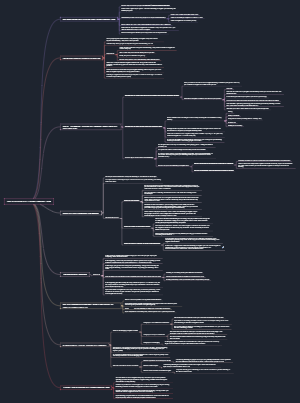
This mind map elaborates on content such as Ethical Considerations in AI Training, Challenges and Limitations in AI Training. By analyzing these key points about the development of artificial intelligence, the map further reveals how to ensure ethical and legal standards while advancing technologically.
Edited at 2024-05-19 20:05:15Introduction to TOT for AI trainers
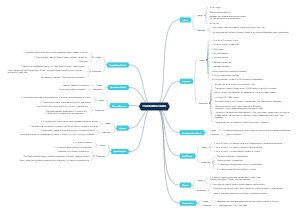
Definition and concept of TOT (Train the Trainer) for AI trainers.
Explanation of TOT as a method to equip trainers with skills and knowledge in AI training.
Importance of TOT for AI trainers to ensure effective and efficient training programs.
Benefits of TOT in enhancing trainers' competency and keeping them up-to-date.
Overview of AI training and its significance in various industries.
Explanation of AI training as the process of teaching AI models to perform specific tasks.
Importance of AI training in transforming industries such as healthcare, finance, and transportation.
Examples of AI applications in different sectors and the impact of effective training.
Potential for AI trainers to contribute to the advancement of AI technologies in various domains.
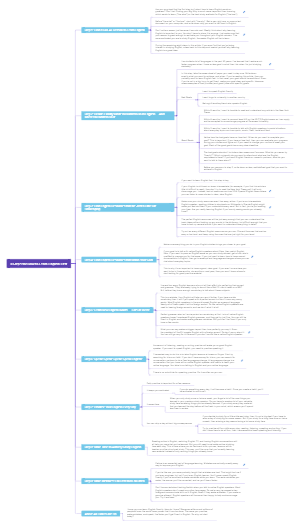
Techniques for labeling and annotating AI training data
Explanation of data labeling and annotation in AI training.
Definition of labeling as the process of assigning meaningful tags or categories to data samples.
Importance of accurate and consistent labeling for training AI models to make correct predictions.
Overview of annotation techniques, including manual labeling, semi-supervised learning, and active learning.
Introduction to annotation tools and platforms.
List of popular tools and platforms used for data labeling and annotation (e.g., Labelbox, Supervisely).
Explanation of their features and capabilities in streamlining the annotation process.
Considerations in choosing the appropriate tool/platform based on specific AI training requirements.
Challenges and strategies in labeling and annotating AI training data.
Discussion of labeling errors, inter-annotator agreement, and mitigation strategies.
Techniques to handle complex labeling tasks and domain-specific annotation requirements.
Considerations for managing large-scale annotation projects and ensuring data quality.
Basic skills required for AI training
Understanding the fundamentals of AI and machine learning.
Explanation of key concepts such as algorithms, models, and data in AI and machine learning.
Familiarity with different types of AI models (e.g., neural networks, decision trees) and their applications.
Knowledge of training techniques, including supervised, unsupervised, and reinforcement learning.
Proficiency in programming languages and tools used in AI training.
Importance of programming skills (e.g., Python, R) for data manipulation, model development, and evaluation.
Familiarity with popular AI libraries and frameworks (e.g., TensorFlow, PyTorch) for efficient training.
Understanding of data structures and algorithms to optimize AI training processes.
Ability to analyze and preprocess data for AI training.
Importance of data preprocessing in cleaning, transforming, and organizing data for training.
Knowledge of preprocessing techniques such as feature scaling, one-hot encoding, and data normalization.
Understanding the impact of data quality, quantity, and diversity on AI model performance.
Understanding data collection and preprocessing for AI training
Overview of data collection methods for AI training.
Explanation of sources for collecting training data, including public datasets, proprietary data, and crowdsourcing.
Importance of clear data acquisition strategies to ensure data relevance and accuracy.
Challenges and considerations in collecting data, such as privacy concerns and legal implications.
Techniques for data preprocessing in AI training.
Explanation of data cleaning techniques to handle missing values, outliers, and inconsistent data.
Introduction to data transformation methods, including feature extraction and dimensionality reduction.
Implementation of data normalization and standardization techniques for improved model performance.
Evaluation of data quality and its impact on AI training.
Importance of data quality assessment measures, such as data completeness, consistency, and representativeness.
Understanding the consequences of biased, noisy, or unbalanced training data on AI model performance.
Techniques to identify and address data quality issues, including data augmentation and synthetic data generation.
Choosing and implementing AI training algorithms
Overview of AI training algorithms and their selection criteria.
Explanation of popular algorithms, including neural networks, decision trees, and support vector machines.
Considerations in choosing the appropriate algorithm based on task complexity, data characteristics, and computational resources.
Introduction to deep learning algorithms for AI training.
Explanation of deep neural networks (DNNs) and their suitability for complex tasks.
Overview of convolutional neural networks (CNNs) for image and video processing.
Introduction to recurrent neural networks (RNNs) for sequential data analysis.
Implementation of AI training algorithms.
Explanation of algorithm implementation steps, including data preprocessing, model initialization, training, and evaluation.
Overview of popular AI frameworks (e.g., TensorFlow, Keras) for algorithm implementation.
Considerations for fine-tuning algorithm parameters to optimize model performance.
Evaluating and finetuning AI models
Importance of model evaluation in AI training.
Explanation of evaluation metrics such as accuracy, precision, recall, and F1 score.
Understanding the trade-offs between different evaluation metrics based on task requirements.
Techniques for avoiding overfitting and underfitting issues during model evaluation.
Overview of model finetuning techniques.
Explanation of transfer learning to leverage pre-trained models for improved performance.
Introduction to hyperparameter tuning to optimize model parameters.
Considerations in choosing the appropriate finetuning strategies based on available data and computational resources.
Techniques for model interpretation and visualization.
Importance of model interpretability to gain insights into AI decision-making.
Explanation of techniques for visualizing model representations and learned features.
Considerations for explaining complex AI models to enhance transparency and trust.
Challenges and limitations in AI training
Discussion of challenges in AI training.
Addressing the scarcity and quality of training data for certain applications.
Handling the computational requirements and resource constraints in large-scale AI training.
Managing the interpretability and transparency of complex AI models.
Understanding the limitations of AI training.
Discussion of AI model limitations, including bias, overgeneralization, and robustness to adversarial attacks.
Explanation of the need for continuous monitoring and updating of AI models to adapt to changing conditions.
Considerations for addressing ethical concerns and societal impacts of AI training.
Ethical considerations in AI training
Importance of ethical guidelines and principles in AI training.
Discussion of the ethical implications of AI training, including privacy, fairness, and accountability.
Introduction to ethical frameworks such as transparency, explainability, and bias mitigation.
Considerations in adhering to regulatory and legal requirements in AI training.
Addressing bias and fairness issues in AI training.
Explanation of bias in training data and its impact on perpetuating social inequalities.
Techniques for identifying and mitigating bias in data labeling, preprocessing, and model training.
Considerations for ensuring fairness and inclusivity in AI training outcomes.
Responsible AI training practices.
Discussion of responsible AI training practices, including data governance, consent, and model validation.
Considerations for addressing ethical dilemmas and potential harm in AI training.
Importance of continuous monitoring and auditing of AI training processes.
Future trends and advancements in AI training
Overview of emerging trends in AI training.
Explanation of advancements in deep learning techniques and algorithms.
Introduction to transfer learning and few-shot learning for efficient training.
Exploration of new data collection methods, including active learning and federated learning.
Discussion of the impact of AI training on job roles and skill requirements.
Understanding the evolving role of AI trainers and the need for upskilling.
Identification of new skill sets in areas such as data collection, preprocessing, and model evaluation.
Considerations for continuous learning and adaptation to advancements in AI training.
Exploration of potential applications and domains for AI training.
Discussion of AI training opportunities in sectors such as manufacturing, education, and entertainment.
Considerations for interdisciplinary collaboration and cross-domain knowledge transfer.
Importance of ethical considerations and responsible AI training practices in future applications.