MindMap Gallery OKR Work Method Reading Notes Mind Map
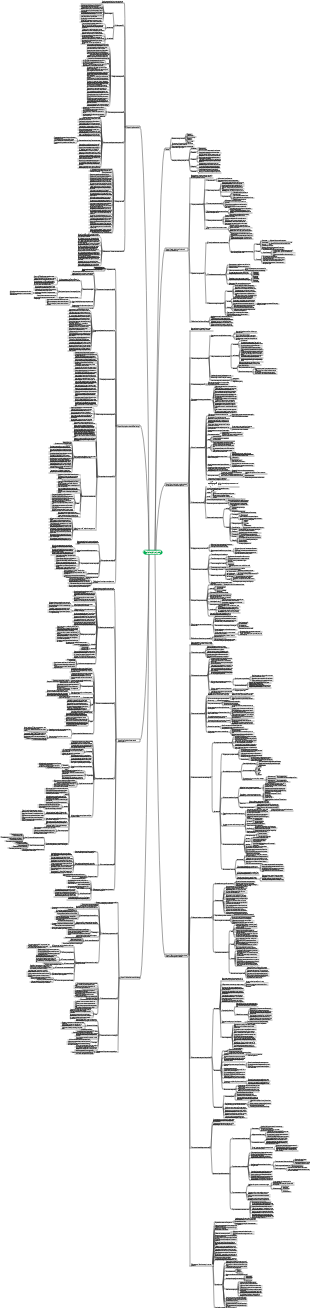
"OKR Work Method" describes a new work model that is popular among Silicon Valley technology companies. How to motivate different teams to work together and go all out to achieve a challenging goal? Hannah and Jack, two young people in Silicon Valley, like many people, embarked on the road of entrepreneurship after having an idea. However, they soon discovered that good ideas were not enough. They also needed a suitable set of management methods to ensure that their dreams could be realized. In order for the entrepreneurial team to survive, Hannah and Jack suffered inner struggles and suffering. They suffer from "novelty syndrome" and want to do everything, causing them to lose focus and need to constantly deal with communication problems. This book starts from this dangerous entrepreneurial story and explains the basic principles and implementation principles of the OKR (Objectives and Key Results) method around the entire process of trial and error, confusion, decision-making and growth of a startup company. OKR originated with Intel, and was later used by Google, LinkedIn, Zynga (social gaming giant), and General Assembly (a well-known entrepreneurial education company in Silicon Valley) to achieve sustained and rapid growth. O stands for Objective, and KR stands for Key Results. The goal refers to what you want to do (such as launching a game), and the key result refers to how to confirm that you have accomplished that thing (such as 25,000 a day). downloads, $50,000 in revenue).
Edited at 2024-02-05 21:36:13This is a mind map about bacteria, and its main contents include: overview, morphology, types, structure, reproduction, distribution, application, and expansion. The summary is comprehensive and meticulous, suitable as review materials.

This is a mind map about plant asexual reproduction, and its main contents include: concept, spore reproduction, vegetative reproduction, tissue culture, and buds. The summary is comprehensive and meticulous, suitable as review materials.
This is a mind map about the reproductive development of animals, and its main contents include: insects, frogs, birds, sexual reproduction, and asexual reproduction. The summary is comprehensive and meticulous, suitable as review materials.
This is a mind map about bacteria, and its main contents include: overview, morphology, types, structure, reproduction, distribution, application, and expansion. The summary is comprehensive and meticulous, suitable as review materials.
This is a mind map about plant asexual reproduction, and its main contents include: concept, spore reproduction, vegetative reproduction, tissue culture, and buds. The summary is comprehensive and meticulous, suitable as review materials.
This is a mind map about the reproductive development of animals, and its main contents include: insects, frogs, birds, sexual reproduction, and asexual reproduction. The summary is comprehensive and meticulous, suitable as review materials.
OKR working method
introduction
0.0 Book Introduction
Author: Christina Watke
Publisher: CITIC Press
Publication date: September 2017
0. 1 Preface
0.1.1 MBO
two principles
Just tell my subordinates what I want
How to motivate your team
Measuring work performance with key results
How to evaluate work
0.2 Preface
0.2.1 Management methods for turning ideas into reality
Set challenging, measurable milestones
Affiliated Company Vision and Mission
Ensure the team is always working towards the goal and not distracted by other things
Link goals and actions
Cut off businesses that are irrelevant to the goals
Keep the rhythm, all members have clear goals, help and encourage each other
Regular inspection results
0.2.2 Set goals - celebrate results, cycle through, and review weekly
0.3 Understand OKRs
0.3.1 Definition
OKR originated from Intel Corporation
Use OKR model for work goals and performance management
History of development of management by objectives
MBO
SMART
KPI
BSC
OKR
O stands for Objective: what do you want?
Goal is what you want to do
KR stands for Key Results (KeyResults): what are you going to do?
The key result is how to confirm that you have done this
0.3.2 What to use OKR for
Achieve the team's most important goals
0.3.3 How to customize OKRs
1. Set challenging and measurable stage goals
2. Make sure you and your team are always moving toward this goal and don’t get distracted by other things.
3. Grasp the rhythm. All members need to always make clear efforts to achieve goals, support and encourage each other.
0.3.4 Applicable objects
company
Internet companies
Innovative Enterprise/Startup Company
Mature company transformation
Rapidly expand your business
department
R & D department
Project team/innovation project
business support department
post
R & D personnel
creative work
Highly complex knowledge work
Positions requiring close teamwork
Other positions that cannot be measured by KPIs
Chapter One
*1. Determine the goal and ensure the team is focused on the goal
1.1 Like to drink tea & drink good tea
Start a business
Plan ≠ reality
Restaurant ≠ Supplier
1.2 Objectivity vs Fanaticism
deep thought
Company profit and loss & original intention
1.3 Goals remain unchanged & strategies change
Transformation
Target
Tea lover & drink good tea
Strategy
Dependencies & Suppliers
1.4 Problems appear & money is useless
most important
Passion? & enthusiasm?
1.5 Focus & Important Goals
Introducing OKRs
Team Goals & Core
Clear goals & specificity
Plan adjustment & details implementation
1.6 Summary
Discuss with the team to determine who we are? What are we going to do? Finding your purpose is important! ! !
Focus on important goals (with challenges and clear direction), and set 3-4 clear and specific result indicators.
After determining the goal, the next step is to build a team and find the right people. Attached is a sentence I like: If you want to go fast, go alone, if you want to go far, go with a group of people, and a group of people go in an organized and planned way.
Chapter two
*2. Discuss joint results and review problems in the OKR implementation process
2.1 Getting into trouble
key results
discuss
Strategy adjustment
Confirm OKRs
Cut off irrelevant businesses
Gather OKRs
product quality
choice
short term
Fast money
long
Brand & Reputation
Pre-Bankruptcy & Cutting Spending
OKR not completed
implement
situation
Not getting better
black sheep
spread negative emotions
Face the bad news head on
Lose a big customer
2.2 Coping with difficulties
Take responsibility
result-oriented
well done
Leave
can not do well
Substitution
What's important?
OKR goals
Inner approval
Strong willingness
Dispensable
Existence value
The overall sense
product
Pay attention to deadlines
Do things first
Key results are embarrassing
OKR not completed
Target
Not trying its best
result
skeptical model
2.3 Transfer
Saying too much = not saying anything
OKR misunderstandings
Too many goals
Correct approach (four-quadrant OKR)
Determine the target
confidence index
priority
Event 3-4
status indication
stay tuned
color code
Weekly inventory of progress
in principle
Continuously adjust
First things first
meeting suggestions
1/4 Current Progress
3/4Future Plans
Advance plans & expectations
general direction
Discuss and formulate OKRs together
Personnel adjustments
Execute OKRs
Target
Key Result 1: Customer 5/10 (Confidence Index)
Key Result 2: Retention 5/10 (Confidence Index)
Key Result 3: Revenue 5/10 (Confidence Index)
status indicator
customer satisfaction
team atmosphere
system satisfaction
this week
P1: Complete materials
P1: Monitor order volume
P2: After-sales work
P2: Prepare for team building
next four weeks
sales funnel
Project 1
Project 2
Project 3
Item 4
2.4 Summary
2.4.1 Discuss customized OKRs with team members to ensure everyone understands. If this is the first time you use OKR, you can find some teams to test the waters to reduce the overall trial and error cost.
2.4.2 Cut out everything that is irrelevant to the key goals.
2.4.3 People with different principles should not conspire against each other. If there is a truly harmful person, it must be eliminated in time. One soldier is raging, and the general is raging in a nest. But we must also consider that the early stage of starting a business is the time to hire people. Different people are needed at different stages, so you need to know how to make good use of them.
2.4.4 The implementation process is definitely not 100% smooth, this is inevitable. We must be able to face bad news head on and hold on no matter what happens!
2.4.5 If you don’t know where the direction is, stop, just like driving, stop and find out the reason! ! ! Nietzsche: What doesn’t kill you makes you stronger.
2.4.6 Empower everyone to assume their own responsibilities. Even if you are just a cleaner (no discrimination intended).
2.4.7 Pay attention to deadlines and output.
2.4.8 Review the original customized OKRs
How is it implementable?
Are there too many customized OKRs? There are so many that I can’t even name them.
Is there review and timely feedback during the implementation process?
Re-formulate OKR (quadrant chart)
third chapter
* 3. Evaluate OKR implementation results
3.1 Changes brought about by improved OKR
Great progress
Passion & Enthusiasm
Personnel adjustments
result
good
award
bad
improve
3.2 Achievements inventory
end of quarter
Higher challenge
half year later
Key results accomplish more
one year later
Complete financing
trend
Chapter Four
* 4. Key factors affecting goal achievement
4.1 5 Key Factors for Failure to Achieve Goals
Factor 1: Goal Priority
If all things are equally important, it means that all things are equally unimportant.
Outcome measurement
One goal, multiple key results to measure
Factor 2: Communicate and understand goals
When you say something you don't want to say anymore, people start to listen.
penetration
weekly
OKR status email
Confidence Index & Changes
Analyze the reasons
planning
Every Monday: Clear goals
Every Friday: Celebrations
Purpose
convey to all
Factor 3: Plan well
Human willpower and determination to persevere are nowhere near that strong. Thinking is a question, only doing it will give you the answer.
management by objectives
Take responsibility, celebrate, take stock weekly
Factor 4: Time Management
Not spending time on important things. “Important things are usually not urgent, and urgent things are usually not important.
Reasonable focus
Important & non-urgent events
Factor 5: Giving up easily
All happy families are alike, and every unhappy family is unhappy in its own way.
Hidden strength
Advance progress
Blind repetition
4.2 OKR specific implementation steps
Clearly define the reasons for implementing OKRs
Understanding OKR through internal and external learning
Find supporters, especially executives
Select and determine implementation point scope
Identify OKR drivers
Define OKR rules and regulations
Organize the first OKR review meeting
Review, system method design
Deployment deepens to all employees
Case: TCL
Three principles
overall plan
Implement step by step
Everyone participates
Three landings
OKR empowerment implementation
OKR management system construction
OKR culture implementation
4.3 OKR key points
Before implementation
First clarify the long-term mission of the company
Concise & easy to remember & clear & direction
OKR basic principles
3 principles of goal setting
clear
Goals are clear and inspiring
time limit
Goal has time limit
implement
Have an independent team to execute
key results
Quantitative goals
User growth
User activation
revenue growth
Product performance
product quality
failure#punishment
position
challenging
Can be completed
How do OKRs work?
Reasons why high-quality companies favor OKR
OKR allows people to focus more on important areas
Stand higher and see further
A quantifiable definition of KR (Key Results)
OKR is more open and transparent, allowing employees to recognize each other
OKR evaluation, the higher the score, the better
The best OKR is not necessarily 100%, just 3/4 is good.
Detailed explanation of the four major characteristics of OKR
focus
O: 2-5
KR: 2-4
transparent
smooth information
trust and dependence
positive pressure
Cross-team collaboration
cooperation
Read this team and cross-team OKRs to know yourself and your enemies
Inform the other party of collaboration requirements and request help through communication
Cross-department OKR settings “point-to-point” feedback
Actively “sell” your OKRs to collaborative departments
Design common OKRs or project-based OKRs
Set up teamwork awards for teams and individuals
challenge
Challenge OKR
Customized based on mission
Maybe not 100% complete
Resource investment is relatively limited
important to the future of the organization
Commitment OKR
Customized based on the overall goal
Must be 100% completed
Resources must be prioritized
Of great significance to the organization today
Case: Google
disruptive innovation
Using technology to transform entire industries
improvement innovation
Use innovative methods to improve work efficiency and effectiveness
How OKR achieves high performance
1. OKR is related from top to bottom
company
Set the company’s OKRs
department
Set departmental OKRs
personal
Set personal OKRs
The company's goals will be achieved
2. A large part of the value of OKR is communication
3. Everyone should set individual OKRs
(1) Personal OKR reflects personal growth & clarifies how to support company goals
(2) Personal OKR gives work a sense of direction & helps the company become better
(3) Personal OKR is a good way to manage “problem” subordinates
4.4 Take responsibility & celebrate results
New product research and development/development
R&D field
on Monday
Determine responsibilities
per person
Friday
Achievements sharing
sense of presence
sense of achievement
Encouragement & Praise
4.5 Product Team & OKR Development Method
OKR meaning
communicate
contribute
avoid duplication
The essential
organize
Cross-departmental & product teams VS corporate business
personal
Growth vs. job
How to formulate OKR (four quadrants)
The key to OKR is that OKR needs to rise from the cross-department product team level to the company's business level.
1. Pay attention to this week’s tasks
List the 3 to 4 most important things. Only if these things are completed this week can the team's goals move forward; clarify the priorities of these things.
2. Plans for the next four weeks
Things that require preparation or support from other team members are listed in the four quadrants.
3. Current status of OKR
If the confidence index you set is 5/10, then the probability of completion is higher or lower. Discuss the reasons with the team.
4. Status indicators
Pick out two other factors that affect the goal and the team needs to pay extra attention to, such as: customer relationships, team status, system status, etc. When accidents occur in these places, discuss and find corresponding solutions immediately to ensure that OKRs are not affected.
5. Discussion questions
Will this priority list ensure our OKRs are completed?
Are the team’s capabilities OKRs? Who can help us?
Are we ready for a new round of efforts? Does the marketing department know what the product department is going to do soon?
Is our team exhausted? Are there any hidden dangers in my product?
4.6 Summary
Road to Success
This method is not complicated, just a bit difficult. Because you have to choose the most important goals and not do everything unrealistically. Your goals must be clear and communicated repeatedly to everyone until everyone is on the same page. You have to put in the time to achieve your goals instead of endlessly hoping for tomorrow. You must have a clear plan to keep you moving forward on your projects, even when you feel tired and frustrated. Be prepared to fail, be prepared to learn from failure, and be prepared to try again. "Desire sets us sail, but only focus, planning and learning can reach the other side of success."
Be prepared to fail, this is important
None of us want to fail, but we must afford to lose. The significance of OKR is not to complete the goal, but more importantly, it can tap the true capabilities of the team.
chapter Five
*5. OKR usage scenarios
Scenario 1: How to hold a quarterly OKR meeting
Goal determined
Summary
sticky notes
Discussion & Debate
Brainstorming
filter
key results
Measuring goals
Set a challenge
50%
overall adjustment
good goal
Significant
Difficulty of implementation
time point
Specific steps
Setting OKR is difficult because the team needs to use this process to review the company and make difficult arguments and choices about the company's strategic direction. Every aspect of the meeting needs to be carefully designed to achieve good results.
The CEO initiates the meeting and all senior managers should participate. Cell phones and computers are prohibited, as this will get everyone in the zone quickly and focused.
A few days before the meeting, all employees should be consulted to think about the goals the company should focus on in the near future. Be sure to give them such a window. Don't procrastinate, as it will never get done.
Discuss - debate - argue - vote sorting - make decisions.
Scenario 2: The service department’s OKRs should be related to the company’s goals
key results
Quantifiable
Case: R&D & sales assistance
Scenario 3: Key steps in the OKR meeting
premise
OKR
focus
summarize
tap potential
Efficient execution
practice
first
Only set one
Before implementation
Team verification
project management
staff
Feel & Understand
key step
everyone
Submit company goals
All employees submit goals they think the company needs to achieve this quarter. This will allow this method to be implemented smoothly, employees can directly participate in the company's goal setting, and it will inject some interesting things into the corporate culture.
Company OKRs
Management
discuss
long time
Management spends half a day discussing OKRs. Choosing a goal requires a process of discussion and compromise, which is worth spending more time on. Then continue to set key results for the goal as a more precise supplementary explanation of the goal.
Department OKRs
Management
set up
Management assignments: Introduce the company's quarterly OKRs to their respective departments and complete the OKR settings for each department. Department managers and members made the final choice through a two-hour meeting, by enumerating goals, categorizing, grouping key results, and ranking by voting.
CEO
confirm
Contextual correlation
transfer
sub-department
Personal OKR
Manager confirms
1VS1 communication
plenary meeting
Summarize
OKR last quarter
explain
OKR this quarter
Employees understand
The CEO explains to all employees what the OKRs for this quarter are and why they are set this way, and then conducts exemplary task dismantling of several of them. When explaining, you should also cover the OKR summary of the previous quarter and point out the results of the previous quarter.
summary
If the OKR is not completed, dare to admit that the key results have not been achieved, dare to admit that the standard set for the key results is too low, learn from the lesson, and set the OKR well next time. OKR is to continuously discover and challenge the team's potential through practice and summary, rather than treating this process as a report or assessment result. Therefore, assuming that the team really has not completed any of the key results, it is necessary to think about why this is the case and how to improve it. If all goals are accomplished, set more challenging goals. Focus your energy on learning summary, tapping potential and efficient execution, and then celebrate the results every Friday.
Scenario 4: Using OKRs for a minimum viable product
Product&Lifecycle&Core
MVP->Kanban
hypothesis
key results
method
story
Goal->Hypothesis
feel
Provide evidence
Preliminary investigation
Tasks & Priorities
Teamwork
Measure goals & summarize learning
application
Company management
personal growth
project management
Scenario 5: Use OKR to improve weekly reports
Team OKR Confidence Index
1
fail
3 or less
No confidence
red mark
7 or more
Have confidence
green mark
10
A sure win
list
last week
Goals & Priorities
Completion
this week
Goals & Priorities
Completion
Remark
Short & timely & effective
Scenario 6: Avoid common pitfalls of OKR
Target
Too many settings
The set OKR cycle is too short
a week or a month
performance indicators
effective drive
confidence index
not set
Not tracked
Monday meeting
First things first
Treat Monday’s meeting as a debriefing session, not a conversation
Friday is too serious
Chapter Six
*6. Final suggestions
6.1 Comparison of OKR and KPI
[Common ground]: SMART principle
Specific: specific
Measurable: measurable
Attainable: achievable
Relevant: related
Time: time-limited
[Difference point]: KPI vs OKR
Focus on result assessment vs. process tracking
Control management vs self-management
Relatively stable VS dynamic adjustment
Top-down VS top-down combination
Demanding 100% completion vs being tolerant of failure
Directly related to salary VS not directly related to salary
OKR standards
Definition of good O
inspiring
Achievable
Executable
Controllable results
valuable to the business
Criteria for good KR
Quantized
Inspiring
specific
There is a specific person in charge
With process management
aligned
drive the right behavior
Case analysis
Yili丨KPI OKR dual regulations
KPI: Managing performance through results, set annually
OKR: Managing performance through process, set quarterly
6.2 Integrate OKR into daily management
The benefits that OKR brings to the organization
promote communication
Make organizations more agile
Focus on goals and priorities
Transparency promotes cross-team collaboration
Improve employee engagement
Innovative thinking and working methods
Use OKR as a strategic implementation tool
mission
Vision
strategy
Target
key results
mission plan
OKR scoring criteria
0-0.3 points
Didn't complete the goal
0.4-0.6 points
Difficult tasks, partially achieved after hard work
0.7-1 points
An almost impossible task, completed or completed well
OKR management cycle
Yearly/Quarterly/Monthly/Weekly
OKR daily management
weekly meeting
monthly tutoring
quarterly review
year in review
Visual management
Case: JD.com
Pilot team goes first & innovative technology team goes first
HR team support & HRBP in-depth business team coaching
KPI OKR dual track & integration of process management and result management
Onion meeting system & strictly implement weekly/monthly/quarterly meeting system
System OKR function support & independent research and development of customized system
Visual office layout & whiteboard/posters/sticky notes
6.3 OKR operation map guide
Top person in charge of the company
Learn the essence of OKR
Firm belief in implementation
Lead by example and participate in OKR execution
Select OKR pilot team
Corporate middle managers
Master the OKR operation process
Counseling and coaching staff use
Answer employees’ questions about usage
Cultivate OKR team culture
Corporate Human Resources Department
Establish OKR Promotion Committee
Select business department OKR promotion ambassadors
Do a good job of warm-up before importing
Arrange training, learning and promotion plans
Develop OKR incentive system/iterative performance appraisal system
Promote OKR cultural activities
Design visual management
staff
Learn OKR knowledge and skills
Develop OKR based on personal work
Actively communicate with managers/colleagues
Set long-term career goals
Gradually develop OKR thinking mode
6.4 How to restore target O’s magic power
1. Use goals to define and drive success
Only goals that inspire people's desire to pursue excellence can be called true goals.
Short-term goals must be clear and specific, with clear execution priorities, so that employees can focus on the most valuable things. (Only 7% of people actually understand goals.)
2. Traditional academies cannot provide the goal of making the team highly productive.
OKR is to identify the largest possible goal that can be accomplished
3. Track goal progress in real time
Keeping real-time tracking of goals and continuous transparent communication can help the team focus on the goals, make the predicted results more reliable, and everyone can be self-motivated.
4. Communicate goals in emails
It allows team members to find their and the team’s goals and progress toward them in three seconds.
5. Top-down goal setting takes into account bottom-up components
Allow everyone to play freely without stifling innovation
6.4 Final tips for using OKRs
Only set one company-level OKR unless the company has multiple business lines
Give yourself three months to challenge OKRs. Goals that can be completed in one week are definitely not a challenge.
There should be no traditional performance appraisal indicators in the goals. The goals need to be inspiring.
When taking stock of progress every week, start with company OKRs and then communicate at the department level. There is no need to communicate personal OKRs at meetings (personal OKRs only require one-on-one communication). The progress of OKRs must be confirmed every week.
OKRs are linked from top to bottom. Set the company's OKR first, then the department's, and finally the individual's.
OKR is not the only thing you need to do, it is the one thing you must do. Trust that everyone can ensure things go smoothly, and don’t cram all tasks into your OKRs
Monday’s OKR progress confirmation is a conversation, not a report or instruction. Be sure to discuss confidence indicators, status indicators, and priority changes
Encourage employees to provide opinions and suggestions on the company’s OKRs (involve everyone)
Make OKRs public (Google puts their OKRs on the company intranet)
Friday’s celebrations are a welcome break from Monday’s grueling tasks and keep the team upbeat and positive
summary
The key to starting a business is doing things the right way: great product, great packaging design, selling to a specific customer base
Entrepreneurship fails partly because of insufficient funds, but also because entrepreneurs lose their passion and confidence.
When encountering a bad decision, use the idea of "changing an executive" to think of a solution
Most of the time, other people's ears have to prick up what you have to say before they can really hear it.
Saying too much at once is like saying nothing at all
No one knows what we can accomplish, so we say "continuous trial and error"
Goals should focus on how to inspire and motivate members
High-performance secrets from top companies like Google, LinkedIn, and more
Be a dreamer, never satisfied with the status quo, and believe that you can do better next time. Be a doer, do what you preach first and then follow it.