MindMap Gallery Section 4 Corporate Operation Decisions and Business Models
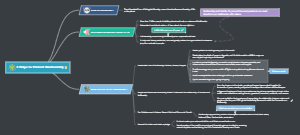
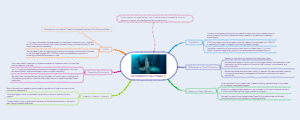
This is a mind map about the fourth section of corporate business decisions and business models, including the concepts and types of corporate business decisions, elements of business decision-making, The process of business decision-making, etc.
Edited at 2023-12-30 21:39:04This is a mind map about bacteria, and its main contents include: overview, morphology, types, structure, reproduction, distribution, application, and expansion. The summary is comprehensive and meticulous, suitable as review materials.
This is a mind map about plant asexual reproduction, and its main contents include: concept, spore reproduction, vegetative reproduction, tissue culture, and buds. The summary is comprehensive and meticulous, suitable as review materials.
This is a mind map about the reproductive development of animals, and its main contents include: insects, frogs, birds, sexual reproduction, and asexual reproduction. The summary is comprehensive and meticulous, suitable as review materials.
This is a mind map about bacteria, and its main contents include: overview, morphology, types, structure, reproduction, distribution, application, and expansion. The summary is comprehensive and meticulous, suitable as review materials.
This is a mind map about plant asexual reproduction, and its main contents include: concept, spore reproduction, vegetative reproduction, tissue culture, and buds. The summary is comprehensive and meticulous, suitable as review materials.
This is a mind map about the reproductive development of animals, and its main contents include: insects, frogs, birds, sexual reproduction, and asexual reproduction. The summary is comprehensive and meticulous, suitable as review materials.
Chapter 1 Section 4 Enterprise Operation Decision and Business Model Analysis
1. Concepts and types of business decision-making
concept
Use scientific methods, choose reasonable plans, and achieve the entire process of corporate business goals 1. Decision-making must have clear goals; 2. Decision-making must have multiple feasible options to choose from; 33. Decision-making is based on investigation, comprehensive analysis, evaluation and selection.
type
length of time
long term decisions
short term decisions
importance
overall decision
business decisions
functional decisions
envirnmental factor
deterministic decision making
decision making under uncertainty
risky decisions
goal of decision
single-objective decision-making
multi-objective decision making
2. Elements of business decision-making
1. Decision maker
The main body of decision-making, the most basic element
2. Decision-making goals
The starting point for decision-making, indicating the direction and measurement standards, and also providing a basis for the implementation of decisions
3. Alternatives
is the premise for decision-making
4. Conditions for decision-making
5. Decision results
3. Business decision-making process
(1) Determining the target stage
Prerequisites for business decision-making
Comply with SMART principles
S The goal is clear; M The goal can be quantified; A is challenging and achievable R is mutually supportive with other goals T has a clear deadline for completion and a clear responsible person
(2) Plan formulation stage
Business decision-making lies in choice. Without choice, there is no decision-making.
1. Feasibility 2. Completeness 3. Mutual exclusivity
(3) Plan selection stage
The most critical step in decision-making is the decision-making; 1. Whether the corporate goals can be achieved; 2. Whether it is scientific and reasonable; 3. Scientifically applicable; 4. Whether it is standardized
(4) Implementation and supervision of the plan
1. Ensure the implementation progress; 2. Determine the person responsible for the implementation of the plan; 3. Establish smooth information communication; 4. Supervise and control to solve problems during implementation
(5) Evaluation stage
After the plan is implemented, testing and evaluation will be carried out to provide necessary reference for the next decision-making.
5. Business model analysis
(1) Concept and characteristics of business model
1. Concept: In order to maximize customer value, enterprises integrate internal and external production factors, build business systems, promote the establishment of partnerships, and form unique core competitiveness. Goal: To achieve the goal of long-term sustainable profitability; the business model expresses the core logic of corporate value activities
Specific performance
Value discovery (the starting point of logic))
Understand customer needs and discover potential profit points in the market
Value matching (logical intermediary)
Enterprises want to deliver value to customers through resource allocation and business operations
Value acquisition (logical end point)
Continue to make profits
The business model is a holistic and systematic
External business model: customer value realization model, business cooperation model, investment and financing model Internal business model of the enterprise: production model, operation and profit model, etc.;
Characteristics of a successful business model
(1) Able to create unique value (2) Integrated and holistic (3) Difficult to imitate (4) Have the ability to withstand risks; (5) Strong operability
(2) Elements of business model
1. Positioning: It reveals the strategic direction, unique value and target customers of the company, and clarifies what products and services the company provides to achieve customer value. It is the first element of the business model, including strategic positioning, value positioning, customer positioning, Business positioning, product positioning, etc. (2) Resources and capabilities: (3) Business system: the core of the business model (4) Profit model: (5) Cash flow structure: (6) Corporate value: an important criterion for judging the quality of a company’s business model
(3) Analysis of business model
Business model canvas is an effective tool for analyzing business models
(1) Value analysis upper right: value proposition, customer segmentation, customer relationship, channel access
(2) Infrastructure analysis: important partners, core resources, key businesses
(3) Profit analysis: cost structure, revenue sources
4. Methods of business decision-making
Qualitative decision-making method, also known as: subjective decision-making method
Use people's knowledge, experience and wisdom to evaluate and select the best decision-making options
1. Brainstorming method, also known as thinking resonance method
Product issues are discussed in a clear manner, and participants can discuss them freely without restraint.
Advantages: 1. Own atmosphere of thinking and discussion; 2. Creative thinking, 3. High predictive value Disadvantages: 1. Influence of psychological factors; 2. Submission to authority; 3. Ignoring minority opinions
2. Delphi method, also known as expert survey method, pioneered by RAND Corporation
1. Choose good experts. 2. Determine the number of 10-30 people. 3. Draw up a consultation form (quality is important). It is mostly used in governments, enterprises and various organizations.
3. Nominal group technique
Nominal group for collective decision-making
4. Gordon's method, also known as synecdoche method
The host of the meeting will first give a general introduction, and the experts will have their own discussions. When the time is right, the host will ask specific questions and further in-depth discussions.
quantitative decision making
1. Deterministic decision-making method
Conducted under stable and controllable conditions
1. Linear programming method
2. Break-even point analysis method (volume-cost-profit analysis method or capital-guaranteed analysis method)
Commonly used methods when making production decisions
Fixed costs and variable costs are then compared to total revenue
2. Risk-based decision-making methods (statistical decision-making and random decision-making)
(1) Expected profit and loss decision-making method
By calculating the expected profit and loss value, choose the plan with the largest profit or the smallest loss
1) Determine decision-making goals
2) Estimate the probability of occurrence based on the business environment
3) According to the market status, examine the strength of the company and formulate a plan
4) Calculate the gain or loss value
5) Calculate the expected profit and loss value of the credibility solution
6) Choose the best solution
(2) Decision tree analysis method (similar to expected profit and loss)
3. Uncertain decision-making method
The market status is difficult to determine, the reversal probability is difficult to predict, and the decisions made
(1), Optimistic principle (take the bigger out of the big)
(2) Pessimistic principle (take the big from the small)
(3) Compromise principle (remove the middle, multiply by the coefficient, take the maximum)
(4) Regret value principle (find the maximum regret value under the state, and find the minimum regret value under the plan)
5. Principle of equal probability (maximize the sum of additions)