 Wondershare EdrawMind
MindMap Gallery Chapter 1 Basic Theory of Safety Production Management
- 23
Chapter 1 Basic Theory of Safety Production Management
Safety Engineer Safety Production Management Chapter 1 summarizes the basic theories of safety production management, including basic concepts of safety production management, accident causes and safety principles, safety psychology and behavior, safety production management, etc.
Edited at 2022-10-04 18:06:13
- bacteria
This is a mind map about bacteria, and its main contents include: overview, morphology, types, structure, reproduction, distribution, application, and expansion. The summary is comprehensive and meticulous, suitable as review materials.
- Plant asexual reproduction
This is a mind map about plant asexual reproduction, and its main contents include: concept, spore reproduction, vegetative reproduction, tissue culture, and buds. The summary is comprehensive and meticulous, suitable as review materials.
- Reproductive development of animals
This is a mind map about the reproductive development of animals, and its main contents include: insects, frogs, birds, sexual reproduction, and asexual reproduction. The summary is comprehensive and meticulous, suitable as review materials.
Chapter 1 Basic Theory of Safety Production Management
- bacteria
This is a mind map about bacteria, and its main contents include: overview, morphology, types, structure, reproduction, distribution, application, and expansion. The summary is comprehensive and meticulous, suitable as review materials.
- Plant asexual reproduction
This is a mind map about plant asexual reproduction, and its main contents include: concept, spore reproduction, vegetative reproduction, tissue culture, and buds. The summary is comprehensive and meticulous, suitable as review materials.
- Reproductive development of animals
This is a mind map about the reproductive development of animals, and its main contents include: insects, frogs, birds, sexual reproduction, and asexual reproduction. The summary is comprehensive and meticulous, suitable as review materials.
- Recommended to you
- Outline
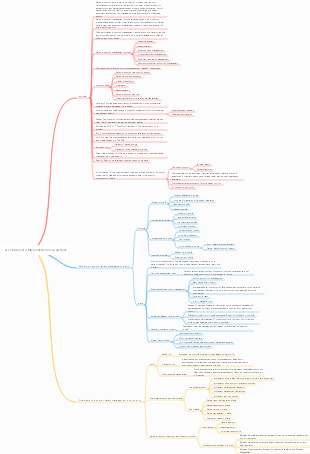
Basic theory of safety production management
Basic concepts of safety production management
Accident hazards
definition
Production and business units violate the provisions of production safety laws, regulations, rules, standards, procedures and production safety management systems, or there are dangerous conditions of objects, unsafe behaviors and management of people that may lead to accidents due to other factors in production and business activities. defects on
Classification
General accident hazards
Major accident hazards
Danger
R=f (F, C): R—risk, F—possibility of accident, C—severity of accident
Heinrich's Law
The ratio of casualties: minor injuries: unsafe behavior (no injuries) is 1:29:300
Source of risk
Category 1 danger source
Dangerous things Severity
The second type of dangerous source
Possibilities and problems arising from the management of things, people, and environment
intrinsically safe
Mistakes—Safety Features
Fail-Safe Function
Safety production license
Yanmin builds dangerous mines
Causes of accidents and safety principles
Accident causation principles
Accident proneness theory
accident causation chain theory
Heinrich's chain theory of accident causation
modern causal chain theory
Insufficient control – management
Basic Causes - Theory of Origin
personal reasons
work part
Direct cause - symptom
Accident - Contact
injury - damage - loss
accidental release of energy theory
Classification
Category 1 Injury: Caused by the application of energy above the local or systemic damage threshold
Category II injuries: caused by affecting local or systemic energy exchange (poisoning, suffocation, frostbite, drowning)
Shielding measures
Replace unsafe energy with safe energy
limited energy
Prevent energy accumulation
Eliminate static electricity accumulation by grounding and use lightning rods to discharge
Control energy release
Pressure-resistant oxygen tanks, special containers for radioactive isotopes
Delayed release of energy
Adopt safety valve and comprehensive caving method to manage coal tunnel roof and control ground pressure; vibration reduction device
Create channels to release energy
Safety grounding, mine water exploration and drainage, and gas drainage in coal bodies
Set up shielding facilities
protective cover; safety fence; personal protective equipment
Create barriers between people, things and energy
Shielding facilities; fire doors, fire seals
Improve protection standards
Change process
Repair or first aid
trajectory intersection theory
The intersection of the movement trajectories of human factors and the movement trajectories of object factors
safety principles
System principle
(1)Dynamic correlation principle
The various elements that make up the management system are in motion and development. They are interconnected and restrict each other.
(2) Principle of integration, division and integration
Efficient modern safety production management must clearly define the division of labor under the overall plan and effectively integrate it based on the division of labor.
(3) Feedback principle
Feedback is the reaction to the control mechanism in the control process. Successful and efficient management is inseparable from flexible, accurate and fast feedback.
(4) Closed principle
Within any management system, the management process must form a continuous closed loop to form effective management activities.
Humanistic principles
In management, human factors must be given top priority and reflect the people-oriented guiding ideology.
(1) Dynamic principle
The basic force that drives management activities is people. Management must have motivation that can stimulate people's work ability•
(2)Energy level principle
Establish a set of reasonable energy levels in the management system, and adjust the work according to the ability of the unit and individuals. Use the energy of different energy levels to ensure the stability of the structure and the effectiveness of management.
(3) Incentive principle
The motivation of management is to use the stimulation of some external incentives to mobilize people's enthusiasm and creativity. Use scientific means to stimulate people's inner potential and enable them to give full play to their polarity, initiative and creativity.
(4) Principles of conduct
Needs and motivations are the basis of human behavior. The law of human behavior is that needs determine motivations, and motivations produce behaviors. Behaviors lead to goals.
precautionary principle
We should focus on prevention. Through effective management and technical means, we can reduce and prevent unsafe behaviors of people and unsafe conditions of objects, so as to minimize the probability of accidents.
incidental loss principle
The consequences of the accident and the severity of the consequences are random and difficult to predict.
principle of causation
The occurrence of an accident is the ultimate result of the continuous occurrence of many factors that are mutually responsible for each other. As long as the factors that cause the accident exist, the accident is inevitable, but it will happen sooner or later.
3E principles
Adopt three types of prevention countermeasures, namely engineering technology, education and legal countermeasures
intrinsic safety principle
The principle of intrinsic safety refers to achieving safety in essence and fundamentally eliminating the possibility of accidents, thereby achieving the purpose of preventing accidents.
coercion principle
Use compulsory management methods to control people's wishes and behaviors. Make personal activities and behaviors subject to the requirements of safety production management, thereby achieving effective safety production management. It means absolute obedience, and control can be taken without the consent of the person being managed. action.
Safety first
Supervision principle
System Security Theory
Start thinking about how to improve the security of complex systems by improving the reliability of physical systems
Nothing is absolutely safe
It is impossible to eradicate all hazard sources and dangers, and the total risk should be reduced
Reduce the risk to an acceptable level, control the sources of danger, and strive to minimize the probability of accidents.
Comprehensive Cause Theory
Accidents are the consequences of social factors (basic causes), management factors (indirect causes) and dangerous factors in production (accident hazards) (direct causes) being triggered by accidental events.
Safety Psychology and Behavior
human behavior patterns
physiological behavioral patterns
sociological behavioral patterns
physiological behavioral patterns
Human physiological behavior patterns can be summarized as: external stimulation - body sensation (five senses) - brain judgment (analysis and processing) - behavioral response - completion of the goal.
The same stimulus elicits inconsistent safety behavior
The same safety behavior may come from different stimuli
Main manifestations of human error
Perceptual error
Judgment and decision-making errors
behavioral errors
Factors affecting human behavior
Personality psychological characteristics and the influence of other people’s behavior
Temperament and safety
choleric
He is interested and excited about anything, but his ability to inhibit is poor, and his work performance is hot and cold, with obvious periodicity.
Sanguine
Characteristics of sanguine temperament: high flexibility in thinking, speech, and movement. Emotions are easy to arise and change.
Phlegm
The outstanding performance is quietness, calmness, emotional stability and peace, and relatively slow thinking, speech and movements.
Depression
Quiet, unsociable, moody, and indecisive. Once faced with a dangerous situation, he is helpless and feels very scared.
needs and safety
Maslow's Principle
Self-actualization.
It refers to the continuous realization of human potential, talents and talents.
Respect needs.
Society's recognition of one's abilities, achievements, etc.
respect for oneself
Belonging and love needs
With the substantial satisfaction of physiological needs and safety needs, individuals take the need for loyalty and love as their main internal driving force
security needs
Including requirements for structure, order and predictability, and personal safety. Its main purpose is to reduce uncertainty in life:
Physiological needs.
needs directly related to survival
motivation and safety
Motivation is a force that regulates individual behavior in order to satisfy individual needs and desires and achieve certain goals.
Behavior is always dictated by motivation
An action may be influenced by multiple motives at the same time. There are always some motives that play a leading role and others that play a supporting role.
A motive may also influence a variety of behaviors
Psychological state closely related to behavioral safety
energy-saving mentality
With this mentality, there will be a behavior of simplifying homework. The energy-saving mentality also manifests as the mentality of being too troublesome, afraid of effort, seeking convenience, and muddle along.
Take a chance
People's needs and expectations for certain things are always affected by group effects. Therefore, it is a small probability event. Most people operate illegally and nothing happens, so they have a sense of luck.
Reverse psychology
Under certain conditions, certain individuals may develop a psychological state that is contrary to normal psychology due to their competitiveness, curiosity, thirst for knowledge, prejudice, confrontation, emotions and other psychological states, and they will do things they shouldn't do.
Just for fun
The psychology of joining in is a psychological reaction of people in interpersonal relationships in social groups. It is more common in young people who are energetic, have more energy but lack experience.
Curiosity
Curiosity is driven by interest, and interest is one of human psychological characteristics.
Proud, competitive mentality
Often characterized by a proud and competitive personality. They always think that others are inferior to themselves. They are content with only half-knowledge. Some are veteran workers who have worked for many years. They think they are very skilled and have an indifferent attitude towards safety rules and regulations and safe operating procedures.
Performance in specific situations and circumstances, competitive, betting, and unwilling to admit defeat. This type is mostly young workers.
group psychology
No matter how big or small a group is, they all have their own standards, also called norms. There are formal provisions for this specification, and there are also unwritten ones. There are no clearly defined standards. Anyone who violates this standard will be subject to group pressure and sanctions
Safety production management
safety philosophy
Five at the same time
plan simultaneously
layout
Check
Summarize
Evaluation
Four complete
All members
comprehensive
The whole process
24/7
Three essays
It is based on safety system theory, safety cybernetics and safety information theory with people, objects, energy and information as elements.
triple sync
In the process of economic development, mechanism reform, and technological transformation, enterprises should plan, implement, and put into production at the same time safety production methods.
Three do no harm
do no harm to others
don't hurt yourself
not be hurt by others
Four checks
Check ideological understanding
Check the rules and regulations
Check management and implementation
Check equipment and environmental hazards
6S
Arrange, straighten, clean, clean, attitude, safety
Security concept of development
red line awareness
safety of people's lives
Safety production responsibility system
The party and government share the same responsibilities, one post has dual responsibilities, and joint management
Four things are not straight
No notices, no greetings, no reports, no accompanying or reception. Go straight to the grassroots and go straight to the scene (undercover investigation)
Safety culture
Definition of safety culture
The definition generally recognized in China is that corporate safety culture is the safety values, safety thoughts and awareness, and safety style with corporate characteristics that are gradually formed by the company in its long-term safety production and business activities. Or it is consciously shaped by all employees and accepted and followed by all employees. and attitude. Safety management mechanism and code of conduct. Safety production goals. Safe and comfortable production and living environment and conditions created to protect the physical and mental safety and health of employees. It is the sum of the material safety factors and safety spiritual factors of the enterprise.
Surface safety behavior culture and safety material culture
Security system culture at the middle level
Deep security concept (spiritual) culture
The connotation of safety culture
The corporate culture is "people-oriented" and advocates "love" and "protection" for people. It is centered on "spiritual management" and is formed based on the safety cultural quality of employees. The safety values and safety behavior norms of the group and the enterprise are reflected in Employees’ attitude towards safe production and dedication after being motivated (connotation). The goals of corporate safety culture and corporate culture are basically the same. That is, "people-oriented" and based on people's "spiritual management" foundation. (Basic Features)
The main functions of corporate safety culture
Guidance function
The values proposed by corporate safety culture provide a value orientation recognized by most employees of the company for the company's safety management decision-making activities. They can internalize values into personal values and internalize corporate goals to set their own behavioral standards. Make personal goals, values, and ideals highly consistent and identical with the company's goals, values, and ideals
Cohesion function
When the values proposed by corporate safety culture are internalized by corporate employees into personal values and H-marks, a very strong and powerful group consciousness will be generated, closely linking every employee together. This creates a strong cohesion and centripetal force.
Incentive function
The values proposed by corporate safety culture show employees the meaning of work. After employees understand the meaning of work, they will have greater work motivation and use the company's macro ideals and goals to motivate employees to work hard: On the other hand, it also provides Individual employees have pointed out the standards and signs of success, giving them specific goals to strive for. Models, rituals and other behavioral methods can also be used to continuously strengthen employees' goal-pursuing behavior.
Radiation and assimilation functions
Once corporate safety culture is formed in a certain group, it will have a strong influence on surrounding groups and quickly radiate to surrounding groups. Moreover, corporate safety culture will also maintain the stable, unique style and vitality of an enterprise. Assimilate batches of newcomers, make them accept this culture and continue to maintain and spread it, so that the vitality of corporate safety culture can be sustained.