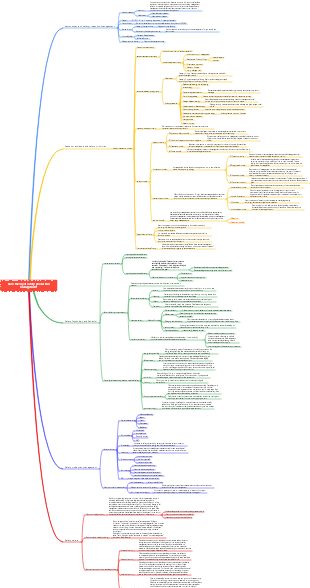
MindMap Gallery Basic theory of safety production management
An overview and summary of the basic theories of production safety management, including the basic objects of production safety management, the principles and theories of modern production safety management theory, an overview of production safety management in my country, etc.
Edited at 2022-02-11 12:43:37This is a mind map about bacteria, and its main contents include: overview, morphology, types, structure, reproduction, distribution, application, and expansion. The summary is comprehensive and meticulous, suitable as review materials.

This is a mind map about plant asexual reproduction, and its main contents include: concept, spore reproduction, vegetative reproduction, tissue culture, and buds. The summary is comprehensive and meticulous, suitable as review materials.
This is a mind map about the reproductive development of animals, and its main contents include: insects, frogs, birds, sexual reproduction, and asexual reproduction. The summary is comprehensive and meticulous, suitable as review materials.
This is a mind map about bacteria, and its main contents include: overview, morphology, types, structure, reproduction, distribution, application, and expansion. The summary is comprehensive and meticulous, suitable as review materials.
This is a mind map about plant asexual reproduction, and its main contents include: concept, spore reproduction, vegetative reproduction, tissue culture, and buds. The summary is comprehensive and meticulous, suitable as review materials.
This is a mind map about the reproductive development of animals, and its main contents include: insects, frogs, birds, sexual reproduction, and asexual reproduction. The summary is comprehensive and meticulous, suitable as review materials.
Basic theory of safety production management
concept
Safety production: ensure that the production process is carried out in compliance with material conditions and working order, prevent production accidents such as personal casualties and property losses, eliminate or control dangerous and harmful factors, and protect personal safety and health, equipment and facilities from damage, and the environment from damage destroy.
Safety production management: Aiming at safety issues in the production process. Make decisions, plan, organize and control. Achieve harmony between people, machines, equipment, materials and the environment, and achieve the goal of safe production.
The goal of safety production management: reduce and control hazards, reduce and control accidents. Avoid personal injury, property damage, environmental pollution, and other losses.
Safety production management includes
Legal management
Administration
Supervision and management
Process technology management
Equipment and facility management
Work environment and condition management
The basic object of safety production management: "people"---employees
content include
Safety production responsibility system
Safety training and education
rules and regulations
organization
Security check
Safety production planning
Organizational Structure and People Management
Accident: An unexpected event resulting in casualties, injuries, occupational diseases, property damage or other losses.
Accident hazards: unsafe behaviors of people, unsafe conditions of objects, and management defects.
General accident hazards
Major accident hazards
Danger: The possibility of undesirable consequences exceeds what people can bear. Use risk degrees to express the degree of danger.
Risk degree: R=f(F,C). F: Possibility of accident. C: The seriousness of the accident.
Risk: A comprehensive measure of the likelihood and severity of an accident.
Heinrich's Law: In a mechanical accident, the ratio of casualties, minor injuries, and unsafe behaviors is 1:29:300.
Source of risk
Category 1 danger source
The second type of dangerous source
Major hazard sources: units where the quantity of hazardous chemicals equals or exceeds the critical quantity.
Security: Security is a relative concept, and security is a state.
Intrinsic safety: Through design means, the production equipment or production system itself is safe and will not cause accidents even in the event of misoperation or failure.
Two major functions
fail safe feature
Fail-safe features
One major feature: the equipment, facilities and process itself are inherently established in the planning and design stage, rather than being compensated afterward.
The fundamental embodiment of putting prevention first
No license, no production
Modern production safety management theory
principle
System principle
Dynamic Relevance Principle
principle of integration, division and integration
feedback principle
closed principle
Humanistic principles
dynamic principle
energy level principle
motivational principles
principles of conduct
precautionary principle
incidental loss principle
principle of causation
3E principles
intrinsic safety principle
Error - safety function (human).
Failure - safety function (object).
coercion principle
Safety first principle
Supervision principle
theory
Accident proneness theory: The main cause of accidents is accident prone persons (people). Fire those who tend to have frequent accidents and retain only the best.
Heinrich's causal chain theory:
Heredity and social environment, human shortcomings, unsafe behaviors of people or unsafe conditions of things, accidents, injuries.
Bode's causal chain theory: management
Insufficient control - management.
Basic Cause-Origin Theory
Immediate cause - symptom. (Unsafe behaviors and unsafe conditions are the direct causes of accidents. This is the most important reason and must be investigated)
Accident-Contact.
Injury - damage - loss.
accidental release of energy theory
Category 1 damage: The energy transferred to the human body exceeds the damage caused by local or systemic damage to the hair. Such as: explosion, collision.
The second type of injury: energy exchange (poisoning, suffocation, frostbite)
Preventive countermeasures (11 types): substitute, limit, vent, control, extend, route, screen, separate, mark, modify, and repair.
trajectory intersection theory
People and things are cause and effect to each other, eliminating "causing things"
System Security Theory
1. Improve system reliability
2. Nothing is absolutely safe
3. It is impossible to eradicate all sources of danger and hazards
4. The sources of danger are not static
Overview of production safety management in my country
policy
Safety first
Implement the principle of safety first and always put safety first
Prevention first
In accordance with systematic and scientific management ideas, and in accordance with the laws and characteristics of accidents, prevent accidents from occurring and nip accidents in the bud.
Comprehensive management
Comprehensively use scientific and technological means, legal means, economic means and necessary administrative means to treat both the symptoms and the root causes.
Five implementation and five in place
Five implementation
Implementing the shared responsibilities of the party and government
Implementing one post with dual responsibilities
Implement organizational leadership
Implement management capabilities
Implement reporting system
Five in place
Safety responsibilities are in place
Safety investment in place
Safety training in place
Safety management in place
Emergency rescue in place
Safety production supervision and inspection system
work system
state supervision
local supervision
Corporate responsibility
The relationship between the three
Between the state and administrative authorities: comprehensive regulation and industry regulation.
Between central government and local government: national supervision and local regulation.
Between Government and Business: Government Regulation and Business Management.