MindMap Gallery cost management
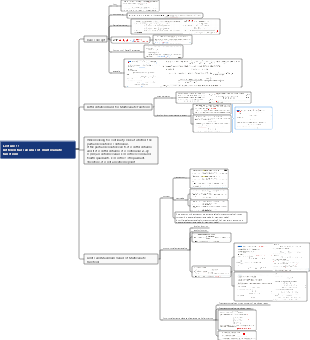
2024 Intermediate Accounting Examination, Financial Management Exam Preparation Guide. The style is simple and the content is easy to read, helping you clarify your ideas while highlighting important and difficult points. The combination of diagrams and formulas allows you to understand it clearly at a glance, achieve twice the result with half the effort, learn more efficiently, and easily obtain the intermediate certificate, come on! Continuously updating...
Edited at 2023-10-14 21:30:11This is a mind map about bacteria, and its main contents include: overview, morphology, types, structure, reproduction, distribution, application, and expansion. The summary is comprehensive and meticulous, suitable as review materials.
This is a mind map about plant asexual reproduction, and its main contents include: concept, spore reproduction, vegetative reproduction, tissue culture, and buds. The summary is comprehensive and meticulous, suitable as review materials.
This is a mind map about the reproductive development of animals, and its main contents include: insects, frogs, birds, sexual reproduction, and asexual reproduction. The summary is comprehensive and meticulous, suitable as review materials.
This is a mind map about bacteria, and its main contents include: overview, morphology, types, structure, reproduction, distribution, application, and expansion. The summary is comprehensive and meticulous, suitable as review materials.
This is a mind map about plant asexual reproduction, and its main contents include: concept, spore reproduction, vegetative reproduction, tissue culture, and buds. The summary is comprehensive and meticulous, suitable as review materials.
This is a mind map about the reproductive development of animals, and its main contents include: insects, frogs, birds, sexual reproduction, and asexual reproduction. The summary is comprehensive and meticulous, suitable as review materials.
cost management
1. Cost Management Overview
Meaning, goals, principles and main content
2. Cost-volume-profit analysis and application
Basic assumptions of cost-volume-profit analysis
The total cost is made up of variable costs and fixed costs. There is a completely linear relationship between sales revenue and business volume Production and sales balance Product production and sales structure is stable
basic formula
Profit before interest and taxes = sales revenue - variable costs = sales revenue x (1 - variable cost rate) = sales revenue x contribution margin rate
Contribution margin = sales revenue - variable costs = sales revenue x (1 - variable cost rate) = sales revenue x contribution margin rate
Marginal contribution rate = total contribution margin/sales revenue = unit marginal contribution/unit price = (unit price - unit price variable cost)/unit price Variable cost contribution margin = 1
single product
Breakeven analysis
meaning
Total revenue equals total cost, business volume or sales when profit is zero
formula
Business volume at break-even point = fixed cost/(unit price-unit variable cost) Sales volume at the break-even point = business volume at the break-even point x unit price = fixed cost/(1-variable cost rate) = fixed cost/contribution margin rate
Ways to lower your breakeven point
(1) Reduce: fixed costs and unit variable costs; (2) Increase: unit price
Break-even point operating rate
=Break-even point business volume (amount)/normal business volume (amount)
safety margin analysis
formula
Margin of safety = actual or expected sales volume (amount) - break-even point sales volume (amount) Safety margin rate = safety margin amount (amount) / actual or expected sales volume (amount) x 100%
The relationship between break-even point operation rate and safety margin contribution rate
Breakeven operation rate Safety margin rate=1
variety of products
Weighted average method
formula
Sales at the break-even point = Total fixed costs Comprehensive contribution margin rate Comprehensive marginal contribution rate = total marginal contribution/total revenue = S (revenue proportion x marginal contribution rate of each product)
joint unit method
Take the smallest proportion of the physical quantity of the product as a joint unit
formula
(1) Joint unit price = S (each unit price x quantity of each product in a consortium) Joint unit variable cost = S (variable cost of each unit x quantity of each product of a joint venture)
(2) Joint breakeven point sales volume = total fixed costs (joint unit price – joint unit variable costs)
(3) Sales volume of a certain product at breakeven point = sales volume at joint breakeven point x quantity of the product in a joint unit
sub-algorithm
Reasonably allocate all fixed costs among various products according to certain standards
formula
Fixed cost allocation rate = total fixed cost, total allocation standard for each product
The amount of fixed costs that should be allocated to a certain product = allocation rate x allocation standard of a certain product
main products act
Target profit analysis
Target profit sales volume = (fixed cost target profit) / (unit price - unit variable cost)
Target profit sales = (fixed cost target profit) / contribution margin rate = target profit sales volume x unit price
Subjective questions
Profit Sensitivity Analysis
meaning
When slight changes occur in the factors that affect profits, the direction and extent of the impact on profits.
formula
Sensitivity coefficient = percentage change in profit before interest and tax, percentage change in factors
The sensitivity coefficient of profit to sales volume is called operating leverage coefficient
If the absolute value of the sensitivity coefficient is greater than 1, it is a sensitive factor.
Sensitivity
Direction unit price ( ); sales volume ( ); unit variable cost (-); fixed cost (-)
Size: largest unit price; sales volume > fixed cost
Application of cost-volume-profit analysis in business decision-making
(1) Product production and pricing strategies
(2) Selection of production process equipment
(3) Choice of new product launch
3. Standard cost control and analysis
Related concepts
ideal standard cost
normal standard cost
Establishment of standard costs
Standard cost per unit product
Establishment of direct material standard costs
Establishment of direct labor standard costs
Establishment of manufacturing overhead standard costs
Calculation and analysis of cost differences
Variable costs
type
direct material costs, direct labor costs, variable manufacturing overhead
calculate
Total difference = actual number - standard number = actual cost - standard cost (under actual output) = price difference quantity difference = A1B1C1-A1B0C0
Volume difference - efficiency difference = (actual working hours or usage under actual output - standard working hours or usage under actual output) x standard distribution rate = (A1B1-A1B0)XC0
Price difference - consumption difference = actual working hours or usage under actual output x (actual allocation rate - standard allocation rate) = A1B1x (C1-C0)
Responsibility
Quality difference
Mainly the production department is responsible for
spread
(1) Direct materials - purchasing department (2) Direct labor - labor and personnel department (3) Variable manufacturing overhead - department manager
fixed costs
Total price difference = actual number - standard number = actual cost - standard cost (under actual output)
Subscript 1: actual; Subscript 0: budget/standard; A: output; B: standard working hours; C: allocation rate
two differences
Consumption difference = actual number - budget number = A1B1C1-A0B0C0
Energy difference = budget number (A0B0C0) - standard number (A1B1C1) = (A0B0-A1B0) x standard allocation rate (C0)
Insert: Budget Products
three differences
Consumption difference = actual number - budget number (same as the difference method)
energy difference
Production variance = budgeted quantity - actual quantity x price tag = A0B0C0-A1B1C0
Efficiency difference = actual quantity x price tag - standard number = A1B1C0-A1B0C0
Insert: actual working hours based on actual output
4. Activity-Based Costing and Responsibility Costing
operating cost
cost drivers
Resources® Jobs® Products
Work center design
Product-level operations: Benefit a single product, the quantity is proportional to the quantity of the product, such as product processing and inspection.
Batch-level operations: Benefit this batch of products, the quantity is proportional to the batch size, such as equipment testing and production preparation.
Variety-level operations: Benefit the product, and the quantity is proportional to the variety, such as product design and product advertising.
Customer-level operations: Implemented to serve customers, regardless of product quantity, such as individual customer consultation activities.
Facility-level operations: Benefit all products, regardless of production and sales, such as overall corporate advertising costs.
Ways to save costs
Job elimination: moving raw materials from warehouse to production department
Job selection: Choose the lowest-cost sales strategy under different sales strategies
Reduced work: Reduce the number of maintenance times
Job sharing: new products using parts from existing products
liability cost
Responsibility center
Cost Center
Features
1. Income is not assessed, only costs are assessed (the lowest level); 2. We are only responsible for controllable costs and not for uncontrollable costs; 3. Responsibility cost: The sum of all controllable costs is the main content of the cost center.
Assessment indicators
(1) Budgeted cost savings = budgeted number under actual production - actual number (2) Budgeted cost savings rate = budgeted cost savings/budgeted number under actual output
Profit Center
Features
Ability to control costs as well as revenue and profits
Assessment indicators
(1) Contribution margin = revenue – variable costs (2) Controllable marginal contribution (department manager’s marginal contribution) = marginal contribution – controllable fixed costs (evaluating manager performance) (3) Departmental contribution margin = controllable marginal contribution – uncontrollable fixed costs (evaluating departmental performance)
investment center
Features
Able to control both costs, revenue and profits, as well as the funds invested (the highest level)
Assessment indicators
(1) Investment rate of return = Profit before interest and tax / Average operating assets = Profit before interest and tax / (Operating assets at the beginning of the period - Operating assets at the end of the period) / 2 (2) Residual income = profit before interest and tax - (average operating assets x minimum investment rate of return)
internal transfer price
price type
Based on market prices, costs and gross profits constitute internal transfer prices.
Scope of application: Generally applicable to profit centers
cost type
Based on relatively stable cost data such as standard costs
Scope of application: Generally applicable to cost centers
Negotiative
The upper limit of the negotiated price is the market price, and the lower limit is the unit variable cost.
Scope of application: Generally applicable to situations with a high degree of decentralization