 Wondershare EdrawMind
MindMap Gallery Cost management knowledge map
- 17
- 1
Cost management knowledge map
First-level Construction Engineer Management Chapter 2 Cost Management of Construction Engineering Projects describes the tasks, procedures and measures of cost management, cost planning, cost control, cost accounting, cost analysis, and cost assessment.
Edited at 2021-08-07 18:43:20
- bacteria
This is a mind map about bacteria, and its main contents include: overview, morphology, types, structure, reproduction, distribution, application, and expansion. The summary is comprehensive and meticulous, suitable as review materials.
- Plant asexual reproduction
This is a mind map about plant asexual reproduction, and its main contents include: concept, spore reproduction, vegetative reproduction, tissue culture, and buds. The summary is comprehensive and meticulous, suitable as review materials.
- Reproductive development of animals
This is a mind map about the reproductive development of animals, and its main contents include: insects, frogs, birds, sexual reproduction, and asexual reproduction. The summary is comprehensive and meticulous, suitable as review materials.
Cost management knowledge map
- bacteria
This is a mind map about bacteria, and its main contents include: overview, morphology, types, structure, reproduction, distribution, application, and expansion. The summary is comprehensive and meticulous, suitable as review materials.
- Plant asexual reproduction
This is a mind map about plant asexual reproduction, and its main contents include: concept, spore reproduction, vegetative reproduction, tissue culture, and buds. The summary is comprehensive and meticulous, suitable as review materials.
- Reproductive development of animals
This is a mind map about the reproductive development of animals, and its main contents include: insects, frogs, birds, sexual reproduction, and asexual reproduction. The summary is comprehensive and meticulous, suitable as review materials.
- Recommended to you
- Outline
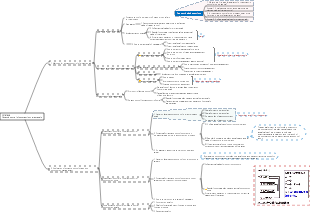
Construction project cost management
1. Cost management tasks, procedures and measures
Cost management tasks and procedures
The construction cost of a construction project consists of direct costs and indirect costs.
Direct costs refer to various expenses incurred during the construction process that constitute the project entity or contribute to the formation of the project entity. They are expenses that can be directly included in the project object, including labor costs, material costs, and construction machinery and tool usage fees.
Indirect costs refer to all expenditures for preparing for construction, organizing and managing construction production. They are not directly used and cannot be directly included in the project object, but are necessary for the construction of the project, including management personnel wages, office expenses, and expenses. Travel expenses, etc.
Cost management is to take corresponding management measures, including organizational measures, economic measures, technical measures, and contract measures, while ensuring that the construction period and quality meet the requirements, to control the cost within the planned scope, and to further seek to maximize cost savings.
Cost management must first do a good job in basic work, and the establishment of a cost management responsibility system is the most fundamental and important basic work. In addition, good basic conditions for cost management should be created from the following aspects: (excluding five specific tasks of cost)
(1) Unify the content and format of the organization’s internal engineering project cost plan. (Unified format)
(2) Establish internal construction quotas within the industry
(3) Establish a collection network for market price information on production materials
(4) Establish cost data of completed projects
(5) Scientifically design the cost accounting system, business ledgers, and cost reports
1. Tasks of construction cost management
Cost management tasks include: cost planning; cost control; cost accounting; cost analysis; and cost assessment.
1. Cost planning preparation
The construction cost plan is a written plan that prepares in monetary form the production expenses, cost levels, cost reduction rates of the construction project during the planning period, as well as the main measures and plans taken to reduce costs. It is an important step in establishing a construction project cost management responsibility system and carrying out It is the basis for cost control and accounting. It is also a guidance document for project cost reduction and the basis for setting target costs. That is, cost planning is a form of target costing.
2. Cost control
Construction cost control of construction projects should run through the entire process of the project from the bidding stage to the return of the deposit. It is an important link in the overall cost management of the enterprise. Cost control can be divided into prior control, in-process control (process control) and post-event control.
3. Cost accounting
Construction cost accounting includes two basic links: First, collect and allocate construction costs according to the prescribed cost expenditure range, and calculate the actual amount of construction costs; second, use appropriate methods to calculate the actual amount of construction costs based on the cost accounting objects. Total and unit costs of a construction project.
Construction cost accounting generally targets unit projects.
The project management organization shall conduct project cost accounting according to the prescribed accounting cycle.
The cost accounting of the completed project should be divided into the on-site cost of the completed project and the complete cost of the completed project, which are calculated and analyzed by the project management agency and the corporate financial department respectively, with the purpose of separately assessing project management performance and corporate operating efficiency.
4. Cost analysis
Construction cost analysis is based on construction cost accounting to analyze the cost formation process and the factors that affect the cost increase and decrease, in order to find ways to further reduce costs, including the excavation of favorable deviations and the correction of unfavorable deviations. Construction cost analysis runs through the entire process of construction cost management. In the process of cost formation, it mainly uses the cost accounting data (cost information) of the project to compare it with the target cost, budget cost and the actual cost of similar projects to understand the changes in costs;
5. Cost assessment
Compare and assess actual cost indicators with plans, quotas, and budgets, evaluate the completion of the construction project cost plan and the performance of each responsible person, and provide corresponding rewards and penalties accordingly.
Every aspect of construction cost management is interconnected and interactive. Cost forecast is the premise of cost decision-making, and cost planning is the specificity of the goals determined by cost decision-making. Cost plan control is to control and supervise the implementation of the cost plan to ensure the realization of the cost target of the decision, and cost accounting is the final test of whether the cost plan is realized.
2. Cost management procedures
Project cost management should follow the following procedures:
(1) Grasp the price information of production factors.
(2) Determine the project contract price.
(3) Prepare cost plan and determine cost implementation targets.
(4) Carry out cost control.
(5) Conduct project process cost analysis.
(6) Conduct project process cost assessment.
(7) Prepare project cost report.
(8) Project cost management data archiving
Cost management measures (error-prone)
organizational measures
Another aspect of organizational measures is to prepare a construction cost control work plan and determine a reasonable and detailed work process. It is necessary to make a good construction procurement plan and effectively control actual costs through optimized allocation, rational use, and dynamic management of production factors; strengthen construction quota management and construction task order management to control the consumption of living labor and materialized labor; strengthen construction scheduling to avoid construction-related problems. Poor planning and blind scheduling lead to problems such as lost work, reduced machinery utilization, and backlog of materials.
Organizational measures are the prerequisite and guarantee for other types of measures, and generally do not require any additional costs. If used properly, good results can be achieved.
technical measures
Combined with the construction organization design and natural geographical conditions of the project, the inventory cost and transportation cost of materials are reduced.
The key to using technical corrective measures is to be able to propose multiple different technical solutions and to conduct technical and economic analysis of different technical solutions.
economic measures
Managers should prepare a fund use plan and determine and break down construction cost management objectives. Conduct risk analysis on construction cost management objectives and formulate preventive countermeasures. Strictly control all expenses during construction. Record, collect, organize and calculate actual expenses in a timely and accurate manner. For various changes, timely preparation of increase and decrease accounts, timely implementation of owner visas, and timely settlement of project payments. Through deviation analysis and unfinished project prediction, some potential problems that may cause an increase in the construction cost of unfinished projects can be discovered, and preventive measures can be taken in a timely manner.
Contractual measures
During the execution of the contract, the contract management measures must not only pay close attention to the execution of the other party's contract to seek opportunities for contract claims; at the same time, we must also pay close attention to the performance of the contract to prevent claims from the other party.
2. Cost plan
Types of Construction Cost Plans
For construction projects, the preparation of cost plans is an ongoing process. Cost plans with different depths and functions are formed at different stages of this process. According to their functions, they can be divided into competitive cost plans, instructive cost plans and implementation cost plans. Project cost plans can also be prepared separately according to cost components, project structure and project implementation stages. The preparation of cost plan is based on cost forecast, and the key is to determine the target cost.
1. Competitive cost planning
That is, the estimated cost plan during the bidding and contract signing stages of a construction project. During the bidding and quotation process, although we also focused on ways and measures to reduce costs, they were generally rough.
2. Instructional cost plan
That is, the budget cost plan at the stage of assigning the project manager is the project manager's responsibility cost target. It is a design budget cost plan based on the contract price and in accordance with the enterprise's budget quota standards, and generally determines the total cost of responsibility indicators.
3. Implementation plan costs
That is, the construction budget cost plan in the project construction preparation stage. It is based on the project implementation plan, takes the implementation of the project manager's responsibility objectives as the starting point, and uses the enterprise's construction quota to form an implementation construction cost plan through the preparation of the construction budget.
4. Construction budget
The construction budget is the main basis for preparing the implementation cost plan. In order to strengthen the internal economic accounting of the enterprise, the construction unit targets the construction and installation unit projects under the control of the construction drawing budget and based on the internal construction quota of the enterprise.
(1) Construction budget preparation requirements, basis and methods
1. Construction budget preparation requirements
(1) Requirements for preparation depth: The items in the construction budget must meet the requirements for issuance of construction task orders and quota requisition orders in order to strengthen management and implement team economic accounting.
3. Construction budget preparation methods
(1) Familiar with construction drawings, construction organization design and on-site information;
(2) Be familiar with construction quotas and relevant document regulations;
(3) List the engineering projects and calculate the engineering quantities;
(4) Apply quotas, calculate labor, material and machine fees and conduct labor and material analysis;
(5) Summary of labor, material, and machine costs per unit project and consumption of labor, materials, and machinery shifts;
(6) Conduct comparative analysis of “two calculations”;
(7) Write the preparation instructions and fill in the cover, and bind it into a book.
(2) Contents of construction budget
The content of the construction budget is to calculate the total number of labor, materials, and machinery shifts and their costs based on the unit project.
(3) Comparison of construction drawing budget and construction budget
A construction budget is different from a construction drawing budget. Although there is a certain connection, the difference is quite large.
1. The basis for preparation is different.
The preparation of construction budget is mainly based on construction quotas, and the preparation of construction drawing budget is mainly based on budget quotas.
2. The applicable scope is different
The construction budget is a document used for internal management of the construction enterprise and has no direct relationship with the contractor; while the construction drawing budget applies to both the contractor and the contractor.
3. Play different roles
The construction budget is the basis for the contractor to organize production, prepare construction plans, prepare on-site materials, issue tasks, assess work efficiency, and conduct economic accounting; while the construction drawing budget is the main basis for bidding quotations.
The "two calculations" comparison methods include physical comparison method and amount comparison method.
The content of the comparison of "two calculations" is as follows:
1. Comparative analysis of labor volume and labor costs
The labor quantity and labor cost of the construction budget are generally about 6% lower than the construction drawing budget.
2. Comparative analysis of material consumption and material costs
The material loss rate of the construction quota is generally lower than the pricing quota.
3. Comparative analysis of construction machinery and equipment costs
4. Comparative analysis of turnover material usage fees
The scaffolding in the construction budget is calculated based on the erection methods and materials determined in the construction plan. The construction drawing budget is based on the scaffolding erection method, based on different structures and heights, and based on the building area; the construction budget template is based on the concrete and formwork. The contact area is calculated, and the template for the construction drawing budget is calculated comprehensively based on the concrete volume.
Cost plan preparation basis and preparation procedures
—Basis for preparation of cost plan (excluding owner’s documents and information, except design documents)
(1) Contract documents.
(2) Project management implementation plan.
(3) Relevant design documents.
(4) Price information.
(5) Relevant quotas.
(6) Cost information of similar projects.
2. Cost planning preparation procedure
The project management agency should prepare project cost plans according to cost components, project structure and project implementation stages through systematic cost planning. Project cost planning preparation should comply with the following procedures: Forecast target planning
(1) Forecast project costs.
(2) Determine the overall cost target of the project.
(3) Prepare the overall project cost plan.
(4) The project management agency and the functional departments of the organization shall determine their own cost targets based on their cost scope of responsibility, and prepare corresponding cost plans.
(5) Develop corresponding control measures for cost plans.
(6) The project management agency and the functional department heads of the organization shall separately review and approve the corresponding cost plans.
Method of preparing cost plan according to cost components
Construction costs can be broken down into labor costs, material costs, construction machinery and tool usage fees and enterprise management fees according to cost components.
Methods for preparing cost plans based on project structure
First, the total construction cost of the project must be decomposed into single projects and unit projects, and then further decomposed into division projects and sub-projects.
When preparing a cost expenditure plan, the total reserve costs must be considered at the overall project level, and appropriate contingency costs must be arranged in the main sub-projects.
Methods for preparing cost plans according to project implementation stages
The construction cost plan is prepared according to the construction progress, which can usually be further expanded on the basis of the network diagram that controls the project progress.
When preparing the network plan, the requirements for project division for schedule control should be fully considered, while the requirements for project division for determining the construction cost expenditure plan should also be considered, so as to achieve both.
By decomposing the construction cost target by time and based on the network plan, a horizontal chart of the project schedule can be obtained, and a cost plan can be prepared on this basis. There are two ways of expression: one is a monthly cost plan histogram on a time scale network diagram; the other is expressed by a time-cost accumulation curve (S-shaped curve).
The steps for drawing the time-cost accumulation curve are as follows:
(1) Determine the project progress plan and prepare a bar graph of the progress plan.
(2) Calculate the cost per unit time (months or ten days) based on the physical project volume completed per unit time or the human, material and financial resources invested, and prepare a cost expenditure plan based on time on the time scale network diagram.
(3) Calculate the cost amount of accumulated expenditure within the specified time/plan.
(4) Draw an S-shaped curve according to the Q, value at each specified time.
Therefore, the S-shaped curve must be enclosed in a banana diagram consisting of all work starting at the earliest start time and all work starting at the latest necessary start time. The project manager can reasonably arrange funds according to the prepared cost expenditure plan. At the same time, the project manager can also adjust the S-shaped curve according to the funds raised, that is, by adjusting the earliest or latest start time of the process project on the non-critical route, and strive to reduce the actual The cost expenditure is controlled within the planned scope.
Generally speaking, all work starts at the latest start time, which is beneficial to saving money and loan interest. But at the same time, it also reduces the guarantee rate of project completion on schedule. Therefore, the project manager must reasonably determine the cost expenditure plan to achieve the purpose of saving cost expenditure and controlling the project duration.
The above three methods of preparing construction cost plans are not independent of each other. In practice, these methods are often used in combination to achieve the effect of maximizing strengths and avoiding weaknesses.
3. Cost control
Basis and procedures for cost control
—The basis for cost control
1. Contract documents
2. Cost planning
3. Progress report
4. Engineering changes and claims information
5. Market information of various resources
2. Cost control procedures
To effectively control the process of construction costs, standardized process control procedures must be developed. In the cost process control, there are two types of control procedures, one is the management behavior control procedure, and the other is the indicator control procedure. The management behavior control program is the basis for the entire cost process control, while the indicator control program is the focus of the cost process control. The two programs are both relatively independent and interconnected, complementing and restricting each other.
(1) Management behavior control procedures
Establish the review organization and review procedures for the project construction cost management system
The establishment of a cost management system is different from the quality management system. The quality management system reflects the quality assurance capabilities of the enterprise and is reviewed and certified by relevant social organizations. The establishment of the cost management system is the need for the company's own survival and development, and there is no social organization to review it. and certification.
(2) Indicator control procedures
Whether the cost target can be achieved is the key to successful cost control. The project cost indicator control procedure is as follows: (similar to dynamic control)
1. Determine hierarchical goals for cost management
2. Collect cost data and monitor the cost formation process
3. Find deviations and analyze the reasons
4. Develop countermeasures to correct deviations
5. Adjust and improve cost management methods
cost control methods
(1) Control of labor costs
The control of labor costs implements the method of "separation of volume and price".
Strengthening labor quota management, improving labor productivity, and reducing labor days consumed by projects are the main means to control labor expenses. (Only the amount can be controlled)
(2) Control of material costs
Material cost control also follows the principle of "separation of volume and price" to control material usage and material prices.
1. Control of material usage (with quotas, use quotas, without quotas, use indicators, small and sporadic lump sums)
(1) Quota control. For materials with consumption quotas, a quota issuance system is implemented based on the consumption quotas.
1) Form of quota collection
① Implement quota collection according to sub-projects, which is a quota collection targeted at construction teams.
② A quota of materials is implemented according to the project location. It is a quota collection of materials targeted at the construction professional team.
③ Implement quotas for material collection based on unit projects
It is a quota collection targeted at project management agencies or subcontracting units.
(2) Indicator control. For materials that do not have consumption quotas, plan management and control based on indicators will be implemented.
(3) Measurement control.
(4) Lump sum control. In the process of material use, for some small and sporadic materials (such as steel nails, steel wires, etc.), the required material amount is calculated based on the project quantity, and is converted into costs, which are used by the operator on a lump sum basis.
2. Control of material prices
Material prices are primarily controlled by the materials purchasing department (not by the project manager).
(3) Control of construction machinery usage fees
Construction machinery usage fees are mainly determined by the number of shifts and the unit price of the shift.
(4) Control of construction subcontracting costs
To control subcontracting costs, we mainly need to do a good job in inquiry for subcontracting projects, enter into equal and mutually beneficial subcontracting contracts, establish a stable subcontracting relationship network, strengthen construction acceptance and subcontracting settlement, etc.
Naked value (earned value) method
The earned value method is used to conduct comprehensive analysis and control of costs and progress. There are three basic parameters, namely the budget cost of completed work, the budget cost of planned work and the actual cost of completed work.
1. Budgeted cost of work completed, referred to as BCWP
2. Planned work budget costs, referred to as BCWS
3. Actual cost of work completed, referred to as ACWP
Four evaluation indicators of the earned value method
1. Cost deviation CV<0, investment is advanced; CV>0, investment is delayed
2. Progress deviation SV
3. Cost Performance Index (CPI)
4. Schedule Performance Index (SPI)
The cost (schedule) deviation reflects the absolute deviation, and the result is very intuitive. Therefore, cost (schedule) deviation is only suitable for deviation analysis on the same project. The cost (schedule) performance index reflects the relative deviation, which is not limited by the project level or the project implementation time, so it can be used in comparisons of the same project and different projects.
Introducing the earned value method into the comprehensive control of project costs and progress can overcome the shortcomings of separate control of progress and costs in the past. That is, when a cost overrun is discovered, it is difficult to immediately know whether it is because the cost exceeds the budget or because the schedule is ahead of schedule. Conversely, when costs are found to be lower than budget, it is difficult to immediately know whether it is due to cost savings or schedule delays. The introduction of the earned value method can quantitatively judge the execution effect of progress and costs.
In the actual execution process, the most ideal state is that the three curves of actual cost of work completed (ACWP), budgeted cost of planned work (B CWS), and budgeted cost of completed work (B CWP) are very close and rising steadily, indicating that the project is on schedule. Plan goals are carried out. If the dispersion of the three curves continues to increase, larger investment deviations may occur.
How to express deviation analysis
Deviation analysis can use different expression methods, and commonly used methods include bar graph method, table method and curve method.
(1) Bar chart method
The bar graph method has the advantages of being vivid, intuitive, and clear at a glance. It can accurately express the absolute deviation of costs and intuitively indicate the seriousness of the deviation. However, this method reflects a small amount of information and is generally applied at higher management levels of the project.
(2) Table method
The tabular method is the most commonly used method for deviation analysis.
1. Flexible and adaptable.
2. Large amount of information.
3. Table processing can be done with the help of computers.
(3) Curve method
4. Cost accounting
Principles, basis, scope and procedures of cost accounting
1. Principles of cost accounting
Project cost accounting should adhere to the principle of synchronization of image progress, output value statistics, and cost collection (actual cost), that is, the value ranges of the three should be consistent.
2. Basis for cost accounting.
3. Scope of cost accounting
According to "Accounting Standards for Business Enterprises No. 15 - Construction Contract", project costs include direct costs and indirect costs related to the execution of the contract incurred from the signing of the construction contract to the completion of the contract.
Direct expenses refer to various expenses incurred to complete the contract and can be directly included in the contract cost accounting objects. Direct costs include:
(1) Cost of materials consumed;
(2) Labor costs consumed;
(3) Machinery usage fees consumed;
(4) Other direct expenses refer to other expenses that can be directly included in the contract cost. Indirect expenses are the expenses incurred by the construction units or production units affiliated to the enterprise to organize and manage construction production activities.
The "Notice of the Ministry of Finance on Issuing the Enterprise Product Cost Accounting System (Trial)" (Cai Kuai [2013] No. 17) divides cost items into the following categories:
Direct labor,
direct material,
Machinery usage fees,
Other direct costs refer to material handling costs, material loading and unloading storage costs, fuel and power costs, temporary equipment amortization, production tools and equipment usage fees, inspection and testing fees, project positioning and retesting fees, project site delivery fees, Site cleaning fees, as well as travel expenses, bidding fees and other expenses incurred for entering into a construction contract that can be separately distinguished and reliably measured.
Extra charges.
Subcontracting costs.
When a construction enterprise calculates product costs, it collects various expenses incurred by the enterprise during the construction, production and operation process that should be included in the cost accounting objects according to cost items. Among them, direct costs such as labor costs, material costs, machinery usage fees and other direct costs are directly included in the relevant project costs. Indirect expenses can first be collected through expense detail accounts, and then distributed according to a determined method at the end of the period and included in the costs of the relevant project cost accounting objects.
4. Cost accounting procedures
(1) Review the expenses incurred to determine the expenses that should be included in the project cost and the amounts included in various period expenses. (review)
(2) Differentiate various expenses that should be included in the project cost into those that should be included in the project cost of this month and those that should be borne by the project cost in other months. (cost this month)
(3) Allocate and aggregate the production expenses that should be included in the project cost each month among various cost objects, and calculate the cost of each project. (collection)
(4) Make an inventory of unfinished projects to determine the actual cost of completed projects in this period. (actual)
(5) Transfer the cost of the completed project to the project settlement cost; calculate the actual cost of the completed project. (Settlement)
cost accounting methods
1. Table accounting method
The tabular accounting method is based on cost accounting for each link within the construction project. The advantages of this kind of accounting are that it is easy to understand, easy to operate, and has good practicality; the disadvantage is that it is difficult to implement a more scientific and rigorous audit system, the accuracy is not high, and the coverage is small.
2. Accounting Law
The accounting method is based on comprehensive accounting of engineering projects. Not only the direct costs of project construction are calculated, but also the claims and debts arising during the construction process of the project, the amortization of tools and equipment purchased for construction and production, the quotation and collection from the contracting unit, and the completion of subcontracting and subcontracting payments, etc.
The advantages of this accounting method are that it is scientific and rigorous, has fewer human control factors and has a larger accounting coverage; its disadvantage is that it requires higher professionalism and work experience for accounting staff. Project finance departments generally use this method.
3. Comprehensive use of two accounting methods
Because table accounting has the characteristics of simple operation and free table format, it is more practical to calculate the cost responsibility of each position in the project. In general, the table accounting method is used for the responsibility accounting and control of the cost of each position in the construction project, and the accounting method is used for the cost accounting of the engineering project. The two are complementary and complement each other to ensure the development of the cost accounting work of the engineering project.
5. Cost analysis and cost assessment
Basis, content and steps of cost analysis
1. Basis for cost analysis
1. Accounting
Accounting is mainly value accounting.
2. Business accounting
The scope of business accounting is wider than accounting and statistical accounting. Accounting and statistical accounting generally account for economic activities that have already occurred. Business accounting can not only calculate whether completed projects have achieved the original purpose and achieved the expected results, but also Economic activities that have not yet occurred or are currently occurring can be accounted for. Its characteristic is the individual accounting of individual economic businesses. The purpose of business accounting is to quickly obtain information so that timely measures can be taken to make adjustments in economic activities.
3. Statistical accounting
Its measurement scale is wider than that of accounting. It can be calculated in monetary terms or measured in physical objects or labor. Through unique methods such as comprehensive surveys and sample surveys, it can provide not only absolute indicators, but also relative and average indicators, which can calculate the current actual level, determine the speed of change, and predict development trends.
2. Contents of cost analysis
3. Steps of cost analysis The cost analysis method should follow the following steps:
(1) Select a cost analysis method.
(2) Collect cost information.
(3) Process cost data.
(4) Analyze the causes of cost formation.
(5) Determine cost results.
cost analysis methods
1. Basic methods of cost analysis
(1) Comparative method
Comparative method, also known as "indicator comparative analysis method"
1. Compare actual indicators with target indicators
2. Comparison of actual indicators in this period with actual indicators in the previous period.
3. Comparison with the average and advanced level of the industry
(2) Factor analysis method
Factor analysis method is also called serial permutation method. This method can be used to analyze the impact of various factors on costs. The calculation steps of factor analysis method are as follows.
1. Determine the analysis object and calculate the difference between the actual and target numbers.
2. Determine which factors the indicator is composed of, and sort them according to their interrelationships (the sorting rules are: physical quantity first, then value quantity; absolute value first, then relative value).
3. Based on the target number, multiply the target numbers of each factor as the base number for analysis substitution.
4. Replace and calculate the actual numbers of each factor in the order listed above, and retain the actual numbers after replacement.
5. Compare the result of each replacement calculation with the previous calculation result. The difference between the two is the impact of the factor on the cost.
(3) Difference calculation method
The difference calculation method is a simplified form of the factor analysis method. It uses the difference between the target value and the actual value of each factor to calculate its impact on costs.
(4) Ratio method
(1) Relevant ratio method
(2) The composition ratio method is also called the specific gravity analysis method or the structural contrast analysis method. At the same time, the proportional relationship between budgeted costs, actual costs and reduced costs can also be seen, thus pointing out the direction for seeking ways to reduce costs.
(3) Dynamic ratio method
2. Comprehensive cost analysis method
(1) Cost analysis of sub-projects
Part-by-part project cost analysis is the basis of construction project cost analysis. The object of cost analysis of sub-projects is completed sub-projects. The analysis method is: compare the "three calculations" of budget cost, target cost and actual cost, and calculate the actual deviation and target deviation respectively.
The data sources for the cost analysis of the sub-projects are: the budget cost comes from the bid quotation cost, and the target cost comes from the construction budget.
Since the construction project includes many sub-projects, it is neither possible nor necessary to conduct a cost analysis on each sub-project. However, for those major sub-projects, cost analysis must be carried out, and a systematic cost analysis must be conducted from the start of construction to completion.
(2) Monthly (quarterly) cost analysis
The basis of monthly (quarterly) cost analysis is the cost report of that month (quarter).
(3) If it is a stipulated "policy" loss, we should start by controlling expenditure and reduce the over-expenditure to a minimum.
(4) By comparing the actual and target main technical and economic indicators, analyze the impact of output, construction period, quality, "three materials" saving rate, machinery utilization rate, etc. on costs.
(3) Annual cost analysis
Enterprise costs are required to be settled once a year, and costs from this year are not allowed to be transferred to the next year. The project cost is based on the life cycle of the project as the settlement period, which requires continuous calculation from the start of construction to completion to the end of the warranty period, and finally the total cost and its profit and loss are settled.
The annual cost analysis is based on the annual cost statement. The content of the annual cost analysis, in addition to the six aspects of monthly (quarterly) cost analysis, focuses on planning practical cost management measures based on the construction progress of the next year to ensure the realization of the construction project cost target.
(4) Comprehensive analysis of completion costs
The analysis of unit project completion cost should include the following three aspects:
1. Completion cost analysis;
2. Comparative analysis of major resource savings;
3. Analysis of main technical saving measures and economic effects.
3. Analysis method of cost items
1. Labor cost analysis
2. Material cost analysis
In order to analyze the impact of changes in material prices and consumption quantities on the cost of materials and structural parts, it can be calculated according to the following formula:
Impact on material costs due to material price changes = (planned unit price – actual unit price) × actual quantity
Impact on material costs due to changes in consumption quantity = (planned usage – actual usage) × actual price
4. Special cost analysis method
Analysis of specific matters related to costs, including abnormal cost profit and loss analysis, construction period cost analysis, capital cost analysis, etc.
(1) Analysis of abnormal cost profit and loss
To examine the reasons for abnormal cost profit and loss, we should start from the "three synchronizations" of economic accounting. Because the basic rule of project economic accounting is: there is an inevitable synchronous relationship between the amount of output value completed, how much resources are consumed, and how much cost is incurred.
2. Construction period cost analysis
Construction period cost analysis generally adopts the comparison method, that is, comparing the planned construction period cost with the actual construction period cost, and then applying the "factor analysis method" to analyze the impact of changes in various factors on the construction period cost difference.
(3) Capital cost analysis
Cost expenditure rate = (actual cost expenditure during the calculation period/actual project revenue during the calculation period) × 100%
Basis and method of cost assessment
1. Basis for cost assessment
The basis for cost assessment includes data on cost planning, cost control, cost accounting and cost analysis. The main basis for cost assessment is various indicators determined by the cost plan.
1. Quantitative indicators of cost plans, such as: total cost indicators of project plans summarized by sub-item
2. Quality indicators of cost plans, such as total project cost reduction rate
3. Benefit indicators of the cost plan, such as project cost reduction:
2. Cost assessment methods
The company should use the project cost reduction amount and project cost reduction rate as the main indicators for cost assessment of the project management organization. Cost assessment can also assess company levels and project management organizations separately.