 Wondershare EdrawMind
MindMap Gallery Chapter 1 Strategy and Strategic Management
- 39
Chapter 1 Strategy and Strategic Management
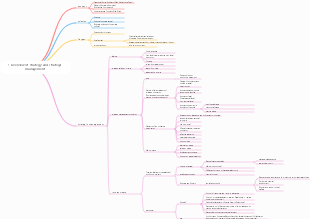
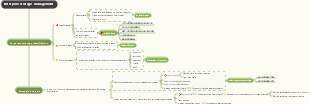
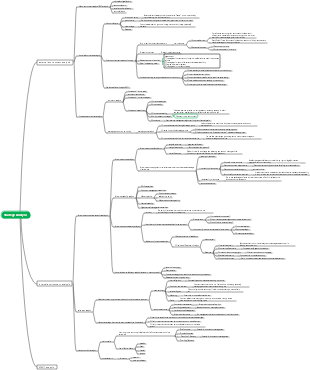
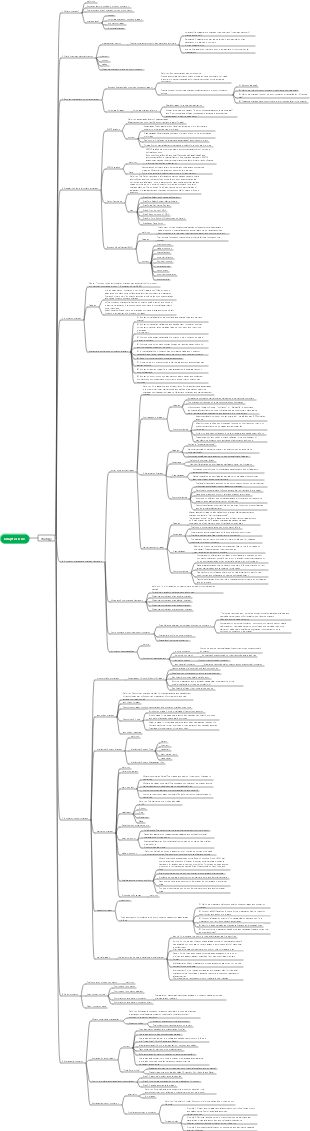
The 2022 CPA Corporate Strategy and Risk Management Chapter 1 mind map covers all knowledge points and marks the key points of the exam. It mainly includes the basic concepts of corporate strategy in the first section and corporate strategic management in the second section.
Edited at 2022-05-07 21:09:16
- bacteria
This is a mind map about bacteria, and its main contents include: overview, morphology, types, structure, reproduction, distribution, application, and expansion. The summary is comprehensive and meticulous, suitable as review materials.
- Plant asexual reproduction
This is a mind map about plant asexual reproduction, and its main contents include: concept, spore reproduction, vegetative reproduction, tissue culture, and buds. The summary is comprehensive and meticulous, suitable as review materials.
- Reproductive development of animals
This is a mind map about the reproductive development of animals, and its main contents include: insects, frogs, birds, sexual reproduction, and asexual reproduction. The summary is comprehensive and meticulous, suitable as review materials.
Chapter 1 Strategy and Strategic Management
- bacteria
This is a mind map about bacteria, and its main contents include: overview, morphology, types, structure, reproduction, distribution, application, and expansion. The summary is comprehensive and meticulous, suitable as review materials.
- Plant asexual reproduction
This is a mind map about plant asexual reproduction, and its main contents include: concept, spore reproduction, vegetative reproduction, tissue culture, and buds. The summary is comprehensive and meticulous, suitable as review materials.
- Reproductive development of animals
This is a mind map about the reproductive development of animals, and its main contents include: insects, frogs, birds, sexual reproduction, and asexual reproduction. The summary is comprehensive and meticulous, suitable as review materials.
- Recommended to you
- Outline

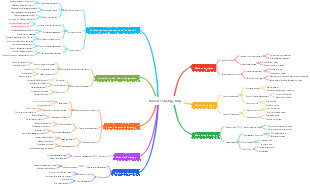

Chapter 1 Strategy and Strategic Management
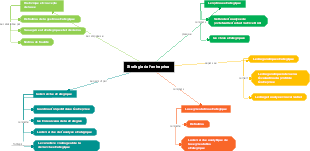
Section 1 Basic Concepts of Corporate Strategy
1. Definition of corporate strategy
(1) The traditional concept of corporate strategy: planning, overall and long-term (the organization is completely rational)
(2) Modern concepts of corporate strategy: adaptability, competition and risk (organizational bounded rationality)
2. The company’s mission and goals
(1) Company mission
1. Corporate purpose: It is a direct reflection of the fundamental nature and reason for existence of the enterprise organization. If it is for profit, its primary purpose is to bring economic value; if it is not for profit, its primary purpose is to improve social welfare and promote political and social change.
2. Company purpose: expound the company's long-term strategic intentions, explain the company's current and future business scope, including the company's products (or services), customer targets, markets and technologies, etc., reflecting the company's positioning.
3. Business philosophy: The values, basic beliefs and codes of conduct established in its business activities are a high-level summary of corporate culture, that is, the business ideological positioning.
(2) Company goals
Financial goal system (quantitative): market share, revenue growth rate, return on investment, dividend growth rate, stock price evaluation, cash flow and company trust, etc., to improve the company's financial performance.
Strategic goal system (qualitative): occupy a leading position, improve competitive advantage, shorter product development cycle, higher product quality, lower total cost, better customer service, etc.
3. Levels of corporate strategy
(1) Overall strategy (company level strategy)
Select business area
Properly allocate resources
Various business operations support and coordinate with each other
Issues that often involve the overall financial structure and organizational structure
(2) Business unit strategy (business unit strategy or competitive strategy): Concrete the overall strategy to ensure the company's competitive advantage.
(3) Functional strategy (functional-level strategy): How to better allocate internal resources of the enterprise to serve strategies at all levels and improve organizational efficiency. Synergy is important.
Multi-Business Companies: Overall Strategy Business Unit Strategies Functional Strategies
single business company
No regional divisions or no autonomy for each regional division: overall strategy functional strategy
With regional divisions and autonomy: overall strategy Business unit strategy Functional strategy
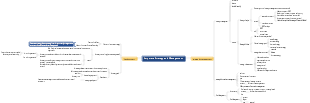
Section 2 Corporate Strategic Management
1. The connotation of strategic management
Scientifically analyze the internal and external environment and conditions of the enterprise
Make strategic decisions, evaluate, select and implement strategic options
Dynamic management processes for controlling strategic performance
2. Characteristics of strategic management
Comprehensive
high level
Dynamic
3. Strategic management process
(1) Strategic analysis
external environment analysis
Macro environment analysis
Industrial environment analysis
Competitive environment analysis
National Competitive Advantage Analysis
internal environment analysis
Enterprise resources and capabilities analysis
value chain analysis
business portfolio analysis
(2) Strategic choice
1. Optional strategy types
Overall strategy: development strategy, stability strategy, contraction strategy
Business unit strategy: basic competitive strategy, competitive strategy for small and medium-sized enterprises, blue ocean strategy
Functional strategy: marketing strategy, production operation strategy, research and development strategy, procurement strategy, human resources strategy, financial strategy, etc.
2. Strategy selection process
(1) Formulate strategic plan
Bottom-up: top-level formulation and subordinates concretize the overall strategy to form a systematic strategic plan.
Top-down: Senior management coordinates and balances the strategic plans submitted by various departments, makes necessary modifications and then confirms them.
Combination of top and bottom: joint participation.
The difference between the above three methods lies in the different grasp of the degree of centralization and decentralization in strategy formulation.
(2) Evaluate strategic alternatives
Suitability standard: whether it leverages the company's strengths and customer service weaknesses; whether it takes advantage of opportunities and minimizes threats; whether it helps the company achieve its goals
Acceptability criteria: whether it can be accepted by business stakeholders
Feasibility criteria: The evaluation of strategy must ultimately be implemented into the financial indicators of strategic benefits, risks and feasibility analysis.
(3) Choose a strategy
Choose a strategy based on corporate goals (you have the final say)
Submit to superior management department for approval (leader has the final say)
Hire external experts to carry out strategic selection work (if you can’t do it yourself, ask others for help)
(3) Strategy implementation
Adjust and improve the organizational structure of the enterprise
Promote corporate culture construction
Use financial and non-financial means and methods to supervise the strategy implementation process
Use advanced technologies, especially digital technologies, to build new corporate organizations and transform business models
Coordinate the relationship between corporate strategy, organizational structure, cultural construction, technological innovation and change
4. Strategic Innovation Management
(1) What is strategic innovation?
Definition: In order to obtain sustainable competitive advantages, enterprises search and select new ideas based on changes in the internal and external environment, combining the principles of dynamic coordination among environment, strategy, and organization, and involving simultaneous supportive changes in all elements of the enterprise organization. , systematic process of implementation and acquisition.
Change: The current plans and concepts may be used without necessarily generating new ideas. Innovation: The process of generating new ideas and concepts and putting them into business management.
Invention: the transformation of new ideas into tangible products Innovation: all activities involved in the generation, development, implementation and acquisition of ideas
(2) The importance of innovation:
1. It is a vital ability for enterprises to adapt to the changing external environment and ensure their own survival and development.
2. It is the most important source for enterprises to obtain sustainable competitive advantages.
Help companies capture and maintain market share
Use non-price factors to achieve sales growth in market competition
Product life cycles are getting shorter and shorter, requiring better products to replace existing products.
3. Continuous innovation is the fundamental guarantee for maintaining the competitive advantage of enterprises.
(3) Types of strategic innovation
1. Product innovation: refers to changes in the products and services provided by the organization
2. Process innovation: refers to changes in the way products and services are produced and delivered
3. Positioning innovation: refers to changes in the environment in which products and services enter the market, that is, innovation achieved by repositioning the perception of existing products and processes in specific user contexts
4. Paradigm innovation: refers to changes in underlying thinking patterns that affect an organization’s business
Judgment of innovation type:
(1) Products and services introduce new products and undergo changes - product innovation
(2) Work flow (process) changes, such as: logistics, management, technology, etc. - process innovation
(3) Changes in product positioning and market positioning—positioning innovation
(4) Changes in management concepts and business concepts - paradigm innovation, including product innovation and positioning innovation, and it is recommended to extend the paradigm innovation
(4) Explore different aspects of strategic innovation
1. The novelty of the innovation
Incremental innovation: a series of continuous and steadily advancing change processes that keep an enterprise running smoothly and normally. Supporting theory: total quality management, learning curve effect
Breakthrough innovation: a comprehensive change process that changes the entire enterprise system. Source: Emergence of new markets, emergence of new technologies, changes in business models
From incremental innovation to breakthrough innovation is a process from quantitative change to qualitative change.
Judgment of novelty of innovation:
(1) Talking about product innovation alone, no matter how novel it is - incremental innovation
(2) Subvert consumer perceptions, change business models, and change the competitive landscape - breakthrough innovation
2. Innovative basic products and product families (approaches): With the help of "basic products" or "product families", relying on a stable basic product or an expandable product family, the most famous example of innovation relying on basic products is the "Walkman" "
3. Level of innovation
Component level: individual components, which may affect the architectural level
Architectural level: the integration between components or the structural whole
Difficulties in architectural innovation: learning and forming new knowledge systems and discarding original knowledge systems
Solution: Technology integration, integrated solutions
4. Timing - innovation life cycle
Stage 1: Rheology (Keywords: exploration, uncertainty, flexibility) Characteristics: coexistence of old and new technologies and rapid improvement of both. The Sailboat Effect: Mature technologies accelerate their own improvements in response to new competing technologies
Stage 2: Transition (Keywords: Dominant Design) Characteristics: Form a “dominant design” and begin to determine the rules of the game. The main activity of innovation has shifted from the development of fundamental concepts to focusing on product differentiation, as well as more stable, cheaper, higher quality and more diverse functions.
Stage 3: Maturity (Keywords: Standardization, Integration) Characteristics: Incremental innovation becomes more important, and the focus also shifts to factors such as price. Turn attention to rationalization, economies of scale and process innovation to reduce costs and increase productivity. Product innovation is more about meeting the special needs of specific customers through customization.
Sunk costs, psychological and institutional barriers make it difficult for companies to cope with discontinuous innovation
(5) Situation of strategic innovation
1. Establish an innovative organization (“people” is the core)
(1) Shared mission, leadership and willingness to innovate: clearly articulate a shared sense of mission; extend strategic goals - "senior management commitment"
(2) Appropriate organizational structure: Organizational design makes creativity, learning and interaction possible; the key issue is between the "organic" (suitable for a rapidly changing environment) and the "mechanical" (suitable for a more stable environment) model Find the right balance (space and time).
(3) Key individuals: source of key technology - inventor or team leader; source of rights - organizational sponsor (usually with a seat on the board of directors); information transmitter - technical gatekeepers formed in an informal structure; business support: others Role (Heavyweight Project Manager and Business Innovator)
(4) Participation of all employees in innovation: Unconscious innovation - the organization's formal attempt to mobilize all employees for innovation (training) - involves integrating the innovation habits of all employees with the strategic goals of the organization - empowering individuals and groups (high-level training) - —Learning organization (everyone is improving)
(5) Effective teamwork: cross the internal boundary mechanism of the organization, gather different knowledge, and eliminate hierarchical differences (the four development stages of formation-concussion-standardization-execution)
(6) Creative atmosphere: Use positive methods to obtain creative ideas, supported by relevant incentive systems (six elements: trust and openness, challenge and participation, organizational slack, conflict and debate, risk-taking, and freedom)
(7) Boundary-crossing (characteristics of innovative organizations): remain open to external stimuli and establish an awareness of external orientation (such as reform and opening up); internal orientation: focus on the relationship between continuous elements, without feedback and adjustment; external orientation: engage with various interests Connecting stakeholders (networking)
2. Develop innovative strategies (the relationship between strategy and innovation)
(1) Enterprise-specific knowledge, including the ability to explore knowledge, is an essential feature of an enterprise’s success in competition.
(2) The essential characteristic of corporate strategy is an innovation strategy, whose purpose is to accumulate this kind of enterprise-specific knowledge
(3) An innovation strategy must be able to cope with the complex and ever-changing external environment.
(4) Internal structures and processes must be balanced with possible conflicting demands
(6) Main processes of innovation management
1. Search stage – how to find innovation opportunities
Search signals: the emergence of new technologies, the emergence of new market demands, changes in government policies or competitor behavior
Develop an innovation plan
The biggest challenge at this stage is how to find incentives related to innovation
2. Choice phase – what to do and why
External research: the study of signals about technology and market opportunities available to the firm
Internal research: Research on products and services related to the company's existing knowledge base (i.e., the company's unique capabilities) to ensure that the company's existing knowledge can match the knowledge required for change
Connecting internally and externally: Research linking innovation to improvements in overall business performance
Note: The close integration of the overall corporate strategy and innovation strategy is crucial at this stage
3. Implementation stage – how to achieve innovation
It can be seen as a process of gradually bringing together various knowledge and producing innovations.
Find and solve problems - generate relevant knowledge - enter the target environment, i.e. internal or external markets - consolidate innovation
At this stage, early uncertainty is gradually replaced by various demands for knowledge and pressures from rising costs.
4. Acquisition stage – how to acquire innovation
Benefits include: business success, expanding market share, reducing costs, social innovation and changing the world
Protect interests: process innovation; use intellectual property protection mechanisms; reinnovate to control and lead the development direction of innovation
5. Rights and stakeholders in strategic management
(1) Main stakeholders of the enterprise
1. Internal stakeholders and their interest expectations
Investors (shareholders and institutional investors), pursuing dividends and control
Managers (middle and senior managers) pursue maximizing sales
Employees, pursuing income and career stability
2. External stakeholders and their interest expectations
Government, tax expectations for businesses
Buyers and suppliers pursue their own value in the industrial chain
Creditors, cash flow and solvency claims
The public expects companies to assume social responsibilities
(2) Interest conflicts and balance among corporate stakeholders
1. Contradictions and balance between investors and managers
Baumol's "sales maximization" model
Manager’s goal: maximize sales (maximize production)
Investor Goal: Maximize Dividends (Below Capacity)
equilibrium outcome
Maris' growth model
Manager’s goal: to achieve company growth
Investor goals: Also consider risks, market evaluation, etc.
acceptable range for both parties
Williams' theory of managerial authority
Manager goals: Maximize power and reputation (employees, compensation, discretionary investments)
Managers use information advantages to resist shareholder pressure to maximize interests
2. The conflict and balance of interests between company employees and the company (shareholders or managers)
Employees pursue: maximizing salary income and job stability
Enterprise pursuit: maximizing profits and constraining wage levels
Equilibrium: Depends on the bargaining power of both parties
3. The contradiction and balance between corporate interests and social benefits
Enterprise pursuit: own economic goals
Public expectations: ensure the basic interest requirements of corporate stakeholders; protect the natural environment; sponsor and support social welfare undertakings
Equilibrium: the process of constant bargaining
Note: "Organizational sluggish" enterprises are the result of ultimate compromise, effectiveness is almost always less than its maximum value, and the "payment" of sluggishness is shared by each member.
(3) Rights and strategic process
that power
Scope: influence in all aspects
Effectiveness: Not necessarily accepted by the subject
Source: From various sources
Identification: Difficult to identify and label
Authority:
Scope: from top to bottom along the management level of the enterprise
Effectiveness: generally accepted by subordinates
Source: included in the positions or functions established by the enterprise
Identification: Easily identified on the company’s organizational chart
1. Sources of rights of corporate stakeholders
Control of resources and exchange of rights
Position in the management hierarchy (legal power, reward power, coercive power)
Personal quality and influence (expert rights, role model rights)
Participate in or influence the strategic decision-making and implementation of enterprises
The extent to which stakeholders are concentrated or aligned
2. The use of rights in the process of strategic decision-making and implementation: confrontation, reconciliation, collaboration, compromise, avoidance