MindMap Gallery Innovation management
This is a mind map about innovation management. It tells the relevant stories of innovation management. If you are interested in the story of innovation management, you are welcome to collect and like this mind map~
Edited at 2022-10-12 04:16:36This is a mind map about bacteria, and its main contents include: overview, morphology, types, structure, reproduction, distribution, application, and expansion. The summary is comprehensive and meticulous, suitable as review materials.

This is a mind map about plant asexual reproduction, and its main contents include: concept, spore reproduction, vegetative reproduction, tissue culture, and buds. The summary is comprehensive and meticulous, suitable as review materials.
This is a mind map about the reproductive development of animals, and its main contents include: insects, frogs, birds, sexual reproduction, and asexual reproduction. The summary is comprehensive and meticulous, suitable as review materials.
This is a mind map about bacteria, and its main contents include: overview, morphology, types, structure, reproduction, distribution, application, and expansion. The summary is comprehensive and meticulous, suitable as review materials.
This is a mind map about plant asexual reproduction, and its main contents include: concept, spore reproduction, vegetative reproduction, tissue culture, and buds. The summary is comprehensive and meticulous, suitable as review materials.
This is a mind map about the reproductive development of animals, and its main contents include: insects, frogs, birds, sexual reproduction, and asexual reproduction. The summary is comprehensive and meticulous, suitable as review materials.
Innovation management
Definition and meaning
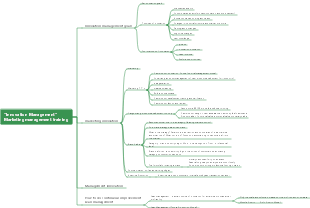
Innovation management refers to a series of management measures and methods adopted by organizations to promote innovation. In the modern competitive environment, innovation management is of great significance to the survival and development of organizations. It can help organizations explore potential innovation opportunities, improve innovation capabilities and efficiency, and promote the incubation, implementation and implementation of innovation.
Related concepts
Innovation: refers to the process of constantly coming up with new ideas, new ideas and new methods and transforming them into valuable products, services or processes. Innovation is an important driving force for social progress and economic development.
Management: refers to the process of organizing and coordinating limited resources to achieve specific goals. It includes activities such as planning, organizing, leading and controlling.
Elements of Innovation Management
Innovation strategy: Formulate the organization's innovation goals and directions, and clarify the key areas and target markets for innovation. Through innovation strategy, organizations can clarify the development path of innovation and improve the effectiveness and success rate of innovation.
Innovation organization: Establish an innovation team and innovation mechanism to provide the resources and support required for innovation activities. Innovation organizations can promote the generation and implementation of innovation and improve innovation capabilities and efficiency.
Innovation culture: Cultivate a cultural atmosphere that encourages and supports innovation. Innovation culture can stimulate employees' creativity and innovation potential, and promote full participation and sustainable development of innovation.
Innovation process: including the discovery, development, testing and promotion of innovation. The innovation process requires scientific methods and effective management to ensure the smooth progress and successful implementation of innovation.
Innovation assessment: Evaluate innovative projects, including market assessment, technology assessment, risk assessment, etc. Innovation assessment can help organizations screen and optimize innovation projects, reduce innovation risks, and improve innovation success rates.
Steps to Innovation Management
Clarify innovation goals: According to the organization's strategy and needs, clarify the goals and direction of innovation. This can help organizations focus resources and make innovation more efficient and effective.
Innovation planning: Develop innovation plans and strategies, and determine the content and steps of innovation. Innovation planning can help organizations organize innovation activities systematically and reduce conflicts and waste.
Innovation execution: implement innovation plans and promote the implementation and implementation of innovation. Innovation execution requires effective project management and coordination to ensure the smooth progress of innovation.
Innovation evaluation: evaluate and provide feedback on innovation projects to understand the effectiveness and effectiveness of innovation. Innovation evaluation can help organizations optimize innovation projects and improve the effectiveness and success rate of innovation.
Continuous innovation: Establish a mechanism and culture for continuous innovation to promote the continuous improvement of the organization's innovation capabilities and innovation efficiency. Continuous innovation can help organizations maintain competitive advantages and innovative vitality.
Innovation management challenges
Risk management: Innovation involves uncertainty and risk and requires effective risk management measures. Organizations need to identify and assess innovation risks and take appropriate measures to control and respond.
Integrate resources: Innovation requires the investment of human, material and financial resources, but resources are limited and require reasonable resource allocation and integration. Organizations need to fully consider the balance and effectiveness of resource allocation.
Culture shift: Building a culture that supports innovation takes time and long-term effort. Organizations need to promote cultural change, cultivate innovation awareness and capabilities, and break traditional habits and mindsets.
Talent training: Innovation requires talents with innovative abilities and innovative thinking. Organizations need to cultivate and introduce talents to improve employees' innovation capabilities and skills.
Managing innovation and performance measurement: How to effectively manage innovation activities and measure the performance of innovation activities is a challenge. Organizations need to establish a scientific and effective performance evaluation system to promote the sustainable development of innovation.
Practical cases of innovation management
Take Google as an example. Google has achieved innovative breakthroughs in multiple fields through innovation management practices. Google has established an innovation mechanism to encourage employees to come up with new ideas and creativity. They have also set up innovative projects, such as the self-driving car project and the Google Glass project, to promote technological innovation and business innovation.
Take Apple as an example. Apple has achieved innovation in multiple products through innovation management practices. Apple is committed to creating unique products with excellent user experience, such as iPhone and iPad. They have become one of the world's leading technology companies through their efforts in innovative design, technology innovation and marketing innovation.
Taking Tesla as an example, Tesla has achieved innovation in areas such as electric vehicles and renewable energy through innovation management practices. Tesla is committed to promoting sustainable development and promoting the rapid development of the electric vehicle industry through innovative technologies and business models.
These practical cases show that innovation management plays an important role in an organization's innovation capability and competitive advantage. Organizations can lead the change and development of the industry through innovative management practices and achieve continuous innovation and growth.