MindMap Gallery banking,financial services,and insurance industry profile
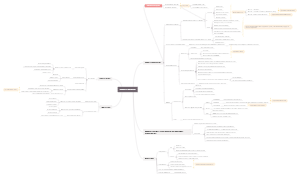
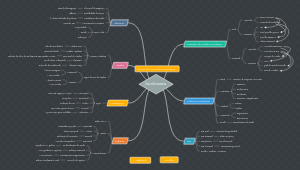
This mind map provides an in-depth analysis of future trends, key players, and regulatory environments. It offers insights into emerging technologies, market dynamics, and policy changes, providing valuable information for understanding industry development directions and preparing for future challenges.
Edited at 2024-05-21 05:51:05Banking, Financial Services, and Insurance (BFSI) Industry Profile
**Introduction:**
The Banking, Financial Services, and Insurance (BFSI) industry in India is a vital sector driving economic growth, fostering financial inclusion, and managing financial risks. It encompasses a diverse range of financial services, including banking, insurance, non-banking financial companies (NBFCs), mutual funds, pension funds, and stock exchanges.
**Overview:**
The BFSI sector serves as the backbone of India's economy, facilitating capital formation, mobilizing savings, and channeling funds towards productive investments. It plays a crucial role in allocating resources efficiently and managing financial risks, contributing significantly to GDP growth and employment generation.
**Key Segments:**
1. **Banking:** The banking sector is divided into scheduled commercial banks (public sector banks, private sector banks, and foreign banks) and regional rural banks (RRBs). It serves as the primary intermediary between savers and borrowers, facilitating credit creation and payment services. 2. **Insurance:** The insurance sector includes life insurance companies, general insurance companies, and standalone health insurance companies. It provides risk protection and financial security to individuals and businesses, promoting long-term savings and investment. 3. **Non-Banking Financial Companies (NBFCs):** NBFCs complement the banking sector by offering a wide range of financial services such as loans, leasing, hire-purchase, insurance, and asset management. They play a crucial role in extending credit to underserved segments of the population, fostering financial inclusion and deepening the financial markets. 4. **Mutual Funds and Asset Management:** Mutual funds pool money from investors to invest in various financial instruments such as stocks, bonds, and money market instruments. Asset management companies manage these mutual funds and other investment portfolios, providing professional expertise and diversification. 5. **Stock Exchanges:** India boasts prominent stock exchanges like the National Stock Exchange (NSE) and the Bombay Stock Exchange (BSE), where securities such as stocks, bonds, and derivatives are traded, facilitating capital formation and price discovery.
**Key Players:**
1. **Banks:** State Bank of India (SBI), HDFC Bank, ICICI Bank, Axis Bank, Kotak Mahindra Bank, and Punjab National Bank (PNB) are some of the leading banks in India, offering a wide range of banking products and services. 2. **Insurance Companies:** Life Insurance Corporation of India (LIC), ICICI Prudential Life Insurance, HDFC Life Insurance, SBI Life Insurance, and Bajaj Allianz General Insurance are major players in the insurance sector, providing risk protection and financial planning solutions. 3. **NBFCs:** Bajaj Finance, HDFC Ltd, Mahindra & Mahindra Financial Services, Shriram Transport Finance Company, and L&T Finance Holdings are prominent NBFCs in India, catering to diverse financial needs and segments. 4. **Mutual Funds and Asset Management Companies:** HDFC Mutual Fund, ICICI Prudential Mutual Fund, SBI Mutual Fund, Aditya Birla Sun Life Mutual Fund, and Reliance Nippon Life Asset Management are leading players in this segment, offering a wide range of mutual fund schemes and investment solutions.
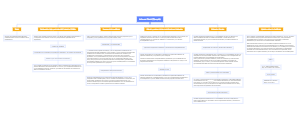
THE BANKING SECTOR
employment in Banking sector
Indian banks experienced their highest hiring numbers in a decade during the last financial year(FY23), reaching 123,000 new employees, according to a report by The Economic Times (ET). The data was taken from the Reserve Bank Of India.1 Dec 2023
Major Players in banking sector •SBI •HDFC •ICICI •Axis Bank •Kotak Mahindra Bank
BANKING SECTOR SIZE IN
2001
9.6trillion
2021
175.4 trillion
Loans
2001
5.1trillion
2022
130.4 trillion
FINANCIAL SERVICES
ProfessionalAdvisori
Wealth Management
Mutual Fund
INSURANCE SECTOR
The Indian insurance industry has grown at a compound annualrate of 10.3% overthe last decade. In 2022-23, the total premium income forlife insurers increased by 12.8% to 7.81 lakh crore, and the total premium underwritten by general and health insurers grew by 16.4% to 2.57 lakh crore. Indian Insurance industry registers 10.3% compound annual growth overlast decade: RBI, ET BFSI 28 Jun 2023 Insurance penetration in India has also been increasing steadily, from 2.7% in 2000 to 4.2% in 2021. In 2021, the life insurance sector's penetration was 3.2%, which is more than double that of emerging markets and slightly above the global average. The insurance industry's value-added to GDP in 2022 was 2.6%. The industry is expected to report 15-17% growth in FY25, led by the health and motorinsurance sectors.
•HDFC Life Insurance Company. •Max Life Insurance Company. •LIC Life Insurance Company. •Reliance Nippon Life Insurance Company. •AEGON Life Insurance Company.

**Regulatory Environment:**
The BFSI sector in India is highly regulated to ensure financial stability, consumer protection, and market integrity. Regulatory bodies like the Reserve Bank of India (RBI), Securities and Exchange Board of India (SEBI), Insurance Regulatory and Development Authority of India (IRDAI), and Pension Fund Regulatory and Development Authority (PFRDA) oversee the functioning of various segments within the industry, setting prudential norms, conduct standards, and disclosure requirements.
**Challenges and Opportunities:**
The BFSI industry in India faces challenges such as cybersecurity threats, regulatory compliance, financial inclusion, and technological disruptions. However, it also presents significant opportunities for growth, driven by factors such as increasing digital adoption, rising income levels, government initiatives like Jan Dhan Yojana and Pradhan Mantri Suraksha Bima Yojana, and favorable demographics.
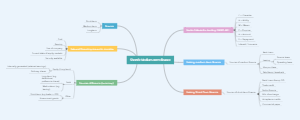
**Future Trends:**
The BFSI industry is poised for transformative changes driven by technological advancements, regulatory reforms, and evolving customer preferences.
Sustainable Finance: Promoting green initiatives and sustainable development to address environmental challenges and societal needs.
Generative AI: Utilizing artificial intelligence for personalized financial planning, risk management, and customer service, enhancing efficiency and effectiveness.
Cybersecurity: Strengthening cybersecurity measures and leveraging AI-powered fraud detection techniques to mitigate risks and safeguard customer information.
Process Automation: Automating routine tasks and workflows to improve operational efficiency, reduce costs, and enhance customer experience.
Blockchain in Banking: Exploring blockchain technology for secure and transparent transactions, streamlined processes, and smart contract applications, enhancing trust and reliability in the financial ecosystem.
**Advantages of Working in BFSI:**
The BFSI Industry offers numerous advantages for professionals seeking rewarding careers: - Rapid expansion and growth opportunities, creating a high demand for skilled talent. - Flexible qualification criteria, providing entry-level opportunities for fresh graduates and professionals from diverse backgrounds. - Career growth prospects and diverse job roles across various segments and functions. - Easy transition between roles and companies, enabling professionals to explore different career paths and opportunities for skill development and advancement.
A BFSI industry level assessment was conducted to understand the total existing and future workforce requirements. As on 31 March 2017, total workforce employed by BFSI sector was more than 55.00 lakhs. The analysis suggests that it has increased from 8.8 lakhs in 1981 to 55.3 lakhs in 2017. It has increased at a CAGR of 5per cent from 1981 till 2001. However, from 2001 it is growing at a CAGR of 5.5 per cent constantly26. Considering the data for 2017 as baseline, the future workforce requirement in the BFSI sector is estimated till 2023. The employment elasticity for BFSI sector is calculated to be 0.52. The BFSI sector has grown at a CAGR of 7.74per cent from 2012 to 2017. The future workforce requirement in BFSI sector is estimated assuming three possible scenarios as explained below. • Same Growth Rate: The sector is assumed to continue to grow at same rate of 7.74 per cent • Lower Growth Rate: The sector is assumed to grow at a lower rate of 7.24 per cent • Higher Growth Rate: The sector is assumed to grow at a higher rate of 8.24per cent The future workforce requirement in the sector, as per the above considerations, is estimated as below: Expected Workforce (2020-2023) Employed in BFSI Sector (in lakhs) Year 2017 2018 2019 2020 2021 2022 2023 2024 Growth Rate at 7.74 per cent 55.32 57.73 60.24 62.86 65.60 68.45 71.43 Growth Rate at 7.24 per cent 55.32 57.57 59.92 62.36 64.89 67.54 70.29 Growth Rate at 8.24 per cent 55.32 57.88 60.57 63.37 66.31 69.38 72.60
**Changing Landscape:**
The BFSI industry in India is witnessing a transformational shift driven by technological innovations, regulatory reforms, and changing customer expectations. With the advent of digitalization, data analytics, and artificial intelligence, traditional business models are being disrupted, paving the way for new opportunities and challenges.
**Foreign Investments:**
India's BFSI sector is attracting significant foreign investments, driven by the country's robust economic growth, regulatory reforms, and burgeoning consumer demand. Foreign investors are drawn to India's large and growing market, favorable demographic trends, and conducive business environment.
India boasts the world's largest young population, translating into a massive potential customer base for financial products. This demographic dividend, coupled with rising disposable incomes, fuels demand for banking services, insurance, and wealth management solutions. The Indian government has take on significant reforms to liberalize the BFSI sector. Increased FDI limits, relaxed regulations, and a focus on digitization have created a more welcoming environment for foreign players. India's tech-savvy population and an upcoming fintech ecosystem present exciting opportunities for foreign investors. Collaborations can leverage India's digital infrastructure and talent pool to develop innovative financial products and services. Enhanced Technological Adoption: Foreign investments bring in cutting-edge technology and global best practices. This is accelerating the adoption of digital solutions in banking, insurance, and wealth management, improving efficiency and customer experience. Increased Product Diversification: The influx of foreign players has led to a wider range of financial products being offered. This caters to the diverse needs of the Indian population and fosters a more competitive financial landscape. Improved Access to Capital: Foreign investments act as a vital source of capital for the Indian BFSI sector. This fuels growth, facilitates infrastructure development, and enables expansion into underserved rural and semi-urban areas. Talent Development: Foreign companies bring in global expertise and knowledge-sharing opportunities. This encourages talent development in the Indian BFSI sector, creating a more skilled and qualified workforce.
Data Points and Sources FDI inflows into India's services sector (which includes BFSI) reached USD 24.02 billion in FY23 (Source: Invest India) India is expected to be the world's fastest-growing economy in the coming years (Source: World Bank)**
Conclusion: Foreign investments in India's BFSI sector represent a win-win situation. Foreign companies gain access to a massive and growing market, while India benefits from technological advancements, increased product offerings, and a more robust financial system. This initiative paves the way for sustained growth and global competitiveness in the Indian BFSI sector.
**Conclusion:**
The Banking, Financial Services, and Insurance (BFSI) industry in India is a dynamic and rapidly evolving sector that plays a pivotal role in driving economic growth, promoting financial inclusion, and managing financial risks. With the advent of digitalization, technological innovations, and regulatory reforms, the industry is poised for transformative changes, offering abundant opportunities for professionals, investors, and stakeholders alike. As India continues on its path of economic development and globalization, the BFSI sector is expected to remain at the forefront, driving innovation, fostering competitiveness, and contributing to the nation's prosperity.