MindMap Gallery management by objectives
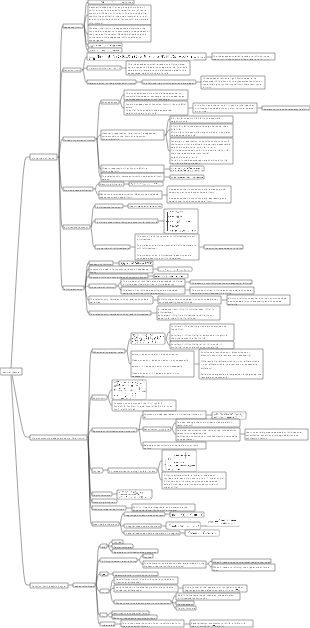
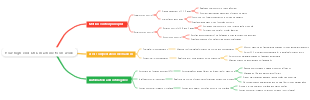
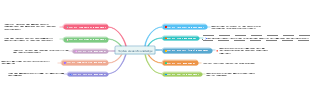
This is a mind map that summarizes goal management. It mainly covers what is good goal management, how to achieve the maximum team goal, how to set goals, how to decompose goals, how to plan and sequence goals, how to deliver goals, how to supervise and manage, and how to Incentives and incentives are summarized in these aspects.
Edited at 2021-12-04 07:40:58This is a mind map about bacteria, and its main contents include: overview, morphology, types, structure, reproduction, distribution, application, and expansion. The summary is comprehensive and meticulous, suitable as review materials.
This is a mind map about plant asexual reproduction, and its main contents include: concept, spore reproduction, vegetative reproduction, tissue culture, and buds. The summary is comprehensive and meticulous, suitable as review materials.
This is a mind map about the reproductive development of animals, and its main contents include: insects, frogs, birds, sexual reproduction, and asexual reproduction. The summary is comprehensive and meticulous, suitable as review materials.
This is a mind map about bacteria, and its main contents include: overview, morphology, types, structure, reproduction, distribution, application, and expansion. The summary is comprehensive and meticulous, suitable as review materials.
This is a mind map about plant asexual reproduction, and its main contents include: concept, spore reproduction, vegetative reproduction, tissue culture, and buds. The summary is comprehensive and meticulous, suitable as review materials.
This is a mind map about the reproductive development of animals, and its main contents include: insects, frogs, birds, sexual reproduction, and asexual reproduction. The summary is comprehensive and meticulous, suitable as review materials.
management by objectives
1. What is good management by objectives?
3 key words
strong will
Competence
Teamwork
Objective management effect
Direction: what to do (rudder)
Progress: Arrange time reasonably (clock)
Contrast: Contrast the gap (mirror)
hope (plum)
Thinking: pain points/difficulties in goal management
Organizational structure and unclear responsibilities
Not aligned with company goals
Goals do not quantify implementation details
Emergency insertion by external factors
Coordination within the team is out of sync
Team members have inconsistent goals
There is no reward and punishment system, and the team’s motivation is not high.
Implementation supervision is not in place
2. The biggest obstacle to achieving team goals
centric thinking
Each department has a different perspective
Case: the engineering department of a real estate company (focuses on progress and production safety, ignoring sales rate), the sales department (focusing on sales rate, customer satisfaction, and ignoring costs), and the finance department (focusing on accuracy, planning, handling fees, financial regulations, and ignoring business need)
Enlightenment: Different positions have different concerns when thinking about the basic thinking, and department walls are too high
How to reduce local thinking
Emotional card
group activities
Cultural brand
Improve overall view and unify thinking
Institutional card
Teamwork is incorporated into assessment and promotion mechanisms
Appropriate job rotation
Team Performance Bundle
realm card
Improve awareness and realm (considering it from a higher level from the boss’s perspective)
3. How to set (formulate) goals
Develop four elements
what is the goal
to what extent
how to do
when to complete goal
SMART principle
Specific
Measurable
Attainable
Relevant
Deadline (Time-based)
Goal setting steps
1. Overall goal
2. SMART principle goals
3. Check whether the goals are consistent with the boss’s
4. List problems and obstacles
5. Authorization and skills required to achieve goals
6. Cooperation partners and external resources
7. Completion date and sequence
Thinking: Most goals that cannot be quantified and are difficult to evaluate cannot be achieved.
4. How to decompose goals
Goal decomposition
decomposition principle
According to the principle of integration, division and integration: the overall goal is decomposed into various levels, departments and even specific people vertically, horizontally or temporally to form a goal system.
Consistent from top to bottom: sub-goals should be consistent with the overall goal direction
Conditions and factors: constraints and factors for each sub-goal (such as: people, finances, materials)
Balance content and time: make reasonable arrangements according to actual conditions
Specific target value and completion time: The expression of sub-goals must also have specific target value and completion time.
Parkinson's Law
Case: Grandma sends a letter
Enlightenment: If you are given a month to do a job, it will take you one month to complete it; if you are given two months, it will take you two months to complete it; if you are given a job, it will take you as long as it takes to complete it.
Decomposition method
Peel onion method (large->small)
Big goals (30 days)
Target (each)
Small goals (daily)
Immediate target (now)
to-do list method
with a clear purpose
Liability lock-in
action plan
performance tracking
Result assessment
5. How to plan and sequence goals
Three points for planning
Determine overall goals
Solve the main contradictions (personnel capabilities, personnel deployment)
Correct sorting (sorting by importance, priority, weight)
Case
Three stories illustrate the truth
1. Hard-working cleaning staff
Enlightenment: Sharpening your sword will keep you from chopping wood
2. Lazy employees
Enlightenment: Use less feet and more brains
3. People who can’t come back
Enlightenment: Only by never forgetting your original intention can you achieve success
Plan sorting
Case
Tianjin 2015 explosion VS Notre Dame fire
Enlightenment: The importance of prioritizing important and emergency plans
Important: personal safety and cultural relics safety
Emergency: Firefighting
The four quadrants of time management
How to judge whether it is important: see what the consequences are
M1: Both important and urgent
crisis management
Accident handling
Important officials visit
Important customer complaints and feedback
Urgent need
M2: Important but not urgent
Medium and long term plans
Learn to improve
accompany children
Exercise
M3: Not important but urgent
M4: Not important or urgent
Tidy up the table
80/20 rule
80% of performance comes from 20% of customers
20% of the work brings 80% of the performance
Case
Stock god Buffett’s 5 stocks account for more than 80% of the company’s total value
Enlightenment: Time and energy are limited. Only by focusing on 20% of the key work can you achieve good performance. Don’t scratch your eyebrows and beard all at once.
6. How to deliver goals
case
The movie "Facing Giants"
Enlightenment: How coaches set goals and what they did right
Pick the right people (understand their potential)
Use the right method
Obtain commitment (use commitment style to subordinates or children)
Recognition and potential stimulation
Companionship, empathy, correction
Leading from point to point and motivating the team
Use commitment to set goals
Analyze goals in advance and convince subordinates to recognize goals
get commitment
7. How to supervise and inspect targets
4 points to do a good job in goal management
Everything must be checked (employees are lazy and will only complete the work you check)
Return to work in a timely manner (everyone must report work progress and results in a timely manner)
One person is responsible: clearly point to his responsibility, and the responsibility is only given to one person, not two or more (responsibility diffusion effect)
Chart management: Gantt chart (important first, combined with the four-quadrant method of time) target tracking order
Five things to note
Goal planning: Negotiate, get commitment, don’t pressure
Goal implementation: process tracking, guidance and correction
Target assessment: quantification, refinement, and concreteness
Performance feedback: Achieving action improvement plans
Application of results: clear rewards and punishments, cash in time
8. How to motivate and motivate goals
five levels of needs theory
self-actualization
Esteem needs (status, respect)
Social needs (social, friends, love)
Safety needs (job security)
Physiological needs (food, clothing, sex)
Case: Analysis of the needs of four masters and disciples of Tang Monk and the Western Heaven to learn Buddhist scriptures
Tang Seng (self-transcendence), Sun Wukong (respect needs), Sha Seng (security needs), Zhu Bajie (physiological needs)
How to motivate employees
Analyze employee levels, understand employee needs, and use different motivation methods. Motivating all employees with a fixed model will only waste talents
12 ways to motivate (non-monetary)
Interest, responsibility, participation, promotion, goals, role model, recognition, culture, vision, competition, growth (training), feelings
Inspire new people
Pay attention to, place high hopes on
Appoint an enthusiastic and responsible facilitator
Utilize the director's strengths and let him produce results as soon as possible
Pay attention to his difficulties and open a way for him when necessary
Dare to set high goals
Give him the credit and take the responsibility for him
Motivating the elderly
Often mention his contribution (like a few treasures)
Ask him for guidance and tutor newcomers (bonus points for tutoring and formation of a team)
Assign positions based on talents (match his interests as much as possible)
Seek his advice for more evidence (consultant)
Persuasion instead of command
use him
Team motivation
Focus on the team
Proud of the team
Set goals and gain consensus (cannot use majority rule)
Never take credit
Avoid criticism in morning meetings
Find a strong external opponent