 Wondershare EdrawMind
MindMap Gallery TEMA 20
- 18
TEMA 20
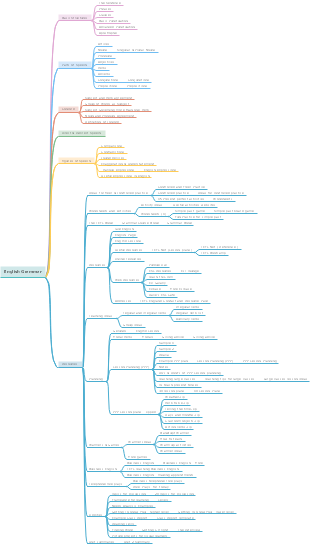
Este es un mapa mental sobre TEMA 20,Contenido principal: REFERENCES,CONCLUSION,3. CRITERIA TO ADD IN THE SCHOOL EDUCATIONAL PROJECT AND IN THE SCHOOL CURRICULAR PROJECT,2. CATERING TO DIVERSITY,1. THE AREA OF FOREIGN LANGUAGES IN THE CURRICULUM,This essay will discuss the main standards which need to be considered when teaching English as a foreign language according to the current legislation. Additionally, it will also explain the school educational project that every school needs to elaborat
Edited at 2024-05-12 19:52:24
- Recommended to you
- Outline

TEMA 20
The Spanish educational system states some nationwide standards that guarantee an equalitarian education for every child who lives in Spain. Each autonomous community specify these standards in order to adapt them to the reality of each location. These specifications guide schools and teachers in their duty to plan and organize the teaching-learning process for a certain group of students with specific characteristics.
This essay will discuss the main standards which need to be considered when teaching English as a foreign language according to the current legislation. Additionally, it will also explain the school educational project that every school needs to elaborate.
1. THE AREA OF FOREIGN LANGUAGES IN THE CURRICULUM
According to the Royal Decree 157/2022, 1st March, which establishes the ordinance and the minimum teaching for Primary Education (henceforth Royal Decree 157/2022), the curriculum of Primary Education can be defined as “the set of objectives, competences, contents stated in the form of basic knowledge, pedagogical methods and evaluation criteria”.
The curriculum of Primary Education for the school year 2023/2024 is regulated by the Decree 61/2022, 13th July, which establishes the ordinance and the curriculum of Primary Education in the Community of Madrid (hereafter Decree 61/2022). This Decree states the curricular elements following the standards announced by Royal Decree 157/2022.
The following subsections explain the aforementioned curricular elements which English teachers need to bear in mind for teaching English as a foreign language.
1.1 Objectives
The article 2 of Royal Decree 157/2022 defines objectives as “the achievements that students are expected to have reached at the end of Primary Education. These achievements are directly linked to the acquisition of the key competences”. The Royal Decree 157/2022 and the Decree 61/2022 outline 14 objectives for the whole stage of Primary Education.
The main objective that English teachers need to consider is objective f, which state that students should “acquire, in at least one foreign language, a basic communicative competence that allows them to express and understand simple messages, as well as manage everyday situations”. (Decree 61/2022, p.4)
The communicative competence, which is widely explained in topic 3, refers to the learner’s ability to use a language to communicate successfully in different contexts. This competence includes three competences: linguistic competence, sociolinguistic competence and pragmatic competence (CEFR, 2001).
1.2. Key competences
The article 2 of Royal Decree 157/2022 defines key competences as “the performances that are considered essential for students to be able to progress with guarantees of success in her training itinerary, and confront the main global and local challenges”. The key competences are:
Competence in linguistic communication.
Multilingual competence.
Mathematical competence and competence in science, technology and engineering.
Digital competence.
Personal, social and learning to learn competence.
Civic competence.
Enterprising competence.
Competence in cultural awareness and expression.
These eight competences have been adapted from the key competences for lifelong learning established by Council Recommendation, 22nd May, 2018.
The Royal Decree 157/2022 and the Decree 61/2022 define each of the key competences in the exit profile (annex I) through the operational definitions. The so-called exit profile is the tool which permits the identification of the expected level of learning in students when they complete the stage of Primary Education. It should be the base for every curricular decision, as well as the methodological guidelines for planning the teaching-learning process.
Apart from this, it is essential to define the specific competences. They are directly related to the operational definitions which describe the key competences. The specific competences are the performances that students must be able to deploy in activities or situations which require basic knowledge of the English subject.
There are six specific competences for the English area, which are common to all cycles of Primary Education. The acquisition of these competences “must be adapted to the students’ circumstances, interests, maturity and development” (Decree 61/2022, p. 75). The specific competences are “the starting point of the English acquisition along Primary Education” (Decree 61/2022, p. 76). Moreover, these competences are the connecting element between, on the one hand, the exit profile and, on the other, the basic knowledge of the English subject and the evaluation criteria.
It can be said that the mere fact of learning English as a foreign language helps students improve their multilingual competence and their competence in linguistic competence. Nevertheless, there are plenty of activities which can be used in the English lessons to promote students’ key competences development. For instance, students of fifth or sixth grade could be asked to create, in small groups, a lapbook about indigenous animals from New Zeeland or Australia. To do so, they will need to search of the information on the internet and to organize their work. This activity can help learners improve other key competences such as the digital competence; the personal, social and learning to learn competence; the enterprising competence and the competence in cultural awareness and expression.
1.3 Basic knowledge
The article 2 of Royal Decree 157/2022 defines the basic knowledge as “knowledge, skills and attitudes that constitute the content of an area or field and whose learning is necessary for the acquisition of the specific competences”.
The aforementioned Royal Decree divides the content of the English area into three blocks, which are the following:
Communication block: the necessary knowledge for the development of communicative activities of comprehension, production, interaction and mediation, as well as activities related to the guided search of information.
Pluriligualism block: integrates knowledge related to the ability to reflect on the functioning of the languages.
Intercultural block: knowledge about the cultures transmitted through the foreign language and its appreciation as an opportunity for enrichment and development of attitudes of interest in knowing and understanding other languages, linguistic varieties and cultures.
The Decree 61/2022 set a fourth block in the English area for the Community of Madrid. This last block set syntactic-discursive elements that should be taught in the English area of Primary Education. These four blocks are established for cycle, not for course.
1.4 Pedagogical methods
The Royal Decree 157/ 2022 states in the pedagogical guidelines that English teachers should prioritize the comprehension, expression and oral interaction of language. Moreover, these pedagogical guidelines state that the teaching-learning process should be meaningful and promote students’ autonomy and reflection. Likewise, they specify that the English teaching-learning process should wonk on student’s reading comprehension, oral and written expression, audiovisual communication, as well as on developing students’ digital competence. By the same token, the English teachers should promote students’ creativity, scientific spirit and entrepreneurship in their lessons.
Moreover, the Decree 61/2022 considers it fundamental to base students’ English learning in their own experiences, providing them with activities in which they could participate actively, communicating, producing and interacting. Additionally, these learning experiences must encourage pupils’ motivation and reflection on the functioning of the English language.
Furthermore, the Royal Decree 157/2022 promotes the use of an eclectic methodology which combines different perspectives, approaches, methods, techniques and activities to create interdisciplinary, contextualized, significant and relevant tasks. This type of methodology could also promote the development of learning situations based on an integrated treatment of languages where students are considered as social agents, progressively autonomous and responsible for their own learning process. In addition, English learning situations must be planned according to the learners’ previous knowledge, interests, emotions and specific circumstances.
Following all these methodological principles, I consider it essential to use the Game-Based Learning (GBL) and the Task Based Language Teaching (TBLT) methods when teaching English, since they motivate children and involve them actively in their own learning, promote communication and interaction and create a friendly atmosphere in the class. Additionally, these methods can be easily adapted to pupils’ characteristics and they help them develop several key competences such as the digital competence; the personal, social and learning to learn competence; or the enterprising competence.
On the one hand, with the GBL, teachers can adapt and use a lot of games (Battleship, Bingo, Memory, Trivial, Taboo…) to help pupil learn vocabulary, grammar or practice the four language skills (listening, speaking, reading and writing). On the other hand, with the TBLT students can perform different tasks in groups to improve their productive skills (speaking and writing) and practice their receptive skills (listening and reading). Some examples are: explaining a typical sport from an English-speaking country, explaining a recipe, planning a city tour or create a blog about British meals. From my point of view, this methodology is very versatile, because it promotes interactions among students and can be used to work on several linguistic and sociolinguistic aspects of language, as well as the key competences.
Apart from this, I consider It fundamental to use digital activities in the English lessons, since they are very motivating for students and help them develop their digital competence. Digital competence will help students to face the changes and challenges of the digitalized era in which we are immersed. Some digital resources that teachers can use are Genially, Educaplay, etc.
1.5. Assessment criteria
The Royal Decree 157/2022 and the Decree 61/2022 establish several assessment criteria of the English area. These assessment criteria are directly linked to the six specific competences. Therefore, teachers should use these assessment criteria when evaluating students, since the determine their degree of the specific competences acquisition. What is more, the use of these assessment criteria determines students’ level of the key competences acquisition, since these competences are linked to the specific competences.
Apart from this, according to the current legislation, pupils’ assessment must be global, continuous and formative. Moreover, teachers should use a wide and varied range of evaluation instruments, so as to guarantee an objective assessment of different learning situations. Some examples of evaluation instruments that English teachers could use are exit tickets, tests or rubrics. Additionally, teachers can also use digital tools to assess such as Plickers, Adittio or Microsoft Excel.
In my opinion, evaluation is one of the most valuable task teachers need to perform, because it helps us identify what students have acquired and developed. This information allows us to modify and adapt our own teaching practice according to the learners’ needs, in order to provide them with effective learning-teaching processes. I also consider it essential to involve learners in the assessment of the teaching practice in an active way, since their feedback is very useful to adapt and modify the teaching practice properly.
Furthermore, from my point of view, it is important to encourage children to perform self and peer assessments, seeing that these activities will help them develop metacognition and learning to learn competence. For example, they can perform self-assessment by answering some questions about their own learning process in which they need to colour a happy or a not so happy little face. In addition, they could perform peer-assessments by filling out a target evaluation sheet.
2. CATERING TO DIVERSITY
Catering to diversity is a fundamental teachers’ task, albeit it is not included in the main elements of the curriculum definition. According to the Organic Law 2/2006, 3rd May, of Education amended by the Organic Law 3/2020, 29th December, teachers should cater to diversity, including every student by applying the Universal Design for Learning principles, which consist of providing learners with multiple means of engagement, representation, action and expression.
Moreover, the Decree 23/2023, 22nd March, of the Governing Council, which regulates educational catering to the individual differences of students in the Community of Madrid (henceforth, Decree
23/2023), states that teachers should use student’s differences as the frame of reference when planning their lessons. It establishes that teachers must design inclusive, flexible and personalized teaching-learning processes which provide students with a comprehensive training.
Furthermore, the Decree 23/2023 indicates that teachers must prevent, detect and identify student’s barriers to learning and participation. This identification must be performed as soon as possible to guarantee students’ proper development. Once the barriers are identified, teachers must address the individual differences of student adopting ordinary or specific educational measures to help learners achieve their maximum development. The ordinary measures can be used with any child who present a barrier, while the specific measures can only be used with the following students:
• Students with special educational needs.
• Pupils which present a maturational delay.
• Students that suffer language and communication development disorders.
• Learners with attention disorders.
• Children with learning disorders.
• Learners that have serious lack of knowledge of the language of learning.
• Children with educational compensation needs.
• Students that have high intellectual abilities.
• Pupils who joined later into the Spanish educational system.
3. CRITERIA TO ADD IN THE SCHOOL EDUCATIONAL PROJECT AND IN THE SCHOOL CURRICULAR PROJECT
The School Educational Project is a document which specifies the decisions made by the educative community, through the School Board, about basic educative options and the general organization of the school. It must include the school distinctive features, aims and objectives, and organization. It is designed to meet the needs and demands that may arise throughout the school year in an effective way. Each school elaborates its own educational project.
On the other hand, the school curricular project was eliminated by the Organic Law 2/2006, 3rd May, of Education amended by Organic Law 3/ 2020, 29th December. However, schools must include the curricular specifications for their own centre in the School Educational Project.
According to the current legislation, the Education Project specifies the principle of peThe general framework that will guide the activity of the centre (values, priorities, objectives).dagogic and organisational autonomy of a school. It contains the following elements:
Socio-cultural characteristics of the school environment.
-The specification of the curriculum established by the administration for each area, subject, and module of the stages developed at school, as well as the different elements and teachings of a cross-curricular nature.
The measures to cater for student diversity.
The planning of tutorial action.
The plan for coexistence, which must respect the principles of non-discrimination and educational inclusion as fundamental values.
Other aspects that the School Educational Project may include are the criteria for organising and distributing school time and extracurricular activities, as well as the planning for the development of other skills (ICT plan, reading plan, innovation plan, linguistic plan, etc.).
CONCLUSION
In conclusion, English teachers should plan their teaching practice according to the legislative standards, using an eclectic methodology in order to provide students with meaningful learning, which will lead them to achieve their communicative competence, as well as the key competences. Additionally, the teaching-learning process should be personalised according to students’ characteristics and interests, so as to meet their needs and make the English learning a gratifying, enjoyable and unique experience for every child.
REFERENCES
Council of Europe (2001). Common European Framework of Reference for languages: Learning, teaching, assessment. Press Syndicate of the University of Cambridge.
Decree 61/2022, 13th July, which establishes de ordinance and the curriculum of Primary Education in the Community of Madrid.
Royal Decree 157/2022, 1st March, which establish the ordinance and minimum teaching of Primary Education.
Organic Law 2/2006, 3rd May, of Education amended by the Organic Law 3/ 2020, 29th December.
Decree 23/2023, 22nd March, of the Governing Council, which regulates educational catering to the individual differences of students in the Community of Madrid.
THE AREA OF FOREIGN LANGUAGES IN THE CURRICULUM