 Wondershare EdrawMind
MindMap Gallery Chapter 3_Strategic Choice
- 19
Chapter 3_Strategic Choice
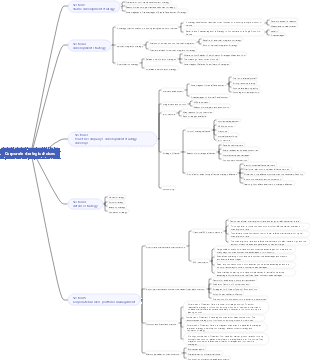
This is a mind map of strategic choices, which elaborates in great detail on four major aspects: overall strategy, business unit strategy, functional strategy, and international business strategy.
Edited at 2021-08-02 11:07:57
- bacteria
This is a mind map about bacteria, and its main contents include: overview, morphology, types, structure, reproduction, distribution, application, and expansion. The summary is comprehensive and meticulous, suitable as review materials.
- Plant asexual reproduction
This is a mind map about plant asexual reproduction, and its main contents include: concept, spore reproduction, vegetative reproduction, tissue culture, and buds. The summary is comprehensive and meticulous, suitable as review materials.
- Reproductive development of animals
This is a mind map about the reproductive development of animals, and its main contents include: insects, frogs, birds, sexual reproduction, and asexual reproduction. The summary is comprehensive and meticulous, suitable as review materials.
Chapter 3_Strategic Choice
- bacteria
This is a mind map about bacteria, and its main contents include: overview, morphology, types, structure, reproduction, distribution, application, and expansion. The summary is comprehensive and meticulous, suitable as review materials.
- Plant asexual reproduction
This is a mind map about plant asexual reproduction, and its main contents include: concept, spore reproduction, vegetative reproduction, tissue culture, and buds. The summary is comprehensive and meticulous, suitable as review materials.
- Reproductive development of animals
This is a mind map about the reproductive development of animals, and its main contents include: insects, frogs, birds, sexual reproduction, and asexual reproduction. The summary is comprehensive and meticulous, suitable as review materials.
- Recommended to you
- Outline
Chapter 3. Strategic Choice (memorize it all and you’re done)
1. Overall strategy
1. Development Strategy (SO)
Definition: Taking advantage of opportunities in the external environment to explore the company’s internal advantageous resources
①Integrated strategy
vertical integration
Please pay attention to answer the questions carefully and from front to back.
看: 产业链\方向
Total advantages: save upstream and downstream purchasing and sales transaction costs, control scarce resources, ensure the quality of key inputs, and obtain new customers. Total disadvantages: increase the company's internal management costs, and bigger is not always better; total risks: not familiar with new business areas. Risks, backward integration has high asset specificity and high exit costs
Forward integration (downstream)
sales, market, customers
advantage:
It is helpful for enterprises to control and master the market, enhance sensitivity to customer needs, and improve product market adaptability and competitiveness.
Applicable conditions:
High sales costs and poor reliability
Industry has great potential for growth
Have forward-integrated financial and human resources
High profits in sales
backward integration
Suppliers, raw materials, costs
advantage:
It is helpful for enterprises to effectively control the cost/quality and supply reliability of raw materials and other inputs, and ensure the steady progress of enterprise production and operation activities.
Be applicable:
Supplier costs are high and reliability is poor
Industry has great potential for growth
Have backward integrated financial and human resources
Suppliers have high profit margins
Small quantity, high competition
The stability of enterprise product prices is very critical to the enterprise (backward integration is conducive to controlling raw material costs and maintaining stable raw material prices)
Horizontal integration:
meaning
Value chain in the same direction
Purpose
Achieve economies of scale to gain resource advantages
Conditions of use (back)
The industry is highly competitive
Significant industry economies of scale
The horizontal integration of enterprises complies with anti-monopoly laws and regulations, so it is certain to obtain a monopoly position in certain areas.
The industry has great growth potential
Horizontal integration requires capital and manpower
②Intensive strategy
definition
Utilize the potential of existing products or markets within the original business scope to strengthen competitive position and seek growth
market penetration
Increase the frequency of product use through various methods
method
Expand market share (growing)
Develop niche markets (weak businesses)
Maintain market share (declining companies)
Applicable conditions
market growth
There is a market
Decide to limit benefits to existing products and services
own limitations
Other companies left the market for various reasons
Others leave
The company has a strong market position and can leverage its experience and capabilities to gain strong and unique advantages
Strong in oneself
Low risk, high executive involvement
Low risk, high participation
Market Development
Introduce existing products and services into new markets Existing market or market segment is saturated
Often combined with product development
Applicable conditions
There is an untapped or unsaturated market
There is a market
Access to new, reliable, economical and high-quality sales channels
Have channels
Existing business areas are very successful
Have strength
Have the capital and human resources needed to expand operations
someone has money
There is excess production capacity
Have production capacity
The main business of the company belongs to an industry that is rapidly globalizing
Can go out
Product Development(Mobile)
Develop new products through technological improvement and product development based on the original ones.
reason
Leverage your company’s understanding of the market
Maintain a leading position relative to competitors
Find new opportunities from shortcomings in existing product portfolio
Enables businesses to maintain a secure position in existing markets
Applicable situations
The company has high market credibility and customer satisfaction
good reputation
The company belongs to a high-tech industry that is suitable for innovation and rapid development.
High-tech
The industry is in a stage of rapid growth
develop well
Have strong research and development capabilities
strong ability
Major competitors offer higher quality products at similar prices
Strong opponent
③Diversification strategy
reason
Goals cannot be achieved by continuing operations in existing products or markets
The goal is not big enough
Capital retained from previous successful operations in an existing product or market exceeds the capital required for expansion
too much money
means higher profits
greedy
type
Related (Concentric) Diversification
Based on existing business, it may be related to products, marketing channels, users, etc.
Uncorrelated (centrifugal) diversification
··Irrelevant
advantage
Find new growth points
Obtain funds or other financial benefits
original intention
Leveraging underutilized resources
Use surplus funds
image and reputation
implement
spread risk
Easier access to financing
result
risk
Risks of the original business industry
overall market risk
Industry entry risk
Industry exit risk
Internal business integration risks
Ansoff matrix
2. Stability Strategy (WT)
Limited to the operating environment and internal conditions, maintain the level and scope of the strategic starting point
Be applicable
The operating environment is forecast to change little, and early operations were successful.
advantage
Can make full use of various resources
Prevent development from being too fast and too hasty and causing imbalances
Take your time, be full
Reduce capital investment and development risks in developing new markets/products
Avoid the cost of reconfiguration and composition
Avoid risks and costs
risk
Once the external environment changes significantly, the imbalance will fall into trouble
Reduce the risk awareness of enterprises
3. Contraction strategy (WO)
retreat strategy
reason
active cause
The need for strategic reorganization of large enterprises
short-term behavior of small businesses
passive cause
External: down
Internal: Business loses competitive edge
Way
①Condensation and concentration
Mechanism change (adjustment of management team, revision of policies and management control system)
Finance and Financial Strategy
Cost reduction (reducing labor costs, administrative expenses)
②Turn
Reposition existing service offerings
Adjust marketing strategy (marketing 4P, price promotion, plsy)
③Abandon strategy
Franchise
Subcontract
buyout
Management and leveraged buyouts
Split into shares/split
Asset swaps and strategic trade
Exit barriers: Judgment of business conditions; exit barriers (high degree of specificity of fixed assets; exit costs (layoff costs); internal strategic connections; emotional barriers; government and social constraints)
Judgment of the business status of the enterprise
exit barriers
Degree of specificity of fixed assets
exit cost
Labor agreement, replacement cost, spare parts repair cost
internal strategic connections
emotional disorder
Government and Social Constraints
Main approaches to development strategy
main method
external development
mergers and acquisitions
1. Type
Merger and acquisition of industries from both parties
Horizontal
same industry
portrait
Same industry but different production and sales stages
forward
backward
Diversification
Attitude of the acquired party
friendly
hostility
Identity of the acquiring party
Industrial capital (seeking industrial profits)
financial capital
investment income
Acquisition funding sources
LBO
Main funds: external liabilities
non-leveraged buyout
Main funds: own funds
2.Motive
Avoid entry barriers and quickly enter to seize market opportunities
speed
synergy
Synergy 1 1>2
Overcome negative externalities of enterprises, reduce competition, and enhance control over enterprises
compete
3. M&A failed
poor decision making
Should not buy
Inability to integrate well after mergers and acquisitions
indigestion
M&A costs are too high
Too expensive to buy
Cross-border mergers and acquisitions face political risks
① Strengthen political assessment
②Flexible investment strategy
③Enterprise localization strategy
Internal Development (New Construction)
Do not acquire other companies and use its own internal resources to achieve expansion.
Strategic Alliance
cooperate
feature
intermediate organization
equal organizational relations
equality
long
complementary
open
strategic partnership
motivation
Promote technological innovation
Realize resource complementation
Open up new markets
Inside
Avoid business risks
Avoid or reduce competition
Reduce coordination costs (relative to mergers and acquisitions)
outside
Main types
Equity type (joint venture, mutual shareholding investment)
strict
advantage
Expand financial strength, enhance trust and responsibility, and facilitate long-term cooperation
shortcoming
Poor flexibility
Contractual (functional agreement)
casual
advantage
Coordination and tacit understanding are more essential characteristics of strategy
Flexibility, autonomy and economic efficiency
shortcoming
poor control ability
Lack of stability and long-term interests
Insufficient communication and low organizational efficiency
stage
Research and development→Manufacturing→Sales→Comprehensive
Control
Enter into an agreement
define goals
design structure
Assess assets
Specify liability for breach of contract and dissolution clauses
Establish an alliance of cooperation and trust
2. Business unit strategy
1. Basic competitive strategy
①Cost leadership
advantage
Create barriers to entry (among potential competitors)
Enhance bargaining power
Reduce the threat of substitutes
stay ahead of the curve
Implementation conditions
market conditions
The product has high price elasticity and there are a large number of price-sensitive users in the market.
Product standardization with little differentiation
Buyers pay less attention to brands
Price competition is the main means of market competition, and consumers’ switching costs are low
Resources and skills
Reduce various factor costs
Improve productivity and improve production capacity utilization
Achieve economies of scale and equip corresponding production facilities in industries with significant economies of scale
focal length
Improve product process design
Choose the appropriate trading organization form (in-house production or outsourcing)
risk
Change, demand, competition
Market demand changes from price → brand image, which is the company’s advantage → disadvantage
New entrants learn at lower cost
Technological changes may cause past investments to reduce costs and gain experience to be wiped out
②Differentiation
Luxury
meaning
Products and services are unique and bring premiums that exceed the cost of uniqueness
Advantage
Create barriers to entry (among potential competitors)
Enhance bargaining power
Reduce the threat of substitutes
Reduce customer sensitivity
risk
cost, demand, competition
Cost is too high
Changes in market demand
Competitors imitate, differences decrease
Market conditions (external)
Able to fully realize differentiation and be recognized by customers
Diversified customer needs
Enterprise industry technology changes rapidly, innovation is the focus of competition
Resources and capabilities (internal)
Focus on R&D and marketing, both institutional and cultural aspects should flourish, and the overall integration cannot collapse.
Strong R&D capabilities and product design capabilities
Strong marketing skills
Ensure employee creative incentive system, management system and good creative culture
Have the ability to improve the overall quality of business operations, establish product image, maintain advanced technology, and establish and improve distribution channels
execution performance
③Centralization
Specialize in a small area
Targeting a specific buying group, product segment or regional market, small and medium-sized enterprises use
1) Concentrated cost leadership 2) Concentrated differentiation
advantage
The advantages of cost leadership and differentiation can be reflected here
Enhance the relative competitive advantage of small and medium-sized enterprises
Large companies avoid direct conflicts with competitors
Implementation conditions
There are differences in needs
The target market is relatively attractive
No other competitor in the target market uses a similar strategy
Enterprises have limited resource capabilities and can only choose individual market segments.
risk
Demand, competition, narrow target market
The difference in demand becomes smaller
Entry and competition of competitors
Narrow target market creates risks
Comprehensive Analysis—Strategy Clock
Cost leadership → low price strategy 2; differentiation → high price strategy 4
Focus on cost leadership → low price and low value 1; focus on differentiation → high price and high value 5
Mixed strategy 3: Provide customers with higher value recognition while gaining cost advantages; reasons → economies of scale, experience curve, and improved production efficiency to reduce costs
Failed strategies: 6-high price, low value; 7-monopoly; 8-deception strategy, concealment
Businesses gain two advantages
Companies that provide high-quality products increase market share and lower average costs due to economies of scale
The accumulated experience of high-quality products reduces costs quickly.
Attention to improving production efficiency can reduce costs in the production of high-quality products
sum
Advantage
create barriers to entry
Enhance bargaining power
Reduce the threat of substitutes
cost leadership
Maintain the company's leading position
Differentiation
Reduce customer sensitivity
centralization
Enhance the competitive advantage of small and medium-sized enterprises
Reduce head-on conflicts between large companies and competitors
risk
need
compete
cost leadership
technological changes
Differentiation
The cost of differentiation is too high
centralization
narrow target market
external market conditions
industry
cost leadership
price competition
Differentiation
Upgrading high-tech industries
product
cost leadership
standardization
Differentiation
Differentiation
customer
cost leadership
Differential insensitivity. price sensitive
Differentiation
Diverse and differentiated needs
internal resource capabilities
subtopic
2. Competitive strategies for small and medium-sized enterprises
Scattered industries
small and broken
reason
economic characteristics of industry
Low barriers to entry or existing barriers to exit
Diverse market demands lead to high product differentiation
Economies of scale do not exist or are difficult to achieve
other factors
Government policies and local regulations restricting the concentration of certain industries
No company in a new industry can occupy a significant market share yet
strategy
Overcome fragmentation and gain cost advantage
Franchise or franchise
Technological innovation and creating economies of scale
Discover industry trends early
Increase added value - improve product differentiation
Specialization-goal agglomeration
Specialization by product type or product segment
Customer Type Specialization
Geographic area specialization
Beware of Traps
Avoid seeking dominance
Avoid over-centralization
Avoid overreacting to new products
Maintain strict strategic constraints
Understand competitors' strategic objectives and overhead costs
Emerging industry
new and fast
definition
Newly formed or re-formed; both a risk and an opportunity
Common characteristics of the internal structural environment of emerging industries
Strategy and technology are uncertain, corporate customers are all new, and cost conversion is extremely fast.
Technical and strategic uncertainty
Rapid cost conversion
Budding businesses and start-ups
first time buyer
developmental disabilities
Difficulties in selecting, acquiring and applying specialized technologies
Insufficient funding for raw materials, parts, and other supplies
Customer confusion and wait-and-see
Reaction of the substituted product
Lack of courage and ability to take risks
Strategic Choice
Shape industrial structure
Correctly treat the externalities of industrial development
Pay attention to changes in industrial opportunities and obstacles, and take the initiative in industrial development
Choose the right time and field to enter
☆3.Blue ocean strategy
definition
In market areas that have not yet been developed or not yet taken seriously by most companies, "value innovation" is the cornerstone of blue ocean strategy.
feature
Avoid competition and expand non-competitive market space
Create and capture new needs
Break the law of mutuality between value and cost, pursue differentiation and low cost at the same time, and integrate the enterprise into a system
in principle
Principles of Strategy Formulation
Rebuilding market boundaries
search
Focus on the big picture rather than the numbers
planning
Go beyond existing needs
scale
Follow a sound strategic sequence
business model
Strategy Execution Principles
Overcome key organizational barriers
organize
Make execution part of the strategy
manage
Reconstructing the Fundamental Laws of Market Boundaries
Examine other industries
Rebuilding cinemas and bars
Look at complementary products or services
Look twice
Redefining industry buyer groups
Reset customer functional or emotional appeals
two realms
View the market across different strategic groups within the industry
Participate in shaping external trends across time
Correctly predict the development trend of the external environment
two trends
3. Functional strategy
☆1.Marketing strategy
Determination of target market
·market segmentation
consumer market segmentation
Geographic segmentation
population segmentation
psychographic segmentation
lifestyle, personality
behavioral segmentation
Industrial market segmentation
User's industry category
User scale
geographical location
buying behavior factors
·Target market selection
No difference
The entire market is the target market, one product, price, sales method
advantage
economies of scale
shortcoming
Poor adaptability
difference
Two or more, all market segments are target markets, design and produce different products and marketing mixes
advantage
Adaptable
shortcoming
The cost is high and requires enterprises to have a high level of management
centralization
One or a few similar properties serve as the target market and occupy a larger share
advantage
Implement specialized production and sales
Save marketing costs
Improve product company visibility
shortcoming
High dependence on a single narrow target market
Greatly affected by strong competitors
5 factors to consider
market similarity
product homogeneity
Enterprise strength
Product life cycle stages
competitor strategy
·Market positioning
Market positioning
First market positioning (initial positioning)
Second market positioning (repositioning)
Three positioning strategies
Strategies to seize or fill market gaps
Market positioning policies for coexistence and confrontation with competitors
Market positioning strategies to replace competitors
Design marketing mix
product! !
product
product mix strategy
Width is the product category; length is the total number of items; depth is the designs, colors, etc.; relevance: end use, production conditions, distribution channels
Strategy type
Expand product portfolio
Reduce product portfolio
product extension
down
up
Two-way
Brand and Trademark Strategy
single business name
Each product has a different brand name
private label
product development strategy
reason
Products have unique competitive advantages
Has potential growth
Changing customer needs require new products
Requires technology development or adopts technology development
Need to respond to competitive innovations
risk
Lack of new product ideas
Market segmentation reduces market capacity and cannot justify investment.
High probability of development failure
Expensive to develop
Competitors imitate, new product life cycle is short
price
price (just need to know how to choose)
Basic pricing method
cost oriented pricing
demand-based pricing
high pricing strategy
low pricing strategy
price sensitive
economies of scale
competitive price pricing
prevailing price pricing
Sealed Tender Pricing
Main pricing strategies
psychological pricing strategies
Mantissa 13,8
round number pricing
prestige pricing
Solicitation pricing (special price to attract the purchase of other products)
Product portfolio pricing strategy
Series product pricing iphonex xs
By-product pricing (marine)
Related product pricing
Bundle pricing
Discount discount pricing
Cash discount, quantity discount
Transaction discount (% new and old customers)
Seasonal discounts (off-season)
Promotional discount
Geographical Spread Strategy
Origin price
destination
Uniform delivery price
Zone freight price
Subsidy freight price
New product pricing strategy
penetration pricing
New product-low price-occupy the market
skimming pricing
New product - high price - gradually reduced (with production capacity ↑)
Satisfied with pricing strategy
between
Distribution
promotion
Determine the best way for your product to reach customers
Distribution strategy
direct distribution
indirect distribution
exclusive distribution
One distributor in one place
selective distribution
Multiple distributors in one place
intensive distribution
High market coverage, convenient for consumers
Suitable for daily consumer goods, most home appliances, and household appliance brands
Distribution channel
online channels
Offline channels
Promotion
place
Earn attention → inspire purchase desire and purchasing behavior
elements
advertising promotion
Business promotion (non-media)
Public relations (corporate image)
personal selling
Strategy
push strategy
Products are pushed to consumers through marketing channels (personnel transaction promotion)
pull strategy
Manufacturer carries out activities directly → final consumer (advertising consumer promotion)
push-pull combination
middlemen advertising
2. Research and Development Strategy
People, property and property
Type of Study
basic research
applied research
development research
R&D type
Product research (new product development)
Main sources of competitive advantage
Risk: Potentially large amounts of money
Notice
Carefully control the development process
Project screening is important
process research
Effective processes, increased productivity
Power source
demand pull
technology push
The strategic role of R&D
Porter's basic strategy
Porter value chain
Ansoff matrix
product life cycle
R&D positioning
Become a company that introduces new technology products to the market
High risk
Become an innovative imitator of successful products
Low risk, but requires excellent R&D and marketing
Become a low-cost imitator of a successful product
R&D costs are low, but investment continues
Policies to encourage innovative ideas
Focus on recruiting employees with the necessary innovative skills
Form a development team
Specific administrators are responsible for obtaining information related to innovative ideas
Actively encourage employees and customers to come up with new ideas
Reward employees who successfully achieve goals; strategic plans should help achieve innovation goals
people
Provide financial support for innovation
fiscal
Requires appropriate management style and organizational structure
thing
3. Production and operation strategy
Main factors and stages involved in production operations strategy
four elements
Batch Type Demand Change Visibility (the process is customer visibility)
five stages
Determine production and operation goals
Determine exactly how the work will be done
Assess current business operating effectiveness
strategize
Execute strategy
Capacity planning
type
lead strategy
Offensive
excess capacity
hysteresis strategy
Conservative
full load
matching strategy
Robust
A small increase in production capacity
Balancing Capacity and Demand Approach
resource order
Order→Resource→Production
architecture
Order production
Resources→Order→Production
Dining room
Inventory production style
Resources→Production→Order
supermarket
Just-in-time production system (JIT)
Produce products to accurately meet (no inventory) customer needs in terms of time, quality and quantity
applied to
Service-oriented enterprise
Reduce queues
Manufacturing Enterprises
decrease stock
elements
keep improving
Eliminate waste
Good workplace organization
Reduce production preparation time
Involvement of all employees in the business
advantage
Reduce warehousing and operating expenses
Reduce the likelihood of obsolescence
Avoid being unable to sell due to sudden changes in demand
Just once! Reduce rework and inspection time
shortcoming
Little room for error correction
Strong dependence on suppliers
No spare finished goods to meet unexpected orders
4. Procurement strategy
Supply strategy
single source strategy
Quality ↑ Price ↑
advantage
Buyers and suppliers establish a relatively solid relationship
Buyers can obtain high-quality supplies (deep relationships)
Keep information confidential
economies of scale
shortcoming
Supplier bargaining power↓
Purchaser: may supply interruption
Supplier: may demand change
Multiple source strategy
Quality ↓ Price ↓
advantage
Gain additional knowledge and expertise
Supply interruption has little impact
Conducive to lowering prices for suppliers
shortcoming
Difficulty designing an effective quality assurance program
Low supplier commitment
Neglect of economies of scale
The supplier is responsible for delivering a complete subcomponent
advantage
Use external experts and external technology
Arrange other business for internal employees
Can negotiate economies of scale
shortcoming
Phase 1 suppliers are in a prominent position
Competitors can use the same suppliers
Procurement mix
quality
quantity
price
delivery
Purchasing Manager Responsibilities
Cost Control
management input
production input
Supplier management
Obtain various information to evaluate various purchasing options
Maintain inventory levels
5.Human resources strategy
effect
Accurately identify the types of talents your company needs
Unlock employee potential through training, development and education
Maximize the proportion of employees who perform well from early in their tenure
Motivating talented employees to achieve higher performance levels
Recruit enough new young workers
Recruit talents with certain experience and achievements
Prevent competitors from poaching corporate talents
Create corporate culture
human resource planing
Human resources master plan
Human resources business planning
step
Investigate, collect and organize various information
Actual determination of time limit, scope and nature
Use scientific methods to predict the company's future human resources
Develop master plan and various business plans
Final goal
HR supply and demand balance
Supply and demand are balanced but structural mismatch
Internal reconfiguration of personnel
Targeted and specialized training for existing personnel to fill vacant positions
Carry out personnel replacement, clean up unnecessary and supplement necessary
Supply>Demand
Expand business scale and explore new growth points
Layoffs, early retirement, hiring freeze
Shorten working hours and train time-rich employees
Supply<Demand
External hires, rehiring, and reducing turnover rates
outsourcing of certain operations
Improve work efficiency and extend working hours
Human resources acquisition
recruit
internal recruitment
method
Job Announcement Act
Archival Recording Act
advantage
Increase morale and develop expectations
Understand, be familiar with, have a sense of identity
Save time and costs
shortcoming
Excessive competition among employees and imbalance in their minds
It is difficult for newcomers to establish leadership reputation
Old-fashioned thinking and lack of innovation
External recruitment
advantage
inject fresh blood
A wide range of choices
avoid internal competition
Put pressure on insiders
shortcoming
Demotivating insiders
Don’t understand external people. External people don’t understand the company and may not necessarily agree with the company’s values.
Selection
Interviews, assessment centres, psychological tests, work samples, knowledge tests
Recruit
Grade
Performance planning→monitoring→appraisal→feedback
Establish an evaluation index system
Set evaluation criteria
Review key performance indicators
salary incentives
composition
basic salary
variable pay
indirect compensation
fairness principle
external fairness
internal fairness
individual fairness
pay level strategy
leading strategy
matching strategy
procrastination strategy
hybrid strategy
☆6.Financial strategy
Fundraising strategy
Establish: financing sources → financing costs → optimal capital structure → dividend distribution policy
concept
Financial Management and Financial Strategy
Financial Management
Fund use and fund raising
financial strategy
Fund use and management
Overall long-term development in the financial field
Financial strategy and non-financial strategy
financial strategy
Fundraising strategy
capital structure decisions
Financing Source Decisions
Dividend distribution decision
money management strategy
Non-financial strategy (business strategy)
The external environment is compatible with the company’s own capabilities
establish
Financing sources
internal financing
Equity financing
debt financing
loan
lease
Asset Sales Financing
Financing costs and optimal capital structure
dividend distribution policy
fixed dividend policy
Stable cash flow
Mature enterprise
Fixed dividend payout rate policy
Unable to predict cash flow
zero dividend policy
growth period
residual dividend policy
Pay only if there are no positive cash flow projects
During the growth stage, it is more difficult to easily obtain other sources of financing.
choose
Equity investors: capital gains and dividends; creditors: principal and interest
①Double high: No creditor can be found
②Double low: No shareholders can be found
③ Low and high: Attract shareholders and creditors
④High or low: Attracting creditors and shareholders
Financial risk and operational risk
business risk
specific business strategy
Financial risk
Capital Structure
Financial strategy selection based on development stage
Financial strategy choices based on value creation or growth rate
choose
Based on life cycle
Introduction period—equity financing, risk capital, no dividend distribution, the highest price/earnings multiple, rapid growth in stock price; growth period—equity financing, equity capital, low and high distribution rates, growth and volatility Maturity period—equity debt, retained earnings debt , distribution ratio high, medium, stable recession period - equity debt, debt, full distribution, low, decline and fluctuate
value creation matrix
Enterprise's market value added
=Market value of enterprise capital - capital occupied by enterprise
Sales growth rate, financing needs and value creation
Factors affecting value creation
投资资本回报率
资本成本
增长率
可持续增长率
Increase corporate value = increase shareholder value
Sales growth rate > sustainable growth rate, cash shortage, rapid growth
Shortage of cash to create value
Raising capital to support high growth
cash shortages that diminish value
Increase sustainable growth rate to reduce value impairment
Sales growth rate <sustainable growth rate: cash surplus, slow growth
Sales growth rate = sustainable growth rate: cash balance, balanced growth
① Value-added cash shortage (>0,>0
Rapid growth is temporary
Raise funds through borrowing
Rapid growth is long-term
Increase sustainable growth rate (improving operating efficiency and changing financial policies)
Increase equity capital (issue additional shares, merge mature enterprises)
②Value-added cash remaining (>0,<0)
Use remaining cash to accelerate growth
internal investment
Acquisition of related businesses
Return excess money to shareholders
increase dividend payments
Buy back shares
③ Impairment cash remaining (<0,<0)
Improve ROI
Increase after-tax operating profits
Improve operating asset turnover rate
It is impossible to reduce capital
Business unit for sale
④Impairing cash shortage (<0,>0)
Corporate Issues - Radical Reorganization
Industry decline - sell as soon as possible
4. International business strategy
1. Motivation
The optimal combination of international production factors
monopoly advantage theory
Market imperfections lead to foreign direct investment
market imperfections
products and factors of production
due to economies of scale
caused by government intervention
Caused by taxes and duties
Three types of advantages achieved by multinational enterprises under imperfect competition
Advantages of product market imperfections
Advantages of imperfect markets for factors of production
Internal economies of scale and external economies of scale owned by the enterprise
location theory
Market imperfections not only exist in one country's market, but also exist in international markets
Influencing factors
factors of production
Market positioning
trade barriers
Operating environment
Product Life Cycle (Vernon)
From the perspective of product R&D and production—product innovation→maturity→standardization
internalization theory
Equivalent to backward integration strategy
Three basic assumptions
The purpose of enterprises operating in an imperfect market is to maximize profits.
When the factors of production are incomplete, especially when the market for intermediate products is incomplete, it is possible for enterprises to manage business activities in a unified manner and replace the external market with an internal market.
When internalization crosses national borders, an international enterprise is created
Four factors influence
Industry Region Country Enterprise
eclectic theory of international production
① If an enterprise wants to invest directly abroad, it must have ownership advantages, internalization advantages, and location advantages.
②Only ownership and internalization, only export
③Only ownership, only technology transfer is considered
④ If you have all three advantages but only use technology transfer, you will lose the benefits of internalization advantages and location advantages.
Oligopolistic market reaction
Heimer
Strengthen your position in international competition by establishing territory in your competitors' territory
Knickerbocker’s “oligopoly reaction theory”
offensive investment
Investment by an oligopolistic company establishing its first subsidiary in a foreign market
defensive investing
Other members of the oligopoly in the same industry follow the lead firm and also establish subsidiaries.
Motives for international business operations in developing countries
The main motivations for overseas investment by multinational corporations in developing countries
time-sensitive assets
asset utilization strategy
seek market
Opportunities, customers, operations, products (see if it promotes product sales)
Enter new markets, expand scale, and circumvent trade barriers
seeking efficiency
Developing countries that are relatively cash-rich make this investment
seek resources
developing country
asset expansion strategy
Seek ready assets
Developing countries invest in developed countries
The main competitive advantages of developing countries’ multinational companies’ foreign investment
Has greater potential to create jobs
Intentional contact and technology absorption are more likely
Directly contribute to improving the productive capacity of developing countries
2.International market entry mode
exit
Target market selection—traditional (go to similar countries first) or new (go to developed countries first)
Whether there is product ownership: agent distributor; control method of sales channel: direct indirect
external equity investment
foreign securities investment
advantage
May be a precursor to direct investment
As part of a long-term corporate plan
Ways to expand corporate interests in other countries
shortcoming
Little or no management and control issues are addressed
It is difficult to give full play to the company's technical or management advantages
Foreign Direct Investment
advantage
Reduce transportation costs
Reduce manufacturing costs
Adjust production according to market demand
Enjoy certain benefits from the host country
shortcoming
High risk
Poor flexibility
type
Wholly owned subsidiary
advantage
Full control over the subsidiary's day-to-day operating activities in the target market
Get rid of conflicts in interests, goals, etc. of joint ventures
shortcoming
Spend a lot of money
The company faces high risks
The ability to avoid political risks is also significantly smaller than that of joint ventures (no host country companies participate in the cooperation)
joint venture
advantage
Reduce capital investment in international operations
Make up for the lack of cross-border experience
shortcoming
Coordination costs may be too large
Differences in goals in various aspects of the joint venture
Cultural differences in various aspects of joint ventures
motivation
Strengthen existing operations, production and R&D mitigation
Existing products enter foreign markets
Foreign products enter the domestic market
new business operations
non-equity form
Contract manufacturing, service outsourcing, contract farming, franchising, licensing, management contracts
3. Types of strategies for international operations
Degree of global collaboration Local independence and adaptability
International Strategy (Double Low)
Poor adaptability, high cost, and unable to provide products and services according to local needs
Headquarters decision-making power
Multi-country localization strategy (low-high)
Provides production and sales together; good adaptability, high cost, and high degree of decentralization (such as KFC); production facilities are repeatedly constructed and costly, and are too independent and difficult to command
local decision-making power
Products sold in different countries are different
×Experience benefits and location benefits
Low collaboration ability
Globalization strategy (high and low)
Supply production and sales to different places; poor adaptability, low operating costs, and highly centralized (such as Apple);
Headquarters decision-making power, local production
Same sales in different countries
√Experience curve benefits and economies of scale benefits
Transnational Strategy (Double High)
Good adaptability, low cost, two-way
√Cost efficiency and location efficiency
High collaboration ability
4. Corporate strategies in emerging markets
Allocate resources according to industry characteristics
Understand the different pressures faced by different industries; evaluate the company's own advantageous resources
Globalization pressure Localization pressure
Strategic Choices for Local Enterprises: Industrial Globalization Process Advantageous Resources of Local Enterprises in Emerging Markets
Defender Strategy: Double Low
Use local advantages for defense
practice
Focus on customers who prefer domestic products
Frequently adjust products and services
Strengthen the construction and management of distribution network
Notice
Don't try to win over everyone
Don’t just imitate your competitors’ strategies
Expander Strategy: Low High
Millet
Use success in the local market as a platform to expand into other markets
Find similar markets
Dodger Strategy: High Low
Move to new businesses or niche markets to avoid competition
Establish joint ventures and cooperative enterprises with multinational companies
sold to multinational corporations
Redefine core business and avoid direct competition
Produce complementary products to multinational corporations
Focus on market segments based on local advantages
Contender Strategy: Double High
Don’t just compete on cost, measure your own strength against industry leading companies
non-cost
Find a clear and defendable market
position
Find a suitable breakthrough in the globalized industry
Breakthrough
Learn to obtain resources from developed countries and overcome their own lack of capabilities and capital.
study