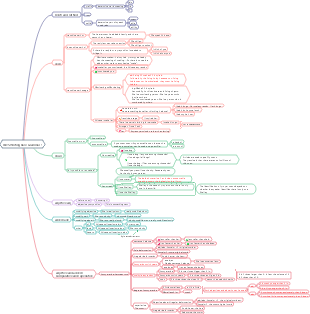
MindMap Gallery IELTS test
This is a mind map about the IELTS test. The main contents include IELTS listening, reading, IELTS writing, and IELTS speaking. If you like it, you can like and collect it!
Edited at 2022-07-31 16:41:26This is a mind map about bacteria, and its main contents include: overview, morphology, types, structure, reproduction, distribution, application, and expansion. The summary is comprehensive and meticulous, suitable as review materials.

This is a mind map about plant asexual reproduction, and its main contents include: concept, spore reproduction, vegetative reproduction, tissue culture, and buds. The summary is comprehensive and meticulous, suitable as review materials.
This is a mind map about the reproductive development of animals, and its main contents include: insects, frogs, birds, sexual reproduction, and asexual reproduction. The summary is comprehensive and meticulous, suitable as review materials.
This is a mind map about bacteria, and its main contents include: overview, morphology, types, structure, reproduction, distribution, application, and expansion. The summary is comprehensive and meticulous, suitable as review materials.
This is a mind map about plant asexual reproduction, and its main contents include: concept, spore reproduction, vegetative reproduction, tissue culture, and buds. The summary is comprehensive and meticulous, suitable as review materials.
This is a mind map about the reproductive development of animals, and its main contents include: insects, frogs, birds, sexual reproduction, and asexual reproduction. The summary is comprehensive and meticulous, suitable as review materials.
IELTS test
IELTS Listening
Fill in the blanks
1. Name of person
first name then surname
Given Name, First Name
Family Name, Last Name, Surname
2. Address
number noun road
Capitalize first letter
66 Lake Road; 24 River Lane; 7 Market Street
62 Queen Avenue; 16 Ocean Drive
suburbs)
city center/ town center/ downtown
urban/ suburb/ outskirts/ suburban/ rural
voice
Clear /e/ /ai/ /æ/
blur /ei/
3. Numbers and digits
Phone number, bank card number, ID number,
Passport number, driver's license number, flight number
, time, date
See character limit
one word and/ or a number
=Fill in at most one word + one number (1 month)
a number
879450963275/ ERQ73A / 12.25.2020/
3000-4000/ 9.00-9.30/ 6:00-8:00
and/or:
over 40/ more than 12/
October 12/August 2nd/August 2
post code
English - numbers + letters (uppercase),
Australia - four digits
Beauty - five digits
Quantity/Words:
hundred, thousand, million, billion, trillion
Fraction, decimal, percentage (percent/ percentage),
point, sub-base matrix
Numbers don’t need to be calculated
Before: ~~~ approx.
over/about/approximately/
more than/above…
After: ~~~unit
years/ months / weeks / working days working days / minutes
hectare / square meters square meter / acre [‘eɪkə] acre / km
liters liters/tons
month, week
annuary February March April May June
July August September October November December
Monday Tuesday Wednesday
Thursday Friday Saturday Sunday
Ø Voice
/e/ /ai/ /æ/
clear
/ei/
Vague
-teen
long sound
-ty
short note
How to do the questions:
1) Read and read:
out positioning word
Guess
4) Dictation:
5) Check:
6) ⚠
after positioning word
before the positioning word.
Listening articles
The first sentence/title is important
Active and passive rewriting
Simplified rewriting of sentences from (subordinate)
Affirmative-negative conversion rewriting
sentence body,
pronouns appear after the test point
position leader
twists and turns
Note the conjunction
but
Draw a circle-Reading questions-Comprehension questions-
use memory
logical connectives
1) New information, questions, attitudes
2) Turn: but, however, instead (of), rather than, more than, unlike
3) Emphasize: the most important/interesting, particularly, focus on, especially, concentrate on…
4) Logic: because, so, after, until, ago, before, although, between…and, among
5) Details: actually, in fact
6) List: the first/second…, on the other hand
7) Parallel: and, also, as well as, in addition, plus, what’s more, another
Article structure
flow chart
1) Passive voice
2) next, then, first, second
) Recite some options
Map question
vocabulary literacy
corner, bend, corridor, arrow, foyer, layout, path, trail, track, etc.
ü Other directions: in front of, before, beyond, behind, rear, on your left….
beside, next to, between…and…, in the middle of the…
opposite, surrounded by, go past
north/south side of…, on the same side of…,along
lead to…, go straight on, at the end of
across, junction, intersection
split, divide, separate, scatter
How to do the questions:
1) NEWS or
top/ bottom/ left/ right
2) Reading questions
Read the pronunciation
Position the question according to the question number
use pictures
Mark the question number,
start again
Multiple choice questions
How to do the questions:
circle noun
Read each option once
Long options overlap with original text
Don't choose,
[Positioning + Listening and Paraphrasing
Option Parallel Relationship
Before the question
Usually the wrong choice
Two-point positioning of question stem and audio
Question stem, options, audio
Multiple choice questions
Will not appear sequentially
at least the noun
stem subject,
person's position.
Before the question
Wrong choice
Two-point positioning of question stem and audio
Matching questions
Reading questions
title)
Objective positioning + selection, understanding and rewriting
Take quick notes
Find the answer after you finish
Two options in the same sentence
Choose carefully
after positioning word
before positioning word
Memory to read questions
Commonly used vocabulary
Reference text
read
Reading material
Scientific exposition (exposition)
or argumentation
Prepare
word
unnecessary
most of the time
Memorize words,
concentrated
core high frequency verbs
Topic high-frequency words.
reading skills
Finished practice
analysis Summary
Question type (academic)
Select the corresponding subtitle
Question type requirements
More than the number of paragraphs
2. Problem solving steps
Cross out used titles
Subject words
The first 2 sentences and the last 2 sentences of the paragraph
Paragraph to the effect
matching title
(True or False)
Question type requirements
(True/Yes), .
False/No,
Still not mentioned
Problem solving steps
Key words
Positioning in the original text
a sentence or a few sentences,
sequentiality
Basically the same as the original text
Judgments based
A. True
synonymous expression
Synonyms or synonymous structures.
Summarize.
Remember to over-reason
B.False
direct opposite
Use antonyms,
not plus synonyms and
antisense structure
The original text is
Multiple conditions are juxtaposed,
One of the questions
The third situation
original theory or feeling
Question objective facts or has been proven
The fourth situation
Words representing different ranges, frequencies, possibilities.
The fifth type
conditional adverbial
Remove conditional ingredients
Not Given
Not mentioned in the original article.
The second kind
Topic scope <original text scope,
The third kind
original
goals, objectives, ideas
, wish, promise, swear
The question is factual.
The fourth kind
The topic is comparative,
There is no comparison in the original text.
NOTICE
According to the original text,
appropriate inference
What does the question require?
must, only, all and always,
Will not be True.
first impression,
Don't get into trouble
Short Answer Questions
Question type requirements
Word limit
NO MORE THAN TWO/THREE/FOUR WORDS;
(1) ONE OR TWO WORDS;
(1) Use a maximum of TWO words
1. Problem solving steps
1) Understand the content of the question
Key words.
Locate the source of the original text.
The question word in the question,
4) Pay attention to the order,
NOTICE
Do not use capital letters, except for proper nouns.
From the original word,
Multiple/single Choice
1. Question type requirements
Choose one from four
Multiple choice and two more
Several features:
The number is known
appear concentratedly
Problem solving steps
Key words.
Location source
In the sentence, determine the answer
Simple
to select directly.
problem
Exclusion
Summary (fill in the blanks for summary)
Question type requirements:
a short paragraph of text
Full text abstract and
Summary of some paragraphs.
Two to three paragraphs,
Abstracts can also be divided into two types:
original word
Select words from multiple options
Problem solving steps
first sentence,
Source in original text
words before and after spaces
In the original text
Corresponding words.
Characteristics of corresponding words
original word
part of speech changes
voice change
synonyms
The corresponding sentence
correct answer.
Pay attention to grammar
Pay attention to the order
Sentence completion
Question type requirements
declarative sentence
Word limit
No word limit
No more than four words
Problem solving steps
Come up with keywords.
Locate the source.
Confirm the answer
sequentiality
NOTICE
grammatical
The answer comes from the original text
Word limit
noun phrase.
Sequentiality.
(Picture and form filling questions
Question type requirements
Time, events and people.
Numbers and rankings
The composition and function of objects
flow chart
abstract noun:
Problem solving steps
Come up with keywords.
Locate the source.
Confirm the answer
sequentiality
NOTICE
The answer comes from the original text
Word limit
noun phrase.
Simple, pay attention to answer questions quickly.
reading skills
Browse in half a minute
Titles of three articles
topic
Look first
topic,
article
Key words
time, name of person, name of place,
Numbers, italics, capital letters,
Boldface, brackets,
quotation marks, underline
Keywords in the article
Key words
sentence
Sentences before and after
Sequentially, looking for answers
Except for matching questions
Use of question sets
Do it three times
Strictly limited time
relax time
Think about why you did something wrong
find out the reason
How to improve
Get the questions right
basis for thinking and judgment
and thought process
Enhance thinking and feeling.
The third time, super intensive reading
IELTS Writing
question type
Column chart, pie chart, line chart,
Tables, flowcharts, hybrid diagrams, maps
Grading criteria for essays
Review questions and opinions
The center is clear and the logic is reasonable
Appropriate wording
Accurate grammar and sentence structure
Composition writing steps
1. Reading and reviewing questions
Keywords & Traps
Expansion of ideas
opening paragraph
Ø Main section
Ø Final paragraph
Precautions
Key words
to range (population
question type
Choosing a discussion method
topic
adjectives and attributives
adverbial
Explain and define nouns
two nouns juxtaposed
Comparative, superlative or
Question classification
Pros and Cons Analysis Category:
Opinion class
Discussion category:
Report class
Mixed class
Topic classification
education, technology, society, government,
media, international, crime, culture,
travel, environment, health, work
basic structure
Four-stage type - pros and cons analysis
First paragraph:
1 to 3 sentences. [
[Introduce the social background.
Title paraphrase.
State an attitude. ]
Second paragraph:
1(main idea)
5 to 6 sentences (reason1. Expand the supporting sentences.
reason2. Expand supporting sentences.
reason3. Expand supporting sentences)
Third paragraph:
Concession paragraph: 1 (main idea) +
3 to 4 sentences (reason1. Expand the supporting sentences.
reason2. Expand supporting sentences).
The fourth paragraph: 1~2 sentences.
(My own preferred point of view
. Make suggestions on what the government, media, parents, teachers, etc. should do)
Five-stage formula - pros and cons analysis
First paragraph:
1 to 3 sentences. [
[Introduce the social background.
Title paraphrase.
State an attitude. ]
Second paragraph:
1(main idea)
5 to 6 sentences (reason1. Expand the supporting sentences.
reason2. Expand supporting sentences.
reason3. Expand supporting sentences)
Third paragraph:
Concession paragraph: 1 (main idea) +
3 to 4 sentences (reason1. Expand the supporting sentences.
reason2. Expand supporting sentences).
Paragraph 4
Concession paragraph: 1 (main idea) +
3 to 4 sentences (reason1. Expand the supporting sentences.
reason2. Expand supporting sentences).
Paragraph 5: 1 to 2 sentences.
(My own preferred point of view
. Make suggestions on what the government, media, parents, teachers, etc. should do)
Four/Five-Paragraph - Opinion Type
First paragraph: 1 to 3 sentences.
[Introduce the social background. Title paraphrase. State an attitude. ]
Second paragraph:
Supported view 1.
/ Opposition 1.
Third paragraph:
Supported view 2.
/ Objection 2.
Paragraph 4:
Opposition 1.
/ Supported view 1.
Paragraph 5: 1 to 2 sentences.
(My own preferred point of view.
Make suggestions on what the government, media, parents, teachers, etc. should do)
Confession style (five paragraphs) - argumentative type
First paragraph: 1 to 3 sentences.
[Introduce the social background. Title paraphrase. State an attitude. ]
Paragraph 2: The point of view of the first position.
Paragraph 3: The perspective of the second position.
Paragraph 4: Your own position.
Paragraph 5: 1 to 2 sentences. (
own preferred point of view.
Make suggestions on what the government, media, parents, teachers, etc. should do)
Reference handout
IELTS Speaking
subtopic
Reference text
text
Modify the template according to your own situation
High score template
read aloud
recording
Correction
develop muscle memory