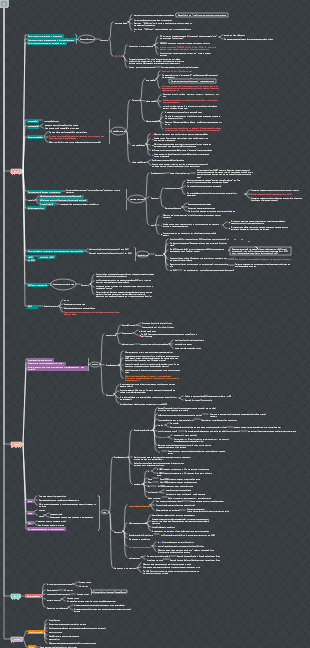
MindMap Gallery GMAT-CR Critical Reasoning
A mind map compiled based on "GMAT-CR Critical Reasoning - Logic Lectures" written by cd master Bi Chu. I hope to be helpful.
Edited at 2020-09-06 06:31:54This is a mind map about bacteria, and its main contents include: overview, morphology, types, structure, reproduction, distribution, application, and expansion. The summary is comprehensive and meticulous, suitable as review materials.

This is a mind map about plant asexual reproduction, and its main contents include: concept, spore reproduction, vegetative reproduction, tissue culture, and buds. The summary is comprehensive and meticulous, suitable as review materials.
This is a mind map about the reproductive development of animals, and its main contents include: insects, frogs, birds, sexual reproduction, and asexual reproduction. The summary is comprehensive and meticulous, suitable as review materials.
This is a mind map about bacteria, and its main contents include: overview, morphology, types, structure, reproduction, distribution, application, and expansion. The summary is comprehensive and meticulous, suitable as review materials.
This is a mind map about plant asexual reproduction, and its main contents include: concept, spore reproduction, vegetative reproduction, tissue culture, and buds. The summary is comprehensive and meticulous, suitable as review materials.
This is a mind map about the reproductive development of animals, and its main contents include: insects, frogs, birds, sexual reproduction, and asexual reproduction. The summary is comprehensive and meticulous, suitable as review materials.
GMAT-CR critical reasoning
inductive reasoning
Analogical/Enumerated Reasoning
Analogical Reasoning-1:1
Distinguishing method
Conclusion repeats premise
The content of the conclusion repeats the content of a sentence in the premise
Example: Because Teacher Guan is hungry, Shasha is also hungry.
similar derivation similar
The analogy object remains unchanged, and one similarity point between the two is used to deduce the other similarity point.
Example: Because both Shasha and Teacher Guan are hungry, it’s time for both Shasha and Teacher Guan to eat.
Assessment direction
Similarity question: Are A and B really similar? Are there some important differences/differences?
Countercase problem: There is another case C, which is also similar to A/B, but the result obtained does not exist?
Enumeration Reasoning-1:N
basic structure
The conclusion content also repeats the content of a certain sentence in the premise.
From a certain characteristic of the sample, it is inferred that the population also has the same characteristic
Assessment direction
Sample representativeness issue: Can the characteristics of the sample really represent the characteristics of the population?
Other sample questions: Is the sample size sufficient? Can you give another sample?
statistical inference
Take the average situation as the premise and the individual situation as the conclusion
Take the percentage situation as the premise and the actual numerical situation as the conclusion
Taking certain data that is not compared with the overall situation as the premise and taking the overall situation as the conclusion
Program reasoning
Make decisions based on known goals
basic structure
A clear plan is given in the question and the purpose of the entire reasoning paragraph is to propose this plan.
Assessment direction
Feasibility: Does the plan really achieve its goals?
Operability: Is the solution really realistic? Can we operate this solution?
Side effects: Will there be any bad side effects after the plan is implemented?
Precautions
Don’t dismiss options you think are irrelevant, especially if they involve side effects
correlation→causal reasoning
Explanation of reasoning methods
Since two events are related, they are considered to be causally linked.
Interrelated classification
Time correlation: two things happen at the same point in time
Statistical correlation: Two events are statistically related to each other, including positive correlation and negative correlation.
basic structure
Premise: There is a positive correlation between A and B
Conclusion: A causes B
Assessment direction
Correlation exists: Under some other circumstances, is there still a positive (negative) correlation between A and B? A typical weakening option is: at a certain time/place, there is no longer a positive correlation between A and B.
Causal indirectness: Is there any way to show that the causal relationship between A and B is caused by an indirect intervening variable, that is, "A causes C, and C causes B?" or "A and C together cause B?"
Causal direction: Is it possible that the causal relationship goes from B to A instead of from A to B?
Independent third factor (other cause): Is there a C that can cause both A and B?
Is there a general trend that allows B to occur naturally?
Is there an event C that causes A and B to occur simultaneously?
causal reasoning
Explanation of reasoning methods
Start from the known results and find the reasons
Starting from known inferences, trace the reasons
A kind of reasoning that starts from a given phenomenon and explores its explanation.
basic structure
Sequential causal logic: because event A, therefore event B
(Result) Premise: Phenomenon or event A occurred
(Cause) Conclusion: Event A must have happened
The two events discussed in the premise and conclusion are completely different, and you can feel the gap between them; The event discussed in the conclusion logically precedes the event discussed in the premise
Assessment direction
Explain the results: Is there another event C that is the cause of event B? That is, it is not event A that causes event B, but event C that causes event B?
Causal connection: Are event A and event B really causally connected?
causal reasoning
Anticipate that an event will occur because its cause has already occurred
basic structure
Sequential causal logic: because event A, therefore event B
Premise: Event A has occurred
Conclusion: Event B will happen
The premise is the logical cause and the conclusion is the logical effect.
Assessment direction
Interfering factors: Are there other factors that interfere with or counteract the outcome in this situation?
Causal connection: Are event A and event B really causally connected?
You only need to find an option that semantically refutes (weakens) the conclusion (result) to weaken a causal inference paragraph.
slippery slope argument
Questioning any link in this causal chain can complete the weakening of the slippery slope argument.
deductive reasoning
deductive reasoning
No external ideas or assumptions can be added
The correct answer can only be derived from the content of the passage!
BOLDFACE
Argument
Semantics: Argument
Explanation: All parts except questions and options are arguments
Conclusion
Semantics: Conclusion
Explanation: A supported sentence in the passage. There may be multiple conclusions in the blackface question, but the main conclusion must refer to the final conclusion of the passage.
Position
Semantics: stance
Explanation: Conclusions are a subset of positions. A conclusion is a position, but a position is not necessarily a conclusion. The main conclusion is the position of the article.
Premise
Semantics: premise
Explanation: The premise has only one role and function, which is to support the conclusion
Claim/Evidence/Situation/Grounds/Reason/Consideration/Finding/Explanation/Prediction/Circumstance/Judgement
Explanation: Indicates the premise or CQ sentence of an inference
In the blackface question, the content of the attributive clauses behind these words is more important than themselves
Objection/against…defended…
refute
Note that defend itself means defense and support.
Goal
Goal refers specifically to the goal of a certain program
Logic loopholes
Control Variable
Both factors A and B are possible causes. Prepare two groups of experimental subjects with A, but one group with B and the other without B.
survivorship bias
transfer target
The current discussion is that A is bad because A has some kind of harm. If we want to refute this point of view, we should say that A is not that bad because of other reasons. But the wrong option often proposes B, because B is worse than A, so A is not bad. Change the target and go astray.
"Discovery" does not mean everything
The facts you know don't mean everything. The world is a big place, you should go out and see it.
Gifted
Logically speaking, doing your best requires more time and energy, but this is for the same person. When comparing a group of people, take into account the differences between people.
trend
If something is spotted frequently, we can consider it a trend and believe that the trend will continue. Note: We can believe that this trend is likely to continue, but we cannot think that this trend will last forever. If something else changes, the trend may stop.
Selection Bias/To generalize the whole
When inferring the overall situation based on a part of the situation, it is necessary to consider whether this part is representative and whether there is any deviation.
In order to make informed choices, you should be informed first.
Case1: It was impossible to know the situation 5 years ago 10 years ago
Case2: There is no useful information available to make the choice
Look at problems from a developmental perspective
Case1: People aged 20-29 did not wear long johns when they were young, but when they grow up, they will also be afraid of the cold
Case2: The wildfire never burns out, but the spring breeze blows it again. Who has never been young?
Comparative vs. Absolute
Fairness and justice means whether all people can be held to the same standards. The reasonableness of something does not mean it is fair.
When considering Trend, you must also consider individual differences.
Although the overall development of the industry is very good, it does not mean that every individual can benefit. It also requires its own strength.
generalize from partial to complete
The situation at a certain time in the past may not necessarily represent the situation at all times
Focus on one and lose on the other