MindMap Gallery 15PMP Exam-Keyword Flash Sale
This is a mind map about the 15PMP exam-keyword flash sale, such as full scope circulation, people and information, data collection and analysis technology, resource optimization, schedule compression, quality, decomposition structure, and collection classification.
Edited at 2021-11-10 18:14:54This is a mind map about bacteria, and its main contents include: overview, morphology, types, structure, reproduction, distribution, application, and expansion. The summary is comprehensive and meticulous, suitable as review materials.
This is a mind map about plant asexual reproduction, and its main contents include: concept, spore reproduction, vegetative reproduction, tissue culture, and buds. The summary is comprehensive and meticulous, suitable as review materials.
This is a mind map about the reproductive development of animals, and its main contents include: insects, frogs, birds, sexual reproduction, and asexual reproduction. The summary is comprehensive and meticulous, suitable as review materials.
This is a mind map about bacteria, and its main contents include: overview, morphology, types, structure, reproduction, distribution, application, and expansion. The summary is comprehensive and meticulous, suitable as review materials.
This is a mind map about plant asexual reproduction, and its main contents include: concept, spore reproduction, vegetative reproduction, tissue culture, and buds. The summary is comprehensive and meticulous, suitable as review materials.
This is a mind map about the reproductive development of animals, and its main contents include: insects, frogs, birds, sexual reproduction, and asexual reproduction. The summary is comprehensive and meticulous, suitable as review materials.
PMP-keyword flash sale
1. Full scope transfer
contract
Before project establishment, the basis for project establishment
Project Charter
The startup phase marks the beginning of the project and is high-end.
Three highs
need
describe
risk
requirements document
What the interested parties want
Stakeholder needs
Requirements Tracking Matrix
business goals
Stakeholder needs
Deliverables
project scope statement
Everything you need to do to achieve your goals
content
Product range description
Product acceptance criteria
Project deliverables
Project Exclusions
constraints, assumptions
WBS&WBS Dictionary
Breakdown of what needs to be done (to the deliverable level)
Activity list & activity attributes
Breakdown of what needs to be done (to activity level)
Purchasing Statement of Work
Scope description that needs external help for the project
Bidding Documents
Introduce official descriptions formed by legal and financial policies
contract of purchase
Description of procurement-specific deliverables
2. People and information
Interested Party Register
Summary of information from relevant parties
Basic Information
Assessment information
Stakeholder classification
Stakeholder Engagement Plan
How to manage relevant parties (external to the project), consider official participation, and formulate strategies
communication management plan
How to convey information (5 correct)
resource management plan
How to manage people (inside the project)
Team charter
Team's shared mission, vision, values, basic rules
3. Data collection and analysis technology
Brainstorming
New, large, concept formulation (delay judgment, pursue quantity)
nominal group
A nominal group (actually each has its own ideas, expressions, voting, and ranking)
Interview
Target one or two specific people
focus group
Discuss and collect ideas on a topic, guided by a professional moderator
Questionnaire
Target a large audience and collect quickly
Delphi method
Experts, anonymity, multiple rounds, consensus (resolving important impactful stakeholder interference)
Benchmarking
Copycat, look for mature products, learn from them, imitate them
prototype method
There is no mature product. (Renderings, demos) Create prototypes and collect feedback based on uncertain needs.
guide
JAD joint design application development (software industry, business & development)
QFD quality function deployment (manufacturing industry, result-oriented)
user stories
SWOT analysis
4. Resource optimization
resource balancing
In view of the limited key resources on the critical path, do it first, which will lead to the extension of the critical path and the extension of the construction period.
Resource smoothing
For non-critical path non-critical resources, do it later without affecting the critical path and construction period.
5. Progress compression
rush work
Use costs to gain progress, add resources, work overtime, and increase risks.
Quick follow up
Parallel work that was originally serial may increase the risk of rework
6. What is the quality?
Cost of Quality (CQD)
consistency cost
prevention cost
Evaluate costs
Non-Consistency (Failure) Cost
internal failure costs
external failure costs
Cost-benefit analysis
Estimate alternatives, determine best benefits, and effectively utilize costs (concave arc)
7. Decomposition structure set classification
Work breakdown structure (WBS)
Work content structure
Resource Breakdown Structure (RBS)
Configuration of people, materials and machines
Organizational Breakdown Structure (OBS)
Show business unit organizational structure
Risk Breakdown Structure (RBS)
Technical/Management/Business/External Risk Classification
8. Responsibility allocation matrix
Perform, Responsible, Consulted and Informed Matrix (RACI)<Responsibility Matrix (RAM)<Resource Management Plan<Project Management Plan
9. Project & Resource Calendar
Project Calendar
Time available for project
Resource Calendar
Resource availability
10. Communication methods
interactive communication
push communication
pull communication
11. Risk response strategies
Threat response
Report
Not within the scope of the project, or beyond the authority of the project manager
avoid
Change the project management plan to completely eliminate
transfer
Transfer to third party
alleviate
Reduce the probability and/or impact of adverse risk events
accept
The strategy can be passive or active
opportunity response
Report
Not within the scope of the project, or beyond the authority of the project manager
open up
Ensure opportunities are realized and allocate the most capable resources
share
Allocate response opportunities to third parties
improve
Increase the likelihood and/or positive impact of an opportunity
accept
Be willing to take advantage of opportunities when they arise, but do not actively pursue them
12. Procurement strategy
Contract payment type
lump sum contract
fixed price contract
Most commonly used, buyer prefers, no changes allowed unless scope of work changes
Total price plus incentive fee
There are upper and lower limits. If the upper limit is exceeded, the seller will bear the responsibility; if it is lower than the lower limit, a reward will be given.
Total price plus economic price adjustment
Performance events are longer or paid in different currencies. Adjustable for inflation or special item cost changes allowed
cost plus compensation contract
cost plus fixed fee contract
Reimburse the seller for all itemizable costs incurred on the contract work and pay a fixed fee
cost plus incentive contract
Cost reimbursement, if the final cost exceeds or is lower than the original cost, the buyer and seller share it proportionally
cost plus incentive contract
Reimburse all legal costs, and how much incentive fee will be given depends on Party A’s mood.
Work and materials contract
Expand staff, hire experts, or seek outside support if you cannot quickly develop an accurate statement of work
13. Differentiation of change requests
Defect Remediation
Purposeful activities to correct inconsistent products or product components (remanufacturing)
Corrective Action
Purposeful activities to bring project work performance back into line with the project management plan (performance, inspection of production processes, control)
Precaution
Purposeful activities performed to ensure that future performance of project work conforms to the project management plan (preventing occurrences, training members)
renew
Changes to formally controlled project documents or plans, etc., to reflect modified or added comments or content (updating project plans or documents)
14. Planning quality management VS managing quality VS controlling quality
Plan quality management
Setting standards: quality measurement indicators
Determination method: quality management plan
Management quality
Do quality: according to quality management plan
Re-doing quality: based on a plan for improvement
Control quality
Look at the results: whether the quality indicators are met
Find deviations: Identify content that does not meet standards
15. Audit VS Testing VS Inspection
Inspection (results meet the indicators)
performance review
test
Audit (Process Compliance)
16. Cause and Effect Diagram VS Pareto Chart
cause and effect diagram
Breaking down the causes of a problem statement into discrete branches helps identify the main cause or root cause of the problem
One to one
Pareto chart
Prioritize defects
80/20 rule
one-to-many, many-to-one
17.Types of organizational structure
Functional
The project manager is reduced to a tool person, and contact personnel need to go through the functional manager
Project type
Maximize power, complete dissolution, homeless
matrix type
weak matrix type
Project manager power<functional manager power
balanced matrix type
Project manager power = functional manager power
strong matrix type
Project manager power > Functional manager power
18. Five stages of team building (Tuckman’s Ladder Theory)
Formative stage
shock stage
Standardization stage
mature stage
dissolution stage
19. Motivation theory
Maslow's Hierarchy of Needs Theory
Physiological needs
Safety requirements
Social needs
Respect needs
self-actualization needs
Macregor's Theory and Theory Y
Theory X
Human nature is lazy
Theory Y
Human nature and diligence
McClelland's theory of achievement motivation (give what you want)
affiliation needs
power needs
achievement needs
Herzberg's two-factor theory
Motivating factors (rewards)
It’s beneficial if you do it well, and it’s harmless if you do it badly.
Hygiene factors (base salary)
It’s useless if you do it well, and it’s harmful if you do it badly.
Vroom's expectancy theory
Motivational power = expected value × valence
20. Conflict Management
retreat/evade
Withdraw/withdraw
Not solved
Save it for later, or push it to someone else
Moderate and inclusive
half/half
neutral
Emphasize consistency, maintain harmony, and take a step back
Compromise/Mediation
half/half
negative
Covering up conflicts may lead to lose-lose situations
force/command
advance / push
solve
Push forward forcefully, sacrifice the opponent, and determine victory or defeat.
cooperation/resolution
half/half
positive
Open cooperation, consensus and commitment, win-win
21.Data analysis
Analysis of alternatives (multiple choice questions)
Cost-benefit analysis (true or false)
Root Cause Analysis (Q&A)
Earned value analysis (calculation questions)
Trend analysis (judging the future, targeting performance)
Designed to review changes in project performance over time
to determine whether performance is improving or deteriorating
Deviation analysis (judgment now, against performance)
Deviation analysis is used to compare benchmarks to actual results
To determine whether the deviation is within the critical value interval
22. Deliverables flow chart
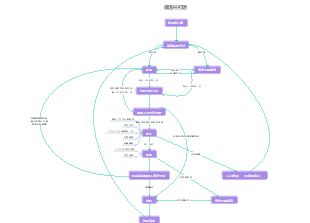
Direct and manage project work
Deliverables
Control quality
Verified deliverables
Confirm scope
Deliverables for acceptance
End project or phase
final product, service, or result
23.Types of life cycle
Extent of change/frequency of delivery
Predictive
Incremental
Iterative
Agile
24. Agile Project Management
3
3
5
5
25. Several committees
Portfolio Governance Board: Senior Management
Steering Committee: Expert Group
Change Control Board: An organization (composed of sponsor, customer, senior management) involved in baseline approval
26. Project closing activities
1. Product verification
2.Formal acceptance
3. Collect records
4.Update records
5. Record and archive
6.Archive
7. Lessons learned
8.Performance Appraisal
9.Team celebration
10. Release resources
theme
theme
theme
theme