 Wondershare EdrawMind
MindMap Gallery PMP exam highlights summary
- 53
PMP exam highlights summary
PMP certification exam, project management, procurement management, risk management, resource management, schedule management, cost management, Scrum agile practice, project integration management
Edited at 2023-08-07 11:55:21
- bacteria
This is a mind map about bacteria, and its main contents include: overview, morphology, types, structure, reproduction, distribution, application, and expansion. The summary is comprehensive and meticulous, suitable as review materials.
- Plant asexual reproduction
This is a mind map about plant asexual reproduction, and its main contents include: concept, spore reproduction, vegetative reproduction, tissue culture, and buds. The summary is comprehensive and meticulous, suitable as review materials.
- Reproductive development of animals
This is a mind map about the reproductive development of animals, and its main contents include: insects, frogs, birds, sexual reproduction, and asexual reproduction. The summary is comprehensive and meticulous, suitable as review materials.
PMP exam highlights summary
- bacteria
This is a mind map about bacteria, and its main contents include: overview, morphology, types, structure, reproduction, distribution, application, and expansion. The summary is comprehensive and meticulous, suitable as review materials.
- Plant asexual reproduction
This is a mind map about plant asexual reproduction, and its main contents include: concept, spore reproduction, vegetative reproduction, tissue culture, and buds. The summary is comprehensive and meticulous, suitable as review materials.
- Reproductive development of animals
This is a mind map about the reproductive development of animals, and its main contents include: insects, frogs, birds, sexual reproduction, and asexual reproduction. The summary is comprehensive and meticulous, suitable as review materials.
- Recommended to you
- Outline


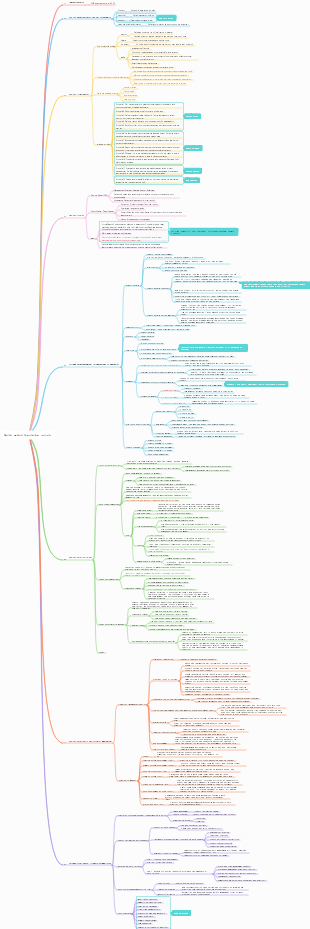
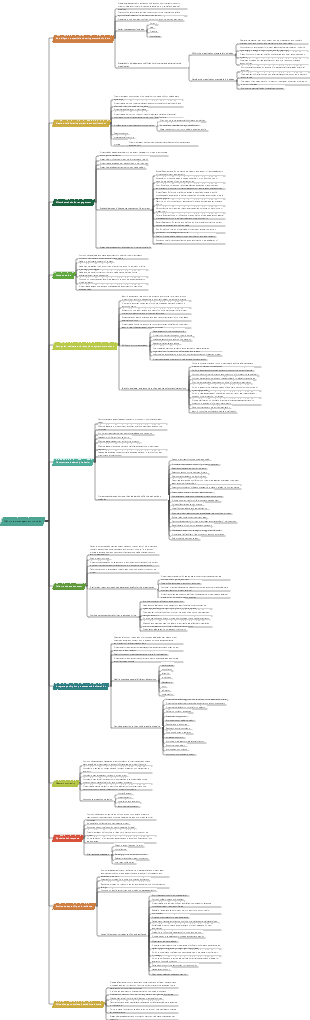
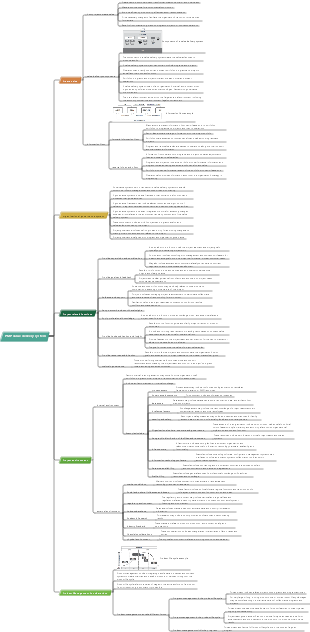
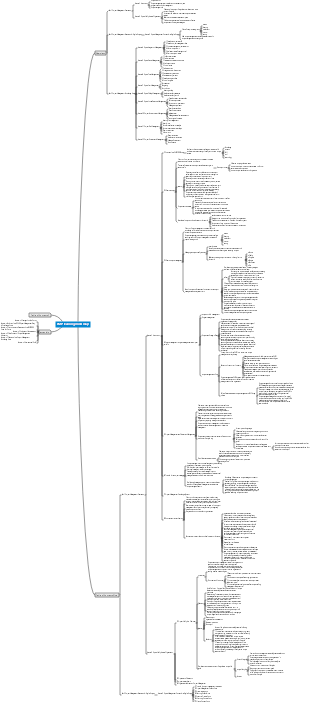
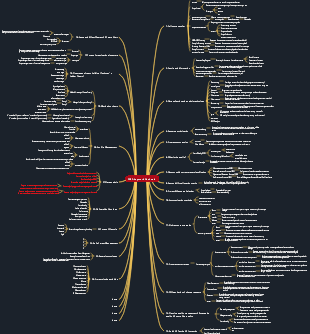
PMP finishing touch
Basic concepts of project management
Introduction
project
Features of the project
temporary, unique
The role of the project
Drive organizational change and create business value
Organizational Project Management
Program vs. Portfolio
Project Management VS Operations Management
Project life cycle type
Predictive
Incremental
Iterative
Agile
business documents
needs assessment
business case
Benefit Management Plan
Operating environment
Project Compliance
Two major influencing factors
business environment factors
organizational process assets
Organization structure type
matrix type
Project type
Functional
PMO
project manager
Project manager’s professional ethics
Talent triangle
People-Team
Planning resource management
organization theory
hierarchical
The difference between several decomposition structures: WBS/OBS/RBS
Responsibility Assignment Matrix
Team members’ roles and responsibilities are unclear
Unclear division of labor when using RAM
RACI applicable internally and externally
text type
resource management plan
Contents and functions of resource management plans
Resource Management Programmatic Documents
Team charter
Consensus on values, rules of conduct, and problem-solving processes
Estimate activity resources
Resource Calendar
Resource Calendar Understand organization member availability
The project calendar identifies holidays and public holidays throughout the project
Access to resources
decision making
Multi-criteria decision analysis
pre-dispatch
Resources that have been assigned to the project by senior management before the project begins
negotiation
Access resources by negotiating (negotiating) with functional managers or suppliers, first internally and then externally
Building a team
definition
The process of promoting interaction among team members and improving the overall team atmosphere to improve project performance
Five stages of team building (Tuckman’s Ladder Theory)
Formation: Clarify the roles and responsibilities of team members; (directive)
Shock: Conflicts arise (coaching type)
Norms: Try to solve problems, work collaboratively (participative)
Mature: operates in an orderly manner like a mature unit and completes work efficiently (authorized type)
Disbandment: The project ends and the team disbands
Centralized offices and virtual teams
Centralized office for convenient and efficient communication
Virtual teams address geographical differences
forms of communication technology
Includes sharing portal, video conferencing, audio conferencing, email/chat software
excitation
Recognition and Rewards
Tangible and intangible rewards
Distinguish between the five motivation theories
hierarchy of needs theory
X-Y theory
two-factor theory
expectancy theory
achievement motivation theory
training
Members lack abilities, knowledge, skills, and cannot be unrestrained
Emotional intelligence
People's emotional quality and adaptability to society, including personal emotions and the emotions of others
conflict management
Conflict Management Definition
When disagreements or conflicts occur between members, conflict management skills should be used to bring them to a consensus
Five ways to resolve conflicts
retreat/evade
Easing/accommodating
Compromise/Mediation
force/command
Collaborate/Problem Solve
Team building
Improve team morale, strengthen team social relationships, and create a positive and cooperative working environment
Output-Team Performance Evaluation
Project managers have the responsibility to care for members with insufficient performance and help them analyze problems and achieve growth.
management team
basic concept
Promote team collaboration and integrate the work of team members to create efficient teams
conflict management
Control resources
basic concept
The Control Resources process focuses on physical resources such as equipment, materials, facilities, and infrastructure.
The management team process focuses on team members
problem solving process
Analyze first, act later
stakeholder management
The connotation of stakeholder management
Identify stakeholders early to avoid lack of stakeholder support
Identify stakeholders
Stakeholder analysis
Position within the organization, role in the project
Stake, expectations, level of support for the project, interest in project information
rights interest grid
Manage stakeholders according to their rights and interests
High power, high benefits: focused management
High power, low benefits: satisfy them
Low power, high benefits: keep informed
Low power, low benefits: supervision
highlight model
Aiming at large and complex stakeholder relationship networks, analyze them from the perspective of power, urgency, and legitimacy
Influence direction
Up, down, outward, sideways
Stakeholder register
Basic information, evaluation information, and stakeholder classification analysis of stakeholders
Update the stakeholder register in a timely manner when it is discovered that a stakeholder has changed or has not been identified.
Planning stakeholder engagement
Stakeholder Engagement Assessment Matrix
How to manage stakeholder involvement
5 levels (unaware, resistant, neutral, supportive, leadership)
The gap between Current and Desire to identify and formulate strategies
Stakeholder Engagement Plan
content
Pay attention to the management strategies developed based on the stakeholders' ability to influence the project and their needs;
Information about project stakeholders
Role: Guidance and management of stakeholder participation in the project
Manage stakeholder engagement
Address issues and facilitate appropriate stakeholder engagement to meet their needs and expectations
Ensure stakeholders receive adequate training and guidance
Oversee stakeholder engagement
Supervise project stakeholder relationships and guide stakeholders to reasonably participate in the project by revising participation strategies and plans
communication management
basic concepts
Classification
Formal vs informal
Formal: important occasions, informal: non-important occasions
Written vs Oral
Written: recorded, oral: face-to-face or remotely
Internal vs External
Internal: Inside the organization: External: Customers, suppliers, etc.
Official vs Unofficial
Whether the information is published on behalf of the organization
Hierarchy
up, down and sideways
Branch offices at different levels
process
Planning communication management
Communication needs analysis
Determine the information needs of project stakeholders
Calculation of the number of communication channels
n represents the number of stakeholders, including the project manager
Formula: n(n-1)/2
communication method
Interactive: easy to understand and clarify, reach consensus, real-time and multi-directional
Pull: The receiver takes the initiative and a large amount of complex information
Push type: passive receiver, specific receiver
communication model
Confirm receipt: Indicates that the information has been received, but does not necessarily agree or understand
Feedback/Response: The receiver responds to the sender based on understanding
Output - Communication Management Plan
Role: Guide the transmission of project information
Content: Ensure that the right information is delivered to the right person in the right way at the right time to achieve the right effect (5 correct)
management communication
definition
Ensure information flows in accordance with the communications management plan
Supervise communication
Changes in communications may update the communications management plan
Obfuscated documents
communication management plan
There was a problem with the transmission of information
Stakeholder register
New stakeholders are identified or information about stakeholders changes.
Stakeholder Engagement Plan
If there is a problem with the level of stakeholder participation, formulate corresponding management strategies
project scope management
planning scope management
Requirements Management Plan VS Scope Management Plan
Gather requirements
connotation
The needs of all relevant parties should be collected in advance
artifact
requirements document
Requirements Tracking Matrix
Correspondence table between requirements and deliverables
Define scope
scope statement
Describe work to be done and not to be done
Product range description
Deliverables
Acceptance Criteria
Project Exclusions
Requirements Traceability Matrix VS Scope Statement
Requirements Traceability Matrix: Requirements and deliverables linked together
Scope Statement: Where to Find Deliverables
Create WBS
connotation
Hierarchical breakdown of the entire scope of work
artifact
WBS and WBS dictionary
Confirm scope (formal acceptance)
connotation
Confirm that deliverables meet business requirements and meet acceptance criteria
Basis for acceptance
Scope baseline (acceptance criteria) or contract
Deliverables flow chart
The sequence between completed - quality control - scope confirmation - closing
Control range
connotation
Supervision scope and management scope baseline changes
scope creep
If it is not supported, do and only do the work within the scope.
If you find it is being done, stop immediately and analyze the impact
It’s done, you need to add the change control process
method
expert judgment
Brainstorming
Interview
focus group
Questionnaire
Benchmarking
Delphi decision
Affinity diagram, mind map
Nominal group, guidance
Prototype method, alternative analysis
Decomposition, rolling planning
Deviation analysis, trend analysis
Project progress management
Planning progress management
degree management plan
Define activities
connotation
Identify and document specific actions taken to complete project deliverables
artifact
Activity List VS Activity Attributes VS Milestone List
Sequence activities
Logic
finish-start, finish-finish, start-start, start-finish
Determine and integrate dependencies
Optional vs mandatory, internal vs external
lead and lag
The amount of time that a successor activity can be brought forward or delayed relative to its predecessor activity
artifact
Project progress network diagram
Estimate activity duration
Estimation method
Analog estimation, parameter estimation
three point estimate
Bottom-up valuation
Reserve analysis (contingency reserves vs management reserves)
Develop a progress plan
critical path method
connotation
The longest activity sequence in the project, used to estimate the shortest project duration
float time
The relationship between float time and deferral
Resource optimization
resource balancing
Leading to the extension of the critical path and project duration
Resource smoothing
Does not change the critical path
Progress compression
rush work
By increasing resources, the schedule can be compressed at the lowest cost.
Quick follow up
Well-organized project activities may result in rework and increased risk
What-if scenario analysis
Evaluate the feasibility of the project schedule under different conditions based on the results of what-if scenario analysis
artifact
Project schedule, schedule baseline, project calendar
control progress
connotation
Monitor progress and manage changes to progress baselines
practice
Analyze the causes of deviations
Assess the impact of deviations on schedule
Develop corresponding solutions
method
Expert judgment, meetings
Decomposition, rolling planning
Alternative analysis, decision-making
Earned value analysis
cost management
basic concepts
Direct costs vs indirect costs
Whether to be directly included in the project
Fixed costs vs variable costs
Does it change with the project workload?
Sunk costs
Costs that have already been incurred and will not change
opportunity cost
Choose one project, give up another project, and the income brought by the other project
planning cost management
cost management plan
There is no specific cost data, just a guideline document that stipulates units of measurement, etc.
Estimate cost
cost estimate level
Rough magnitude estimates and deterministic estimates
Several ways to estimate
Refer to the detailed description in Estimating activity duration
Budgeting
Reserve analysis
emergency reserve, management reserve
Budget composition
Work Package Estimate Contingency Reserve = Cost Baseline
Cost Baseline Management Reserve = Budget
Control costs
cost control practices
Map costs to scope to monitor projects
Earned value analysis
Analyze the current
Basic calculations, judging the status of the project, and determining what to do based on the status
Predict the future
Quality Control
basic concepts
Prevention and inspection
In the process of quality management, prevention is better than inspection
Quality and grade
Quality and grade are not directly related, they need to be weighed to achieve the required quality and grade levels at the same time
Flexible sampling and variable sampling
Attribute sampling is the result of passing or failing, and variable sampling is the degree of passing
Quality management process
Plan quality management
connotation
Focus on setting methods, standards, and indicators
artifact
Quality management plan, quality testing indicators
Management quality
connotation
Implement specific plans to achieve corresponding quality and identify ineffective processes and causes of poor quality.
Control quality
connotation
Compare the results with the plan, look for deviations, and discover problems
artifact
Verified deliverables
Quality management methods
Cost-benefit analysis, quality cost
Flow charts, cause and effect diagrams, root cause analysis
Pareto chart, histogram
Scatter plots, checklists
Checklist, control chart
Audit, test, inspection
Procurement management
Procurement implementation
Publish tender advertisements or tender documents
Invitation to Bid VS Invitation for Information VS Invitation for Proposal
Identify shortlist of qualified sellers
Hold bidders meeting
time
Before the seller submits a proposal, all potential sellers meet to answer
effect
Ensure that potential bidders understand the bidding documents clearly and consistently
The seller submits a proposal (tender document)
The proposal needs to be prepared based on the buyer's procurement policy and submitted
Evaluation of proposals (technical and cost
Based on supplier selection criteria, proposals are selected and screened
Select the winning proposal
Procurement negotiation, contract signing
Negotiation: Clarifying the structure of the contract, the rights and obligations of the parties, and other terms before the contract is signed so that both parties can reach a consensus
Contents of the agreement: including (but not limited to) procurement work statements or major deliverables, inspection, quality and acceptance standards, Termination Provisions and Alternative Dispute Resolution
The role of the agreement: It binds both parties to the contract. For all inconsistencies involving suppliers in the project, priority will be given to the contract (if there are differences, refer to the contract)
Procurement control
Execution of the contract
Performance Review VS Inspection VS Audit
change
Inconsistent with contract requirements or beyond the scope of the contract
claim
Negotiation is the first choice, followed by ADR (alternative dispute resolution), arbitration, and litigation.
Procurement closed
All deliverables have been delivered, no claims are outstanding and all final payments have been made
Risk Management
basic concepts
Known knowns (planned), known unknowns (contingency reserves), unknown unknowns (management reserves)
planning risk management
risk management plan
How to arrange and implement risk management activities
Identify risks
SWOT analysis
Analyze strengths, weaknesses, opportunities and threats, and consider risks more comprehensively
artifact
risk register
Document all relevant information about the risk
Including (but not limited to) a list of identified risks, potential risk responsibilities, and a list of potential risk response measures, which need to be updated in real time
risk report
Report on overall risk
Qualitative risk analysis
connotation
Prioritize risks, focusing on high-priority risks
Probability and Impact Matrix
Prioritize risks based on the product of risk impact and probability
Quantitative risk analysis
connotation
Conduct a quantitative analysis of the impact of identified individual project risks and other sources of uncertainty on overall project objectives
simulation
Monte Carlo analysis
Use computer software to run models to simulate the relationship between probability and cost or time, Modeling for uncertainty
sensitivity analysis
tornado diagram
Risks with the greatest impact on the project
Decision tree analysis
Calculation of expected monetary value
Calculate the expected monetary value, multiply the probability returns, and choose the largest
Plan risk responses
Threat response strategies
Report, transfer, avoid, mitigate, accept
Opportunity response strategies
Report, share, develop, improve, accept
emergency response strategies
Contingency plans, rebound plans, contingency measures
Implement risk responses
After the identified risks occur, implement them according to the contents in the risk register
After an unrecognized risk occurs, analyze it first and then take action
Oversight risk
definition
Monitor identified risks and identify new risks
risk reassessment
Continuously re-identify, re-analyze and re-evaluate risks
audit
Assess risk management effectiveness
method
Brainstorming, interviews, Delphi, checklists
Root Cause Analysis
Assumptions and constraints analysis
Document analysis, meetings, reserve analysis
Project integration management
Develop project charter
Project Charter
content
Formal approval of project establishment and authorization of project managers to use organizational resources.
Documents that a project manager must have before taking office.
effect
Initial, initial, early, original, start-up stage: high-level, main, overall, management
Hypothetical log
Assumptions and constraints
Develop project management plan
project management plan
content
Ten Areas of Management Plan Three Benchmarks Other Components
effect
Outputs from the planning phase, prerequisites and documentation for the execution phase, guarantees of success
Revise
Once the baseline is established, it can only be modified by implementing overall change control
Kick-off meeting
Communicate project goals, gain team commitment to the project, and clarify the roles and responsibilities of each involved party
Direct and manage project work
connotation
Execute the work identified in the project management plan and implement approved changes to achieve project goals;
First output of deliverables
Issue log and updates
Problems are found, recorded in the problem log, and updated in real time
Problem handling process: record - analyze/evaluate - develop solutions - implement
Managing project knowledge
Managing project knowledge
Explicit knowledge vs tacit knowledge
Knowledge and information management tools
Ensure that project documents and other lessons learned are in the repository (or PMIS) and ensure that they are up to date to prevent personnel turnover and knowledge loss
Lessons Learned Register and Updates
effect
Avoid similar problems from happening again in other projects
Environmental requirements
An open and trustful environment
Monitor project work
job performance report
Job performance data VS job performance information VS job performance reports
Implement holistic change control
Changed artifacts
Change management plan vs change log
Authorization to approve changes (change flow chart)
Changes that do not involve baseline
project manager
Changes involving baselines
CCB
The implemented changes have not gone through the process and need to be supplemented by the change process.
End project or phase
Deadline for change
— Once acceptance is completed, no changes will be made;
Unless something is not done that should be done, or there is a product quality problem
Early termination
The reasons for early termination need to be investigated and closure needs to be carried out
Main sequence of closing events
1. Handover results
2. Financial closing
3. Satisfaction survey
4. Update the lessons learned register
5. Document update (organizational process asset update)
6. Final report
7. Document archiving
8. Celebration party
9. Disband the team
Change process
method
Expert judgment and brainstorming
interviews, focus groups
Conflict management and guidance
Meeting management, meetings, checklists
Alternatives analysis, cost-benefit analysis
Earned value analysis
Root cause analysis, deviation analysis
trend analysis
Agile Manifesto and Principles
Agile Manifesto
Individuals and interactions over processes and tools
Available software is better than complete documentation
Available software is better than documentation, but documentation is not entirely unnecessary
When detailed documentation is already part of the requirements, we need to focus on the value and make adjustments
When relevant parties want detailed documents and detailed plans, you can show successful experience to persuade
Customer collaboration trumps contract negotiation
We do not blindly follow the contract. When we disagree with customers, we emphasize communication and cooperation to reach an agreement and pursue win-win cooperation.
Plans, needs, etc. may change and should be responded to proactively
Responding to change is better than following a plan
Embracing change does not mean accepting all changes unconditionally
twelve principles
value driven delivery
Principle 1: Our highest goal is to meet customer needs through early and continuous delivery of valuable software
Team principles
Team members business people and developers always work together, and the team is a self-organizing team that is motivated and trusted
Working principles
Lean and minimalist, the way to realize this principle is "regular reflection"
communication principles
face to face
Scrum Agile Practice
three pillars
Transparency, inspection, adaptation
three characters
product owner
Agile coach
self-organizing team
three artifacts
Product Backlog
An ordered list of all work, value-oriented and progressively detailed
Ranking based on factors such as value, risk, etc.
Functional content and non-functional content
Iterate the backlog
Output in the iteration planning meeting, define iteration goals, clarify specific tasks, and the team will discuss and receive them on their own
Generally, we will not change it arbitrarily. We must first ensure the smooth completion of the iteration task. (Unless the user story is worthless and involves the life and death of the project)
Deliverable product increment
five events
iteration, sprint
Consider team capabilities and project characteristics
The time box is fixed and will not be adjusted at will.
sprint planning meeting
Determine iteration tasks and goals, discuss how to complete them, and produce an iteration backlog
Stakeholders can be invited to participate to understand changes in needs
Daily stand-up meeting
Understand project status information (master progress), team personal status, consensus information, and identify problems
The team organizes itself and anyone on the team can host the stand-up meeting
The time box is generally 15 minutes (can be extended unless other reasons affect the effectiveness of the meeting)
Only discovering problems, not solving them
Problems can be solved through dedicated discussion after the stand-up meeting
Does not affect the current iteration goal and is consistent with the overall process
Relevant issues can be reviewed at meetings to discuss improvements.
iteration review meeting
PO appraisal "completed", customer acceptance, giving feedback
Unfinished or unaccepted user stories are placed back into the product backlog
Discuss next time expectations and trends
iteration retrospective meeting
Examine yourself, pay attention to the process, review the effectiveness of measures, find out the reasons, and propose improvement plans
Five values
Commitment, focus, openness, respect, courage
Agile project management phase framework
Conception
Product Vision VS Project Charter VS Team Charter
Speculate
Onion ring planning (rolling planning)
Vision
Visual overview of the product, approximate time stages and functional description
product roadmap
User story map
Based on customer value, composed of user stories
MVP
Can run the smallest architecture that meets the customer's most important needs (differentiate MMF)
release plan
Contains large-grained version and approximate time information, version release = launch on the market
iteration planning
What needs to be done in an iteration
daily plan
Tasks to be completed in a day
time box
A fixed, relatively short period of time within which the planned work must be completed
user stories
Build scenes and characters
Collect needs and describe user groups (target groups) needs
DOD
It is the standard for acceptance, which is conducive to reducing defects and promoting the successful acceptance of deliverables.
Led by the PO, the team works together to clarify when the user story is determined.
User story granularity
Theme Story-Epic Story-User Story-Task·Subtask
The granularity is negotiated between the PO and the team.
story point concept
A unit of measurement that expresses the size of user stories, reflecting relative size and workload.
Relative estimation based on reference
Generally not compared across teams
User story estimation
ideal time
Regardless of speed and interruptions
story point estimation
Broadband Delphi, Planning Poker, Affinity Estimation
Team members work together to estimate
Prioritize by
Value is the most important, risk and other factors will also have an impact
Prioritization method
MOSCow's law, Kano analysis, four quadrants of risk, show of hands
Risk Adjustment Backlog
expected monetary value of risk
probing/probe
Explore new technologies, new methods, new problems, and unclear risks
explore
Iteration planning and monitoring
Iterate the backlog
technical practice
Technical skills in execution
Coaching and Team Development
Guide teamwork and customer cooperation
adapt
Presentation and review
Earned Value in Agile
Based on completed story points
speed
concept
Completed story points for this iteration
Initial speed estimate
Refer to past experience or past average speed
feature
Pursue speed and stability and cannot compare across teams
show
burn up chart burn down chart
Granularity (Release)
Can read pictures
monitor
If it does not meet expectations, the actual speed of the team will be used as the priority.
Decrease or increase story points to match the team's actual velocity
Finish
review
Other agile practices
Lean
value stream map
Identify the flow of processes within a work item
Identify deficiencies (waste) and develop improvements (find activities that do not add value to the product)
Kanban
The function is to visualize work flow, consensus information and risks
Limit work in progress (wip)
Reasonable planning, team efficiency, and identifying bottlenecks
cumulative flow graph
Based on the completion statistics of different modules of the Kanban board, determine the scope changes and trends of the current project
extreme programming
pair programming
Two developers, working together, one writing code and the other reviewing it in real time
The function is to be more focused and efficient, break down team barriers, and develop new skills.
Semi-private spaces (cave and public areas)
continuous integration
Integrate immediately to quickly find code problems and solve them
test driven development
Write test cases before development and test while coding. If the test fails, you can refactor it.
automated test
Avoid frequent failures after delivery and avoid increased costs of manual testing
Refactor
Optimize and reorganize the code without changing the function to improve the maintainability of the code