 Wondershare EdrawMind
MindMap Gallery CFA Level 2 Quantity Summary
- 40
- 1
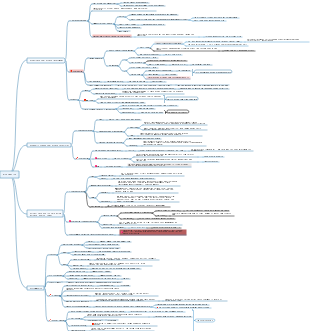
CFA Level 2 Quantity Summary
Self-made mind map, suitable for JC online courses. All the knowledge points have been sorted out for everyone, so that you can browse and check them when preparing for the exam, which will help you deepen your memory and improve your review efficiency. The places that need to be remembered have been marked with symbols and fonts of different colors. I hope it will be helpful for you to prepare for the exam.
Edited at 2021-05-31 16:37:12
- bacteria
This is a mind map about bacteria, and its main contents include: overview, morphology, types, structure, reproduction, distribution, application, and expansion. The summary is comprehensive and meticulous, suitable as review materials.
- Plant asexual reproduction
This is a mind map about plant asexual reproduction, and its main contents include: concept, spore reproduction, vegetative reproduction, tissue culture, and buds. The summary is comprehensive and meticulous, suitable as review materials.
- Reproductive development of animals
This is a mind map about the reproductive development of animals, and its main contents include: insects, frogs, birds, sexual reproduction, and asexual reproduction. The summary is comprehensive and meticulous, suitable as review materials.
CFA Level 2 Quantity Summary
- bacteria
This is a mind map about bacteria, and its main contents include: overview, morphology, types, structure, reproduction, distribution, application, and expansion. The summary is comprehensive and meticulous, suitable as review materials.
- Plant asexual reproduction
This is a mind map about plant asexual reproduction, and its main contents include: concept, spore reproduction, vegetative reproduction, tissue culture, and buds. The summary is comprehensive and meticulous, suitable as review materials.
- Reproductive development of animals
This is a mind map about the reproductive development of animals, and its main contents include: insects, frogs, birds, sexual reproduction, and asexual reproduction. The summary is comprehensive and meticulous, suitable as review materials.
- Recommended to you
- Outline



quantity
Regression
linear
Modeling
Calculation: b1(OLS),b0
X:indepentent variable;
Y:depentent variable;
assumption
E(Error term)=0
analyze
1.ANOVA
ESS
Sum of squares of Yi-Y
the sum of squared errors or residuals
error
df=n-k-1
RSS
Sum of squares of Y pre-Y means
the regression sum of squared
regression
df=k
TSS
Sum of squares of Yi-Y means
total
df=n-1
MSS(mean sum squares)
MSR
RSS/K
MSE
ESS/n-k-1
sample covariance=(X-X mean)(Y-Y mean)/(n-1)
2.R-Squared
Coefficient of determination
1. calculate
RSS/TSS=explained variation/total variation
2. explain
How much variation in y can the independent variable explain?
The larger the value, the better the fit
3. relationship with correlation coefficient,multiple R
3.SEE
Stardard error of estimate/regression
The smaller the value, the better the fit
Essence: standard deviation of the error term
SEE df=df of standard deviation of b1 (or slope coefficient)
Formula: ESS/n-k-1 under the root sign
test
1. Parameter estimation
point estimate
CI build
2. Hypothesis testing
Significance test of b1
H0:b1=0
The df of b1 is n-k-1
Involving the greater than or less sign, Bezawa assumes that it is greater than a certain value, and the rejection region is at the right end. and single-tailed table lookup problems
t-test
if reject null,means that b1 is significance
The F value of the in-table t test in the question is for the case where the null hypothesis is equal to zero.
The smaller the P value, the more rejected it is, which is compared with the significance level.
Predict Y
point estimate
Bring into calculation
CI
ypre-kS(ypre)
Sf=standard error of the forecast=yforecast
How to find Sf: n tends to infinity, Sf is approximately equal to SEE
K. obeys t distribution, n-k-1
multiple
1.Difference from linear
Explanation of b1
hypothetical test
t-test
Univariate regression (1), multiple regression (k)
F-test
assumption
H0:b1=b2=...bk=0
Ha: At least one bi is not equal to 0
F=(RSS/K)/(ESS/N-K-1)
The bigger the better
draw distribution
Right deviation
judge
When F falls in the rejection region, accept Ha. access the effectiveness of the model as a whole
R-squared
The difference between monism and plurality
Explanation of R2;
Explanation of R2; explanation of correlation
whole
shortcoming
Adjusted-R2
Formula: 1-(ESS/N-K-1)/(TSS/N-1)
Analysis: k increases, R2 ,A-R2 -
2.Dummy variables
n categories,n-1 dummy variables
The meaning of coefficient bi
bo
R4
bi
eg:R1-R4
3. Violation of assumptions
heteroskedasticity
meaning
the variance of the term is not constant
conditional- (discussed)
error variance is related to the independent variable
as a result of
not affect
consistency
coefficient estiamtes bipre
affect
Sbi pre
t/F-test
test
BP test(other side)
BP=n*R squared (error term)
Correction
white
generalized least squares
serial correlation
meaning
regression errors are correlated with one another
often found in time series data
positive-
common
as a result of
not affect
consistency
coefficient estiamtes bipre
affect
Sbi pre
t/F-test
test
DW test
calculate
DW=2(1-r)
Assume a hypothesis; calculate; draw a distribution; judge
Correction
Henson method
Autocorrelation & Conditional Heteroscedasticity
Newey-West method
multicollinearity
meaning
Xi,Xj highly correlated
as a result of
not affect
consistency
affect
coefficient estiamtes bipre
Sbi pre
t/F-test
test
pairwise correlations
correlation among Xi,Xj
classic method satisfies both
t-test failed; F-test passed; R2 high
Correction
excluding
4.model misspecification
cause the estiamted regression coefficients inconsistnet
7 situations
5.qualitative dependent variables
dependent variables is dummy variables
2 forms
probit and logit models(logic)
maximum likelihood methods
discriminant models (discriminant)
Z-scored
time-series analysis
1.trend models
linear -
log-linear -
2.autorgressive model (AR)
Condition 1
No autocorrelation
test
H0:correlation(error t ,error t-k)=0
t-test
Sr=1/n under root sign
The larger t is, the null hypothesis is rejected and Ha has autocorrelation.
Correction
Add relevant labeled value as variable
Condition 2
covarience-staionary
Conditions: mean,variance,covariance constant
mean-reverting
Calculation: mean yt=bo/(1-b1)
predict
b1 is not equal to 1
random walk
b1 is equal to 1
is not covarience-staionary
mean-reverting test
DF-test
Check unit root (b1=1)
Essential t-test
H0;g=0(g=b1-1) has unit root; Ha:g<0
Correction
if has unit root
first-difference
Condition three
no conditional heteroskedasticity
conditional heteroskedasticity
The variance of the residual term is related to t
test
ARCH
AR model for the variance of the residual term
For ARCH(1), if a1=0, there is unconditional heteroskedasticity. On the contrary, there is.
Correction
generalized least squares
3. Multiple sets of time series data
Modeling conditions
5 situations
2 types available
cointegration test
DF-EG test
Quantity 2
1. machine learning
1.overview
X feature;Y target variable
type
3
data sets
training sample
validation sample
test sample
overfitting
Features
much complexity
bias error is low, variance error is high
fitting curve
optimal level:minimize total level
preventing overfitting
penalty
corss-validation
k-fold
2.supervised ML
2.1 penalized regression
LASSO
The larger r is, the greater the punishment
2.2 SVM (classification)
concept
support vectors; discriminant boundary; margin
maximum margin
soft margin classification
1.add penalty
2.For non-linearity, increase features and increase complexity
uesd for classification, regression, outlier detection
2.3 KNN (discrimination classification)
concern
define similar
value of k
2.4 CART
Can be discrete or continuous
visual explanation
frame
initial root node; decision nodes; terminal nodes
goal
Classification
The minority obeys the majority
return
Average the final value
avoid overfitting
1.regularization;2pruned
2.5 ensemble
voting classifiers
Same training set data, different models
result:
The minority obeys the majority
bootstrap aggregating/bagging
Same model, different training set data
resample
result
Classification
The minority obeys the majority
return
Average the final value
application
random forest
drawback:blackbox
Each random trial produces a tree
3.unsupervised ML
dimension reduction
PCA
process
Build composite; define eigenvector; eigenvalue; first principal component
shortcoming
black box
clustering
k means
shortcoming
depend on centroids
Run multiple times
k
set range
hierarchical level
1.agglomerative (bottem up); 2divisive (top down)
4.neural networks
concept
nonlinear; complex
type of layer
input;hidden;output
hidden function
summation operator: Integrate (randomly assign weight sum) into total net input
activation function
deep learning
The hidden layer is at least 3 layers, usually more than 20 layers
reinforcement learning
maximize its rewards
2. big data
1. Basic concepts
Features
volume;variety;velocity;veracity
type
structured data
unstructured data
2.structured data
2.1 conceptualization of the modeling task
determining what the output
2.2 data collection
internal source
enteral source
API "interface"
2.3 data preparation(cleansing) and wrangling(preprocessing)
cleansing 6 errors
incompleteness
invalidity
outside a meaningful range
inaccuracy
outside a meaningful range
inconsistency
data conflict
non-uniformity
not present in an identical format
duplication
preprocessing
transformations
extraction
aggregation
filtration
row
selection
column
conversion
eg: Currency unit conversion
scaling
normalization
(Xi-Xmin)/(Xmax-Xmin)
Advantages: any distribution; Disadvantages: sensitive to outliers
standardization
Advantages: Insensitive to outlier; Disadvantages: Normal distribution
handling outlier
trimming
removed (eg: truncated average score)
replaced
replace (eg:winsorization)
2.4 data exploration
EDA exploratory data analysis
tools
summary statistics
visualizations
eg;histogram,scatterplot
feature selection
feature decrease
feature engineering
feature increase
2.5 model training
selection method
performance selection
error analysis
Calculate precision, recall, accuracy, F1 score
ROC
The more curved the better; the larger the AUC the better
RMSE
The smaller the better
tuning
Adjust parameters (depending on the training set); hyperparameters minimize the total error (bias variance)
method: grid search; ceiling analysis
3.unstructured data
3.1 text problem formulation
3.2 data collection(curation)
Same as the first 2 steps of structured data
3.3 data preparation and wrangling(preprocessing)
cleansing
remove HTML tags/punctuations/numbers/white space
nou remove all
number, punctuation
preprocessing
tokenization(mormalization)
low secasing
Convert to lowercase
remove stop words
stemming
lemmatization
BOW(bag of words)
N-grams
DTM (document term matrix)
cell value
goal:digitization
3.4 data exploration
EDA
word cloud
feature selection
BOW decrease
The bigger the Method, the better
frequency; Chi-square; mutual information
feature engineering
feature increase
technique
number; N-gram; name entity recognition; parts of speech
3.5 model training
3. probabilistic approaches
1.simulation
steps
advantage
better input estimation
yield a distribution
issue
GOGI(garbage in,garbage out)
input,model wrong
real data may not fit distribution
non-stationary
changing correlation across inputs
risk-adjusted value and simulation
Consider risk, numerator or denominator, avoid double counting
2. Comparison of methods
full risk analysis
scenario analysisi
Failure to conduct a comprehensive risk analysis
decision tree
All risks within the scope of management are considered
simulation
all circumstances considered
type of risk
scenario analysisi
discrete results
decision tree
discrete results
simulation
Continuous results
correlation across risk
scenario analysisi
Consider correlation. But very subjective
decision tree
difficult to consider
simulation
Correlation can be explicitly considered in the model as a variable
the quality of information
scenario analysisi
The situation considered is relatively simple and the requirements for information quality are low.
decision tree
The situation considered is relatively simple and the requirements for information quality are low.
simulation
The amount of data required is large and the quality of information is high.
complement or replacement for risk-adjusted value
scenario analysisi
Only as a supplement
decision tree
Can be used as a supplement or as an alternative
simulation
Can be used as a supplement or as an alternative
Quantity 2
1. machine learning
1.overview
X feature;Y target variable
type
3
data sets
training sample
validation sample
test sample
overfitting
Features
much complexity
bias error is low, variance error is high
fitting curve
optimal level:minimize total level
preventing overfitting
penalty
corss-validation
k-fold
2.supervised ML
2.1 penalized regression
LASSO
The larger r is, the greater the punishment
2.2 SVM (classification)
concept
support vectors; discriminant boundary; margin
maximum margin
soft margin classification
1.add penalty
2.For non-linearity, increase features and increase complexity
uesd for classification, regression, outlier detection
2.3 KNN (discrimination classification)
concern
define similar
value of k
2.4 CART
Can be discrete or continuous
visual explanation
frame
initial root node; decision nodes; terminal nodes
goal
Classification
The minority obeys the majority
return
Average the final value
avoid overfitting
1.regularization;2pruned
2.5 ensemble
voting classifiers
Same training set data, different models
result:
The minority obeys the majority
bootstrap aggregating/bagging
Same model, different training set data
resample
result
Classification
The minority obeys the majority
return
Average the final value
application
random forest
drawback:blackbox
Each random trial produces a tree
3.unsupervised ML
dimension reduction
PCA
process
Build composite; define eigenvector; eigenvalue; first principal component
shortcoming
black box
clustering
k means
shortcoming
depend on centroids
Run multiple times
k
set range
hierarchical level
1.agglomerative (bottem up); 2divisive (top down)
4.neural networks
concept
nonlinear; complex
type of layer
input;hidden;output
hidden function
summation operator: Integrate (randomly assign weight sum) into total net input
activation function
deep learning
The hidden layer is at least 3 layers, usually more than 20 layers
reinforcement learning
maximize its rewards
2. big data
1. Basic concepts
Features
volume;variety;velocity;veracity
type
structured data
unstructured data
2.structured data
2.1 conceptualization of the modeling task
determining what the output
2.2 data collection
internal source
enteral source
API "interface"
2.3 data preparation(cleansing) and wrangling(preprocessing)
cleansing 6 errors
incompleteness
invalidity
outside a meaningful range
inaccuracy
outside a meaningful range
inconsistency
data conflict
non-uniformity
not present in an identical format
duplication
preprocessing
transformations
extraction
aggregation
filtration
row
selection
column
conversion
eg: Currency unit conversion
scaling
normalization
(Xi-Xmin)/(Xmax-Xmin)
Advantages: any distribution; Disadvantages: sensitive to outliers
standardization
Advantages: Insensitive to outlier; Disadvantages: Normal distribution
handling outlier
trimming
removed (eg: truncated average score)
replaced
replace (eg:winsorization)
2.4 data exploration
EDA exploratory data analysis
tools
summary statistics
visualizations
eg;histogram,scatterplot
feature selection
feature decrease
feature engineering
feature increase
2.5 model training
selection method
performance selection
error analysis
Calculate precision, recall, accuracy, F1 score
ROC
The more curved the better; the larger the AUC the better
RMSE
The smaller the better
tuning
Adjust parameters (depending on the training set); hyperparameters minimize the total error (bias variance)
method: grid search; ceiling analysis
3.unstructured data
3.1 text problem formulation
3.2 data collection(curation)
Same as the first 2 steps of structured data
3.3 data preparation and wrangling(preprocessing)
cleansing
remove HTML tags/punctuations/numbers/white space
nou remove all
number, punctuation
preprocessing
tokenization(mormalization)
low secasing
Convert to lowercase
remove stop words
stemming
lemmatization
BOW(bag of words)
N-grams
DTM (document term matrix)
cell value
goal:digitization
3.4 data exploration
EDA
word cloud
feature selection
BOW decrease
The bigger the Method, the better
frequency; Chi-square; mutual information
feature engineering
feature increase
technique
number; N-gram; name entity recognition; parts of speech
3.5 model training
3. probabilistic approaches
1.simulation
steps
advantage
better input estimation
yield a distribution
issue
GOGI(garbage in,garbage out)
input,model wrong
real data may not fit distribution
non-stationary
changing correlation across inputs
risk-adjusted value and simulation
Consider risk, numerator or denominator, avoid double counting
2. Comparison of methods
full risk analysis
scenario analysisi
Failure to conduct a comprehensive risk analysis
decision tree
All risks within the scope of management are considered
simulation
all circumstances considered
type of risk
scenario analysisi
discrete results
decision tree
discrete results
simulation
Continuous results
correlation across risk
scenario analysisi
Consider correlation. But very subjective
decision tree
difficult to consider
simulation
Correlation can be explicitly considered in the model as a variable
the quality of information
scenario analysisi
The situation considered is relatively simple and the requirements for information quality are low.
decision tree
The situation considered is relatively simple and the requirements for information quality are low.
simulation
The amount of data required is large and the quality of information is high.
complement or replacement for risk-adjusted value
scenario analysisi
Only as a supplement
decision tree
Can be used as a supplement or as an alternative
simulation
Can be used as a supplement or as an alternative