MindMap Gallery CFA Level 2 Time Series
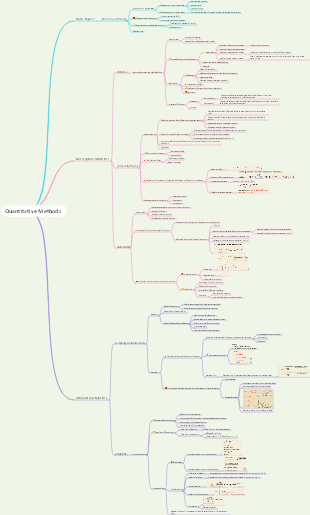
Time series trend model, autoregressive model*AR time series forecasting steps Covariance stationarity, etc.
Edited at 2019-12-30 14:43:49This is a mind map about bacteria, and its main contents include: overview, morphology, types, structure, reproduction, distribution, application, and expansion. The summary is comprehensive and meticulous, suitable as review materials.

This is a mind map about plant asexual reproduction, and its main contents include: concept, spore reproduction, vegetative reproduction, tissue culture, and buds. The summary is comprehensive and meticulous, suitable as review materials.
This is a mind map about the reproductive development of animals, and its main contents include: insects, frogs, birds, sexual reproduction, and asexual reproduction. The summary is comprehensive and meticulous, suitable as review materials.
This is a mind map about bacteria, and its main contents include: overview, morphology, types, structure, reproduction, distribution, application, and expansion. The summary is comprehensive and meticulous, suitable as review materials.
This is a mind map about plant asexual reproduction, and its main contents include: concept, spore reproduction, vegetative reproduction, tissue culture, and buds. The summary is comprehensive and meticulous, suitable as review materials.
This is a mind map about the reproductive development of animals, and its main contents include: insects, frogs, birds, sexual reproduction, and asexual reproduction. The summary is comprehensive and meticulous, suitable as review materials.
Time Series
Trend Models
linear trend
A fixed amount that grows over time
log-linear trend
have exponential growth (exponential growth)
A fixed rate that grows over time
predicted trend value of yt
growth rate
Linear trend regression will have the problem that the regression error is related to the observed value. The log will be corrected some, but it is not solved.
Testing for Correlated Errors
DW-test
H0: There are no sequence-related problems,
The premise of using the trend model is that the covariance is stationary. If the covariance is not stationary, the model will be invalid.
Autoregressive (AR) Time-Series Models
We must assume that the time series we are modeling is covariance stationary
Covariance-Stationary Series
the expected value of the time series must be constant and finite in all periods
the covariance of the time series with itself for a fixed number of periods in the past or future must be constant and finite in all periods
the variance of the time series must be constant and finite in all periods
How to check whether the covariance is stationary? Look directly at the plot, if the plot shows the same mean and variance
Autocorrelation coefficient for all lag values = 0
A random walk
Previous value Unpredictable random term
previous period plus an unpredictable random error
incovariance stationary
If the time series is a random walk, it is not covariance stationary
Random walk with drift
A random walk with drift is a random walk with a nonzero intercept term.
Has a unit root
All random walks have unit roots.
If a time series has unit roots, it is impossible to have stationary covariances
Treatment of unit roots
first-differencing the time series; (first-order splitting), perform autoregressive estimation of the sequence after first-order splitting.
Moving-Average Time-Series Models
moving average
Lags behind actual data and plays a role in smoothing data (such as smoothing seasonal fluctuations)
Because of the lag, the prediction effect cannot be achieved.
MA(1) model
MA(q):A qth order moving-average model
ts first q autocorrelations are nonzero while autocorrelations beyond the first q are zero.
ARMA models
autoregressive moving average models
the parameters in ARMA models can be very unstable;
determining the AR and MA order of the model can be difficult;
ARMA models may not forecast well
ARCH
Autoregressive conditional heteroskedasticity modelAutoregressive conditional heteroskedasticity model
If the coefficient on the squared residual is statistically significant, the time-series model has ARCH(1) errors
if a time-series model has ARCH(1) errors
Multivariate time series problem
All timelines have no cell roots and regression is available
If neither of the time series has a unit root, then we can safely use linear regression.
Only one of the time series has a unit root, can regression be used?
If one of the two time series has a unit root, then we should not use linear regression
All series have unit roots, and time series are cointegrated, regression is available
If both time series have a unit root and the time series are cointegrated, we may safely use linear regression
All series have unit roots, and the time series is not cointegrated, so regression is not available.
however, if they are not cointegrated, we should not use linear regression
(Engle–Granger) Dickey–Fuller test cointegration test
The (Engle–Granger) Dickey–Fuller test can be used to determine if time series are cointegrated
Some issues with time series
Covariance stationarity will form mean reverting
Compare the accuracy of different regression models
The root mean squared error (RMSE) root mean squared error: Error squared and square root of mean
The smaller the better
The parameters of the time series model will be unstable. When using the time series model for estimation, it is necessary to check whether the time series is stable.
The steps of time series forecasting
Understand your investment problem and choose an initial time series model
regression model
Use one variable to predict another variable
time-series model
Predict the same variable using previous data on the same variable
If you use a time series model, first draw a graph to see if the covariance is stationary.
Does not contain
a linear trend a linear trend
an exponential trend an exponential trend
seasonalality
There is a significant deviation in the data within the sample interval, a significant shift in the mean or covariance.
step
Draw a graph to check whether a linear trend or an exponential trend makes the most sense
Estimate trend parameters
Calculate remaining residuals
Durbin–Watson statistic detection sequence related issues
if it does not exist
Model available
if exists
Use autoregressive model autoregressive model
autoregressive model
Treatment of covariance stationarity violations of stationarity
a linear trend,
first-difference the time series.
exponential trend
take the natural log of the time series and then first-difference it
shifts significantly during the sample period
estimate different time-series models before and after the shift
significant seasonality
include seasonal lags
Construction of autoregressive model
Estimate an AR(1) model
Test to see whether the residuals from this model have significant serial correlation. If there is no sequence correlation problem, AR(1) can be used.
If there is a sequence correlation problem, use AR(2) for further estimation and repeat the previous steps. Until there are no sequence problems.
Check for seasonal issues
Method 1: Draw and observe
Method 2: Examine the data to see whether the seasonal autocorrelations of the residuals from an AR model are significant (for example, the fourth autocorrelation for quarterly data)
To correct for seasonality, add seasonal lags to your AR model. For example, if you are using quarterly data, you might add the fourth lag of a time series as an additional variable in an AR(1) or an AR(2) model .
Detecting heteroskedasticity problems conditional heteroskedasticity
ARCH(1)
Regress the squared residual from your time-series model on a labeled value of the squared residual.
Test whether the coefficient on the squared lagged residual differs significantly from 0
If the coefficient on the squared lagged residual does not differ significantly from 0, the residuals do not display ARCH and you can rely on the standard errors from your time-series estimates.
use generalized least squares or other methods to correct for ARCH
out-of-sample forecasting performance
floating theme