MindMap Gallery Quantitative Analysis(1)
Quantitative analysis occupies an important position in chemistry learning. It helps students understand and analyze chemical problems more accurately and grasp the nature and laws of chemical changes.
Edited at 2024-11-17 21:04:44quantitative analysis
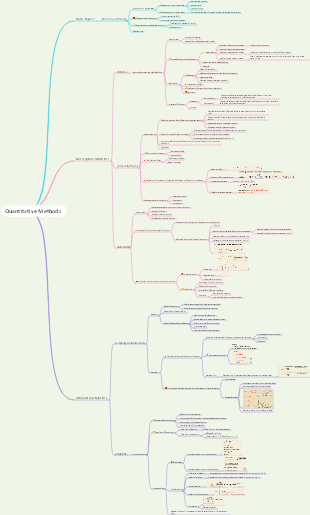
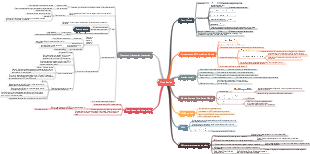
Overview
The purpose is to accurately determine the content of one or certain components in the sample
Chemical analysis, instrumental analysis
step
Quantitative analysis tasks and plans
Sampling and specimen preparation
Preparation of standard solutions or standard series of solutions
Determination
Data processing and result expression
Error in quantitative analysis
Error and Accuracy
Absolute error (E) The difference between the measured value (x) and the true value, that is, E=x-true value
Relative error (RE) The percentage of absolute deviation (E) in the true value, RE=E/true value
True value: Commonly used true values are agreed true value and standard value
Classification of errors
Systematic error
method error
Instrument and reagent errors
operating error
subjective error
Accidental error: also called unmeasured error, is caused by certain uncertain factors in the analysis process.
Bias and Precision
Absolute deviation (deviation): d=single measurement value-arithmetic mean
Average deviation: Average deviation = sum of absolute values of each deviation/n
Relative average deviation: average deviation/measurement average
Relative deviation: relative deviation = d/arithmetic mean
The relationship between accuracy and precision
High precision is a prerequisite for high accuracy; but good precision does not necessarily mean high accuracy. Only on the premise of eliminating systematic errors can the precision and accuracy be high.
Methods to improve the accuracy of analysis results
Choose the appropriate analytical method
Reduce measurement errors
Reduce system errors
controlled trial
Blank test
Calibrate instruments
Reduce accidental errors
Significant figures and their applications
Significant figures
Definition: A number that can actually be measured.
Significance: Significant digits include all exact digits and the last estimated digit.
"0" between or after the numbers one to nine is a valid digit
The number of significant digits in a logarithm depends only on the number of digits after the decimal point.
Mathematical constants e, π, and multiples or fractions, not actual measured numbers
When the first digit of the significant digit is equal to or greater than 8, the significant digit may be counted by one more digit.
Rounding of significant figures
The principle of "rounding up and leaving even numbers"
Rules for calculating significant figures
Addition and subtraction: The number of digits retained after the decimal point depends on the one with the fewest digits after the decimal point (that is, the one with the largest absolute error)
Multiplication and division: The number of significant digits retained depends on the one with the fewest significant digits (that is, the one with the largest relative error)