MindMap Gallery Physical Training for Group Projects Reading Notes
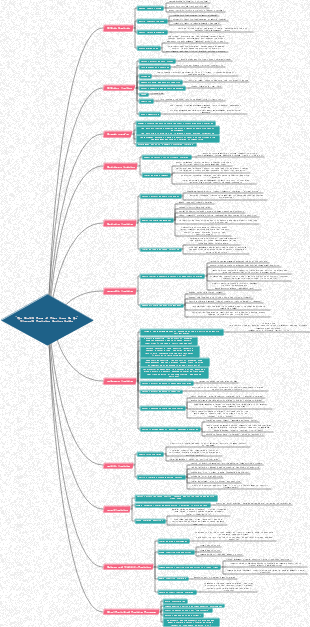
Sharing of physical training for group projects of "The Fifth Form of Tian Long Ba Bu"! This mind map summarizes all elements such as the specialization and training effects of physical training, physiological and competitive ability assessment, etc. It is provided for free to the majority of sports and fitness enthusiasts!
Edited at 2019-03-20 07:51:20This is a mind map about bacteria, and its main contents include: overview, morphology, types, structure, reproduction, distribution, application, and expansion. The summary is comprehensive and meticulous, suitable as review materials.

This is a mind map about plant asexual reproduction, and its main contents include: concept, spore reproduction, vegetative reproduction, tissue culture, and buds. The summary is comprehensive and meticulous, suitable as review materials.
This is a mind map about the reproductive development of animals, and its main contents include: insects, frogs, birds, sexual reproduction, and asexual reproduction. The summary is comprehensive and meticulous, suitable as review materials.
This is a mind map about bacteria, and its main contents include: overview, morphology, types, structure, reproduction, distribution, application, and expansion. The summary is comprehensive and meticulous, suitable as review materials.
This is a mind map about plant asexual reproduction, and its main contents include: concept, spore reproduction, vegetative reproduction, tissue culture, and buds. The summary is comprehensive and meticulous, suitable as review materials.
This is a mind map about the reproductive development of animals, and its main contents include: insects, frogs, birds, sexual reproduction, and asexual reproduction. The summary is comprehensive and meticulous, suitable as review materials.
"The Fifth Form of Tian Long Ba Bu" "Physical Training for Group Projects"
Specialization and training effects
principle of expertise
The training response caused by a certain training mode is related to There is a direct relationship between physiological factors responding to specific training stress.
Transfer of training effects
To what extent training effects are retained in competition It depends on how well the training can replicate the constraints associated with the competition.
Physiological and athletic ability assessment
strength assessment
maximum strength
Isometric strength assessment
Isokinetic force assessment
Isoinertial force assessment
Eccentric force assessment
That is, the maximum strength during a 3-second confrontation within the full range of eccentric movement.
Strength-Endurance Assessment
Evaluated by the number of times it can be repeated under submaximal load
“Speed-Strength” or Explosiveness Assessment
isokinetic dynamometer
force growth rate test
Isoinertial evaluation of power output P (power) = force (mass of barbell × acceleration) × speed
Evaluation of maximum power output loads
squat jump test
Olympic lift maximum repetition test
Assessment of vertical jump
Horizontal jump test
Evaluate reactions (speed-strength and length-shortening cycles)
Endurance performance assessment
Laboratory evaluation
On-site testing of cardiopulmonary function
Ground running incremental test
20m multi-level return run test
YO—YO intermittent test
30-15 Intermittent Fitness Test
Sports specific testing procedures
Submaximal load testing for endurance levels
Running economy or work efficiency assessment
Lactate handling capacity assessment
lactic acid country
Maximal lactate homeostasis assessment
Field experiments on anaerobic capacity
Repeated Sprint Ability Test p.29
Speed component assessment
Evaluation of linear acceleration capabilities
Evaluation of straight-line running speed
Sensitivity test
Test of ability to change direction
reaction speed test
Balance and Stability Test
Single leg balance and stability
static postural balance
dynamic postural balance
dynamic stability
Lumbosacral—core stability of the pelvis
Musculoskeletal and movement pattern screening
FMS
function and neuromuscular
functional training
Endurance required for group projects Physiological and Neuromuscular Fundamentals
Repeated sprint ability
anaerobic capacity
aerobic capacity
maximum speed capability
Muscle buffering capacity
Running economy and neuromuscular factors P.56
Relevant factors that determine training adaptation
enzyme adaptation
Energy matrix supply and repair
Ability to scavenge and buffer metabolites
Peripheral adaptations that support muscle oxygenation
Aerobic capacity and maximum oxygen uptake rate
neuromuscular adaptation
Develop training strategies for different functions
high intensity training
high intensity interval training
Repeated sprint training
Interval running training with personalized MAS (30 seconds of work; 15 seconds of rest) (15 seconds of work; 30 seconds of rest)
Tactical functional training methods
Technical functional training methods
Skill training methods for small field competitions
Attachment: When choosing training methods and planning training intensity, training volume, time-rest ratio, etc. Parameters should follow the internal and coherent progress of the project.
neuromuscular training
Risk ratio of knee injuries for men and women
1:2~10
Because: Women do not benefit from the "rapid neuromuscular maturation period", On the contrary, the control of the lower limbs appears to be insufficient (during puberty).
Assess balance ability
static stable postural balance
:The ability to maintain the body's center of gravity on a static support base and fixed support surface
dynamic postural balance
: The ability to maintain the center of gravity on a fixed support basis during exercise
dynamic stability
:The ability to maintain balance during transitions from moving to resting postures
Neuromuscular training for postural control and balance
static balance training
Separation factors: vision; hearing; vestibular system; shoes, etc.
dynamic balance training
Perform movements on a stable surface
Practice balancing on an unstable surface
dynamic stability training
Landing and braking style training for approaching competition
It can also fall on an unstable plane
Neuromuscular training can achieve
: Eliminate known risk factors for injury in sports mechanics
:Improve the effectiveness of movements and competitive ability
Strength, power, speed and agility
strength
Benefits of Strength Training for Group Sports Athletes
Reduce risk of injury (Enables greater resistance to neuromuscular fatigue that can easily lead to injury)
Improve endurance performance (Any improvement in aerobic or anaerobic parameters can potentially improve endurance performance)
Advances in strength training models: the specialization continuum P.79
general strength development
Transitional Strength Training Mode
Transfer of Strength Training Effects
training suggestions
Introduce unilateral support resistance exercises, alternating upper limb exercises and unilateral limb change exercises
A neuromuscular training approach that focuses on movement quality rather than simply increasing load
explosive force
Factors affecting explosive performance
maximum dynamic strength
growth rate of force
high strength
Stretch-shorten cycle capability
Neuromuscular skills and coordination
Develop explosive training models
The Olympic lifting training model can promote the improvement of concentric contraction and explosive power. And achieve maximum explosive performance with greater external resistance.
Projectile resistance training provides a means to increase concentric contraction power output. This is partly due to training adaptations that occur during the eccentric phase of contraction.
"Athlete's Body" Power Peaks and "Athlete's Body Barbell" During Barbell Squat Jumps The peak power of this system is also significantly higher than the effect obtained in 0%~80%1RM load barbell power clean training.
Super isometric training can promote the improvement of both slow lengthening-shortening cycles and fast lengthening-shortening cycles. Super isometric training can be used to train highly specialized movement patterns. This facilitates the transfer of training effects in both horizontal and multi-directional directions.
Coordination training mode provides options for throwing and hitting Such sports techniques are a means of developing specialized explosive abilities.
speed
Factors affecting speed development
Strength and Speed - Strength Training Methods (Strength training for hip, knee, and ankle muscles)
Special training for super isometric sprint running (Slow and fast elongation-shortening cycle capabilities)
Resistance coordination training model (increased resistance running and weight-bearing running)
Special speed development
Acceleration stage of speed development (Motion Mechanics and Kinesiology p.121)
maximum speed development (Increase the reaction force with the ground and limit the contact time with the ground)
training mode
super isometric training
neuromuscular
accelerated training
muscle coordination
sensitivity
Factors affecting the development of sensitivity
Transfer training for agility development
Development of change of direction motor skills (specific change of direction training)
Strength and Speed—Strength Training Mode (Unilateral strength sagittal plane training and super isometric exercises)
Postural control and body stability (lumbosacral-pelvic stability and neuromuscular control training)
training mode
posture control
neuromuscular skills
lateral acceleration
slow down
reaction force ability
Perception (stimulus responses and decision factors)
Lumbosacral pelvic core stability and Injury risk factors and injury prevention
Lumbosacral pelvic core stability
Key Elements of Spine-Pelvis-Hip Stability
Upper limb involvement
Movement patterns of trunk and limbs
Internal and external loads endured by athletes
Body posture—especially when weight-bearing
A comprehensive approach to training your core
Neuromuscular training for body posture stabilization
Low threshold core training
Postural control and proprioceptive training
Lumbosacral-pelvic strength and stability training with larger loads
Spin training
hip strengthening exercises
Unilateral resistance training mode
Rotational stability training mode
Static trunk stabilization exercises
Injury risk factors
Internal factors
Gender Old injuries Joint laxity Muscle flexibility Imbalance between strength and flexibility
External factor
Environment Errors in training program design and implementation Sports equipment
The main injuries are: ankle, knee, waist, hamstring, shoulder joint
Universal Injury Prevention Methods
Incorporate all parts of the lower extremity musculature chain
Increases muscle strength and corrects strength imbalances thereby increasing joint mechanical stability
Improved control of proprioception and neuromuscular training to address stability of body functions
Address tightness and imbalances in muscle mobility and flexibility through targeted flexibility training
Training periodic arrangement and Physical Preparation for Youth Athletes
Arrangement of training cycles
Training variables p.192
periodic plan periodic schedule
Transfer of training effects Periodic plan of training intensity, volume and content
Planning for period training p.194
Periodic arrangement
linear periodic schedule
unit cycle schedule
Fluctuation cycle arrangement
Dosage mid-cycle
Practical application of season cycle
out of season
before season
In season
Weekly minor cycle p.204
Summary: The best approach is to strategically combine approaches
Physical Preparation for Youth Athletes
neuromuscular burst
In males, this period is accompanied by growth of limbs and benign changes in body composition.
This phenomenon does not occur in women. Instead, the stability of the lower limbs decreases due to growth (ACL injury).
Prepuberty: the period before the onset of puberty p.224
Early adolescence: the period from the beginning of adolescence to the peak of height growth p.227
Adolescence: the period after the peak of height growth and entering adulthood p.229
Attachment: The training of young athletes in collective events should focus on balanced physical development. and the building of basic competitive abilities, only when these priorities are achieved and the body begins to mature, Only then can the training focus gradually shift to specialized training and position-specific training.