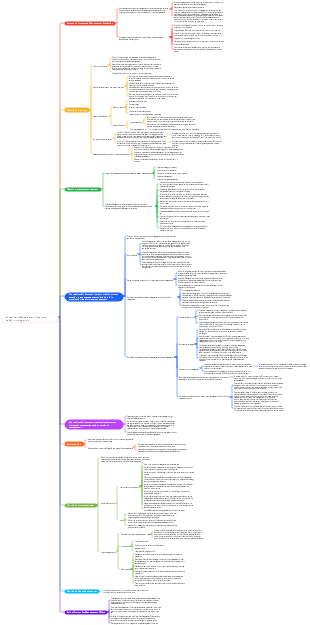
MindMap Gallery Public Institution Exam Basic Knowledge of Management Strategic Management
This is a mind map of strategic management for the public institution exam "Basic Knowledge of Management", which is introduced from four aspects: overview of strategic management, organizational strategy, strategic process and issues.
Edited at 2021-07-09 10:41:43This is a mind map about bacteria, and its main contents include: overview, morphology, types, structure, reproduction, distribution, application, and expansion. The summary is comprehensive and meticulous, suitable as review materials.

This is a mind map about plant asexual reproduction, and its main contents include: concept, spore reproduction, vegetative reproduction, tissue culture, and buds. The summary is comprehensive and meticulous, suitable as review materials.
This is a mind map about the reproductive development of animals, and its main contents include: insects, frogs, birds, sexual reproduction, and asexual reproduction. The summary is comprehensive and meticulous, suitable as review materials.
This is a mind map about bacteria, and its main contents include: overview, morphology, types, structure, reproduction, distribution, application, and expansion. The summary is comprehensive and meticulous, suitable as review materials.
This is a mind map about plant asexual reproduction, and its main contents include: concept, spore reproduction, vegetative reproduction, tissue culture, and buds. The summary is comprehensive and meticulous, suitable as review materials.
This is a mind map about the reproductive development of animals, and its main contents include: insects, frogs, birds, sexual reproduction, and asexual reproduction. The summary is comprehensive and meticulous, suitable as review materials.
Chapter 9 Strategic Management
Overview
Meaning and characteristics
Ansoff 1976 "From Strategic Planning to Strategic Management"
Operation and management business
Steiner 1982 "Corporate Policy and Strategy"
Dynamic Process
...the process of achieving long-term goals
Components
strategic thinking
soul commander
Strategic objectives
core
strategic focus
around strategic goals
strategic stage
Segmentation of strategic goals and strategic cycles
strategic countermeasures
To achieve strategic ideas and strategic goals
are means and measures
Foresight, pertinence, multiplicity, flexibility
feature
comprehensive
a range of management activities
The extent to which each department contributes to the organization's mission and goals
internal external
long
Time span 3-5 years
No end, no interruption
decision-making, science, art
Scientific knowledge, objective laws
Soul: application, practice
Resource allocation, innovation and response
development trend
Evolution and development
long term planning era
strategic planning era
strategic management era
traditional school
Mintzberg's Ten Schools
organizational strategy
meaning, components
...overall action plan
Logic:
organizational strategic management
Continuous development of the organization
maximize revenue
5 basic elements
"Wish Project Asset Group"
organizational strategic leadership
The process by which managers lead employees to achieve...
leadership is key
Handle 5 types of relationships well
Goals and abilities, opportunities and abilities, present and future, formulation and execution, rigidity and flexibility
Strategy formulation is a thinking process, strategy execution is an action process
strategic management of organizations
overall strategy
growth type
Densification
market penetration
product development
Market Development
Integration
portrait
Horizontal
Diversification
concentric
Horizontal
mix
Stable
compact
Division strategy
competitive strategy
cost leadership
centralization
Differentiation
functional strategy
process
Divide into ten empty bottles
Strategic Analysis
strategic environment analysis
System scans internal and external environments
SWOT analysis
boston matrix
Strategy formulation is the primary position and starting point
Two aspects of content
Determine organizational mission and goals
Make strategic choices
General procedure
Accurate identification and evaluation
method
Top-down, bottom-up, top-down strategy team
strategic evaluation
General principles
consistency
Strategy is aligned with organizational goals
suitability
Can reflect organizational resources and competitive advantages
effectiveness
Whether the assumptions are valid and reasonable, and whether the data is valid
rationality
Limitations for all parties
Inside
culture, technology, resources
Employees and managers recognize
outside
Customers, competitors, suppliers, government
attraction
Stakeholders
Financial risk
Staff changes
Management training, redundancy
Social Issues
self-organization
Influencing factors
Values, Behavioral Preferences, Tools and Methods, Information and Materials, Timeliness
process
Adaptability evaluation
Take advantage of external opportunities and avoid external threats
Determine program requirements
Can the organization satisfy
Analysis plan consistency
internal balance
Analyze risks and difficulties
Are there any prevention possibilities and countermeasures?
strategy implementation
Considerations
structure following
chandler
acculturation
resources around
type
Command type
Formulated by senior executives themselves
transformational
High-level research implementation, new structures, new systems
cooperative
Top managers act as coordinators and inspire other managers
cultural type
Senior management provides opinions and encourages grassroots staff to design activities
growth
Senior managers encourage middle and lower managers
in principle
Adhere to goals, be adaptable, moderate and reasonable, and have unified leadership and command
strategic control
Supervise and inspect implementation
It is the guarantee of implementation and the last link of strategic management.
necessity
Adjust actions that are inconsistent with plans
Adjust parts and the whole
Components
Establish standards, measure effectiveness, and correct deviations
type
Avoid tracking switch feedback
Way
before, after, any time
in principle
ensure target
Short-term business activities and long-term strategic activities
moderate control
Flexibility, avoid excess, minimal intervention
timely control
timely, appropriate time
suitability
Different control standards and methods
priority control
Of great significance to the implementation of the strategy
Control by exception
Focus on exceptions
Motivating
self control
information feedback
implementation strategy, strategy formation
question
positive effect
ability to adapt to the environment
Guide resource allocation priorities
Direction of development
standards of excellence
Basis for control and evaluation
strategic management issues
low consciousness
structural lag
Implement rigidity
Missing evaluation mechanism
lack of ability
Out of touch with reality
Poor implementation
Improve
Establish a vision
improve abilities
Strengthen ideas
Do a good job in publicity
Clear focus
Effective implementation
strategic control