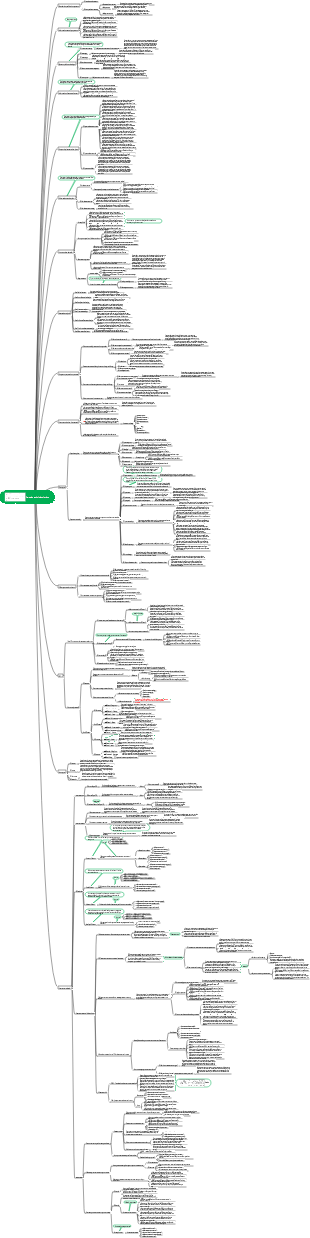
MindMap Gallery Consultation and Evaluation Chapter 6 Construction Plan Mind Map Contains Mistaken Points (Red Letters)
Consulting Engineer 2024 analysis and evaluation, mainly includes the main research content of construction plans, comparison and selection methods of construction plans, etc. Welcome to like and collect~
Edited at 2024-03-14 13:00:40This is a mind map about bacteria, and its main contents include: overview, morphology, types, structure, reproduction, distribution, application, and expansion. The summary is comprehensive and meticulous, suitable as review materials.

This is a mind map about plant asexual reproduction, and its main contents include: concept, spore reproduction, vegetative reproduction, tissue culture, and buds. The summary is comprehensive and meticulous, suitable as review materials.
This is a mind map about the reproductive development of animals, and its main contents include: insects, frogs, birds, sexual reproduction, and asexual reproduction. The summary is comprehensive and meticulous, suitable as review materials.
This is a mind map about bacteria, and its main contents include: overview, morphology, types, structure, reproduction, distribution, application, and expansion. The summary is comprehensive and meticulous, suitable as review materials.
This is a mind map about plant asexual reproduction, and its main contents include: concept, spore reproduction, vegetative reproduction, tissue culture, and buds. The summary is comprehensive and meticulous, suitable as review materials.
This is a mind map about the reproductive development of animals, and its main contents include: insects, frogs, birds, sexual reproduction, and asexual reproduction. The summary is comprehensive and meticulous, suitable as review materials.
Consultation and Evaluation Chapter 6
Overview
1. Tasks and requirements for research, comparison and selection of construction plans
The process of constructing a relatively optimal construction plan or sequence of construction plans
2. The main contents and functions of construction plan research, comparison and selection
Construction scale and product plans
Process technology, equipment and installation solutions
Factory site, route and resettlement plan
Raw material and energy supply solutions
Overall transportation plan
Civil Engineering Plan
Public, auxiliary and off-site engineering solutions
Energy saving, water saving and material saving solutions
Environmental ecological protection and dual carbon solutions
Safety, Occupational Health and Fire Protection Program
Organization structure and human resource allocation plan
Project schedule and operation plan, etc.
3. Principles and indicator systems for research and comparison of construction plans
in principle
principle of advancement
applicability principle
reliability principle
economic principle
Compliance principles
comprehensive principle
Indicator system and basic data
Indicator system
The comparison and selection of announced product project plans often focuses on the social aspect, while also comparing the technical and economic aspects.
The comparison and selection of competitive project plans is mainly based on technical and economic aspects.
4. Scope and basic steps of construction plan research and comparison
scope
Overall project plan
Sub-project plan
Research and comparison of plans for various professional projects
The basic steps
Accept tasks, component work team
Collection and processing of basic data
Choice of methods and indicators
Preliminary selection and recommendation of plans
overall grasp
Main research contents of the construction plan
1. Construction scale and product plans
(1) Construction scale
1Main factors considered in determining construction scale
reasonable economies of scale
Market Capacity and Competitiveness
Environmental capacity, energy consumption and dual carbon
natural resource supply
Technical and policy requirements
infrastructure and socioeconomic status
2 Main methods to determine construction scale
empirical method
Survival Techniques Act
scale effect curve method
3. Reasonable analysis of construction scale
Indicators that measure the rationality of economic scale usually include
unit product investment
Unit product record book
Labor productivity
Unit investment profit, etc.
Compliance with industrial policies and industry characteristics
Reasonable use of resources
Adaptability and matching of technology and equipment
Adaptability and matching of construction conditions
Reasonability of benefits (economics)
(2) Product plan
The product plan is formed based on the forecast of product demand and comprehensive consideration of various factors such as construction scale.
Coordinate with technology, equipment, raw material and fuel supply solutions
2. Production technology and equipment solutions
(1) Production process technology plan
1Main factors to consider when selecting production technology
Advanced nature: good product performance, long product service life, low energy consumption per unit product, high labor productivity, high automation level, long smooth operation cycle, etc.
Applicability: match, adapt
Safety: intrinsically safe
Reliability: stable long-term operation
Economic rationality: less consumption, less investment, low cost, high profit
Comply with clean production process requirements
2 Process technology sources
3 Comparison and selection of production process technology solutions
technical analysis
Raw material and auxiliary material consumption indicators, energy consumption indicators, product yield, raw material loss rate, product quality (including high value-added product yield, etc.)
Economic Analysis
Unit product cost, unit product investment, technology usage rights fee
comprehensive analysis
Area and capacity
4. Introduction of process technology
(2) Equipment plan
(3) High-tech process solutions
3. Site and route plan
(1) Site and route plan research
1Main factors to consider when selecting a project site
natural environmental factors
transportation factors
market factors
labor factor
social and policy factors
human condition factors
agglomeration factors
2 Basic requirements for site plan selection
3 Requirements for site plan selection for special projects
Basic requirements for selection of general industrial solid waste disposal sites
Monkey Selection Requirements for Hazardous Waste Storage Facilities
Hazardous waste landfill site selection requirements
4 Things to note when choosing a site plan
(2) Comparison and selection of site and route plans
1Comparison selection content
Comparison of construction conditions
Investment fee comparison
Operating Expenses Comparison
Comparison of environmental protection conditions
Site safety conditions
2 Conclusion of comparison and selection (opinions on project site selection)
Geological hazard risk assessment includes
Engineering construction may induce or aggravate geological disasters.
The project construction itself may suffer from the risk of geological disasters
Preventive and control measures to be taken, etc.
4. Raw material and fuel supply plan
(1) Research on raw material and fuel supply plans
1Main factors to consider when selecting raw material supply solutions
2 Main factors to consider when choosing a fuel supply solution
(2) Comparison and selection of raw material and fuel supply options
The supply options for main raw materials and fuels should be determined through comparison of multiple options.
5. General transportation plan
(1) Research on general transportation plan
1Overall more than
General layout of 2 field (factory) areas
Vertical layout of 3 fields
4 field area road layout
5 On-site and off-site transportation
6Greening
(2) Comparison and selection of general transportation plans
1Technical and economic indicators of the general transportation plan
Normative indicators
Volume rate
building coefficient
Proportion of land used for administrative offices and living service facilities
Recommended indicators
Fixed asset investment intensity
Land productivity
land tax
2 Comparison and Selection of General Plan Transportation Plans
Comparison of technical indicators
General plan layout cost comparison
Other comparison and selection contents: functional comparison and selection, demolition plan comparison and transportation plan comparison and selection
6. Civil Engineering Plan
(1) Basic requirements and research content
1Basic requirements
Meet the functional needs of production and use
Adapt to the calculated site (line direction)
Comply with engineering standards and specifications
Economically reasonable
2Research content
Engineering solutions for process industry projects
Civil construction engineering plans
Engineering plans for water conservancy and hydropower hub and reservoir projects
(2) Earthquake resistance and earthquake safety evaluation
The earthquake safety assessment report should include
Engineering overview and technical requirements for seismic safety assessment
Seismic Activity Environmental Assessment
Seismic location structural evaluation
Fortification intensity or design earthquake parameters
Earthquake location hazard assessment
Other relevant technical information
How to compare and select construction plans
1. Relationship types of construction plans and construction plan comparison and selection methods
(1) Types of relationships between construction plans
Independent, Mutually Exclusive, Complementary, Dependent, Dependent and Mixed
(2) Types of construction plan comparison and selection methods
1Comparison and selection of overall and specific solutions (by scope)
2 Qualitative and quantitative solution comparison and selection (by model tool)
2. Technical comparison and selection methods of construction plans
(1) Simple scoring method (delete solutions that do not meet the requirements)
(2) Weighted scoring method
3. Economic comparison and selection method of construction plans
(1) Analysis of the absolute economic effect of the plan
Indicator classification
(1)
Static evaluation indicators: investment return rate (total investment return rate, net capital profit rate), static investment payback period, interest payment rate, debt service reserve ratio, asset-liability ratio; current ratio; quick ratio
Dynamic evaluation indicators: net present value; net annual value; annual cost; internal rate of return; dynamic investment payback period; benefit-to-cost ratio
(2)
Value indicators: net present value, present value of costs, net annual value, annual value of costs
Time Metrics: Static and Dynamic Payback Periods
ratio indicator
(3)
Solvency analysis indicators: interest reserve ratio, debt service reserve ratio, asset-liability ratio, current ratio and quick ratio
Profitability analysis indicators
1Investment rate of return
Total investment return EBIT/total investment
Net profit margin on capital Net profit/capital investment
Features
2Investment payback period
The time required to recover the total investment (including construction investment and working capital) with the net income of the project
It can be calculated from the year when the project construction starts, or it can be calculated from the year when the project is put into production, but it should be clearly stated.
Features
3Net present value
Use a predetermined benchmark rate of return to discount it to the sum of the present values when the investment plan is implemented.
Features
present value of costs
4Net annual value Annual value of expenses
5 internal rate of return
The discount rate when the cumulative present value of each net cash flow during the calculation period equals zero.
Profitability of the investment proposal as a percentage of uncollected funds
The maximum loan interest rate that the plan can bear
The net present value decreases as the discount rate increases
call it a day algorithm
Features
(2) Analysis of the relative economic effects of the plan
Vangardner integer programming method
objective function
Restrictions
resource constraints
Constraints on the relationships between plans
Corresponding independent relationship
Corresponding mutually exclusive relationship
Corresponding complementary relationship
Corresponding subordination relationship
Mutually exclusive scheme combination method
(1) Construction of mutually exclusive solution combinations
independent relationship
complementary relationship
subordination relationship
hybrid relationship
(2) Comparison and selection method of mutually exclusive solutions
Direct comparison method of evaluation indicators
Value-based indicators such as net present value, present value of costs, net annual value, annual value of costs, annual converted costs and annual comprehensive costs
Incremental indicator analysis method
The incremental indicator analysis method is the most commonly used method for comparing and selecting mutually exclusive solutions.
For solutions with only investments and expenses, but with the same or basically the same income but difficult to estimate, value-based indicators such as the present value of incremental expenses, annual value of incremental expenses, incremental annual conversion expenses, etc. can be used, or incremental investment can be used Indicators such as rate of return and incremental investment payback period