 Wondershare EdrawMind
MindMap Gallery The Selfish Gene Reading Notes
- 88
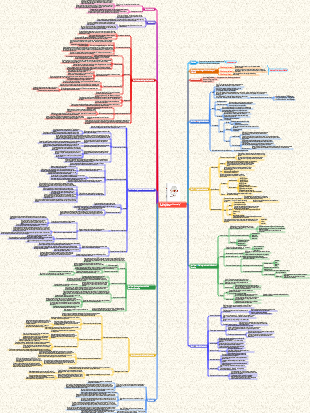
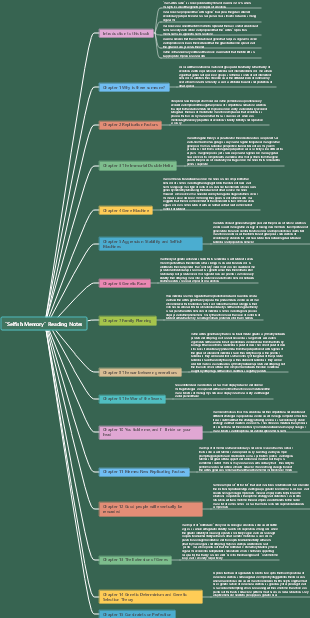
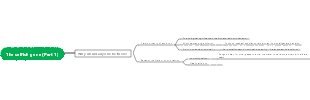
The Selfish Gene Reading Notes
This is a classic study of evolution and genetics. Author Richard Dawkins explains in vivid and easy-to-understand language how genes shape our behaviors and traits. He believed that genes are selfish and that they perpetuate themselves through competition among individuals. This book explains various interesting and thought-provoking phenomena in the evolution process in a simple and easy-to-understand way!
Edited at 2024-03-13 15:15:07
- bacteria
This is a mind map about bacteria, and its main contents include: overview, morphology, types, structure, reproduction, distribution, application, and expansion. The summary is comprehensive and meticulous, suitable as review materials.
- Plant asexual reproduction
This is a mind map about plant asexual reproduction, and its main contents include: concept, spore reproduction, vegetative reproduction, tissue culture, and buds. The summary is comprehensive and meticulous, suitable as review materials.
- Reproductive development of animals
This is a mind map about the reproductive development of animals, and its main contents include: insects, frogs, birds, sexual reproduction, and asexual reproduction. The summary is comprehensive and meticulous, suitable as review materials.
The Selfish Gene Reading Notes
- bacteria
This is a mind map about bacteria, and its main contents include: overview, morphology, types, structure, reproduction, distribution, application, and expansion. The summary is comprehensive and meticulous, suitable as review materials.
- Plant asexual reproduction
This is a mind map about plant asexual reproduction, and its main contents include: concept, spore reproduction, vegetative reproduction, tissue culture, and buds. The summary is comprehensive and meticulous, suitable as review materials.
- Reproductive development of animals
This is a mind map about the reproductive development of animals, and its main contents include: insects, frogs, birds, sexual reproduction, and asexual reproduction. The summary is comprehensive and meticulous, suitable as review materials.
- Recommended to you
- Outline
![The Selfish Gene [English] Richard Dawkins](https://edrawcloudpublicus.s3.amazonaws.com/work/5594742/2024-5-22/1716393430/thumb.png?x-oss-process=image/resize,w_300,m_lfit)
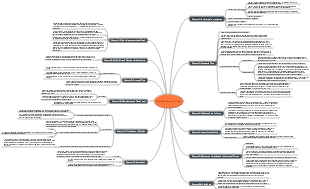

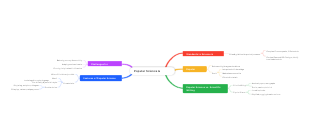

"The Selfish Gene" Reading Notes
Chapter 1: Why are there people?
Logical overview
main argument
We and all other living things are machines created by our genes
One of the outstanding characteristics of successful genes is their ruthless selfishness
Statement (a point not intended to be argued)
Do not advocate a moral perspective based on evolution
Some people cannot distinguish between explaining an understanding of something and advocating for it
The “Nature and Nurture” Debate
Does not describe the behavior of humans or other animals in detail
definition of selfishness
An entity whose actions result in an increase in its own chances of survival at the expense of other entities' chances of survival.
Behavioral definition, not subjective consciousness
Altruistic behavior when the entity is an individual: worker bee sting, antelope, bird warning, parents
The level of analysis of altruism and selfishness - "group selection" and "gene selection"
Evolution is driven by natural selection, and the "fittest" survive differentially
Is the "fittest" an individual, a species, a species, or something else?
Biological evolution is "for the benefit of its group"
Taxon selection
The basic unit of selection is the gene, which is the basic unit of self-interest.
Gene selection
"Group selection" is a misunderstanding
A group of selfless people will be destroyed by selfish rebels. The system is not steady state.
Falsification by Gui Miao method
"Group selection theory" is a popular misunderstanding
summary
Point out the point to be demonstrated - genes are ruthlessly selfish
Used to elicit key arguments and statements and reveal the analytical level of "gene selection"
Chapter 2: Replication Factors
Logical overview
Generation of replication factors
material stabilizer survival principle
The original form of natural selection is the rejection of unstable patterns by stable patterns.
“Original Soup”
Chemical raw materials: carbon dioxide, water, methane, ammonia, etc.
Reaction conditions: volcano, sunlight, lightning
Products: Amino acids, purines and pyrimidines that make up replication factors
The generation of self-replicating, “anti-image” replicating factors
Selfish goals of replicators
Increase the number of copies of itself
Evolutionary trends in replicators
longevity
The structure itself is stable and exists for a long time
high copy rate
High copy accuracy
Copying errors is necessary for evolution, but nothing "wants" to evolve
High competitiveness
Limited resources
struggle for survival
Replication factors make proteins, cells, and organisms to protect themselves and improve their ability to survive.
form a survival machine
summary
The replicators that emerged from the primordial soup were selfish, and we are all the survival machines they piloted
Starting from the original genetic perspective, it explains that "we are all genetic survival machines", thereby accepting that genes are the units of selfishness.
Chapter Three: The Immortal Double Helix
Logical overview
Modern replication factors: DNA molecules on chromosomes
Function: Self-replicate and construct proteins
Errors in self-copying: chromosomal crossovers, inversions, and point mutations
The shorter the genetic unit, the longer it survives and the less likely it is to break apart due to crossover
A cistron is less than 1% of a chromosome
The basic unit of selfish behavior: genes
Gene: Any part of a chromosome capable of acting as a unit of natural selection for several successive generations.
Several cistrons can be closely combined through chromosomal inversions to complement or strengthen each other to form a new gene whole.
“Mimicry” gene linkage group in butterflies
Genes are generally between cistrons and chromosomes
Genes are immortal genetic entities
A gene can theoretically survive as a copy of itself for 100 million years
Genes can be passed on in many copies
Genes are granular
The unit is small enough that it is not easily damaged by exchange during the copying process and can exist for a long time.
Natural selection pressure: Same alleles compete for positions on offspring chromosomes, increasing their own frequency in the gene pool
Gene bank is the new soup of genetic life
Some extended discussions
Genes need to cooperate with the external environment including other genes
If it works well with other genes, it usually has a better chance of survival.
Rower selection, carnivore, herbivore teeth and intestines
Why do individuals age?
In the gene pool, late-active lethal genes and semi-lethal genes accumulate and escape the net of natural selection.
Response: Delay reproduction, impose age selection pressure; “fool genes”, suppress expression
Why Sexual Reproduction and Exchange
Having genes that control sexual reproduction and exchange, and being able to derive survival benefits from doing so
Analogy to mutator genes with control mutations
"Parasite" genes on chromosomes
summary
Genes are the basic unit of selfish behavior and the basic genetic entity
Describe modern replicators and their replication and working mechanisms
Chapter 4: Gene Machine
Logical overview
The evolution and development of survival machines
Cells that started out as mere storage of genes have now become producers of organic food and consumers who make a living from it.
Multicellular bodies are “populations” of genes
How a survival machine works
Genes structure organisms by controlling protein synthesis
Sense organs, neurons that conduct signals, the brain that controls and coordinates functions, and muscles that perform mechanical movements
Genes are excellent programmers
chess program
Gene provides overall strategic instructions: please take whatever action you feel is most appropriate to ensure our existence
The quality of the program is related to the survival of the survival machine - the death of the gene
In order to predict and cope with the future, genes give the brain the ability to learn and simulate
Evolution tends to form consciousness - purposefulness
Survival machines are liberated and become decision-makers with executive capabilities
summary
Building high-efficiency survival machines is the basis for judging the quality of genes
Genes formulate the main strategies, survival machines are executors who have acquired their own decision-making abilities
Chapter 5: Aggression: Stability and Selfish Machines
Logical overview
Aggression among organisms is widespread
For a survival machine, another survival machine is part of its environment
The survival machines of different species also interact with each other in various ways
mole and blackbird
Mutual game
Definition of evolution stable strategy (ESS)
Strategies are preprogrammed patterns of behavior
Most members of the population adopt a certain strategy that is not matched by other strategies - ESS
Stable polymorphism: multiple strategies are combined in specific proportions to achieve system steady state
Features of ESS
The population stability of ESS is not about maximizing the interests of the average individual, but only about the absence of hidden dangers of betrayal within it.
Human individuals are able to use their conscious foresight to understand that abiding by covenants is in their best interests.
monopoly price
A system may have more than one stable point, and disturbances may significantly change the stable state.
Behavior that deviates from ESS will be punished by natural selection
Results: Genes controlling different strategies achieved stable proportions in the gene pool
New genes occasionally succeed in invading a stable gene pool and spread
An unstable transitional phase then occurs, culminating in the formation of a new set of evolutionarily stable genes
The formation case of ESS
Hawks and Doves
counterattack strategist
Bullying Strategist
"War of Attrition"
lie openly
asymmetric game
"Remainers" and "Intruders"
territoriality
Body size, fighting ability and fighting memory
Cannibalism among adult individuals of the same species does not exist
summary
Aggressive interactions among a number of intact individuals, ultimately selecting for a stably composed gene pool
Chapter Six: Genetic Race
Logical overview
Selfish genes are all copies of a segment of DNA in the gene pool.
The purpose is to expand your team and increase your frequency of existence
Genes act altruistically towards relatives
Individuals in the same family share a large number of genes
The genetic "generation distance" of relatives represents the genetic similarity in the body
"Relative-Friendly Guidelines"
Parental love is an example of altruistic behavior by close relatives
Parental love is much more sincere than brotherly love
"Certainty" Index
Asymmetry in the relationship between parents and children
Parents have greater ability to survive
Children’s life expectancy and reproductive capacity are stronger
summary
Explaining kin selection from a selfish genetic perspective
Chapter Seven: Family Planning
Logical overview
Reproductive Choices—Giving and Raising
Gathering of ochon birds
The number of wild animals will not increase indefinitely
A mixed strategy of rearing and reproduction to achieve evolutionary stability and maximize gene frequency
Individuals who possess more than they can support mostly do so out of ignorance
You can't have an unnatural welfare state unless you also have unnatural birth control
Individual animals will predict individual density and reduce the number of eggs in their clutches
There is corresponding deceptive behavior
summary
Parental individuals practice family planning in order to keep their birth rate at an optimal value
Chapter 8: Battle of Generations
Logical overview
Should parents have a favorite child?
Parental investment
A invests in B at the expense of A's ability to invest in other individuals, including itself.
This investment ability is weighted according to the affinity index
Genetically, the mother is 1/2 related to each of her children.
Each individual is a life insurance insured, and there are differences in life expectancy
It is uneconomical for a small person to receive too much parental investment.
Generally speaking, when it comes to life and death, you should save the elderly and avoid duplication of investment.
It does not involve life and death, but young individuals should be invested, and the elderly should be self-reliant.
Maternal weaning and menopause (elderly women’s ability to support them decreases)
selfish behavior of children
I am twice as closely related and genetically duplicated as my brothers, and I hope to get more investment.
Deception, blackmail and horrific murder
Birds call loudly to attract predators, cuckoos, honeybirds kill other babies
When a brother's net loss from grabbing food is greater than twice his gain, enough is enough.
Weaning
Small child effect: When the expected return of a small child from parental investment is less than half that of other young children, he should voluntarily die.
The war between parents and offspring - asymmetry
The same gene serves the same purpose with different identities: itself has a higher priority than other individuals with only 1/2 of the biological relationship.
Children use strategies to gain more investment
Parental identification to better weigh investments and maximize your own gene transmission rate
summary
Gene's selfish behavior leads to behavioral conflicts between generations
Chapter 9: The War of the Sexes
Logical overview
male and female
Asymmetry evolved from isomorphic gametes
sex ratio
According to the "good of the species", the sex ratio should be 100:1
4% of walrus males occupy 88% of mating
Theoretically, male individuals are "low value and easy to consume", while female individuals are more valuable.
The ratio of parents’ investment in children should be 50:50
Genetic natural selection pressure forces the proportion of children to reach a stable equilibrium
The game between spouses raising children
The less invested in any one child, the more children he/she will have
Mothers have congenital disadvantages and are easily "exploited" in parenting
Except for in vitro fertilized fish
Once abandoned
deceive other males
The "Bruce Effect" of Male Individuals
Male individuals extend the pursuit time
Give priority to abandoning the other party and leaving
How females take the initiative and mitigate losses: bargaining
Happy Family Strategy: Populations consisting primarily of shy females and loyal males are evolutionarily stable
b. Male chauvinism: Since they are to be abandoned, female individuals will only mate with the best males to improve the quality of their offspring.
summary
Different reproductive systems in the animal kingdom are the result of conflicts of interest under conditions of asymmetry between the sexes.
Individuals hope to pass on their genes to the greatest extent throughout their lives
Chapter 10: If you itch for me, I will ride on your head
Logical overview
gregarious altruistic behavior
Advantages of living in groups
Hyenas, spiders, emperor penguins, fish, birds and more
Out of selfishness, to avoid being preyed upon
The geometry of the selfish herd
Reduce your danger zone
bird alarm sound
Relative selection, "be careful" not to be discovered, "never leave the team"
gazelle jumping
Losers are the targets of predators
social insects
Division of reproduction and rearing in social (Hymenoptera) insects
The death of a sterile worker bee affects its own genes like the fall of leaves in autumn to its tree.
Workers are sterile, and workers "work" and "queen" replicate and pass on their own genes.
Female (diploid): worker (sterile), queen; male (haploid)
Reproductive insects (queen and males) have wings
The Queen goes out to mate once when she is young and stores the same set of sperm for her entire life.
The probability that the male and female worms born by the queen contain a certain gene of their own genes is 1/2.
The probability that a female's sister has the same genes as her is 3/4, and the probability that a female's brother has the same genes as her is 1/4
The queen wants a sex ratio of 1:1; workers want a sex ratio of 1:3
In a slave-free insect colony, the sex ratio is adjusted to 1:3 according to the wishes of the workers.
In a group that raised slaves, the queen was able to "cheat" the nanny, and the gender ratio was 1:1
Ants capture larvae through war and raise them as slaves
mutualistic behavior
Parasol ant cultivation nursery
Ants 'farm' aphids
Lichens, and even our own cells, DNA, etc.
Mutual benefit but no reciprocity
Birds remove ticks from each other's heads
An evolutionarily stable strategy composed of fools, liars, and caretakers
Are human memory, recognition abilities, and emotional and psychological characteristics the product of natural selection of deception and anti-deception?
summary
Mutual beneficial and altruistic behaviors between individuals are also a way of expressing gene selfishness.
Chapter 11: New Replication Factor—Meme
Logical overview
Possible law of biology: All life evolves through differential survival of replicating entities
New communication factor—mimeme
Primordial Soup: The Soup of Culture
Reproductive: Imitation for reproduction, self-replication
The concept of "God" emerged through mutation and spread through speech, art, and printed matter.
Exact copying capabilities
Granularity of tiny components
Memes (genes) "try to increase their number in the future library" that is, "anything that increases in number in the future library due to the behavior of the meme (gene)" is those valuable and effective memes ( Gene)
Meme competition: time and space in memory storage
Meem complements each other and is closely connected
God and Hellfire, Religion and Faith
Memes and genes support or contradict each other
Solitary
Once genes provide a brain for a survival machine, memes automatically take over.
The meme library will also acquire evolutionarily stable properties and resist new memes.
Humanity resists the tyranny of replicators
We are built as genetic machines, bred as meme machines
Human beings have conscious foresight and are not selfish
The human ability to perform sincere and selfless altruistic behavior
summary
Meme (culture) is also an emerging replicator
What we leave to our offspring are replication factors—genes and memes.
Chapter 12: Good people will eventually be rewarded
Logical overview
prisoner's dilemma
"Prisoner's Dilemma" under a simple game
Unable to establish trust
No matter how you choose, I must "betray"
repeated game
Multiple rounds of play give opportunities to build trust and suspicion, to engage in confrontation or reconciliation, to grant revenge or forgiveness.
The most important task is to win the "banker", not the other party
first competition
Tit-for-tat: Cooperate for the first time, then repeat each other’s actions later
"Kindness": Never be the first to betray
“Tolerance”: A strategy with only short-term memory
Although he will take revenge, he will soon forget his opponent’s bad deeds.
second competition
Well-intentioned strategies win over malicious ones again
A successful strategy depends on your opponent's strategy
The extremely tolerant strategy of "Two Tat for Tat" failed
The third competition—evolutionary stable strategy
reduces subjectivity
Winning a single game will gain descendants and increase the number of your own strategies.
A "tit-for-tat" strategy that is both kind and yet easily incited to retaliate is not evolutionarily stable
Unable to resist assimilation by a few mutant strategies and easily invaded
Can be invaded by the combination of "Tit for Tat" and "Tit for Tat Paranoid Version"
Two collective stable states: "Tit for tat" and "Eternal betrayal"
Through the aggregation of individuals, the "tit-for-tat" group can finally cross the decisive point
Game discussion
"Non-zero-sum" and "zero-sum game"
Board games, divorce proceedings, football matches
The key to a more stable “tit-for-tat” situation—no jealousy
The real enemy of a "non-zero-sum" game is the "banker", not the opponent
"Shadows of the Future"
It is known that the limited number of games will make the final game a one-time process
The longer an individual expects the number of games to be, the closer the strategy selection will be to the analysis of repeated games.
In the first battle, "let yourself live and let others live", keeping the threat of revenge
natural case
Bacteria and the human body (choosing betrayal when seriously injured), fig trees and fig wasps, sea bass hermaphrodites, vampire bat blood donation
summary
Even if we are all run by selfish genes, good people will eventually be rewarded (due to gaming)
Chapter Thirteen: The Extension of Genes
Logical overview
extended phenotype of genes
Natural selection favors one gene over others, depending on the gene's phenotype
Mouse t gene - meiosis disguised factor
The phenotype of a gene may only be beneficial to its own reproduction and harmful to other genes in the body.
The phenotype of a gene can be extended to its effect on the world
Genes can act on behavior, playing a role in embryonic nervous system development
Caddis moth larvae build "stone houses", beaver dams
Genes of one organism have phenotypic effects on other organisms
Parasitic castration – juvenile hormone of schistosomiasis and snail shells, microsporidians and flour beetles
Depending on the future outcome of the parasite and host genes, the parasite's genetic phenotype may be mutualistic (eventually becoming the same individual) or selfish
Viruses, cuckoos, etc.
Determining the phenotypic origin of a gene: asking whose behavior the animal benefits from gene transmission
Individuals provide all genes with the same probability of exit to the future
Biological individuals are the carriers of genes, not groups
Why do genes make up cells?
Nature’s chemical factory
Multiple processes collaborate to create complex proteins
The cell membrane acts as a conveyor belt and test tube rack
Why do cells form multicellular organisms?
Large organisms have the ability to exploit and utilize more survival resources
For example, large creatures can eat small creatures.
Large organisms have the conditions to make each cell specialize in division of labor and improve their ability to cope with survival pressure.
Why do organisms adopt a "bottleneck" life cycle?
"Bottleneck" - Multicellular organisms always repeat the process of developing from a single cell, a fertilized egg
The "bottleneck" makes the cells in the organism closer to each other and the genes closer to the same, making the organism a more complete community.
Provides a "calendar" and "rhythm" for individual gene expression
"Back to the drawing board" to create improved versions of organisms
summary
The whole world is a cross, a causal arrow pointing to phenotypic effects from aggregated genes, either far or near.
Chapter 14: Genetic Determinism and Genetic Selection Theory
Logical overview
What is a myth?
Rumors, typical cases: Hitler, Russian soldiers, computers, chips, etc.
Why genetic determinism is a myth
This is a preconceived interpretation of individual growth and development using genetic theory.
Genes cannot determine all traits of an individual, they can only affect the material basis of phenotypes, and the environment can also cause certain behavioral phenotypes.
Not all phenotypes are Darwinian adaptive
Just as acquired experience and knowledge cannot be passed on genetically, the ontogeny of future generations naturally has more freedom.
Why does the myth of genetic determinism exist? Why is it so powerful?
Genetic influence immeasurably exaggerated
Analyzing the meaning of “decision” from a statistical perspective
The event of R always occurs after C
Evaluate whether the results indeed imply a causal relationship at an arbitrarily determined level of probability confidence.
If a genetic sex difference is manifested through the education system or other systems, it will still count as a genetic difference
In fact, people attribute all the effects of environment and other systems to genes, but it is difficult to verify by removing them through operations.
The non-heritability of acquired traits has led to cognitive misunderstandings
The experience and knowledge of ancestors cannot be directly passed on to future generations.
Genes remain unchanged as they spread
In fact, when we talk about the uneasiness that experience cannot be inherited, we have actually acknowledged the impact of acquired learning on individual growth, and also denied "genetic determinism"
The myth that “survival machines” are genetically programmed “robots”
Genes only provide strategies and do not predict future development. They are "the opposite of thoughtful things."
But individuals can be prophetic
Have a rigid and rigid concept of robots
The frequent emphasis on "gene selection theory" at the evolutionary level has led to people's misunderstanding of "genetic determinism" at the developmental level.
Why do we say genetic selection? Must talk about genes
To discuss natural selection is to discuss the differential survival of many genes
If you want to discuss the evolution of a certain behavioral pattern driven by natural selection, you must presuppose that certain genes are related to it.
The logic of controlling genes behind behavioral patterns may be very complex, but when talking about the behavioral patterns brought about by Darwinian adaptation, the nature of genes must be mentioned
summary
Debunking the myth of "genetic determinism" at the developmental level and explaining the reasons for this myth
Further emphasizing that "gene selection theory" plays an inevitable role in Darwin's adaptability is an expression that should not be misunderstood.
Chapter 15: Constraints on Perfection
Logical overview
The “adaptationist” view of perfection
It explores the study of evolution that assumes, without further evidence, that all aspects of an organism's morphology, physiology, and behavior result from adaptation to optimal solutions to problems.
The adaptationist perspective can, to a certain extent, stimulate the testing of physiological hypotheses.
Gould's evidence of bee dance
constraint of perfection
Time lag: Creatures may be "out of date"
Current average conditions differ from ancestral average environmental conditions
Gannets lay eggs, hedgehogs shrink in front of cars, and moths fly into the flames
In the past, moths used starlight to determine the direction of straight travel, but candlelight misled them into flying in a spiral.
Behavior in the artificial world does not make adaptive sense
Adoption, contraception, reading, math, stress-induced illnesses, etc.
Different environments lead to changes in the phenotype controlled by the same gene
gay issues
The genes "for" A in the past environment X have become genes "for" B in the current environment Y.
Historical constraints: Adaptive evolution lacks “foresight” and can just “get by”
Counterexample of jet engine replacing propeller engine
Tinkering with substitutes
The recurrent laryngeal nerve passes through the back of the aorta, soleus, and retina "backwards"
Once a lineage has evolved in a given direction, previously possible options are closed
By meeting the principle of minimum requirements, other competing solutions can be eliminated.
Available genetic changes: "It's hard to make a meal without rice"
No usable genetic mutations were produced
Pigs have no wings
Once a lineage has evolved in a given direction, previously possible options are closed
Bat wing membrane and feather scheme
By meeting the principle of minimum requirements, other competing solutions can be eliminated.
Cost and material constraints: “There is no free lunch”
Every evolutionary adaptation has a cost, which is reflected in the opportunity to accomplish something else
The best design is the one that meets the index requirements at the lowest cost
In order to reduce operating costs, digger bees choose not to have sufficient sensory capabilities, resulting in the "Concordia error" - "Our children cannot die in vain."
Imperfections at one level due to selection at another level
Selection at the genetic level produces imperfections at the individual level
Heterozygous advantage leads to certain individuals in the population being defective
Errors due to the unpredictability and "maliciousness" of the environment
The environment exerting selection pressure is statistically average, and individual cases have different degrees of deviation and cannot be accurately predicted.
animal climbing tree branch
Dynamic game, there is no eternal winner
Climbing a branch and encountering a python
summary
The "adaptationist" view that biological evolution tends towards perfection is wrong
Book information
Author: [English] Richard Dawkins
Member of the Royal Academy of Sciences, Chief Simonyi Professor of Public Understanding of Science at the University of Oxford, evolutionary biologist
He is a famous British science writer. Almost every book he writes is a bestseller and often causes a stir in major media.
Publisher: CITIC Press
Publication year: 2018-11
Related book recommendations
"Genetic Revolution"
"Greedy Dopamine"