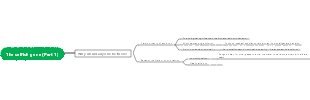
Introduction to this book
"The Selfish Gene" is a book published by Richard Dawkins in 1976, which mainly talks about the genetic principles of evolution.
In his book, he proposed the "selfish gene" to express the gene-centered evolutionary perspective, which can explain various altruistic behaviors among organisms.
This book also coined the term meme to represent the basic unit of evolution of human society and culture, and proposed that the "selfish" replication mechanism also applies to human culture.
Dawkins believes that the combination of genes that helps an organism survive and reproduce increases the likelihood that the gene itself will be spread, and the gene will always win in the end.
In the 30th anniversary edition of this book, Dawkins felt that the title left an inappropriate impression on readers.
Chapter 1 Why is there someone?
Discussed the controversial nature of group selection theory in the theory of evolution and its explanation of individual self-interested behavior. The authors argue that genes, not species or groups, are the basic units of self-interested behavior. In addition, the article discusses the different levels of controversy over altruism in human morality, as well as attitudes towards and protection of other species.
Chapter 2 Replication Factors
It explores how the replicator molecules in the primordial soup continuously evolved and improved through the process of competition and natural selection to adapt to the environment and improve survival ability, and eventually evolved into genes, the basis of modern life. The article emphasizes that evolution is a process that occurs by chance rather than a conscious act, while also mentioning three key properties of evolution: stability, fertility, and replicative accuracy.
Chapter 3 The Immortal Double Helix
The selfish gene theory's explanation for the evolution of sex is explored. Sex and Chromosome Swapping is a way in which gene frequencies change in the gene pool. From an individual perspective, the existence of sex may seem paradoxical, but from a selfish gene perspective, sexual activity is less difficult to explain. . The gene pool is just a new soup in which genes live. The way genes now survive is to compete with an endless stream of partners from the gene pool in the process of constantly creating survival machines that are bound to perish. cooperate.
Chapter 4 Gene Machine
The communication between survival machines can be compared to the behavior of animals, including the singing of birds, the dance of bees, and human language. This type of contact can enhance the interests of one's own genes by indirectly influencing the behavior of other survival machines. However, some survival machines deceive by taking advantage of other survival machines' sexual desires or mimicking the appearance of other insects. This suggests that there is some element of fraud involved in the communication signals, since all animals interact with each other with at least some kind of conflict of interest.
Chapter 5 Aggression: Stability and Selfish Machines
The interaction of genes in the gene pool and the process of natural selection are discussed. Through the analogy of rowing crew members, the importance of gene interaction and coordination for survival and reproduction is illustrated. The article also discusses the formation of gene pools and selection of evolutionarily stable states, and how interactions between genes influence individual and population behavior.
Chapter 6 Genetic Race
The theory of genetic selfishness holds that an individual's self-interest is even more important than the interests of his siblings. In kin selection behavior, in addition to the kinship index, the "certainty" index must also be considered. The parent/child relationship is no closer in a genetic sense than the brother/sister relationship, but parental love is much greater because parents can more easily identify their offspring. In real life, parental love and altruistic behavior between brothers/sisters are also examples of kin selection.
Chapter 7 Family Planning
How individual animals regulate their reproductive behavior based on omens and how the selfish gene theory explains this phenomenon are discussed. The article believes that individual animals will reduce the number of eggs in their clutches based on estimates of individual density, and the selfish gene theory can explain the selfish behaviors of individual animals, including conspicuous displays and other phenomena. Finally, the article raises the issue of conflicts of interest within the family, including mothers' preference for their children.
Chapter 8 The war between generations
In the selfish gene theory, there is no fundamental genetic asymmetry between parents and offspring, so it cannot be used as an argument. Alexander's argument and those who turn it upside down are deviations from the truth by looking at the issue from an individual's point of view. The correct point of view is to look at evolutionary phenomena from the perspective of selfish genes. If the genes of adolescent individuals have the ability to surpass the parental individuals, they will be selected. On the contrary, if the genes of the parental individuals have the ability to surpass the adolescent individuals, they will be selected. There is an undeniable asymmetry between parents and offspring, but the final outcome is often some compromise between the ideal conditions sought by offspring and the ideal conditions sought by parents.
Chapter 9 The War of the Sexes
Sexual differences in evolution, such as male display behavior and diverse mating strategies, are explored. At the same time, the article also mentioned the characteristics of monogamy and sexual display in human society, and thought and explained these.
Chapter 10 You tickle me, and I’ll ride on your head
The role of mutual altruism in evolution and the competition and evolution of different strategies in populations are discussed. Through computer simulation, it was confirmed that the strategy of being careless is an evolutionarily stable strategy, and that cheaters are also ESS. The article also mentions the symbiosis of cleaner fish and the evolutionary correlation between human psychological characteristics and deception and anti-deception mechanisms.
Chapter 11 Memes: New Replicating Factors
The impact of memes on the evolutionary and survival value of human cultural traits is discussed. Memes can be spread orally, in writing, and by example, prompting people to have blind beliefs, such as patriotism, politics, and religion. Memes and genes often support and reinforce each other, but they can sometimes conflict. Humans may also have an extraordinary trait—the ability to perform sincere and selfless altruistic behavior. We are strong enough to resist the selfish genes we are born with and the selfish memes instilled in our minds.
Chapter 12 Good people will eventually be rewarded
Some examples of "tit-for-tat" that exist in nature are introduced. These include the relationship between figs and fig wasps, gender role reversal in sea bass, and blood sharing among vampire bats. These examples illustrate that in some situations, cooperation is the optimal strategy and "defection" can lead to retaliation. At the same time, these examples also demonstrate the noble character of some animals, such as the mutual aid and cooperation between vampire bats.
Chapter 13 The Extension of Genes
The impact of "bottleneck" life cycles on biological evolution is discussed. Bottle algae, as a whole with genetic identity, have tacit cooperation among cells, while the genetic identity of loose algae plants is relatively vague, and cells no longer cooperate wholeheartedly with each other. Genetic mutations cause cells in plants to no longer be identical and to cooperate wholeheartedly with each other to make organs and offspring. Natural selection selected cells, not "plants." This article points out that the "bottleneck" life history tendency makes organisms evolve into independent and unified carriers. The three supporting reasons for this theory can be called "back to the drawing board", "on-time time loop" and "cell unity" respectively.
Chapter 14 Genetic Determinism and Genetic Selection Theory
Explores the flaws of opponents' failure to face up to the true implications of Darwinian selection, and how genes are implicitly dragged into the discussion when kin selection is discussed. The article believes that frankly facing the most basic genetic nature of Darwinian selection is a good way of expressing it and can avoid some tempting errors in reasoning. At the same time, the article also points out that not all behavioral patterns must have a Darwinian function. Only adaptive behavior needs to presuppose a genetic basis.
Chapter 15 Constraints on Perfection
Selection at the genetic level may lead to imperfections at the individual level, such as heterozygous dominance. In sexual populations, the genome is the product of random assemblages, causing genes to be averaged across individuals. Animals often make mistakes, especially behaviorally, due to the unpredictability or malicious nature of their environment. These errors can be due to statistical unpredictability or due to malicious environments. These questions would become a new branch of biology, devoted to the science of manipulation, arms races, and phenotypes.
 Wondershare EdrawMind

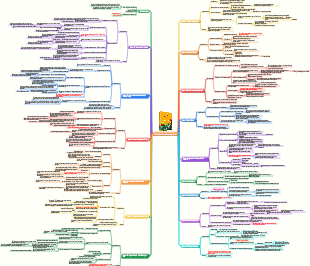
![The Selfish Gene [English] Richard Dawkins](https://edrawcloudpublicus.s3.amazonaws.com/work/5594742/2024-5-22/1716393430/thumb.png?x-oss-process=image/resize,w_300,m_lfit)