MindMap Gallery Psychological development and learning of primary school students
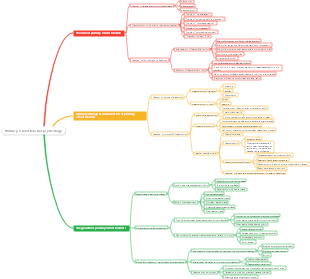
This is a mind map about the psychological development and learning of primary school students. The main contents include: basic theories of learning, learning of primary school students, psychological development characteristics of primary school students, main factors affecting psychological development, general characteristics of psychological development, psychological development meaning.
Edited at 2024-03-13 10:39:00This is a mind map about bacteria, and its main contents include: overview, morphology, types, structure, reproduction, distribution, application, and expansion. The summary is comprehensive and meticulous, suitable as review materials.

This is a mind map about plant asexual reproduction, and its main contents include: concept, spore reproduction, vegetative reproduction, tissue culture, and buds. The summary is comprehensive and meticulous, suitable as review materials.
This is a mind map about the reproductive development of animals, and its main contents include: insects, frogs, birds, sexual reproduction, and asexual reproduction. The summary is comprehensive and meticulous, suitable as review materials.
This is a mind map about bacteria, and its main contents include: overview, morphology, types, structure, reproduction, distribution, application, and expansion. The summary is comprehensive and meticulous, suitable as review materials.
This is a mind map about plant asexual reproduction, and its main contents include: concept, spore reproduction, vegetative reproduction, tissue culture, and buds. The summary is comprehensive and meticulous, suitable as review materials.
This is a mind map about the reproductive development of animals, and its main contents include: insects, frogs, birds, sexual reproduction, and asexual reproduction. The summary is comprehensive and meticulous, suitable as review materials.
Psychological development and learning of primary school students
The meaning of psychological development
Broad: Psychological development in a broad sense refers to the psychological changes throughout life from birth to death.
Narrow sense: Psychological development in the narrow sense refers to various orderly and adaptive changes in psychology from birth to maturity, mainly reflected in changes in cognition, personality, sociality and other aspects.
General characteristics of psychological development
Continuity and Sequence of Psychological Development
Continuity: Individual psychological development is a process of development from low-level to high-level psychology, and high-level psychology is carried out on the basis of low-level psychological development.
Sequentiality: For example, perceptual ability develops first, followed by motor, speech and other abilities, while abstract thinking ability develops last.
Stages of psychological development: Psychological development is a process that gradually changes from quantitative to qualitative changes. With the emergence of quality, psychological development reaches a new stage.
Individual differences in psychological development: The optimal level that different individuals can achieve in various psychology, the speed of formation, the period of reaching maturity, etc. vary from person to person.
Unbalanced psychological development: The entire development advances in a wave-like manner; in most cases, there is a first accelerated development period in early childhood, stable development in childhood, and a second accelerated period in adolescence, and then stable development.
Main factors affecting psychological development
Individual psychological development is affected by many factors such as innate heredity and acquired environment.
Heredity is the material premise and basis for psychological development. Genetic quality provides the possibility for children's physical and mental development.
There are two types of environment: natural environment and social environment. The natural environment provides the material basis needed for individual production, and the social environment refers to social living conditions, such as social systems, family status, education level, etc. The environment here mainly refers to social living conditions and the role of education
Heredity and environment are interconnected and influence each other
Psychological development characteristics of primary school students
Cognitive development: Swiss psychologist Piaget divided human cognitive development into four stages
The order in which the four stages appear will not change.
Sensory-motor stage 0-2 years old: object permanence
Preoperational stage 2-7 years old: symbolic representation, egocentricity
Concrete operational stage 7-12 years old: conservation, thinking about reversibility
Formal Operations Stage After 12 years old: logical thinking about abstract and symbolic materials
The basic characteristic of primary school children’s cognitive development is that they gradually transition from concrete image thinking as the main form to abstract logical thinking as the main form; then they gradually turn to abstract logical thinking, and after the age of 10 (around the fourth grade of primary school) is an important transition period.
Personality and social development
Maturity of self-awareness
Social development: social cognition social interaction
The social interactions of primary school children also have stage-by-stage characteristics of development.
In terms of the relationship with parents and teachers: from complete dependence to a certain degree of autonomy; from complete belief in adult authority to showing a certain degree of doubt; from other-control to a certain degree of self-control.
In terms of interaction with peers: primary school children's interaction time has gradually lengthened from short; the objects of communication have gradually become more stable; the forms of communication have become more complex, communication skills have improved, peer groups have begun to form, and collective awareness has improved
moral development
Moral cognition: Primary school children can gradually use moral cognition to evaluate and regulate moral behavior
Moral words and deeds: The younger you are, the more consistent your words and deeds will be. As age increases, the differentiation between consistent and inconsistent words and deeds gradually appears. The differentiation is only preliminary, and the coordination of words and deeds is its main feature.
Conscious discipline: The conscious discipline of primary school children has been formed, that is, from the disciplinary behavior generated by external educational requirements to the disciplinary behavior generated by inner needs.
The moral character of primary school children has transitional characteristics: in the process of moral development, there is a turning period, which is the critical age for moral development. The turning period is around the second semester of third grade.
primary school students learning
The meaning of learning: Learning is defined as the process of accumulating experience within the subject's mind through the interaction of subject and object, and building a psychological structure to actively adapt to the environment. It can be manifested through relatively lasting changes in behavior or behavioral potential.
1. Learning relies on practice and experience
2. Learning is a dual physical and psychological adaptive activity
3. The results of learning can be reflected through relative behavioral changes
Types of learning
Classification of learning content (Feng Zhongliang): learning of knowledge; learning of skills; learning of attitudes and social norms
Classification of learning outcomes (Gagne): intellectual skills; cognitive strategies; verbal information; motor skills; attitudes
Classification of learning styles: discovery learning; acceptance learning
Characteristics of primary school students’ learning
General characteristics of human learning: 1. Acquisition of indirect experience. 2. Use language as an intermediary. 3. Actively adapt to the environment
Basic characteristics of primary school students’ learning
Intuitive-operability
Instruction-imitation
Basics - Reproducibility
The role of learning
1. Learning is an important means for individuals to adapt to the environment and maintain a dynamic balance with the environment.
2. Learning can promote individual physical and mental development
3. Learning can promote the progress of human society
Basic theories of learning
connection theory of learning
Pavlovian-classical conditioning
believes that learning is the process of establishing connections between stimuli and responses
Thorndike's Connection-Trial and Error Theory
Believes that the essence of learning lies in forming certain connections
Skinner-operant conditioning
Positive reinforcement and negative reinforcement both increase the probability of a certain behavior.
cognitive theory of learning
Gestalt-Epiphany Theory of Gestalt School
Thinking that learning is a process of enlightenment - a process of reorganization of perception
Bruner's Cognition-Discovery Theory
Acquisition of new knowledge, transformation and evaluation of knowledge
Ausubor's Theory of Meaningful Acceptance
Focus on accepting learning (non-artificial, substantive)
humanistic theory of learning
Rogers believed that learning is a meaningful process (learning by “doing”; the learning process should always be people-centered)
constructivist theory of learning
1. View of knowledge: dynamic and changeable; 2. View of students: active construction; social interaction; situational; 3. View of teaching