MindMap Gallery Medical Immunology 03 Antigens
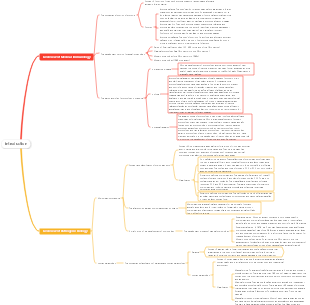
Chapter 3 of Medical Immunology: Antigens mainly introduces the concept of antigens, the nature and molecular structure of antigens, factors affecting the immunogenicity of antigens, types of antigens, etc. Completely organized based on the textbook content, the content is detailed and suitable for in-depth study and difficult inquiries. Word Count: 3100
Edited at 2024-03-12 21:05:31This is a mind map about bacteria, and its main contents include: overview, morphology, types, structure, reproduction, distribution, application, and expansion. The summary is comprehensive and meticulous, suitable as review materials.

This is a mind map about plant asexual reproduction, and its main contents include: concept, spore reproduction, vegetative reproduction, tissue culture, and buds. The summary is comprehensive and meticulous, suitable as review materials.
This is a mind map about the reproductive development of animals, and its main contents include: insects, frogs, birds, sexual reproduction, and asexual reproduction. The summary is comprehensive and meticulous, suitable as review materials.
This is a mind map about bacteria, and its main contents include: overview, morphology, types, structure, reproduction, distribution, application, and expansion. The summary is comprehensive and meticulous, suitable as review materials.
This is a mind map about plant asexual reproduction, and its main contents include: concept, spore reproduction, vegetative reproduction, tissue culture, and buds. The summary is comprehensive and meticulous, suitable as review materials.
This is a mind map about the reproductive development of animals, and its main contents include: insects, frogs, birds, sexual reproduction, and asexual reproduction. The summary is comprehensive and meticulous, suitable as review materials.
03Antigen
Antigen concept
Theoretically, all substances that can activate and induce immune responses are called antigens.
Usually refers to substances that can be recognized and combined by T and B cells, and can produce specific immune responses with corresponding immune response products (antibodies or lymphocytes) in vivo and in vitro. They are called antigens.
Main points
Can stimulate the body's immune system to produce specific immune responses
Can specifically bind to the corresponding response products in vivo and in vitro
substances that are antigens
Microorganisms such as bacteria, viruses, fungi, and their toxic metabolites (such as exotoxins)
Vaccines (e.g. vaccines, toxoids)
Xenogeneic protein, xenogeneic animal immune serum
xenogeneic tissue cells, allogeneic tissue cells, blood group antigens
tumor antigen
Antigen properties and molecular structure basis
Basic properties of antigens
Immunogenicity
Antigens can be
T cell surface receptor TCR
B cell surface receptor BCR
Identify and combine
Activate T/B cell proliferation → differentiation
Effector cells (activated T cells)
Effector products (antibodies)
Immunoreactivity (antigenicity)
Antigens can bind to effector cells or products, thereby exerting adaptive immune response effects
A substance that is immunogenic must have antigenicity, and a substance that is antigenic does not necessarily have immunogenicity.
complete antigen
Substances that are both immunogenic and antigenic, such as most proteins
Incomplete antigen (hapten)
Small molecular substances that only have antigenicity but no immunogenicity (possibly because the molecular weight is too small and cannot be recognized by immune cells)
Such as polysaccharides, lipids, certain drugs, etc.
After the hapten is cross-linked or combined with a carrier such as a macromolecular protein, it can also become a complete antigen.
Example: Penicillin degradation product penicillin itself has no immunogenicity. Once combined with serum proteins, it can become a complete antigen, induce the body to produce IgE antibodies and mediate type I hypersensitivity reactions (penicillin allergy)
B cell antigen receptor BCR recognizes hapten determinants
carrier
Proteins that confer immunogenicity to haptens, commonly used carriers include
BSA: bovine serum Pr
OVA: Egg White Pr
BGG: Bovine immunoglobulin Pr
Antigen specificity of the adaptive immune response
Antigen-induced immune responses are antigen-specific
The antigen stimulates the body to produce an adaptive immune response and its binding to the response effector products shows specificity.
A specific antigen can only stimulate the body to produce activated T/B cells or antibodies against that antigen, and can only specifically bind to that lymphocyte or antibody.
Application: Immunological testing
For example: HBsAg, the surface antigen of hepatitis B virus, can induce the body to produce HBsAg-specific antibodies. This antibody only binds to HBsAg and will not bind to other antigens of hepatitis B virus (such as core antigen), let alone other viral antigens. The human serum HBsAg detection kit developed based on this principle can determine whether a person is infected with hepatitis B.
Molecular structural basis that determines antigen specificity: antigenic epitope
Antigenic determinant (antigenic epitope) concept
Small molecule group in an antigen molecule that determines antigen specificity
The site where the antibody molecule binds to the antigen
Ligands recognized and bound by immunologically active cell surface antigen receptors (TCR/BCR)
Such as amino acids, polysaccharides, nucleotides
Natural antigens generally have multiple (multivalent) epitopes
A hapten is equivalent to an independent antigenic epitope. The antigenic epitope separated from the antigen macromolecule also belongs to the hapten.
Type of epitope
conformational epitope
A specific conformation formed by a discontinuous arrangement of short peptide or polysaccharide residues in space, usually located on the surface of the antigen.
B cells recognize
After the antigen molecule is cleaved, the first thing affected is the conformational epitope.
sequential epitope
A continuous linear arrangement of short peptides or sugar groups, also called a linear epitope
Can be recognized by both T/B cells, mainly T cells
B cell epitopes and T cell epitopes
T cell epitope
receptors that recognize epitopes
TCR
MHC molecules are involved
required
Epitope properties
Protein polypeptide
epitope type
linear epitope
epitope position
Any part of the antigen molecule
Must be degraded and processed before it can be recognized by T cells
B cell epitope
receptors that recognize epitopes
BCR
MHC molecules are involved
unnecessary
Epitope properties
Proteins, polysaccharides, lipopolysaccharides, nucleic acids, etc.
epitope type
linear epitope or conformational epitope
epitope position
Generally on the surface of antigen molecules
direct identification
After enzymatic hydrolysis of natural antigen molecules, B cell conformational epitopes are easily inactivated.
Epitope function
Binding to antibody molecules
Determines the specificity of binding to antibody molecules
cause immune cross-reaction
hapten-carrier effect
hapten protein → complete antigen
Example: Penicillin allergy
Common epitopes and cross-reactivity
common antigen
Antigens with common epitopes
cross-reactivity
Antibodies produced by the body stimulated by common antigenic determinants can combine with multiple antigens to produce immune responses.
Factors affecting antigen immunogenicity
Physicochemical and structural properties of antigen molecules
Foreign body property
Alien substances: substances that the immune system has not been exposed to during the embryonic period
Xenogeneic substances: pathogenic microorganisms, heterogeneous proteins, drugs, etc. The farther the germ line relationship is, the stronger the immunogenicity is.
Allogeneic substances: blood group antigens, serum proteins
Self-material: sperm, eye lens protein, brain tissue
Self-substances: substances that the immune system is exposed to during embryonic life
The blood types of twins may not be the same, but blood transfusions with each other will not cause agglutination reactions because they have been exposed to each other's blood group antigens during embryonic period.
chemical properties
Immunogenicity intensity: protein>polysaccharide/lipopolysaccharide>nucleic acid/histone
molecular weight
Generally speaking, the larger the molecular weight, the more antigenic epitopes, the more complex the structure, and the stronger the immunogenicity.
Molecular Structure
The more complex the structure, the stronger the immunogenicity
molecular conformation
accessibility
The spatial location of the antigenic epitope
Physical properties
Immunogenicity intensity: Aggregated protein > Granular protein > Soluble protein
Host characteristics
genetic factors
The body's ability to respond to antigens is controlled by a variety of genetic genes, especially the "major histocompatibility complex" (MHC)
MHC is highly polymorphic, making different individuals respond to the same antigen at different levels.
Age, gender and health status
Youth is stronger than infancy and old age
Females are more capable of inducing antibodies than males, but the response ability of pregnant individuals is significantly suppressed
How antigens enter the body
dose
Moderate
induce immune response
too high or too low
Immune tolerance
way
Ability to elicit an immune response: intradermal/subcutaneous > intramuscular > intraperitoneal > intravenous > oral
frequency
Appropriate interval (1~2 weeks)
immune response
frequent contact
Immune tolerance
immune adjuvant
Can significantly alter the intensity and type of immune response
Type of antigen
Classification based on whether Th cells are required to induce antibodies
Thymus-dependent antigen TD-Ag
Need T cell help
There are many types of determinants, including B/T cell epitopes
MHC-restricted (because MHC is responsible for T cell activation)
Can induce humoral immunity and cellular immunity
Can produce IgM, IgG, IgA and other antibodies (mainly IgG)
Have immune memory
Pulmonary thymus-dependent antigen TI-Ag
No need for T cell help
A large number of determinants, regular arrangement, and repeated B cell epitopes
No MHC restriction
Produces only IgM antibodies
Cannot induce cellular immunity
There is no immune memory, so TI-Ag cannot induce another immune response.
Proteins are almost always TD, polysaccharides are TI, and exotoxins are superantigens.
Classification based on the relationship between the antigen and the body
heterophile antigen
Common antigens that exist among humans, animals, and microorganisms regardless of species
Hemolytic Streptococcus-human glomerular basement membrane-myocardial tissue
Escherichia coli O14 lipopolysaccharide-human colon mucosa
xenoantigen
An antigenic substance derived from another species.
Pathogenic microorganisms, plant proteins, animal antisera, xenografts
alloantigen
Antigens that exist between different individuals of the same species.
Blood group antigens, HLA
autoantigen
cryptic antigen
Certain hidden self-components are released under factors such as surgery and trauma, thereby stimulating the body's immune response.
Example: Sympathetic ophthalmia
modified autoantigen
Normal self-components are changed by radiation, chemical damage, infection, drugs, etc., which can stimulate the body to produce an immune response.
Example: anti-tumor immunity
Common types: eye lens protein, sperm, brain tissue, thyroglobulin
idiotype antigen
The complementarity determining regions (CDRs) within antibodies, TCRs, and BCRs serve as epitopes to induce specific antibodies.
Classification based on the source of intracellular antigens in antigen-presenting cells
endogenous antigen
Newly synthesized antigen in antigen-presenting cells
Viral proteins synthesized by virus-infected cells (virus progeny are synthesized by the host), tumor antigens
APC: synthesis, processing, presentation
exogenous antigen
Not synthesized by APC, but derived from antigens outside APC
Bacteria, fungi, parasites
APC: Processing and Presentation
Other categories
production methods
natural antigen
artificial antigen
Physical properties
particulate antigen, soluble antigen
chemical properties
Protein antigen, polysaccharide antigen, nucleic acid antigen
disease related
Transplantation antigens, tumor antigens, autoantigens
Can it induce allergies?
Allergens (allergens)
Can it induce immune tolerance?
tolerogen
non-specific immune stimulants
Superantigen SAg
A class of antigenic substances composed of bacterial exotoxins and retroviral proteins
When inducing the body to produce an immune response, it has no strict antigen specificity, is not restricted by MHC, and only requires a very low concentration to activate polyclonal T cells.
Examples: Staphylococcus aureus protein A, mouse mammary tumor virus protein
The immune effect induced by SAg is not directed against the superantigen itself, but through non-specific activation of immune cells.
Adjuvant
concept
A non-specific immune enhancer that is injected into the body in advance or together with the antigen, and can enhance the body's immune response to the antigen or change the type of immune response.
It is non-immunogenic and cannot elicit an immune response
mechanism
Change the physical properties of the antigen and prolong the retention time of the antigen in the body - sustained release
Enhance the coordinated stimulation signals required for immune cell activation and stimulate antigen-presenting cells
Make the antigen easily phagocytized by phagocytes and enhance the processing and presentation of antigen by phagocytes
Promote lymphocyte proliferation and differentiation and enhance the body's immune response
application
Immunization, animal serum preparation; adjuvant treatment for patients with tumors or chronic infections
category
biological adjuvants
inorganic compounds
synthetics
organic matter
Liposomes
Mitogen (mitogen)
Can cause cells to undergo mitosis
Nonspecific polyclonal activator of lymphocytes
Stimulates resting lymphocytes to transform into lymphoblasts and undergo mitosis. It is a non-specific polyclonal activator of lymphocytes.