MindMap Gallery T cell mediated cellular immune response
Immunology T cell-mediated cellular immune response, characteristics of CTL effect: specificity ② MHC restriction, high efficiency and continuity.
Edited at 2024-04-27 21:14:23This is a mind map about bacteria, and its main contents include: overview, morphology, types, structure, reproduction, distribution, application, and expansion. The summary is comprehensive and meticulous, suitable as review materials.

This is a mind map about plant asexual reproduction, and its main contents include: concept, spore reproduction, vegetative reproduction, tissue culture, and buds. The summary is comprehensive and meticulous, suitable as review materials.
This is a mind map about the reproductive development of animals, and its main contents include: insects, frogs, birds, sexual reproduction, and asexual reproduction. The summary is comprehensive and meticulous, suitable as review materials.
This is a mind map about bacteria, and its main contents include: overview, morphology, types, structure, reproduction, distribution, application, and expansion. The summary is comprehensive and meticulous, suitable as review materials.
This is a mind map about plant asexual reproduction, and its main contents include: concept, spore reproduction, vegetative reproduction, tissue culture, and buds. The summary is comprehensive and meticulous, suitable as review materials.
This is a mind map about the reproductive development of animals, and its main contents include: insects, frogs, birds, sexual reproduction, and asexual reproduction. The summary is comprehensive and meticulous, suitable as review materials.
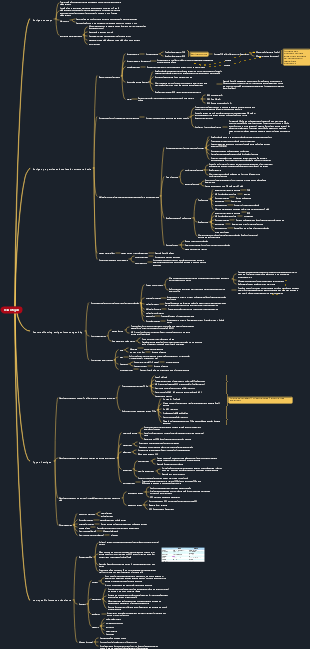
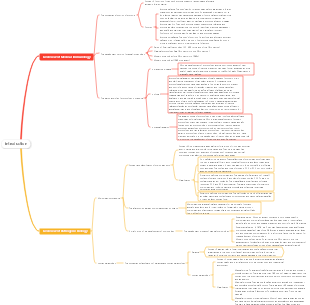
T cell mediated cellular immune response
Recognition of antigens by T cells
T cell surface antigen recognition receptor (TCR) specifically binds to the pMHC molecular complex on the surface of APC
Reversible, non-specific binding between T cells and APC
Binding site: corresponding area of peripheral lymphoid organs
The contact is short-lived and reversible, mainly completed by adhesion molecules (LFA-1, CD2, etc.) on the surface of T cells and corresponding ligands (ICAM-1, LFA-3, etc.) on the surface of APC
Purpose: Provide antigen opportunities for TCR-specific contact
Specific binding of T cells to APC
Specific binding→CD3 molecules specifically recognize signals into cells→LFA-1 conformation changes and enhances affinity with ICAM-1
Activation, proliferation and differentiation of T cells
T cell activation
First signal: Antigen-specific signal
Dual recognition: TCR-antigenic peptide/MHC I/II
Core receptor: CD4-MHC II; CD8-MHC I
Tyrosine phosphorylation in ITAM in the cytoplasmic domain of the CD3 molecule: transducing T cell activation signals
Second signal: co-stimulatory molecules (co-stimulatory molecules)
The most important molecular pairs: CD80/86 (APC)/CD28 (T cells) and other pairs promote the expression of IL-2, IL-2R, and BCL-XL, and participate in T cell proliferation and anti-apoptosis
The effect of cytokines on T cells
IL-1, IL-2, IL-6
T cell proliferation and differentiation
T cell clonal expansion is mainly mediated by IL-2 produced by Th cells, which must interact with the cell surface Only after binding to the IL-2 receptor (IL-2R) can T cells expressing this receptor be induced to proliferate.
CD4 T cells
Under the synergistic effect of different cytokines, Th0 differentiates in different directions and produces T cell subpopulations (Th1, Th2) with different functions.
CD8 T cells
Th cell independent—direct presentation by APC
CD8 T cells directly recognize signals provided by virus-infected APCs, activate and secrete IL-2, and CD8 T cells proliferate and differentiate.
Th cell dependence
Memory CD4 Th is activated after interacting with APC, produces and secretes IL-2, and assists CD8 T cell activation, proliferation and differentiation.
CD40L-CD40 binds, the target cells express B7 molecules, CD8 T cells are activated, secrete IL-2, and assist CD8 T cells to activate, proliferate and differentiate.
Effector role of T cell immunity
CD4 T cell mediated/Th cell effect
Th1 cell effects
Produce different types of cytokines, which act extensively on neighboring cells
Macrophages
activation
induction and recruitment
Promote B cells to produce opsonic antibodies
Lymphocytes
Phagocytosis and killing of pathogens
neutrophils
Promote Th1, CTLp and B division and proliferation; activate NK and monocytes to amplify immune effects
Th2 cell effects
auxiliary humoral immune response
Direct contact, Th2 type cytokines: involved in B cell proliferation, differentiation into plasma cells, and production of antibodies
Involved in hypersensitivity inflammation
Th2 secretes IL-4, IL-5 and other cytokines to activate mast cells, basophils and eosinophils
Effects of other Th subpopulations
Tregs effect
Th17 effect
Effect of Tfh
CD8 T cell mediated/CTL cell effect
Effect-target cell binding
CTL highly expresses adhesion molecules and specifically binds TCR
A tight, narrow space is formed between the target cell's pMHC, CTL and the target cell.
Polarization stage of CTL
The subcellular structures in the CTL cytoplasm are rearranged and aggregated to facilitate granule exocytosis.
fatal assault
Cell lysis: perforin
Apoptosis: granzyme, Fas/FasL pathway, TNF-α
Characteristics of CTL effect: ① Specificity ② MHC restriction ③ High efficiency and continuity
Immune synapse (more stable, longer lasting)
Structure: Center: TCR-pMHC molecule pair Peripheral: costimulatory molecule pairs such as CD28-CD80/CD86 Outermost layer: adhesion molecules such as LFA-1 and ICAM-1
It enhances the structural combination of T cells and APC, and at the same time, provides strong enough power for corresponding signal transduction to initiate the transduction of T cell activation signals.
"Dual recognition": While TCR recognizes antigen peptides, it must also recognize the characteristics of its own MHC molecules.
Two major characteristics
Recognition specificity: Each T cell clone can only recognize one antigen surface
Restrictions of MHC: While TCR specifically recognizes the antigen peptide presented by APC, it must also recognize its own MHC molecules in the pMHC complex.