 Wondershare EdrawMind
MindMap Gallery In-depth application of BIM in construction engineering design - BIM forward design
- 36
In-depth application of BIM in construction engineering design - BIM forward design
In-depth application of BIM in architectural engineering design - BIM forward design, BM forward design is a term that has only appeared in recent years, but it has been quickly accepted by the industry, expressing the design industry's strong expectation for BM technology to return to its roots in the design field. The background of this concept is obviously for a BM application process called mold turning.
Edited at 2024-03-12 20:39:40
- bacteria
This is a mind map about bacteria, and its main contents include: overview, morphology, types, structure, reproduction, distribution, application, and expansion. The summary is comprehensive and meticulous, suitable as review materials.
- Plant asexual reproduction
This is a mind map about plant asexual reproduction, and its main contents include: concept, spore reproduction, vegetative reproduction, tissue culture, and buds. The summary is comprehensive and meticulous, suitable as review materials.
- Reproductive development of animals
This is a mind map about the reproductive development of animals, and its main contents include: insects, frogs, birds, sexual reproduction, and asexual reproduction. The summary is comprehensive and meticulous, suitable as review materials.
In-depth application of BIM in construction engineering design - BIM forward design
- bacteria
This is a mind map about bacteria, and its main contents include: overview, morphology, types, structure, reproduction, distribution, application, and expansion. The summary is comprehensive and meticulous, suitable as review materials.
- Plant asexual reproduction
This is a mind map about plant asexual reproduction, and its main contents include: concept, spore reproduction, vegetative reproduction, tissue culture, and buds. The summary is comprehensive and meticulous, suitable as review materials.
- Reproductive development of animals
This is a mind map about the reproductive development of animals, and its main contents include: insects, frogs, birds, sexual reproduction, and asexual reproduction. The summary is comprehensive and meticulous, suitable as review materials.
- Recommended to you
- Outline
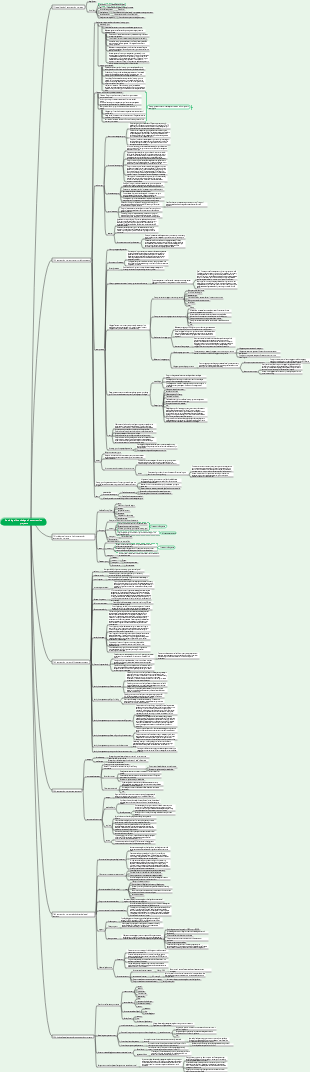
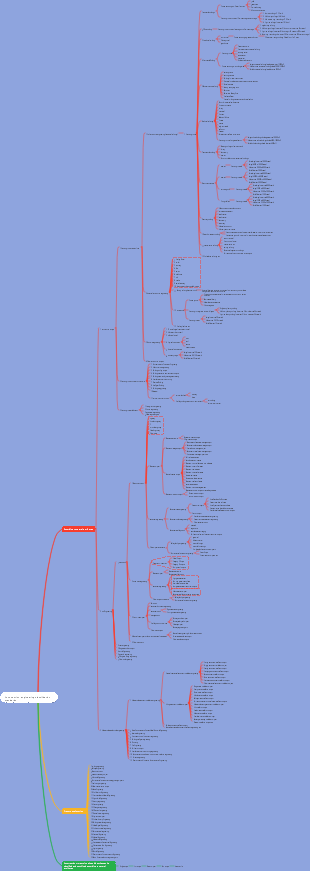
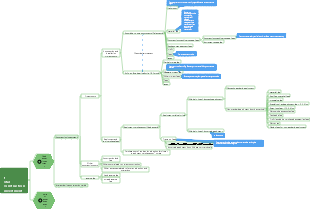
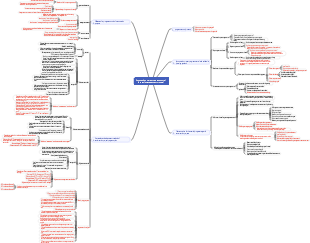

In-depth application of BIM in construction engineering design - BIM forward design
Overview of BIM forward design
1.1Concepts and elements of BIM forward design
concept
BM forward design is a term that has only appeared in recent years, but it has been quickly accepted by the industry, expressing the design industry's strong expectation for BM technology to return to its roots in the design field. The background of this concept is obviously for a BM application process called mold turning. The widely used process of turning over the mold refers to the establishment of a BM model based on two-dimensional drawings. The main purpose is to establish a BM model to test, deepen and even virtually construct the design results while still using the traditional two-dimensional CAD design method in the design stage. Operation and maintenance and other subsequent applications. Mold flipping is certainly of positive significance to the entire project, but for the design stage it is a "post-verification process" and does not play its due role in assisting and optimizing the design process. Whether the model and drawings are consistent is also unclear. It is difficult to guarantee, so the design field has always criticized this BIM application model. Despite encountering many technical and management obstacles, the design field and software development manufacturers have not stopped researching and exploring "BM design". It can truly combine BM with the design process and design results. In this context, the concept of BM forward design has been proposed. Although there is no official formal definition, we might as well explain it like this: BIM forward design is. It refers to the design model that uses BIM technology to design based on BIM models and form design results documents accordingly. This definition is still broad and vague. Technically speaking, it is not yet possible to achieve the same goal as the "In-depth Regulations on the Preparation of Construction Engineering Design Documents". This puts forward clear content and depth requirements for BIM forward design, but the industry has also reached a certain consensus. We summarize the certain elements and uncertain elements of BIM forward design as follows to clarify the concept.
elements
1. Determining elements of BIM forward design
(1) Drawing based on BIM model
The concept of forward already includes the requirement to form design documents based on models, so whether drawings are produced based on BM is a key basis for judging whether it is forward. Although there is also the practice of "using BM to assist the design throughout the entire process, but without drawings", we think this is "BM design", but it cannot be regarded as "BM forward design". However, as will be discussed below, the majors, stages, map categories, etc. covered by BM-based maps are currently uncertain. We cautiously make this limitation: where technically feasible, drawings related to the entities of building components are output from the BM model. In Section 43, the scope of BM drawings, we give the BM and CAD designs used by each major. Suggestions for the range of drawings.
(2) BIM modelers are designers
During the mold reversal process, BM modelers are generally not the designers of the project, so misunderstandings and inconsistencies between drawings and models frequently occur. In the BIM forward design process, there is no "pure modeling" position. Each major directly combines modeling with its design process. The model is the design and the modeler is the designer.
(3) Multi-disciplinary collaborative design based on BIM model
BM technology itself is highly synergistic. Only by integrating the models of various majors can we express the overall picture of the design, discover conflicts between majors, and coordinate the relationship between majors. The design drawings of each major are also referenced and verified. Modeling and modeling are also carried out collaboratively, so BM forward design requires multiple disciplines to participate in collaborative design. BM design that only involves a single major (generally referring to the architecture major) cannot be called BM forward design in the true sense.
(4) BIM and CAD cooperate to complete the design
In the early days of industry exploration, BM Design also made some attempts to switch the entire profession to BIM. It could only use BM software for design and drawing, and was not allowed to use AutoCaD for drawing. It even put forward the slogan "Farewell to CAD. Practice shows that this This approach is not yet sustainable for many reasons, the most important of which are three: first, many professional computational analysis software have not yet been transplanted to the BM software platform and are still based on the CAD platform; second, they are only expressed in drawings. Generally speaking, the overall effect and efficiency of BM software has not reached the level of CAD; thirdly, in some aspects of design expression, the expression of model projection has no advantages, such as the structural level and detailed nodes of the building, structural steel bars, and electrical cables. , electromechanical systems, etc. This information may be more concise and clear in the traditional two-dimensional expression habit, and it is also more acceptable to all parties involved. Therefore, in order to promote truly implemented BIM forward design, we should not abandon CAD, but should explore the technical route of combining BIM with CAD in two and three dimensions to efficiently complete the design.
(5) The expression method of BIM drawings should be close to the traditional expression method
This view may not be fully agreed with in the industry. Many experts have proposed that the design expression in the BM era should be modified according to the characteristics of BM technology. However, there is no generally accepted method for how to modify it. The competent government departments have also organized and compiled the industry standard "Construction Engineering Design Information Model Drawing Standard" JGJ448-2018, but it is still unclear how to express the drawings of each profession and each type of component. In this state, maintaining traditional and customary expressions to deliver design results in a legal sense has become the most realistic but safest approach. From a technical point of view, there are indeed some gaps in the two-dimensional expression of the three-dimensional BM model, but it basically does not affect the overall situation. Some details can be realized through manual modification and improvement. What is most needed at present is to sort out the complete technical path and convert what can be directly realized by BIM. The methods are listed, and alternative methods are provided for the parts that cannot be directly implemented, and finally complete delivery of quality-guaranteed results is achieved. This is what this book strives to achieve.
2. Uncertain elements of BIM forward design
(1) The majors covered by BIM are uncertain
As mentioned earlier, BM forward design requires multi-professional collaborative design. The specific majors covered are still subject to many practical constraints, and it is impossible to uniformly require the participation of all majors. For example, in the structural profession, its calculation analysis and drawings are self-contained systems. The common practice is that the structural calculation model and the BM collaborative design model are independent of each other, or they lead to each other in the process. There is no general practice of integrating the two, so the structural BM Forward design is still in the exploratory stage. Other majors or sub-specialties may also encounter similar problems, such as power distribution design in electrical majors, cooling and heating load calculations in HVAC, etc. The "design part is still difficult to integrate into the BM model. The more mature ones are still Implement its "mapping" part via BM. In recent years, domestic software manufacturers have also been actively engaged in research and development. For example, Guangsha Software has implemented the technical process of combining structural calculation models with Revit models and expressing them on Revit software; Hongye's BIMSpace software has also integrated many mechanical and electrical professional calculations. and design features. With the continuous breakthroughs of similar technologies, the majors/subdivisions covered by BIM forward design will become more and more comprehensive.
(2) The design stage covered by BIM is uncertain
There is no standard answer to the question of what stage of intervention is considered BM forward design. Some people believe that using BM directly from the planning stage is considered forward design. The author does not agree, because the plan is more of a refinement and adjustment of a single construction discipline. The informatization and integration of BIM are not necessary at this stage. Architects BIM software can be used to assist in scheme design or not. Of course, as the functions of BM software are improved and architects gradually become accustomed to using it as a tool for daily scheme design, it is also very possible. In Section 42, the timing of BIM intervention, we list several models for reference. The principle is still to use BIM for multi-disciplinary collaboration during the design process and to output design results from the BIM model. Under this principle, different majors can choose the appropriate intervention time according to the specific conditions of the project. The key is to plan well in advance.
(3) The scope of BIM drawings is uncertain
As mentioned earlier, it is unrealistic to require that all construction drawings be produced from BIM models. Let’s use the less rigorous term “BIM drawing rate” to express the proportion of BIM drawings in the overall drawings. Even if the architectural major can theoretically achieve a BIM drawing rate of close to 100%, some drawings (such as detailed node drawings such as waterproofing samples) have little to do with the model and are still mainly two-dimensional line drawings. It is also feasible and even recommended to use CAD to draw drawings; the BIM drawing output rate of other majors is lower, such as many drawings in the electrical major, and drawing in BIM software is not the best choice. Therefore, the scope of BIM drawings is uncertain and will be dynamically adjusted as the software develops. The scope division given in Section 43 of this book is for reference, and each design company can adjust it according to the project and human resources conditions.
1.2 Advantages and dilemmas of BIM forward design
Advantage
(1) Based on the three-dimensional visualized BIM model, designers can more fully control the design effect.
(2) Based on multi-professional three-dimensional BIM model collaborative design, it effectively improves the quality of professional cooperation.
(3) The two-dimensional and three-dimensional linkage and digital-analog linkage of BIM models can effectively reduce drawing errors and improve drawing quality.
(4) The forward design mode can completely solve the problem of "drawing and model consistency".
(5) Highly structured model information can achieve automatic review of compliance to a certain extent.
(6) Based on the design BIM model, more design results can be derived, such as visualization results and performance analysis results.
(7) The digitally delivered design BIM model can be applied in the construction and even operation and maintenance phases, which is also the future development direction.
(8) The statistical results of engineering quantities can be carried out to increase the added value of the design.
Dilemma
(1) BIM software operation skills require high skills. Software operation is far from the CAD model. It is difficult for designers to change and generally requires special training.
(2) BIM software and hardware configuration requires more investment than CAD model.
(3) For the current design cycle that is generally highly compressed, the overall efficiency of BIM forward design is currently difficult to reach the efficiency of CAD mode.
(4) BIM design software still has a certain gap between graphic expression and customary expression, which consumes designers a lot of time to find solutions, and the results may not be ideal.
(5) BIM design software is currently not well integrated with professional structural and electromechanical design and calculation software. The design process often needs to be divided into three links: system design and calculation, BIM modeling, and drawing, which reduces efficiency.
(6) The collaboration requirements of BIM forward design are much stricter than those of CAD model. It requires close and near real-time collaboration among various disciplines, and designers also need to change and adapt.
(7) The project management process of BIM forward design, such as stage division, design depth, funding method, review method, drawing method, change method, production value division, etc., are all different from the CAD design model, and are even very different from each other. Enterprises need to explore management methods that suit them.
The seven dilemmas listed above can be roughly divided into two aspects: technical and management issues. The author believes that the most critical point is points (3) and (4), which solve the efficiency problem and graphic expression problem, and other difficulties can basically be solved easily.
1.3 The difference between BIM forward design and traditional design models
1.3.1 Different design carriers
This is an obvious difference. The carrier of BM design is a highly structured BIM model with three-dimensional visualization characteristics, while the carrier of traditional model is relatively discrete CAD graphics composed of lines, text and other graphics elements. Simple It seems to be the difference between three-dimensional and two-dimensional, but this difference has a great impact on the designer's way of thinking. Here is only a brief introduction. I believe you will have a deeper understanding in practice. For the architectural profession, traditional design is also inseparable from three-dimensional modeling software to refine the shape and space. However, drawings and modeling are independent of each other and have no connection. To deepen the design and or modify it, they need to be carried out separately. The two- and three-dimensional integration characteristics of BIM models are very beneficial to architects. They can be viewed at any time and at any time, and the drawings and models can be modified simultaneously in both directions. These are the conveniences that BIM models bring to architects. However, the interconnection of components during its modification means that the operation is not as arbitrary as the CAD design mode, which needs to be adapted to. For mechanical and electrical majors, the requirements for the transformation of design thinking are higher. For electromechanical design in CAD mode, most electromechanical engineers think in two dimensions and only consider height coordination in the final pipeline synthesis stage. The BIM design model requires that the height of all physical components should be considered when designing, which is equivalent to considering the late design work in advance. This is a favorable factor for professional coordination; but for this professional design, it increases the time required in the early stage. The workload needs to be adjusted and adapted to the new periodization. In addition, once the content originally expressed by lines is converted to a three-dimensional model, the requirements immediately become higher. The size and elevation need to be considered, and the alignment between components also needs to consider the height direction. Originally, some components were not required on two-dimensional drawings. Expression may or may not need to be expressed accurately, but it must also be expressed accurately in the BM model. For example, pipe elbows, tees and other pipe fittings, stair handrails and other components must be modeled realistically. Adjustment also requires more work, especially the adjustment of electromechanical pipelines. In terms of pure "drawing", this reduces efficiency to a certain extent. Although the design effect should be better, the design cycle should also be appropriately lengthened. In reality, it may be difficult to lengthen the design cycle. How to achieve the same efficiency as the CAD design process in the BM design process is a goal that the entire industry strives for. This book also compiles a lot of our accumulated experience for reference.
1.3.2 Different drawing principles
1.3.3 Different design processes
1.3.4 Different collaboration methods
1.3.5 Different methods of capital raising
1.3.6 Different proofreading methods
1.3.7 Deliverables are different
Comprehensive pipeline design
11.1 Comprehensive pipeline design process
11.1.1 Comprehensive pipeline design process in the preliminary design stage
In the preliminary design stage, preliminary pipeline comprehensive design is carried out based on BIM design models of various professions. The process is as follows:
(1) Take the mechanical and electrical professional Revit file as the main body, link other building, structure, curtain wall and other model files, and open them all for display
(2) Each floor sets a dedicated modeling and drawing view for management and integration.
(3) Carry out comprehensive adjustments to the main pipelines by floor, focusing on determining the route and elevation of the main pipelines.
(4) Comprehensive adjustment of vertical tube wells.
(5) Comprehensive adjustment of main pipes in floors.
(6) Equipment and pipeline layout in the equipment room.
(7) Check and optimize the net height of the building space, and comprehensively coordinate and optimize the entire major.
(8) After proofreading, export the floor height analysis diagram, tube well and main equipment room analysis diagram.
11.1.2 Comprehensive pipeline design process in the construction drawing stage
BIM forward design pipeline comprehensive process in the construction drawing design stage:
(1) Based on the comprehensive preliminary design of pipelines, optimize the comprehensive adjustment of floor main pipes and vertical pipe wells.
(2) Comprehensive adjustment and connection of floor branch pipes and ends.
(3) Pre-buried BIM opening coordination reserved for structural and architectural professionals.
(4) Support and hanger arrangement or reserved settings.
(5) After proofreading and confirming that the requirements are met, a comprehensive plan section drawing of the pipeline and a reserved pre-embedded construction drawing will be derived.
11.2 Principles of comprehensive pipeline design
11.2.1 Basic principles of management and comprehensive management
(1) Comprehensive adjustment and avoidance principles for indoor pipelines in buildings
1) Pressurized pipelines are replaced by unpressurized pipelines. For example, fire hydrants, sprinklers, water supply, pressure waste water, air conditioning hot and cold water pipes should avoid rainwater, sewage, condensate water and other natural gravity drainage pipes with slopes.
2) Bendable pipes versus non-bendable pipes. For example, pressure pipes should avoid generator or boiler flues, large-size air ducts, and pressure pipes should avoid drainage system vent pipes, etc.
3) Small diameter pipes give way to large diameter pipes. For example, fire hydrants, sprinklers, water supply, and pressure wastewater pipes should be kept away from domestic hot water, air-conditioning hot and cold water, air duct main pipes, high-temperature flues and other pipes.
4) Ordinary water pipes are thermal (with insulation) pipes. For example, fire hydrants, sprinklers, water supply, and pressure wastewater pipes should avoid insulated air-conditioning hot water, domestic hot water, steam pipes, etc.
5) Branch pipes to main pipes. Connect fire hydrants, sprinklers, air-conditioning end branch pipes to avoid fire circulation, air-conditioning air supply, exhaust, air-conditioning cold and heat source main pipes and main pipes, etc.
6) Pipe crossings should be resolved in the space between beams and plates as much as possible.
7) A single pipe must avoid a pipe group with multiple pipes.
8) The pressure pipes passing through the public area can be arranged on the uppermost level, and the main pipes connecting branch pipes to the left and right, with openings downward or connecting branch pipes can be arranged on the lowermost level.
9) When cable trays, bus ducts and pressure water pipes are arranged in parallel, the cable trays and bus ducts must be arranged at the top to ensure safety during operation and maintenance.
10) It is best to lay out comprehensive pipelines in one layer, and try not to lay them out in layers; if two layers are laid out, they should not be laid out in three layers. The layered layout should ensure convenient construction and installation.
11) A space of ≥ 400m must be reserved for the upper and lower layers of electromechanical pipelines in public walkways to ensure that all systems in the future follow the work interface, installation sequence and maintenance needs.
12) The cross-bending of pipelines should meet the requirements of various professions. Multiple pipelines should be arranged on one level to keep the bottom of the pipes flush to facilitate the subsequent layout of comprehensive supports and hangers.
13) When pipelines pass through structural beams and structural shear walls, they must meet the technical requirements of the structural profession.
14) During the comprehensive adjustment of pipelines, line pipes and water pipes cannot pass through the air ducts, and irrelevant water pipes cannot pass through the high and low voltage distribution rooms.
15) The result of the integrated pipeline must be to ensure the spacing requirements between pipelines in accordance with the specifications, do everything possible to meet the building net height requirements, and comprehensively improve the efficiency of building space use.
(2) Comprehensive adjustment and avoidance principles for outdoor pipe networks of buildings
1) First consider laying the engineering pipeline under the sidewalk or non-motorized lane.
2) Similar to the comprehensive requirements for indoor pipelines, pressure pipes should avoid gravity-flow pipes, bendable pipes should avoid hard-to-bend pipes, small-diameter pipes should avoid large-diameter pipes, and temporary pipes should avoid permanent pipes.
3) The comprehensive outdoor pipe network of the building must comply with the current status and overall requirements of urban municipal roads.
4) When comprehensively adjusting pipelines, it is necessary to reduce crossings at road intersections.
5) The order in which engineering pipelines are arranged parallel to the outward direction of the building wiring in the courtyard should be determined according to the nature and burial depth of the engineering pipelines. The order of arrangement is: electricity, weak electricity, rainwater, sewage, gas, water supply, etc.
6) When engineering pipelines are laid across each other, the order from the ground surface downward is: electricity, weak electricity, gas pipelines, water supply pipelines, rainwater drainage pipelines, and sewage drainage pipelines.
7) Various engineering pipelines should not be laid vertically overlapping and directly buried.
(3) Overall aesthetic control principle
1) Avoid random intersections and bends in electromechanical pipelines.
2) Arrange trunking and pressure water pipes of the same type in groups. The distance between pipes should be kept consistent, and space between groups should be reserved for installation, maintenance, and branch pipe bending.
3) Before the comprehensive arrangement of the entire project pipeline, the classification technology should be unified, and the top, bottom, left, and right arrangements should be consistent.
4) After comprehensive arrangement, the pipelines are overall reasonable and the pipelines are basically straight and parallel to each other.
5) Areas with dense pipelines should be kept neat and orderly.
6) The upper space of pedestrian passages and vehicle passages should be as high as possible, and large pipes should not be arranged as much as possible
(4) Mechanical and electrical pipeline spacing control
1) Pass through the square wall; pass through in the form of reserved casing or hole, and use non-combustible materials to seal the gaps around the place where the pipe passes.
2) The distance between the outer wall of the water pipe (including insulation) is about 120mm, and the distance between the outer wall of the pipe (including insulation) and the wall is about 200mm. The larger the pipe diameter, the more installation spacing is required. For details, see "Building Water Supply and Drainage Design Manual" (Second Edition) .
3) Pipeline valves should be staggered. If they need to be installed side by side, the clear distance needs to be determined based on the valve size and should not be less than 250mm. If a valve is installed on the standpipe, the space for valve installation and maintenance also needs to be considered.
4) Pipelines should be equipped with as few elbows as possible; irrelevant pipelines should not pass through high and low voltage power distribution rooms, switch rooms, pipe wells, front rooms, stairs, and fire control rooms.
5) When arranging multi-layer pipes up and down, the distance between layers should be kept at least 150mm to ensure the position of brackets and flanges. If possible, it can be increased to 300mm, which can meet the needs of water pipes below DN200 and air ducts with a thickness of 150mm to pass through. Flexibility of comprehensive pipeline adjustment.
11.2.2 Net height control in key areas of building space
(1) Important areas of general mechanical and electrical majors
Including domestic water pump room, fire pump room, air-conditioning cold and heat source machine room, fan room, air-conditioning machine room, high and low voltage power distribution room, inner walkway of fire protection zone of equipment room, roof layer, refuge floor/room or refuge passage, mechanical and electrical professional system conversion Floors, places where mechanical and electrical pipelines are concentrated, etc.
(2) Important areas of building functional space
Including basement driveway, parking spaces, logistics unloading area, elevator hall, general lobby, hall, lobby, standard floor walkway, dining room, specialty restaurant, small and medium-sized conference rooms, multi-functional hall, concert hall, theater, indoor sports Houses, basement commercial areas, first-floor structure lowering areas, model houses, model sections, etc.
(3) Areas where the architectural profession or construction unit has special clear height requirements for certain parts of the building.
11.2.3 Comprehensive pipeline adjustment and sequencing plan
(1)General provisions
1) In public areas or parts with a lot of pipelines, they should be arranged in as few layers as possible. If one layer can be laid out, there will be no need for two layers.
2) Prioritize the arrangement of sloped, pressure-free natural drainage pipes and electrical bus ducts.
3) Prioritize the layout of larger-sized air ducts and duct groups.
(2) Principles of electromechanical pipeline layout
1) Principles of electrical bridge layout. In principle, the electrical bridge should be laid at the top to facilitate the laying of cables. Keep the minimum distance between the bridge and the beams, columns and walls, and the minimum distance between the strong/weak current bridges.
2) Principles for the layout of pressure pipes in water systems. Water pipes that are parallel to the electrical bridge are not allowed to be laid above the bridge. They are generally parallel to the left and right or arranged on the next floor.
3) Principles of air duct layout. Set up in layers, with air ducts arranged at the bottom or side by side with water pipes.
(3) Basement pipeline layout principles
1) Try not to centrally arrange pipes or large-sized air ducts in the basement sinking plate area.
2) The width-to-height ratio of the main air duct in the basement garage should be as large as possible (within the specifications), and the thickness of the air duct should not exceed 0.4~0.5m.
3) The air ducts, cable trays, automatic sprinklers, and fire hydrant supervisors of the basement garage are prioritized above the parking spaces and close to the bottom of the beams, avoiding the main driveway.
4) When the upper space (width and height) of the basement garage parking space is not enough to arrange all the electromechanical main pipes, the cable trays can be arranged in parallel to the beams on both sides of the driveway or close to the columns or column caps to maximize the height of the middle of the driveway.
5) Car ramps between basement levels prevent irrelevant main pipes from passing through.
6) Fire hydrant boxes, drainage risers, wastewater pipes and valves, and car charging pile locations in the basement garage must not affect parking spaces.
(4) Other spatial pipeline layout principles
1) On the roof layer of the building, pipes should be avoided from crossing in the middle, and pipe routing should be arranged as far outside as possible along the parapet wall.
2) Public inner corridors on the above-ground floors of public buildings, close to strong/weak current pipe wells, water supply and drainage pipe wells, air-conditioning water pipe wells, air-conditioning machine rooms, smoke exhaust ventilation wells, avoid main air ducts and larger-sized pipes If it is too close, it will affect the smooth connection of the pipes coming out of the tube well.
3) The intersection of mechanical and electrical supervisors and main pipes in public areas of public building floors should be handled in the beam/slab space and primary/secondary beam space as much as possible to reduce the occupation of more clear height.
4. The aisles in the shop areas of public buildings are generally wide (3~45m). The mechanical and electrical supervisors should be arranged in the public corridors as much as possible; irrelevant pipes should not pass through the shops as much as possible.
11.2.4 Basic requirements for pipeline connection and bending in various professions
(1) Water supply and drainage major
1) Building pressure water supply pipe connections are usually hot melt connections, threaded wire connections, flange connections, welding, etc. Fire water pipes also have clamp connections.
2) A 90° elbow can usually be used to bend building pressure water supply pipes. There are no requirements for turning up or down to cross. Valves cannot be directly installed before and after the elbow. Valves and valves must be installed at least 2 to 4 times the length of the pipe diameter. meter.
3) Natural gravity drainage pipe connection, usually using plug-in connection, glue connection, etc. according to the selected pipe materials.
4) To connect natural gravity rainwater, sewage, ventilation pipes and drainage risers, the horizontal pipes on the floor should be connected with two 45° elbows and a section of straight pipe with a 9° bend or an oblique tee connection. They cannot be connected directly with a 9-degree elbow.
5) When the floor cross-pipe is turned or connected, the branch pipe should choose a 45° oblique tee or a 90° downstream tee or be set into two 45° elbows and a section of straight pipe to make a 90° turn.
6) The horizontal pipes from the indoor rainwater and sewage risers connected to the outdoor inspection wells must be kept flush with the bottom when connecting to the tube wells. The pipes connecting the tube wells cannot be arranged completely according to the designed slope.
7) For connecting pipes between outdoor rainwater and sewage inspection wells, the bottom of the pipes must be arranged to the bottom of the well; the pipes connecting the pipe wells cannot be arranged completely according to the designed slope.
8) When outdoor rain and sewage pipes are connected to municipal pipe wells, the upper part must be connected to the municipal drainage pipe well according to the designed slope. If the bottom is kept flush to connect to the municipal pipe well, it may easily lead to pipe blockage.
9) When the outdoor rainwater outlet is connected to the water collection well, the pipes must be arranged to connect the pipe well according to the designed slope, and there is no need to consider the bottom flush connection.
(2)Electrical major
1) The drawing design is sometimes labeled as a busbar, and sometimes it is labeled as a bus duct. The two terms are the same thing; the bending method of the bus duct is 90°. It is recommended that the bus duct be bent as little as possible when integrating pipelines.
2) For buildings with a seismic fortification intensity of 6 degrees or above, the bus duct must be equipped with an expansion joint every 50m; when the bus duct passes through an earthquake gap, expansion joints must be installed on both sides of the gap.
3) The commonly used bending methods for cable sealed trunking, cable trays and cable ladders for laying trunk lines include 90° hypotenuse elbow, two 45° elbows combined into 90°, 135° elbow, vertical up and down elbow, 45° up and down climb.
4) Commonly used connection methods for cable sealed trunking, cable trays, and cable ladders include up and down jump bend 45° joints, horizontal tees, and horizontal fours.
5) The special connection methods for cable sealed trunking, cable trays and cable ladders include climbing bend joints with an upper and lower angle of 30°, 60° or other angles. The length and radius of the bend are determined according to the size of the bridge. This type needs to be made on site. Use as little as possible when arranging pipes and healds.
6) When cable trays and bus ducts pass through ordinary shear walls, they can be directly passed through through reservations, and the surrounding gaps should be sealed with fireproof sealing materials.
7) When cable trays and bus ducts pass through civil defense shear walls, they must be passed through pre-embedded circular casings. Each cable or single busbar is connected to a casing and passed through. The spacing of the casings is determined according to the pipe diameter.
8) When the high-voltage electric well passes through the exterior wall of the basement, a waterproof casing must be reserved on the concrete wall, and each cable is connected to the outdoor electric well through the casing.
9) When the outdoor cable trench intersects with other majors at the same height and cannot be avoided through comprehensive pipeline adjustment, it is allowed to reserve cross casings in the cable trench.
(3) HVAC major
1) The connection method of refrigerant pipes of multi-split air conditioners is usually brazing or flared connection. The refrigerant liquid pipes must not form a "9" shape upward, and the gas pipes must not form an "Ω" shape.
2) When the liquid branch pipe of the multi-split air conditioner refrigerant pipe is led out, it must be taken out from the bottom or side of the main pipe; when the gas branch pipe is led out, it must be taken out from the top or side of the main pipe. When there are more than two branch pipes leading from the main pipe, the connection parts should be staggered, and the distance should not be less than twice the diameter of the branch pipes, and not less than 200mm.
3) The connection methods of air conditioning hot and cold water pipes usually include wire connection, flange connection, clamp connection, and welding. The specific selection depends on the material and pipe diameter.
4) The interfaces of chilled water pipelines and air-conditioning terminal equipment (suspended-mounted) should not be lower than the air-conditioning branch pipes, and the branch pipes should be higher than the horizontal main pipes. The horizontal pipes should be installed in a straight line. If the straight-line installation cannot be fully satisfied on site, consideration can be given to the installation from the end branch pipe to the vertical pipe. In the direction of the pipe, the pipe should be turned downward, but it cannot be installed "convex" or "concave" downward.
5) The commonly used elbow for bending air-conditioning hot and cold water pipes is 90°. The bending radius of the bent steel pipe should be no less than 3.5 times the outer diameter of the pipe for hot bending and no less than 4 times the pipe diameter for cold bending; the welding elbow should not be less than the pipe diameter. 1.5 times the outer diameter.
6) The air ducts and air conditioning equipment are connected using insulated hoses. When located on the negative pressure side, the length is 100mm. When located on the positive pressure side, the length is 150mm.
7) The connection of air ducts is related to the selection of air duct materials. Generally, steel plates are used for air ducts. The connection methods include plug-in joints and flange connections. Flange connections are commonly used; commonly used pipe fittings are tees, four-way, and arc-shaped. 45°, 90° elbow, 90° rectangular elbow, big and small heads, round sky and square place (rectangle on the left, circle on the right), etc.
8) The air duct bending methods include upward B-shaped, downward B-shaped, upward horse-shaped, and downward horse-shaped.
11.2.5 Pipeline installation height optimization and estimation
(1) Reduce unfavorable areas for pipelines. Generally, there will be more and larger pipelines near the fire pump room, power transformation and distribution room, refrigeration machine room, air shaft, fan room, and air conditioning machine room. Therefore, try to stagger them when laying out the layout. The layout principles are recommended as follows:
1) The water pump room, especially the fire water pump room, is separated from the power transformation and distribution room and the refrigeration machine room.
2) The air shaft is separated from other air shafts, water wells and electric wells.
3) Each fan room and air conditioning machine room are separated.
4) The fan room and air-conditioning room are separated from the water well and electric well
5) Air ducts should avoid taller structural beams
6) Pipelines should avoid fireproof roller shutters.
7) Reduce the number of layers of pipeline laying.
8) Leave space for pipe crossing and branch pipe installation.
(2) Installation and maintenance space estimation
1) The construction and installation sequence should be considered to facilitate the installation of pipelines, equipment, insulation, as well as space requirements for protection, marking, and adjustment operations.
2) When optimizing the layout of pipelines, the required space and access opening locations should be reserved to facilitate maintenance and replacement.
3) The nearest distance between strong and weak currents should be kept at least 0.3m, and the distance between cable troughs, ladder racks, pallets and other bridges should be at least 0.15m from the bottom of walls, columns and beams.
4) At least 0.15m should be left above, below, left and right of the same type of bridge to provide space for wiring and installing brackets; when the bridge is arranged parallel to the top and bottom to cross the bridge bend, the distance between the lower trunking cover and the upper part should be at least 0.2m.
5) The minimum distance between pressure pipes is generally 0.2m, and at least 0.15m of U-shaped clamp, valve or flange installation position is ensured.
6) Keep at least 0.2m between the left and right sides of HVAC air ducts, water pipes and other pipes, leaving space for insulation, valve operation, and instrument reading.
7) The circumference of the air duct in the smoke prevention and exhaust vertical air shaft should be controlled at 50~100mm from the building wall, and space for shaft construction deviation and installation brackets should be reserved.
8) If there are air-conditioning ducts and air-conditioning fresh air ducts in the vertical air shaft, and galvanized steel plates and thermal insulation are used in the design, the circumference of the air duct should be controlled at 80~120mm from the building wall, and the vertical shaft construction deviation should be reserved. Space for mounting brackets and insulation.
9) For wider inner walkways (3~4.5m), space for inspection and control must be reserved on both sides. For narrower inner walkways (2-2.5m), at least one side of the narrower inner walkway (2-2.5m) must have inspection space, preferably near the middle; inspection space Generally 04-06m wide
10) There are generally horse paths above the ceilings of large-space buildings or building lobbies, theaters, multi-functional halls, etc. It is necessary to ensure that the horse paths are smooth for pedestrians.
11) When arranging multi-layer pipes up and down, the distance between layers should be kept at least 150mm to ensure the position of brackets and flanges. If possible, it can be increased to 300mm, which can meet the needs of water pipes below DN200 and air ducts with a thickness of 150mm to pass through. Flexibility of comprehensive pipeline adjustment.
(3) Construction and installation cost considerations
1) Parallel pipes of the same type can be equipped with common brackets, and pipes with the same standard and flush bottoms without special requirements can be equipped with common brackets.
2) When arranging comprehensive pipelines, consider the layout from high cost to low cost. The pipelines with high cost should have the shortest distance and the least bends; for example, bus ducts, larger cable trays, larger air-conditioning pipelines, etc.
3) Optimize the arrangement of the construction sequence of professional equipment and pipelines to reduce disassembly and rework; arrange fragile, fragile, and expensive building materials for later installation.
4) Pipes with more homogeneity (especially with more branch pipes) should be as straight as possible; repeated bending of pipe fittings will increase more, and the price of finished pipe fittings is much higher than the price of the pipeline, which will have a greater impact on the cost; for example, automatic spray branches Main pipes, air duct branches, power bridges, etc.
5) Check the model to avoid errors in layout and holes, and try to avoid rework and replacement of building materials due to inherent problems in optimizing the model and exporting drawings.
(4) Pipeline installation height estimation
A reasonable layout of the building plane and electromechanical pipelines should be that each main engine room is located in the center of the load area, and the pipelines in the ceiling are basically evenly spread. Generally, the most unfavorable point is used as the basis for calculating the pipeline installation height. If the pipeline layout is reasonable, the most disadvantageous point is generally caused by the HVAC pipeline, and there are few other professional pipelines in this area. Then as long as you calculate the required installation height of the HVAC pipeline, you can get the pipeline installation height. Take the underground garage as an example, where "no air-conditioned water pipes" are general residential projects. "Air-conditioned water pipes" are relatively complex public building projects with many underground control water pipes, making it difficult to lay them on the same floor as air ducts. Beam-slab structure: 1) No air conditioning water pipes H=overhead (50) air duct (400) spray (100)=550mm 2) There are air conditioning water pipes H=Water pipe (350 diameter, 100 insulation, 100 hangers) Air duct (400) Lower spray (100)=1050mm Beamless floor 1) No air conditioning water pipes H=upper flange (50) air duct (400) lower cross (200) support and hanger (50)=700mm 2) There are air conditioning water pipes H=water pipe (350 diameter, 100 insulation, 100 hangers), air duct (400), lower climb (250)=1200mm
11.2.6 Reserved and embedded special management and control
(1) Comprehensive inspection and optimization of mechanical and electrical reservations
1) According to the specifications, design requirements or standard drawings, check whether the reserved holes, casing positions and casing selection meet the requirements, and conduct unified technical reservation and embedment by type.
2) List the forms of casings and holes according to the actual conditions of the project, and how water pipes, bridges, bus bars, etc. pass through concrete walls, structural beams, etc. For example, ordinary partition walls and secondary masonry inside the building use reserved square or circular openings, concrete walls, structural beams, and floors use reserved holes or ordinary casings, civil air defense areas use closed casings, and basement exterior walls and pool walls Use waterproof casing, etc.
3) Where electromechanical pipelines pass through structural floors, shear walls, and basement exterior walls: steel/flexible waterproof casing, which can be set with the same diameter as the pipe; closed casing, which can be set with the same or one size larger than the pipe diameter; ordinary reserved holes : It must be reserved 2 sizes larger than the pipe diameter, and at least ∅50 for small pipe diameters.
4) According to the technical requirements, determine the relationship between the size of the hole or casing and the size of the mechanical and electrical pipes. For example, circular closed casings and waterproof casings are one or two sizes larger than the pipe diameter. Pipes below DN40 must have holes of DN50 when passing through structural beams. Square pipes must pass through building partition walls and reserve holes along the outermost edge of the pipe. 50-100mm.
5) When multiple pipes pass through the internal partition wall of the building, it is recommended that the pipes be grouped or different types of pipes be integrated to centrally reserve holes to reduce the difficulty and workload of reserved holes.
6) When multiple pipelines pass through structural beams and concrete walls in a certain area at the same time, it is recommended that the bottoms be flush to ensure the continuity of the application of comprehensive supports and hangers.
7) According to the needs of business development after the project opens, increase the number of reserved holes and embedded casings in important areas.
(2) Focus on inspecting and optimizing the safety of buildings and structures
1) Waterproofing measures should be used when mechanical and electrical pipelines pass through the outer wall of the structure to prevent outdoor groundwater and rainwater from penetrating from the edge of the pipeline for a long time.
2) When electromechanical pipelines pass through indoor structural beams, shear walls, and floors, holes or casings should be reserved in principle. When conditions permit, reserved holes should also be provided for small-diameter pipes passing through floors.
3) The reserved openings for structural beams should be within 13cm of the mid-span and mid-beam. The distance between the openings should not be less than the height of the beam and should not be less than 200mm from both sides of the beam.
4) When the openings in concrete structural walls, beams, and floor slabs are less than 300mm, the steel bars do not need to be cut and can be bypassed. When the reserved openings are larger than 300mm, necessary structural reinforcement measures must be taken according to the design requirements.
5) When making holes in shear walls, generally for openings with a size less than 300mmx300mm, there is no other indication on the structural professional drawings, but each profession needs to indicate it when raising funds.
6) For the casing left on the roof of the civil air defense area and the empty wall, regardless of the size of the casing, the structure needs to be confirmed by a professional and represented on the structural drawing.
7) If equipment pipelines need to pass through beams, the opening size must be less than 1/3 of the beam height, the frame beam must be less than 250mm, and the connecting beam must be less than 300m. The opening is located at the center of the beam height. In the plane position, it is located at 1/3 of the beam span. The positioning of through-beams needs to be confirmed by a structural professional and shown on the structural drawing at the same time.
8) Prepare professional holes. You need to pay attention to leaving them in the center of the shear wall, not close to the wall or corners, and avoid hitting hidden columns.
9) No holes are allowed on the structural floor within the column cap range.
10) The cross-section height of frame beams generally takes 1/12~14 of the calculated span, the height of cantilever beams generally takes 1/4-1/6 of the span, and the height of large-span beams generally takes 18~114 of the span. Pipelines should avoid passing through higher structural beams, and casings should be embedded in the structural beams.