MindMap Gallery Logic and Thinking Unit 1 Mind Map
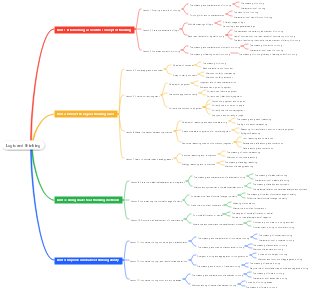
The first unit on logic and thinking establishes a mind map of scientific thinking concepts, including entering the world of thinking, Grasp the essentials of logic, understand scientific thinking, etc.
Edited at 2024-03-09 21:48:56This is a mind map about bacteria, and its main contents include: overview, morphology, types, structure, reproduction, distribution, application, and expansion. The summary is comprehensive and meticulous, suitable as review materials.

This is a mind map about plant asexual reproduction, and its main contents include: concept, spore reproduction, vegetative reproduction, tissue culture, and buds. The summary is comprehensive and meticulous, suitable as review materials.
This is a mind map about the reproductive development of animals, and its main contents include: insects, frogs, birds, sexual reproduction, and asexual reproduction. The summary is comprehensive and meticulous, suitable as review materials.
This is a mind map about bacteria, and its main contents include: overview, morphology, types, structure, reproduction, distribution, application, and expansion. The summary is comprehensive and meticulous, suitable as review materials.
This is a mind map about plant asexual reproduction, and its main contents include: concept, spore reproduction, vegetative reproduction, tissue culture, and buds. The summary is comprehensive and meticulous, suitable as review materials.
This is a mind map about the reproductive development of animals, and its main contents include: insects, frogs, birds, sexual reproduction, and asexual reproduction. The summary is comprehensive and meticulous, suitable as review materials.
Unit 1: Establish scientific thinking concepts
Lesson 1, Entering the World of Thinking
The meaning and characteristics of thinking
meaning of thinking
Broad meaning: synonymous with consciousness
Narrow sense: synonymous with rational thinking
Type: strategic thinking, historical thinking, dialectical thinking, innovative thinking, rule of law thinking, bottom line thinking, etc.
characteristics of thinking
Indirectness: It is impossible for people to directly perceive everything they want to know, and the essence and laws of things cannot be directly perceived. However, thinking can rely on the perceptual materials obtained, existing knowledge and experience, through things phenomenon, reveal the essence and laws of things, and realize the understanding of unknown things
Generality: Thinking can discard superficial and non-essential attributes from a variety of things and their various attributes, grasp the inner, common and essential attributes, and grasp the common essence of a type of things.
Initiative: Any thinking is a reflection of the object of cognition, but it is not a mechanical reflection of the object of cognition. Thinking can refine and process perceptual materials to form understanding that is different from objective reality. Correct thinking can truthfully reflect the object of cognition, while wrong thinking can distort the object of cognition. Thinking is generated in practice, develops in practice, and reacts on thinking. Correct thinking can help people achieve their desired goals in practice
Thought forms and their characteristics
basic forms of thinking
From the perspective of thinking
divergent thinking
convergence thinking
From the perspective of thinking on cognitive objects
Comprehensive thinking
Analytical thinking
From the perspective of the way thinking reflects the objects of knowledge
Dialectical thinking that looks at things and thinks about problems from a connection, development, and comprehensive perspective
Metaphysical thinking that looks at things and thinks about problems from an isolated, static and one-sided perspective
Different basic units according to the operation of thinking
abstract thinking
Image thinking
Characteristics of basic forms of thinking
Abstract thinking: using concepts, judgments and reasoning to reflect objects of knowledge and reveal the nature and laws of things
The main features are the conceptual nature of the basic unit, the derivation of the operation mode and the rigor of the expression of thinking.
Image thinking is based on feeling, perception and representation, using association, imagination and fantasy to reflect the objects of knowledge and touch the essence and laws of things.
The main features are the image of the basic unit, the imagination of the operation mode and the emotional expression of thinking.
Lesson 2: Grasp the essentials of logic
The many meanings of “logic”
Different uses of “logic”
Synonymous with "law"
"Logic" in the sense of "law" is the object of study in all sciences
"Logical laws and rules"
And "logic" in the sense of "method of thinking" is the research object of logic.
A certain "way of thinking" to understand the problem
The science of "logic"
Logic in the narrow sense and logic in the broad sense
People regard formal logic, which studies the formal structure and laws of thinking, as logic in a narrow sense.
Consider logic in a narrow sense and dialectical logic that studies the laws, rules and methods in dialectical thinking as logic in a broad sense
Formal logic is particularly concerned with problems of reasoning
Deducing true conclusions from true premises depends on the formal structure of thought
The core task is to grasp the laws and rules for deriving true conclusions from true premises
Basic requirements for logical thinking
Law of Identity: Requirements for Certainty in Thinking
Basic content: Judgment "A" formed at the same time, from the same aspect, and about the same object. If it is true, it is true; if it is false, it is false.
Requirement: In the same thinking process, each thought must maintain its own identity, and cannot confuse concepts or change the topic.
Logical errors made by violating the law of identity: "stealing a concept" or "stealing a thesis"
The law of contradiction: the consistency requirement of thinking
Basic content: The assertion "A" and its negative assertion "not A" formed at the same time, from the same aspect, and about the same object cannot be both true, and there must be one falsehood in them.
Requirement: The conclusion "A" and "not A" formed at the same time, from the same aspect, and about the same object cannot be concluded to be true.
Logical errors committed in violation of the law of contradiction: "Contradiction
The law of excluded middle: the requirement for clarity of thinking
Basic content: The judgments "A" and "not A" formed at the same time, from the same aspect, and about the same object cannot be both false, and one of them must be true.
Requirement: The judgments "A" and "not A" formed at the same time, from the same aspect, and about the same object cannot be concluded that neither of them is true.
Logical errors made when violating the Law of the Excluded Middle: "Two cannot be done"
Lesson 3: Understand scientific thinking
The meaning and characteristics of scientific thinking
The meaning of scientific thinking
Meaning: Generally refers to thinking that conforms to the laws of cognition and follows logical rules, and is thinking that can achieve correct cognition results.
Basic conditions: The content is true and the form is correct
Characteristics of scientific thinking
Pursue objectivity of knowledge
Always proceed from reality and strive to truthfully reflect the object of understanding
It does not blindly worship authority or blindly believe in the conclusions of books. It respects the results of practical tests, pays attention to practical reasoning and argumentation, insists on convincing people with reason, and strives to grasp and follow objective laws.
The results are predictable
Always find out the laws of the development of things through the analysis of the history of things and realistic materials, and make logical inferences about the development trends and prospects of things.
The results are verifiable
The results must be tested in practice. The more complex something is, the more our understanding of it needs to be tested repeatedly in practice.
Be able to adopt a pragmatic attitude, accept the strict test of practice, correct mistakes, and adhere to the truth
Learning the meaning of scientific thinking
The significance of thinking literacy in learning scientific thinking
Helps us correct logical errors, refute sophistry, and defend the truth
Helps us grasp the essence and development laws of things
It helps us grasp new situations and solve new problems, thereby making discoveries, inventions, and creations, and improving our innovation capabilities.
The ideological and political significance of learning scientific thinking
It helps us clearly understand the laws and stage characteristics of social development, correctly understand the national conditions and world conditions in different social practices, accurately grasp our historical position, improve our political position, and enhance our ideological level and political consciousness.
It helps us carry forward the scientific spirit, actively participate in the extensive and profound social changes and grand and unique practical innovations in contemporary China, promote social harmony with a enterprising attitude and responsible actions, and contribute to the prosperity of the country and the rejuvenation of the nation.