MindMap Gallery Improve innovative thinking skills
High School Politics Selective Compulsory Course 3 Logic and Thinking Unit 4, in which innovative thinking refers to people’s thinking activities in practice that break away superstition, transcend stereotypes, and make discoveries and inventions.
Edited at 2023-10-11 13:00:15This is a mind map about bacteria, and its main contents include: overview, morphology, types, structure, reproduction, distribution, application, and expansion. The summary is comprehensive and meticulous, suitable as review materials.

This is a mind map about plant asexual reproduction, and its main contents include: concept, spore reproduction, vegetative reproduction, tissue culture, and buds. The summary is comprehensive and meticulous, suitable as review materials.
This is a mind map about the reproductive development of animals, and its main contents include: insects, frogs, birds, sexual reproduction, and asexual reproduction. The summary is comprehensive and meticulous, suitable as review materials.
This is a mind map about bacteria, and its main contents include: overview, morphology, types, structure, reproduction, distribution, application, and expansion. The summary is comprehensive and meticulous, suitable as review materials.
This is a mind map about plant asexual reproduction, and its main contents include: concept, spore reproduction, vegetative reproduction, tissue culture, and buds. The summary is comprehensive and meticulous, suitable as review materials.
This is a mind map about the reproductive development of animals, and its main contents include: insects, frogs, birds, sexual reproduction, and asexual reproduction. The summary is comprehensive and meticulous, suitable as review materials.
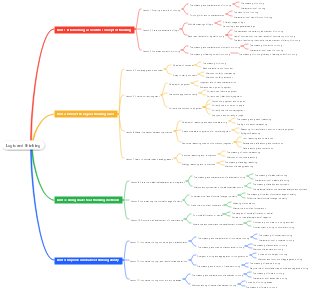
Improve innovative thinking skills
Creative Thinking
1. meaning
Innovative thinking refers to the thinking activities in which people break away superstitions, transcend stereotypes, and make discoveries and inventions in practice.
2. Generate conditions
Innovative thinking must be based on practice
Inherit the achievements of predecessors and others
Comprehensive use of multiple thinking methods
There are both logical thinking activities and non-logical thinking activities (imagination)
It is necessary to use both conventional thinking and unconventional thinking (reverse thinking)
3. feature
feature
1||| Ideas are multi-directional. From the perspective of thinking direction, innovative thinking often thinks about problems from different perspectives.
2||| The steps are leaps and bounds. It often appears as the omission or skipping of reasoning steps.
3||| The results are unique. It requires people to use unique and ingenious methods to solve problems unexpectedly.
"New" performance
1||| Think new, break through stereotypes and think about problems in new ways.
2||| The method is new, not limited to conventional methods, dare to use new methods and try out new tools.
3||| The results are new, and any result of innovative thinking always has its own novelty and originality.
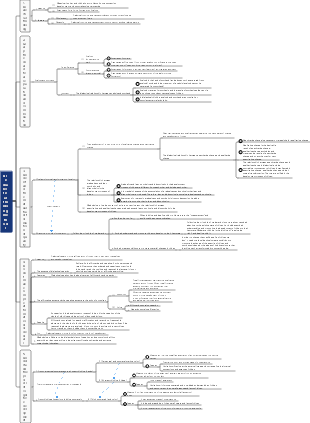
associative thinking
1. meaning
Associative thinking is the thinking activity of connecting and thinking about the understanding of different things in memory.
2. in accordance with
The similarity, proximity or contrast between things makes it possible to connect seemingly unrelated perceptions.
3. feature
(1) connectedness across
content
The "connection" of associative thinking is to connect the understanding of things with the same, similar or even different properties, establish new connections, and generate new concepts. The connection mode has discontinuous spans.
4. "Connection" method: migration
(1) meaning
Change the position and transplant the functions of different cognitive objects in order to find new ideas for solving problems.
(2) Migration method
1||| positive migration
play a promoting role
eg: The impact of mastering mathematics question review skills on physics question review
2||| negative transfer
act as a hindrance
eg: Kindergarten children learn to write the numbers 6 and 9
3||| assimilation transfer
Application of original cognitive experience
eg: Draw inferences from one instance and draw inferences by analogy
4||| compliant migration
Form a higher-level cognitive structure that accommodates new and old experiences
eg: For example, the concept "ball" in the original cognitive structure, now we need to learn table tennis and incorporate it into the original structure of "ball", which not only expands the concept of ball, but also obtains the meaning of the new concept of ball. .
(3) significance
Develop possible ideas for innovative thinking.
Build a bridge from here to there for innovative thinking
eg: Lotus leaf and lotus are associated with Phoenix legend, umbrella, pavilion, etc.
(2) Imaginativeness without logical constraints
content
The reason why thinking can make leap-forward connections when making associations, and "absurdly" connect seemingly unrelated objects, is that thinking has exerted its imaginative function without logical constraints.
Way
Conception, imagination, fantasy
4. "Imagination" method: imagination
meaning
The thinking process of processing and transforming existing representations of things in the mind, and producing new images of things through recombination.
type
1||| Unintentional imagination - imagination without a predetermined goal
eg: I think of it when I see white clouds. .
2||| Intentional imagination - imagination carried out consciously according to a certain purpose
Way
1||| visual imagination
Meaning: to visualize abstract thoughts and concepts, and to think according to the requirements of intentional imagination
eg: guessing riddles
Significance: It can fill the gaps in experience and knowledge; establish a creative new image
2||| "What if" imagination
Meaning: taking the situation contrary to the facts as a condition for the development of things, and speculating on the possible prospects for the development of things
eg: What would the world be like without money?
Significance: It helps to break the limitations of people’s understanding of the original ways of connecting things and enrich people’s understanding of content and spiritual world.
significance
Help people clarify the goals of innovative thinking
4. relationship with innovative thinking
Association is the basis of innovative thinking, and migration and imagination are important ways for thinking to develop associations.
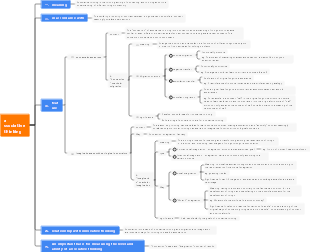
divergent thinking
1. meaning
A way of thinking that seeks diverse answers to problems by thinking from different angles and directions based on known information about things.
2. Features
Thinking in all directions from a starting point, thinking about novelty and uniqueness, is diffusion and radiation.
① Fluency of thinking process
②Flexibility (or flexibility) of ideas
③The originality of thinking results.
3. method
1||| checklist method
meaning
Mainly through detailed examination of several aspects of the conceived problem, we can find breakthroughs in thinking innovation from seemingly "no problem" things in order to generate innovative ideas.
Performance
Use, borrow, change, expand, reduce, replace, adjust, reverse, combine, etc.
2||| information transfer law
meaning
It uses existing or imported information to purposefully combine different information through enumeration to generate new ideas.
effect
Possible combinations of things can be "catched" for people to filter
3||| Enumeration method
List the characteristics, shortcomings, and expectations of the research object one by one in order to provide suggestions for improvement.
4||| Brainstorming
status
It is a divergent technique of brainstorming and group thinking.
Features
It is carried out in the form of a meeting, requiring someone to chair the meeting, and the meeting has a topic for discussion. When the meeting enters the free imagination stage, it is not advisable to judge other people's ideas prematurely, so that other ideas can be generated smoothly.
in principle
"Delayed Judgment" and "Quality over Quantity"
4. Advantages: Divergent thinking can not only help people discover new problems, but also provide many new ideas for the problems to be solved.
5. Disadvantages: However, it is difficult to produce ideal results by relying solely on a few divergent thinking techniques (requiring a joint force)
The relationship between the two
The objective basis of divergent thinking and convergent thinking: things are both different and related to each other
Divergent thinking and convergent thinking are the manifestations of understanding the relationship between the individuality and commonality of objects in thinking activities.
Solving complex problems often requires people's thinking to be combined with the actual situation and repeatedly "divergence-convergence-divergence-convergence"
Relationship with innovative thinking: divergent thinking and convergent thinking are the two wings of innovative thinking; only with the "joint force" formed by the interaction of the two wings can things be done well, science can progress, and truth can develop.
convergence thinking
1.Meaning
Use existing knowledge and experience to gradually guide a large amount of information into organized logical ideas in order to arrive at a logical solution to the problem.
2.Features
Thinking about a target point from all directions and thinking about connections and commonalities is convergence and concentration.
①The process of convergence thinking is rigorous.
②The idea of aggregation thinking is unified.
③The conclusion of convergent thinking is demonstrable.
3.Method
Requires repeated use of logical thinking methods such as comparison, analysis, abstraction, induction, deduction, and synthesis
4. Function
Establish internal connections between many scattered pieces of knowledge, thereby connecting seemingly unrelated knowledge and focusing on the problems to be solved.
eg: When police officers solve a case, they discover the facts and perpetrators from various phenomena and suspicious persons.
Reverse Thinking
1. meaning
All ideas that are opposite to the original direction of thinking can be called reverse thinking.
2. method
1||| Reverse the existing understanding of the structural order of things
Up, down, left and right; perspective taking in interpersonal management
2||| Make transformational thinking on the existing understanding of the existing status of things
Movement and stillness, cold and heat
3||| Reverse the existing understanding of the functions of things
It is useless here, but it will be useful there, and its shortcomings may become advantages.
4||| Think interchangeably about existing understandings of causal relationships between things
From cause to effect, or from effect to cause
3. positive and negative complementarity
1||| Reverse thinking should be "reasonable" and follow objective laws. The reverse of reverse thinking is the reverse of rational thinking.
2||| Forward thinking is the basis of reverse thinking. Only by mastering the "positive" of positive thinking can we carry out the "reverse" of reverse thinking reasonably and effectively. Reverse thinking in innovative thinking is often adopted when positive thinking fails to achieve satisfactory results.
3||| Reverse thinking is not always better than positive thinking, it depends on the specific situation
4||| We should complement each other's positive and negative directions and work together to advance together. It is more likely to discover new functions and effects of things and produce innovative results.
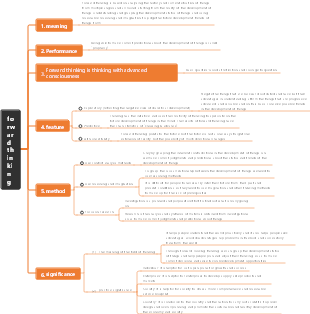
forward thinking
1. meaning
Forward thinking is based on analyzing the history and current situation of things from multiple angles and all-round, starting from the reality of the development of things, understanding and grasping the development status of things, and using reasonable reasoning and imagination to judge the future development trends of things. form
2. Performance
Being able to make correct predictions about the development of things is called "prophecy"
3. Forward thinking is thinking with advanced consciousness
Basic qualities: Good at reflection and courage to question
4. feature
1||| Exploratory (reflecting the negative view of dialectical development)
Negate the things that are backward, outdated, and have lost their advantages in understanding, affirm the things that are progressive, advanced, and valuable, and on this basis, conceive possible trends in the development of things.
2||| Predictive
Thinking has the initiative, and uses the creativity of thinking to speculate on the future development of things in the mind. The results of forward thinking have the characteristics of "knowing in advance"
3||| with uncertainty
Forward thinking points to the future, but the future is not a one-way straight line extension of reality, but the possibility of multi-directional changes.
5. method
1||| Use conflict analysis methods
Only by grasping the inherent contradictions in the development of things can we make correct judgments and predictions about the status and trends of the development of things.
2||| Use reasoning and imagination
To grasp the causal relationship between the development of things, we need to use reasoning methods.
It is difficult for people to necessarily infer their future from their past and present conditions, so they need to use imagination and other thinking methods to make up for the lack of prerequisites.
3||| Focus on research
Investigation is a planned and purposeful effort to find out what is really going on.
Research is the analysis and synthesis of materials obtained from investigations, so as to make correct judgments and predictions about things.
6. significance
(1) The meaning of the field of thinking
It helps people understand the world proactively, and it also helps people seek advantages, avoid disadvantages, nip problems in the bud, and successfully transform the world.
Through forward-looking thinking, we can grasp the development status of things and help people plan and adjust their thinking, so as to make correct decisions and seize favorable development opportunities.
(2) practical significance
Individual: It is helpful for us to plan plans for growth and success,
Enterprises: It is helpful for enterprises to develop supply-side products and markets.
Society: It is helpful for society to draw a more comprehensive and reasonable service blueprint,
Country: It is conducive to the country and the nation to carry out scientific top-level design and overall planning, and promote the sustainable and healthy development of the economy and society.