MindMap Gallery Pharmacokinetic
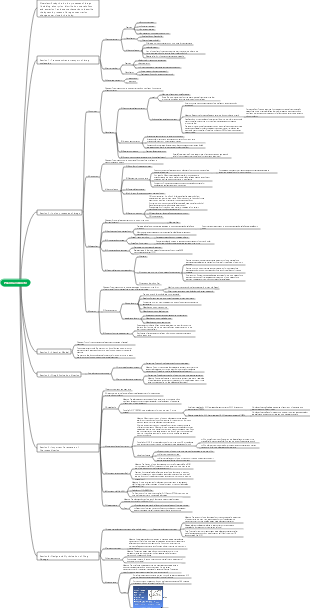
This is a mind map about Chapter 2: Pharmacokinetics, including transmembrane transport of drug molecules, In vivo processes of drugs, compartment models, etc.
Edited at 2024-03-08 18:24:28This is a mind map about bacteria, and its main contents include: overview, morphology, types, structure, reproduction, distribution, application, and expansion. The summary is comprehensive and meticulous, suitable as review materials.

This is a mind map about plant asexual reproduction, and its main contents include: concept, spore reproduction, vegetative reproduction, tissue culture, and buds. The summary is comprehensive and meticulous, suitable as review materials.
This is a mind map about the reproductive development of animals, and its main contents include: insects, frogs, birds, sexual reproduction, and asexual reproduction. The summary is comprehensive and meticulous, suitable as review materials.
This is a mind map about bacteria, and its main contents include: overview, morphology, types, structure, reproduction, distribution, application, and expansion. The summary is comprehensive and meticulous, suitable as review materials.
This is a mind map about plant asexual reproduction, and its main contents include: concept, spore reproduction, vegetative reproduction, tissue culture, and buds. The summary is comprehensive and meticulous, suitable as review materials.
This is a mind map about the reproductive development of animals, and its main contents include: insects, frogs, birds, sexual reproduction, and asexual reproduction. The summary is comprehensive and meticulous, suitable as review materials.
Chapter 2: Pharmacokinetics
Section 1: Transport of drug molecules across membranes
How drugs pass through cell membranes
Passive shipment
Also known as downhill transport: refers to the transport of drugs from the side with high cell concentration to the side with low concentration. The driving force comes from the drug concentration gradient on both sides of the cell membrane. The transport of most drugs in the body is passive transport.
Features
From high concentration to low concentration
No need for carrier
No energy consumption
Small molecular weight, high lipid solubility, less polarity, non-dissociable drugs are easy to transport
Classification
Filtration (water-soluble diffusion)
Simple diffusion (fat-soluble diffusion)
carrier transport
Features
Classification
active transport
facilitated diffusion
membrane transport
Factors affecting drug permeability through cell membranes
Reasons why there is no need to finish reading a book
①There is a lot of knowledge in the book that we don’t need, so there is no need to waste time
②Value has nothing to do with how much you read, the key lies in being precise and being able to apply it in practice
③Even if what you learn from books has a little effect at work, It is also far greater than the purchase value of the book.
No need to read the book completely
① Reading is not about copying the author’s knowledge system
② It is not necessary, you need to choose specific content.
Section 2: In vivo processes of drugs
How should professionals learn
The "Nissin Work Method" implemented by Zhang Ruimin at Haier successfully saved the company's performance. This working method was inspired by the book "The Effective Manager". It is required that the company completes its work every day, cleans up and improves every day, and everyone is in charge of everything, and everyone is in charge. Form a virtuous cycle system of goals, daily goals and incentives. It is concluded that people in the workplace should take the initiative to learn knowledge that is of practical use to their jobs.
Five axioms for effective learning
①Self-direction, that is, from dependence to self-direction
② Learn to relate past experiences;
③ Emphasis on practice, and the "readiness" for doing things is divided into ability level and willingness level; Judgment when selecting learning content: whether it is useful; Judgment of learning effect: whether it is useful.
④Focus on solving practical problems, future applications→immediate applications.
⑤ Regarding the comparison of intrinsic drivers, learning driven by intrinsic factors will be happier. Learning driven by external factors, such as exams, will make you unhappy.
Why is training more expensive than books?
Training = book X, X=A1 A2 A3, (A1, method judgment; A2. Planning application; A3. Planning drill), X means to use it for your own use, which is the element that really helps learners transform core knowledge into their own abilities.
“Separate it for your own use” is true learning
Trainers often arrange multiple sections such as games, jokes, stories, videos, etc. This allows learners to use multiple senses to participate in learning, which helps learners understand, think and remember.
RIA = Read and split pages, explain and guide, use them for your own use
RIA=Reading, splitting pages (book), explaining and guiding (teacher), splitting pages for one's own use (scholar)
One-sided pursuit of "dry goods" is a "disease"
Knowledge is like water, unlike diamonds, its marginal cost is almost zero.
RIA on-site learning: transforming knowledge into abilities
Section 3: Chamber Model
What type of learner are you?
Elementary Learner: The Learning State of Primitive Man
① Treat books as authorities and believe that the main task of learning is to find answers from materials;
② Studying for exams and getting certificates;
③Regard the number of books read directly as a gain, and worship those who have won various competition awards;
④Look down on practical books;
⑤I don’t go to bed and wake up early enough, and I play too much on my mobile phone.
Advanced Learners: Apply Reasoning to Personal Life
① Determine the learning goals and type of reading
② Treat knowledge books as teachers; interest books as tour guides; practical books as doctors;
④ Not responsible for the books, only responsible for solving your own problems and improving your own abilities;
⑤Embrace new knowledge, identify and believe when you meet, organize and analyze the information received, and be able to frequently question and reflect.
Learning Facilitator: Proactively guides others
Have the strongest learning ability and be able to deeply master certain knowledge by teaching others. They are gospel to the people around them, speaking of the scarcest talents in the rapidly changing society and accumulating competitive workplaces.
How to ask the right question?
People who are good at learning are good at using "how" instead of "why" when reflecting and questioning.
Be a valuable learning facilitator
As a learning facilitator, the most important thing in on-site learning is to actively create information. Focus on asking questions and give most of the time to learners so that they can There is time to create information and discuss expressions. Valuable notes should be your own information created with a high degree of personal relevance.
Section 6: Design and Optimization of Drug Dosage
Unlock your communication skills
In this era when skepticism is prevalent, the author uses his own real experience to verify the "dismantling of calligraphy" It can stand the test of practice. For example, he once wrote a book about "Unlocking Your Communication Power". The knowledge system is divided into 4 chapters (towers) and has different levels of floors (advance levels) , he used dismantling calligraphy to decompose the knowledge in dozens of books, and used these knowledge bricks to Construct a building of knowledge about communication.
The growth system of book-openers
Open Book Academy: Empowering the workplace
Section 5: Important Parameters of Pharmacokinetics
Identify your core competencies
The so-called core competencies are a special set of knowledge systems. Every position requires core competencies, There is no need to match knowledge; core competencies are important to everyone, and some people don’t recognize the knowledge.
Choice is more important than diligence
Experience and reflection are the most important knowledge
Be an activist with dreams!
Section 4: Drug Elimination Kinetics
A new kind of “expert”: the book opener
There are no books that cannot be opened by a book-opener
Dismantling: How to improve workplace effectiveness?
Teardown: How to manage subordinates?
Learn like a book opener