 Wondershare EdrawMind
MindMap Gallery Pharmacology 9th Edition Chapter 2 Pharmacokinetics
- 71
Pharmacology 9th Edition Chapter 2 Pharmacokinetics
Pharmacology 9th Edition Chapter 2 Pharmacokinetics mind map, including drug elimination kinetics, important parameters of pharmacokinetics, etc. Hope this helps!
Edited at 2023-11-21 20:32:54
- bacteria
This is a mind map about bacteria, and its main contents include: overview, morphology, types, structure, reproduction, distribution, application, and expansion. The summary is comprehensive and meticulous, suitable as review materials.
- Plant asexual reproduction
This is a mind map about plant asexual reproduction, and its main contents include: concept, spore reproduction, vegetative reproduction, tissue culture, and buds. The summary is comprehensive and meticulous, suitable as review materials.
- Reproductive development of animals
This is a mind map about the reproductive development of animals, and its main contents include: insects, frogs, birds, sexual reproduction, and asexual reproduction. The summary is comprehensive and meticulous, suitable as review materials.
Pharmacology 9th Edition Chapter 2 Pharmacokinetics
- bacteria
This is a mind map about bacteria, and its main contents include: overview, morphology, types, structure, reproduction, distribution, application, and expansion. The summary is comprehensive and meticulous, suitable as review materials.
- Plant asexual reproduction
This is a mind map about plant asexual reproduction, and its main contents include: concept, spore reproduction, vegetative reproduction, tissue culture, and buds. The summary is comprehensive and meticulous, suitable as review materials.
- Reproductive development of animals
This is a mind map about the reproductive development of animals, and its main contents include: insects, frogs, birds, sexual reproduction, and asexual reproduction. The summary is comprehensive and meticulous, suitable as review materials.
- Recommended to you
- Outline
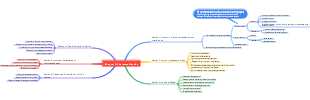
Pharmacokinetic
Overview: Study the in vivo processes of drugs (including absorption, distribution, metabolism and excretion), and use mathematics to describe the dynamic process of drug concentration changes over time in the body.
Section 1: Transmembrane transport of drug molecules
1. Passive transport
Features
①Shun concentration
② No carrier required
③No energy required
④No saturation, no competitive inhibition
Classification
Simple diffusion (fat soluble)
Filtration (water soluble)
Influencing factors
Difference in drug concentration on both sides of the membrane
molecular weight
High or low polarity (it can be understood that the higher the polarity, the higher the water solubility, and the lower the fat solubility)
Relative solubility in lipids and membrane permeability
2. Carrier transfer
Features
①Selective for transporting substances
②Has saturation
③ It is competitive and may cause competitive suppression.
Classification
Active transport (consuming energy)
Facilitated diffusion (no energy consumption)
3. Membrane transport
endocytosis
exocytosis
Section 2: In vivo processes of drugs
1. Absorption
Overview: The process by which drugs enter the blood circulation from the site of administration
Classification
(1) Gastrointestinal administration
oral
Main site of absorption: small intestine
Route: The drug is absorbed from the gastrointestinal tract, enters the liver through the portal vein, and then enters the blood circulation
Sublingual and rectal administration
Absorption sites: mucous membranes of the oral cavity, rectum and colon respectively
Meaning: Bypass the first-pass effect and enter the blood circulation directly
First-pass effect: The drug absorbed from the gastrointestinal tract is partially metabolized by the intestinal wall and liver before reaching the systemic blood circulation, thereby reducing the amount of effective drug entering the systemic blood circulation.
Capillary blood in the middle and lower rectum flows into the inferior and middle hemorrhoidal veins, and then into the inferior vena cava without passing through the liver. The superior hemorrhoidal vein passes through the portal vein system, and there is extensive collateral circulation between the superior hemorrhoidal vein and the middle hemorrhoidal vein. Therefore, only about 50% of the drug dose can bypass the liver.
(2) Injection administration
Intravenous administration: no absorption process
Intramuscular injection and subcutaneous injection Absorption rate: intramuscular injection > subcutaneous injection
Aqueous solutions are rapidly absorbed; oils and suspensions can remain locally and are absorbed slowly, so they have a long-lasting effect.
(3) Respiratory breathing
Features: Fastest absorption
(4) Skin and mucous membrane absorption (topical application)
Special: The airway itself is the target organ of anti-asthma drugs, and aerosol relief of bronchospasm is a topical drug (not respiratory absorption)
2. Distribution
Overview: The process by which drugs travel from the blood circulation to various tissues and organs
Influencing factors
(1) Blood flow of tissues and organs
(2) Plasma protein binding rate
Drugs combine with plasma proteins in plasma to form bound drugs, and free drugs are free drugs.
Conjugated drugs cannot be transported across membranes and are a temporary storage form of drugs in the blood.
Non-specific: When the anticoagulant warfarin is combined with phenylbutazone, the bound warfarin is partially displaced, causing a significant increase in the free drug concentration in the plasma.
Competition: Drugs and endogenous compounds can also compete for displacement at plasma protein binding sites.
(3) Tissue cell combination
(4) pH of body fluids and dissociation degree of drugs
(5) Barriers in the body
1. Blood-brain barrier: It is difficult for large molecules, water-soluble or dissociated drugs to enter brain tissue. Only drugs with high lipid solubility can pass through the blood-brain barrier through passive diffusion. (In other words, drugs with central effects generally have higher fat solubility) (Has glucose transporter, glucose can pass through) (The permeability of the blood-brain barrier is increased only in certain pathological conditions (such as meningitis))
2. Placental barrier: almost all drugs can pass through it
3. Blood eye barrier
3. Metabolism
Overview: Structural changes that occur to drugs in the body. (Biotransformation)
Main site: liver
(1) Significance of drug metabolism
There are also a few drugs that are activated to produce pharmacological effects or toxicity
Drugs that require activation to produce pharmacological effects are called pro-drugs
Most drugs are inactivated and their pharmacological effects are reduced or completely lost.
(2) Drug metabolism phase
Phase 1: redox hydrolysis
Generates metabolites with increased polarity
Phase Two: Combination
Drugs are covalently bonded to endogenous substances to form highly polar, highly water-soluble conjugates that are excreted in the urine.
(3) Drug metabolizing enzymes
Participate in drug metabolic reactions
Representative of liver drug metabolizing enzymes: Cytochrome P450 monooxygenase system (CYP)
(4) Factors affecting drug metabolism
1.Heredity
2. Induction and inhibition of drug metabolizing enzymes
Enzyme inducers: drugs that can enhance the activity of drug-metabolizing enzymes and accelerate drug metabolism. As a result, the efficacy of the drug is reduced
Enzyme inhibitors: drugs that can reduce the activity of drug-metabolizing enzymes and slow down drug metabolism. As a result, the efficacy of the drug increases
Autoinduction: Some drugs themselves are substrates for the drug-metabolizing enzymes they induce. After repeated use, the activity of drug-metabolizing enzymes increases and the drug's own metabolism accelerates.
3. Changes in liver blood flow
4. Excretion
Overview: The process by which drugs are excreted from the body in the form of their original form or metabolites through different pathways.
Mainly through the kidneys (urine), and secondarily through bile (feces)
Other routes: respiratory tract (volatile drugs), sweat, breast milk
(1) Kidney excretion
Slowing factors
The drug is highly lipid-soluble and non-dissociable
Renal insufficiency, and the drug is mainly excreted through the kidneys
Competitive inhibition occurs between two types of drugs transported via the same carrier
Weakly acidic drugs in acidic urine
Weakly basic drugs in alkaline urine
accelerating factors
Increased urine output and decreased drug concentration
Weakly acidic drugs in alkaline urine
Weakly basic drugs in acidic urine
(2) Excretion from the digestive tract
Enterohepatic circulation: Many drugs are excreted into the bile through the liver, and flow from the bile into the intestinal lumen, where they return to the liver through the portal vein.
Significance of enterohepatic circulation: slow down drug excretion rate and prolong action time
Section 3: Chamber Model
Overview: Think of the body as a complete system composed of several chambers
Two-compartment model: The part with rich blood flow and drug distribution that can instantly reach equilibrium with the blood is divided into the central chamber; The part with less blood supply and a longer time for drug distribution to reach equilibrium with blood is divided into peripheral chambers.
Section 4: Drug Elimination Kinetics
Drug elimination kinetics type
1. First-order elimination kinetics
Prerequisite: The body’s elimination ability is not saturated
Meaning: Drugs in the body are eliminated at a constant ratio, that is, the amount eliminated per unit time is directly proportional to the plasma concentration. (Therefore, it is also called equal ratio elimination)
2. Zero-order elimination dynamics
Prerequisite: The elimination ability of the drug in the body reaches saturation
Meaning: Drugs are eliminated in the body at a constant rate, that is, regardless of the plasma drug concentration, the amount of drug eliminated per unit time remains unchanged (so it is also called equal elimination)
Section 5: Important Parameters of Pharmacokinetics
1. Peak concentration and peak time
2. Area under the curve: Its size reflects the relative amount of drug absorbed into the blood circulation.
3. Bioavailability
Meaning: The relative amount and speed of drug absorption into systemic blood circulation after administration via extravascular route (evaluation of the degree of absorption of the preparation)
Formula: F=A/D*100% (A is the total amount of drug in the body, D is the dosage)
Absolute bioavailability: AUC (extravascular administration)/AUC (intravenous administration) *100%
Clinical significance: Evaluate the degree of absorption of the same drug administered by different routes
Relative bioavailability: AUC (test preparation)/AUC (standard preparation)*100%
Clinical significance: Basis for determining whether two drugs are bioequivalent, and evaluating drug absorption rate and drug preparation quality
4. Apparent volume of distribution
Meaning: When the distribution of drugs in plasma and tissues reaches equilibrium, the volume of body fluid required for the distribution of drugs in the body according to the plasma drug concentration. After the drug enters the body, it is actually distributed in various tissues at different concentrations. When performing pharmacokinetic calculations, it can be assumed that the drug is evenly distributed in various tissues and body fluids, and its concentration is the same as that in the blood. Under this hypothetical condition, the volume required for drug distribution is called the apparent distribution volume.
Formula: Vd=A/C0 (A is the total amount of drug in the body, C0 is the plasma drug concentration when the drug in plasma and tissue reaches equilibrium)
① If Vd is small, the drug will be more in the plasma, less distributed in the intercellular fluid and intracellular fluid, and the drug will be excreted quickly.
② If Vd is large, the drug is widely distributed or even concentrated in certain tissues, with little in the plasma and slow excretion.
clinical significance
①The distribution of drugs in the body can be inferred based on the size of Vd
② Infer the drug excretion rate
③ Infer the total amount of drug in the body or the drug concentration when it reaches a certain effective blood concentration
5. Elimination rate constant (Ke)
Meaning: The fraction of drug eliminated per unit time (for example, Ke is 0.18/h, which means that 18% of the amount of drug remaining in the body at the end of the previous hour is eliminated every hour)
Features: Its numerical value reflects the rate of drug elimination in the body, which only depends on the physical and chemical properties of the drug itself and the function of the elimination organ, and has nothing to do with the drug dosage form)
6. Elimination half-life (t1/2)
Meaning: It is the time required for plasma drug concentration to decrease by half. Its length can reflect the speed of drug elimination in the body. (also called plasma half-life)
Calculation: t1/2 =0.693/Ke
Tip: According to first-order kinetics, after 5 t1/2, about 97% of the drug in the body is eliminated, that is, it is basically eliminated.
7. Clearance rate
Meaning: The plasma volume of the body's elimination organs that eliminates drugs per unit time. Unit: ml/min or L/h)
Tips
①The clearance rate mainly reflects the functional status of liver and kidneys
② Patients with liver and kidney insufficiency should adjust the dosage or extend the dosage interval to prevent accumulation and poisoning.
Section 6: Design and Optimization of Drug Dosage
1. Steady-state plasma concentration after multiple doses
Steady state plasma concentration
Meaning: The amount of drug eliminated from the body is equal to the amount of drug entering the body, thus reaching equilibrium. The plasma drug concentration at this time is called steady-state plasma concentration.
Related: related to clearance; related to administration time, dose and bioavailability (corresponds to the previous column)
Time: The time for a drug to reach steady-state plasma concentration after multiple doses depends only on the elimination half-life of the drug, t1/2 (approximately five t1/2)
2. Target concentration
Meaning: Use a reasonable dosing regimen to make the steady-state plasma concentration (Css) of the drug reach a therapeutic concentration range that is effective without causing toxic reactions (i.e., Css.min is higher than the minimum effective concentration, and Css.max is lower than the minimum toxic concentration)
3. Maintenance dose
Meaning: To maintain steady-state blood drug concentration within the therapeutic range, a drug dose that is often repeated multiple times or continuously intravenously infused.
Dosing speed: the ratio of dosing time to dosing interval, that is, the amount of dosing per unit interval
4. Loading dose
Meaning: The initial dose increase and then the maintenance dose are given to produce the steady-state blood drug concentration (i.e., the target concentration set for the patient in advance) in advance. (Premise: The patient urgently needs to reach steady-state blood drug concentration)
tips
If oral intermittent administration is given, it should be administered every t1/2, and the loading dose can be doubled from the first dose.
During continuous intravenous infusion, the loading dose can be 1.44 times the intravenous infusion volume of the first t1/2.
safety