MindMap Gallery How to do cost accounting
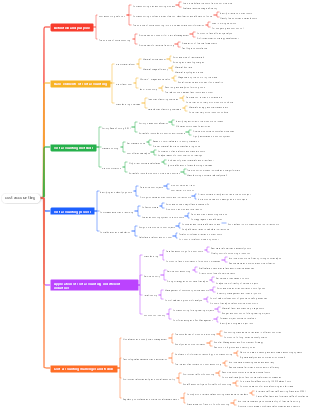
This is a mind map on how to perform cost accounting. It summarizes the basic procedures of cost accounting, including the classification of expenses, Basic procedures of cost accounting, etc.
Edited at 2024-03-07 16:07:06This is a mind map about bacteria, and its main contents include: overview, morphology, types, structure, reproduction, distribution, application, and expansion. The summary is comprehensive and meticulous, suitable as review materials.

This is a mind map about plant asexual reproduction, and its main contents include: concept, spore reproduction, vegetative reproduction, tissue culture, and buds. The summary is comprehensive and meticulous, suitable as review materials.
This is a mind map about the reproductive development of animals, and its main contents include: insects, frogs, birds, sexual reproduction, and asexual reproduction. The summary is comprehensive and meticulous, suitable as review materials.
This is a mind map about bacteria, and its main contents include: overview, morphology, types, structure, reproduction, distribution, application, and expansion. The summary is comprehensive and meticulous, suitable as review materials.
This is a mind map about plant asexual reproduction, and its main contents include: concept, spore reproduction, vegetative reproduction, tissue culture, and buds. The summary is comprehensive and meticulous, suitable as review materials.
This is a mind map about the reproductive development of animals, and its main contents include: insects, frogs, birds, sexual reproduction, and asexual reproduction. The summary is comprehensive and meticulous, suitable as review materials.
How to do cost accounting
1. Basic procedures of cost accounting
Basic requirements for cost accounting
Adhere to the principle of combining cost accounting and management
Correctly divide various expense boundaries
Do the basic work of cost accounting
Choose an appropriate costing method
Classification of expenses
Expenses (salaries and other matters depend on the department)
cost
production cost
Product Cost
Expenses for the period
Other expenditures: non-operating expenditures, capital expenditures, etc.
Classification
Classified by economic content: purchased materials, purchased fuel, purchased power, employee compensation, depreciation, taxes, and interest expenses
Classified by economic use
production cost
direct material
Direct labor
Manufacturing costs
Expenses for the period
Management costs
Financial expenses
sales expense
Other categories
Classification by method of calculating product costs
Directly included in expenses: It is possible to distinguish which products are consumed and to find out the production expenses that are directly included in the cost of a certain product. If the cost of raw materials is directly used in the production of a certain product
Indirectly included expenses: It is impossible to distinguish which product is consumed, and cannot be directly included in the cost of a certain product, but must be allocated according to certain standards before being included in the cost of various related products. This is a production expense. Such as the wages and benefits of production department managers, the depreciation of production equipment for parts commonly consumed by several products processed, etc.
Classification of expenses by relationship to product output
Variable costs (variable costs): refer to the costs that change in proportion to the total cost as product output (or business) changes.
Fixed expenses (fixed costs): refer to the total amount that is not directly affected by changes in output. If the output changes within a certain range, the total amount remains unchanged.
Basic procedures of cost accounting
Do a good job in formulating and revising quotas
Establish and improve the measurement, receipt and inventory system of materials and supplies
Establish and improve original record work
Do a good job in formulating and revising planned prices in the factory
program
Determine cost objects and set up production cost detailed accounts
Recognize and measure production expenses
Collect and distribute the expenses included in the product costs of the current period among various products
The expenses included in the costs of various products will be collected and allocated between completed products and products in progress in the current period.
Choose an appropriate costing method
Variety method: A method of setting up accounts according to product varieties and performing cost accounting.
Batch method: A method of setting up accounts according to product batches for cost accounting.
Step-by-step method: A method of setting up accounts according to product steps and performing cost accounting.
cost accounting account
cost account
Production cost - basic production cost
Production costs-auxiliary production costs
Manufacturing overhead: no balance
expense account
Selling expenses: finally transferred to profit for the year
Management costs
Financial expenses
Correspondence between accounts: look at the picture
cost accounting
1. Collection and distribution of material costs
Material cost accounting tasks
Correctly determine feed costs
Determine material costs
Determine the cost of inventory
basic work
Establish and improve the measurement system for issued materials
Perpetual inventory system: Ending balance quantity = Beginning balance quantity Current income quantity – Current period issue quantity
Periodic inventory system: quantity of materials issued - quantity of opening balance, quantity of income for the period - quantity of ending balance
Establish and improve the voucher system for receiving and issuing materials
Picking list
Quota picking list
Establish and improve the material return and inventory system
False returns
Accounting based on actual cost materials issued: first-in-first-out method, weighted average method, individual determination method
Accounting for material issuance at calculated cost: see diagram
2. Collection and distribution of salary expenses
3. Collection and distribution of other expenses
4. Collection and distribution of auxiliary production expenses
5. Collection and allocation of manufacturing expenses
6. Accounting for production losses
7. Distribution of production costs between completed products and work in progress