MindMap Gallery plague
This is a mind map about the plague, which tells stories related to the plague. If you are interested in the story of the plague, you are welcome to collect and like this mind map~
Edited at 2022-11-19 09:07:13This is a mind map about bacteria, and its main contents include: overview, morphology, types, structure, reproduction, distribution, application, and expansion. The summary is comprehensive and meticulous, suitable as review materials.

This is a mind map about plant asexual reproduction, and its main contents include: concept, spore reproduction, vegetative reproduction, tissue culture, and buds. The summary is comprehensive and meticulous, suitable as review materials.
This is a mind map about the reproductive development of animals, and its main contents include: insects, frogs, birds, sexual reproduction, and asexual reproduction. The summary is comprehensive and meticulous, suitable as review materials.
This is a mind map about bacteria, and its main contents include: overview, morphology, types, structure, reproduction, distribution, application, and expansion. The summary is comprehensive and meticulous, suitable as review materials.
This is a mind map about plant asexual reproduction, and its main contents include: concept, spore reproduction, vegetative reproduction, tissue culture, and buds. The summary is comprehensive and meticulous, suitable as review materials.
This is a mind map about the reproductive development of animals, and its main contents include: insects, frogs, birds, sexual reproduction, and asexual reproduction. The summary is comprehensive and meticulous, suitable as review materials.
plague
Introduction
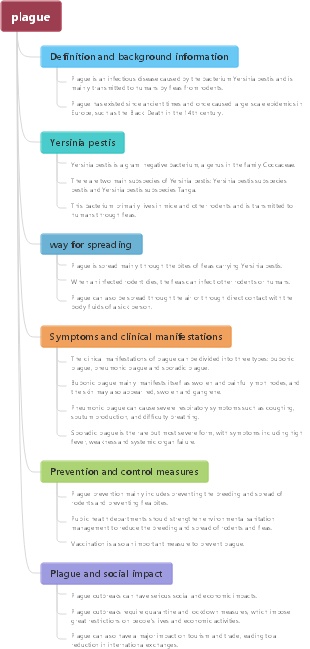
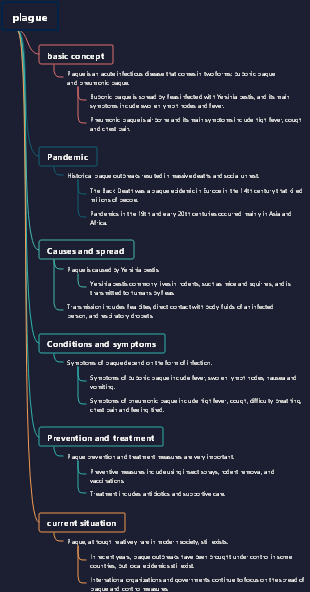
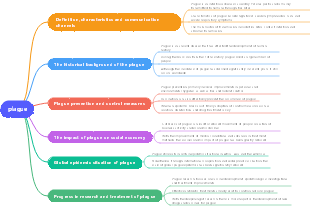
Plague is an infectious disease caused by the bacterium Yersinia pestis, which is common in rodents and can be transmitted to humans by fleas.
Cause
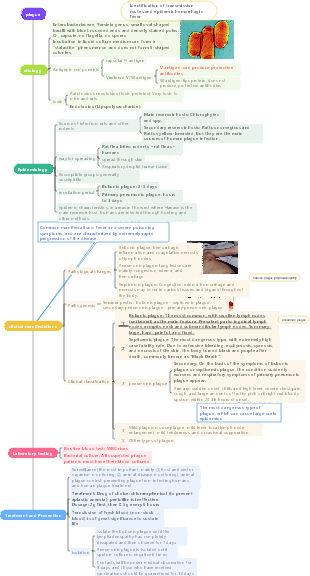
Yersinia pestis infects rodents and is transmitted to humans through flea bites.
Infection can also be caused by eating or coming into contact with the blood, tissue, or excrement of infected rodents.
symptom
Plague is divided into three types: bubonic plague, pneumonic plague and septicemic plague.
Common symptoms of bubonic plague include swollen lymph nodes, fever, headache, fatigue, etc.
Pneumonic plague presents with respiratory symptoms such as high fever, cough, and chest pain.
Septicemic plague can cause a systemic inflammatory response, with symptoms including high fever, increased heart rate, and hypotension.
way for spreading
Collective plague is transmitted primarily through flea-biting rodents and humans.
Collective pneumonic plague can be spread to others through respiratory droplets.
Individualized plague can enter the body through broken skin from direct contact with infected animals or objects.
Precaution
Strengthen hygiene prevention and control, keep the environment clean, and reduce the chance of rats breeding.
Pay attention to personal hygiene and avoid contact with animals that may be infected with plague.
Use personal protective equipment such as masks, gloves, etc.
Inject the plague vaccine to improve the body's resistance to the plague.
treatment method
Use antibiotics for treatment, such as streptomycin, fluoroquinolones, etc.
Early treatment improves the cure rate.
Provide supportive treatment, such as infusion, adjustment of water and electrolyte balance, etc.
Strengthen the observation of patients' conditions and take effective measures in a timely manner.
Epidemic prevention and control
Detect and report suspected cases in a timely manner and conduct epidemiological investigations.
Strengthen epidemic monitoring, implement isolation measures, and control the spread of the disease.
Provide health education to enhance public awareness of plague and prevention awareness.
International cooperation to jointly respond to transnational plague epidemics.