MindMap Gallery plague
This is a mind map about the plague, which tells stories related to the plague. If you are interested in the story of the plague, you are welcome to collect and like this mind map~
Edited at 2021-07-28 14:43:33This is a mind map about bacteria, and its main contents include: overview, morphology, types, structure, reproduction, distribution, application, and expansion. The summary is comprehensive and meticulous, suitable as review materials.

This is a mind map about plant asexual reproduction, and its main contents include: concept, spore reproduction, vegetative reproduction, tissue culture, and buds. The summary is comprehensive and meticulous, suitable as review materials.
This is a mind map about the reproductive development of animals, and its main contents include: insects, frogs, birds, sexual reproduction, and asexual reproduction. The summary is comprehensive and meticulous, suitable as review materials.
This is a mind map about bacteria, and its main contents include: overview, morphology, types, structure, reproduction, distribution, application, and expansion. The summary is comprehensive and meticulous, suitable as review materials.
This is a mind map about plant asexual reproduction, and its main contents include: concept, spore reproduction, vegetative reproduction, tissue culture, and buds. The summary is comprehensive and meticulous, suitable as review materials.
This is a mind map about the reproductive development of animals, and its main contents include: insects, frogs, birds, sexual reproduction, and asexual reproduction. The summary is comprehensive and meticulous, suitable as review materials.
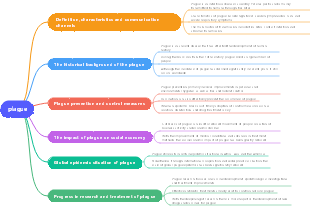
plague
Introduction
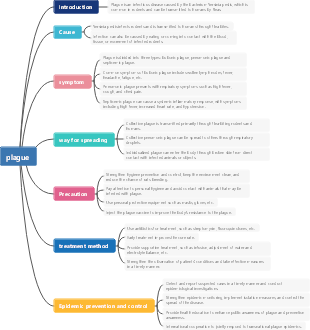
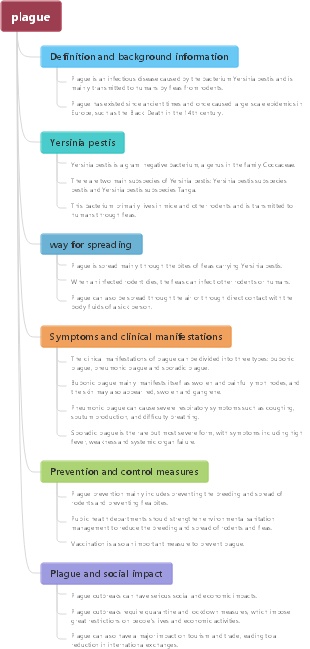
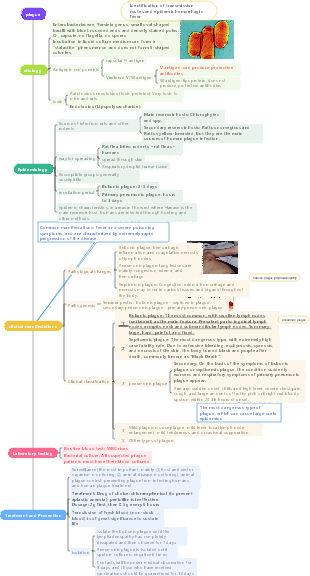
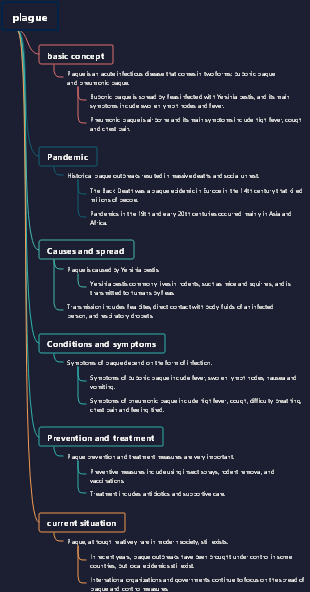
Plague is an infectious disease caused by Yersinia pestis and can be divided into two types: pneumonic plague and bubonic plague. Yersinia pestis is mainly spread through fleas. Human infection may cause symptoms such as fever and lymphatic swelling, and in severe cases, death.
history
Ancient plague epidemics
Records of ancient plague epidemics can be traced back to the 6th century BC, the most famous of which is the Black Death.
The Black Death was a massive plague outbreak in Europe in the mid-14th century that killed an estimated one-third of the European population.
The Black Death brought about tremendous changes in Europe's economy and society, and had a profound impact on the prevention and control of epidemics in later generations.
Modern plague epidemics
Modern plague epidemics are relatively rare, but they still occur.
In the early 20th century, China experienced a large-scale outbreak of plague, resulting in hundreds of thousands of deaths.
In recent years, the frequency of plague has increased, especially in Africa, which requires high vigilance.
way for spreading
Mainly spread by fleas
Fleas are the intermediate hosts of the plague bacterium. They carry the plague bacterium after sucking the blood of infected rodents and then transmit the plague bacterium to humans by biting them.
Infected rats often live in the same environment as humans, so the chances of plague transmission are relatively high.
Rare direct transmission method
Direct transmission can occur when funeral workers and others come into contact with infected corpses, but this is relatively rare.
Symptoms and Diagnosis
symptom
The symptoms of pneumonic plague include high fever, cough, chest pain and other respiratory symptoms. The disease develops rapidly and the mortality rate is high.
Symptoms of bubonic plague include fever, swollen lymph nodes, and purple spots on the skin. The mortality rate is relatively low.
diagnosis
The diagnosis of plague mainly relies on the patient's clinical manifestations and laboratory tests, such as culturing Y. pestis and PCR.
Treatment and Prevention
treatment method
Early treatment of plague is very important and includes treatment with antibiotics as well as symptomatic management.
People with more severe illness may need to be hospitalized and receive supportive care.
Precaution
Plague prevention mainly includes controlling the spread of fleas, such as rodent control and flea control, and strengthening personal hygiene habits.
Plague vaccination is an important means to prevent plague, especially for high-risk occupational groups.
Prevention and control measures
Early reporting and monitoring
For areas where the epidemic may occur, it is necessary to strengthen monitoring of animals, the environment and humans.
Once an epidemic is discovered, it must be reported promptly and measures must be taken to control it.
quarantine measures
For patients, effective isolation is required to avoid the spread of plague.
Contacts and close contacts also need to be observed and quarantined to prevent spread.
Environmental cleaning and rodent control measures
The spread of plague is related to the presence of rodents and fleas, so environmental cleaning and rodent control measures are required.
Social prevention and control measures
Plague prevention and control requires the joint efforts of the entire society, including public education, information dissemination and community cooperation.
Taking effective social prevention and control measures can improve the effectiveness of plague prevention and control.