MindMap Gallery Plague treatment
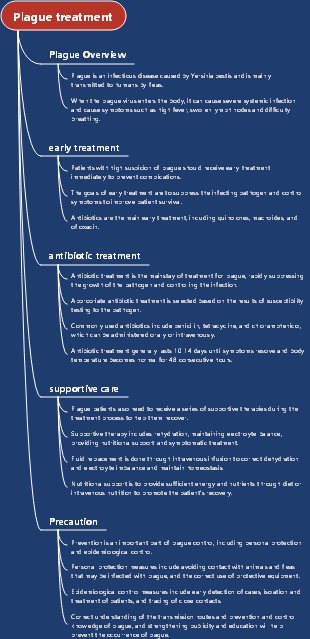
This is a mind map about the treatment method of plague. It tells the story about the treatment method of plague. If you are interested in the story of the treatment method of plague, please feel free to collect and like this mind map~
Edited at 2022-07-30 11:17:24This is a mind map about bacteria, and its main contents include: overview, morphology, types, structure, reproduction, distribution, application, and expansion. The summary is comprehensive and meticulous, suitable as review materials.

This is a mind map about plant asexual reproduction, and its main contents include: concept, spore reproduction, vegetative reproduction, tissue culture, and buds. The summary is comprehensive and meticulous, suitable as review materials.
This is a mind map about the reproductive development of animals, and its main contents include: insects, frogs, birds, sexual reproduction, and asexual reproduction. The summary is comprehensive and meticulous, suitable as review materials.
This is a mind map about bacteria, and its main contents include: overview, morphology, types, structure, reproduction, distribution, application, and expansion. The summary is comprehensive and meticulous, suitable as review materials.
This is a mind map about plant asexual reproduction, and its main contents include: concept, spore reproduction, vegetative reproduction, tissue culture, and buds. The summary is comprehensive and meticulous, suitable as review materials.
This is a mind map about the reproductive development of animals, and its main contents include: insects, frogs, birds, sexual reproduction, and asexual reproduction. The summary is comprehensive and meticulous, suitable as review materials.
Plague treatment
Plague is an acute infectious disease caused by Yersinia pestis.
Yersinia pestis is mainly spread by rodents such as rats.
The World Health Organization divides plague into two types: pneumonic plague and bubonic plague.
Pneumonic plague is an infection caused by Yersinia pestis bacteria that invades the lungs.
Bubonic plague is an infection caused by the Yersinia pestis bacterium that invades lymph nodes and other tissues.
Plague spreads quickly among people and has a high fatality rate.
How the plague spreads
Plague is spread mainly through flea bites.
Fleas are the intermediate hosts of plague and carry the bacterium Yersinia pestis.
Yersinia pestis enters the body during a flea bite infection.
In severe cases, it may also be spread through aerosols.
early symptoms of plague
Early symptoms of plague usually occur 2-7 days after infection.
Early symptoms include fever, headache, nausea, vomiting, etc.
As the disease progresses, the lymph nodes can swell and form painful lumps.
Patients with pneumonic plague may have symptoms such as coughing and difficulty breathing.
Plague treatment
Treatment of plague mainly includes drug treatment and supportive therapy.
Medication is the most common treatment method.
Antibiotics, such as streptomycin and tetracycline, can effectively kill Yersinia pestis.
The selection of antimicrobial drugs should be determined based on the results of drug susceptibility testing.
Starting treatment early can increase the cure rate.
Supportive care refers to supporting a patient’s recovery by maintaining stable vital signs.
This includes providing adequate fluid and nutritional support to control related symptoms.
Preventive measures against plague
Plague can be avoided with some simple preventive measures.
Environmental cleaning is an important measure to prevent plague.
Reduce trash and food scraps to avoid attracting rodents.
Cooperate with rodent eradication programs to control rodent populations.
Personal protective measures are equally important.
Avoid close contact with people infected with plague.
When traveling to areas with insect-borne diseases, you should pay attention to personal protection.
plague vaccine
Plague vaccines currently exist to prevent plague.
The plague vaccine is a preventative measure that helps the body produce antibodies.
Vaccines can effectively control the spread of the epidemic by providing herd immunity in outbreak areas.
Global control of plague
International organizations and national governments have been committed to global control of plague.
The World Health Organization has developed guidelines for the prevention and control of plague.
Governments are stepping up monitoring and reporting, as well as vaccination campaigns.
The social impact of the plague
The social impact of the plague cannot be ignored.
Outbreaks can cause economic losses and social panic.
Proper publicity and education can help people understand plague and reduce panic.
The historical background of the plague
Plague has broken out many times in history, causing a large number of casualties.
The Black Death is one of the most famous plague outbreaks.
The historical background of plague reminds us to pay attention to plague prevention and control.
Plague Research and Innovation
Plague research and innovation are ongoing.
The development of new drugs and vaccines could improve the effectiveness of plague treatments.
Using modern technology to monitor and track plague can better control the epidemic.