 Wondershare EdrawMind
MindMap Gallery Physiology - blood circulation
- 59
Physiology - blood circulation
Physiology - blood circulation, including heart pumping function, cardiac output and heart pumping function reserve, cardiac function evaluation, cardiac electrophysiology, surface electrocardiogram, vascular physiology, microcirculation, tissue fluid, regulation of cardiovascular activity, Organ circulation content points sorting out.
Edited at 2023-01-12 17:59:49
- bacteria
This is a mind map about bacteria, and its main contents include: overview, morphology, types, structure, reproduction, distribution, application, and expansion. The summary is comprehensive and meticulous, suitable as review materials.
- Plant asexual reproduction
This is a mind map about plant asexual reproduction, and its main contents include: concept, spore reproduction, vegetative reproduction, tissue culture, and buds. The summary is comprehensive and meticulous, suitable as review materials.
- Reproductive development of animals
This is a mind map about the reproductive development of animals, and its main contents include: insects, frogs, birds, sexual reproduction, and asexual reproduction. The summary is comprehensive and meticulous, suitable as review materials.
Physiology - blood circulation
- bacteria
This is a mind map about bacteria, and its main contents include: overview, morphology, types, structure, reproduction, distribution, application, and expansion. The summary is comprehensive and meticulous, suitable as review materials.
- Plant asexual reproduction
This is a mind map about plant asexual reproduction, and its main contents include: concept, spore reproduction, vegetative reproduction, tissue culture, and buds. The summary is comprehensive and meticulous, suitable as review materials.
- Reproductive development of animals
This is a mind map about the reproductive development of animals, and its main contents include: insects, frogs, birds, sexual reproduction, and asexual reproduction. The summary is comprehensive and meticulous, suitable as review materials.
- Recommended to you
- Outline
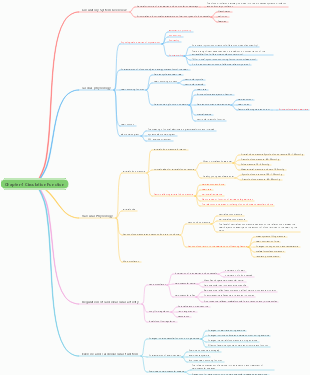
blood circulation
heart pumping function
Heart pumping process and mechanism
cardiac cycle
A cycle of mechanical activity consisting of one contraction and one relaxation of the heart
Cardiac cycle is inversely proportional to heart rate
heart pumping process
ventricular systole
isovolumetric contraction phase
Indoor pressure rises sharply
first heart sound
Sudden closure of atrioventricular valves Vibration produced by ventricular ejection
Marks the beginning of ventricular contraction
rapid ejection period
Aortic blood flow is maximum
Late period
Left ventricular pressure reaches maximum
Aortic pressure reaches maximum
slow down ejection phase
ventricular diastole
isovolumetric diastole
Indoor pressure drops sharply
Late period
left ventricular volume minimal
second heart sound
Main and pulmonary valve closure
Marks the onset of ventricular diastole
rapid filling period
Late period
third heart sound
Children and young people occasionally have
slow down filling phase
Late stage
fourth heart sound
Can't hear it normally
Causes of ventricular congestion
Ventricular diastole (main)
Atrial contraction (times)
atrial systole
Late period
Left ventricular volume reaches maximum
atrial diastole
The role of the atria
primary pump action
Changes in intraatrial pressure during the cardiac cycle
Cardiac output and heart pumping reserve
stroke volume
The amount of blood ejected from one ventricle in one heartbeat
ejection fraction
Stroke volume as a percentage of ventricular end-diastolic volume
Determine whether ventricular function is reduced or abnormal ventricular enlargement
Output per minute (cardiac output)
The amount of blood ejected from one ventricle per minute
Cardiac output = heart rate * stroke volume
heart index
cardiac output per unit body surface area
Comparing cardiac function in different individuals
Influencing factors
ventricular contraction preload
load before ventricular contraction
Ventricular end-diastolic volume (pressure)
Influencing factors
venous blood return volume
ventricular filling time
venous return velocity
ventricular diastolic function
ventricular compliance
intrapericardial pressure
The amount of blood remaining in the ventricle after ejection
regulatory pathways
heterologous autoregulation
cardiac function curve
Changes in the initial length of the myocardium cause changes in myocardial contractility
Adjust to small short-term changes
Postural changes, sudden increase in arterial pressure
ventricular contraction afterload
The load on the ventricles during contraction
aortic blood pressure
regulatory pathways
heterologous autoregulation
Isometric adjustment
Directly alter myocardial contractility
Adapt to continuous and drastic changes, which belongs to nervous and humoral regulation
Hypoxia, acidosis, heart failure
myocardial contractility
Isometric adjustment
heart rate
beats per minute
The higher the value, the higher the cardiac output; if it is too high >180, the ventricular diastole period is too short and the cardiac output decreases.
heart pump reserve
The function of cardiac output that increases with the body's metabolic needs
stroke volume reserve
systolic reserve
Increase myocardial contractility and ejection fraction
front load
Myocardial initial length, ventricular end-diastolic volume
afterload
arterial pressure
diastolic reserve
Increase ventricular end-diastolic volume
heart rate reserve
Accelerating the heart rate within a certain range can increase cardiac output
Stroke work
relatively high blood pressure
Cardiac function evaluation
Evaluating cardiac function from changes in ventricular pressure
Evaluating cardiac function from changes in ventricular volume
Evaluate cardiac function from changes in ventricular pressure and volume
electrophysiology of the heart
Classification of cardiomyocytes
working cells
ventricular myocytes
fast response cells
resting potential
K outflow
(Main) Inward Rectifier Potassium Channel Ik1
Non-gated, affected by membrane potential, the more depolarized the membrane, the smaller the K permeability
Action potential
Period 0: Rapid depolarization period
(Main) Na internal flow
fast sodium channel INa
Voltage gating, fast activation and fast deactivation
Tetrodotoxin
Phase 1: Rapid repolarization phase
Instantaneous outward current Ito (mainly K outflow)
potassium channel
4-aminopyridine
Period 2: Platform period
Ca2 influx
Slow calcium channel ICa-L
Mn2, verapamil
K outflow
delayed rectifier potassium channel Ik
gradually strengthen over time
Phase 3: End of rapid repolarization
K outflow
(First)Ik
(Back)Ik1
Phase 4: Resting phase
sodium pump
Ouabain
Na-Ca2 exchanger
Absorb 3 sodium and expel 1 calcium
Features
(Main) There is a plateau phase, unique to cardiomyocytes; there is superradiation
Phase 0 depolarization is fast
Large resting potential -90mv
No automatic depolarization
autonomous cells
Purkinje cells
fast response cells
0-3 Same as ventricular myocytes
Stage 4 is slower than the sinus node
outward current
Ik gradually decays
(Main) inward current
If
Na internal flow
sinoatrial node cells
slow responding cells
Issue 0: Depolarization
(Main) Ca2 influx
ICa-L
Phase 3: Repolarization
K outflow
Ik
Issue 4: Automatic depolarization
(Main) outward current
Ik gradually decays
inward current
Na internal flow
Slow sodium channel If
Enhance over time
Ca2 influx
Fast calcium channel ICa-T
Quick activation, quick deactivation
Ni2
Features
(Main) 4-stage automatic depolarization
No 1st or 2nd phase, no overshot
The absolute values of the maximum repolarization potential and threshold potential are low
Phase 0 depolarization is smaller and slower
Physiological properties
Electrophysiological properties
Excitability
The ability to generate action potentials after receiving stimulation
Sinoatrial node (P cells) > Atrioventricular segment area > Atrioventricular bundle > Purkinje fibers
cyclical changes
Effective refractory period ERP
absolute refractory period
local reaction period
Strong stimulation only produces local potentials
relative refractory period
Suprathreshold stimulation may produce excitation
supernormal period
Subliminal stimulation may produce excitation
Relationship between cyclic changes and contractile activity
normal contraction
preterm contraction
Premature excitation and contraction caused by external stimulation after the effective refractory period
compensatory interval
The effective refractory period caused by pre-excitation causes the next impulse to fail, resulting in a longer ventricular diastole.
physiological significance
The ERP of cardiomyocytes is very long, causing them to not produce tonic contractions
room delay
Ensure ventricular contraction follows atrial contraction
Influencing factors
resting potential
The closer to the threshold stimulus, the higher the excitability
threshold potential
The closer it is to the resting potential, the higher the excitability
Phase 0 ion channel
fast sodium channel
Resting potential: backup——>Threshold potential: fast activation and fast deactivation——>it takes time to revive after returning to the resting potential
slow calcium channel
self-discipline
No external stimulation, automatic generation of rhythmic excitement characteristics
normal pacemaker
sinoatrial node
Highest self-discipline
Control potential pacemakers to produce sinus rhythm
mechanism
Be the first to occupy
Sinoatrial node excitement occurs before other autonomic cells automatically depolarize to threshold potential.
overdrive
Autonomous cells are stimulated by high frequency, which inhibits their own autonomy and causes excitement according to external frequencies.
potential pacemaker
other autonomous cells
Normally it only functions as excitatory conductor
Abnormal normal pacemaking points/abnormal increase in potential pacemaking points
ectopic pacemaker
Metrics
Frequency of automatic excitation (4-period automatic depolarization speed)
Influencing factors
4-stage automatic depolarization speed
most important
maximum repolarization potential
threshold potential
conductivity
Way
in the cell
local current
between cells
Leap disk (gap junction)
way
speed
Room-room junction
The slowest, 0.02m/s
interventricular delay
Purkinje fiber
Fastest, 4m/s
Influencing factors
structure
Cell diameter (lateral area)
Inversely proportional to resistance
gap junction
low resistance
physiological
Phase 0 depolarization speed and amplitude
membrane potential
adjacent unexcited membrane excitability
Mechanical properties
Contractibility
Surface electrocardiogram
P wave
Reflects the process of atrial depolarization
QRS complex
ventricular depolarization
T wave
ventricular repolarization
U wave
Purkinje fiber web repolarization
PR interval
Sinoatrial node-atrial-atrioventricular junction-atrioventricular bundle-ventricular excitatory conduction period
conduction velocity
QT interval
The period from depolarization to full repolarization of the ventricles
heart rate
ST segment
A period when cells in all parts of the ventricles are in a state of depolarization
Vascular Physiology
arterial blood pressure
aortic blood pressure
Causes
full of blood
Prerequisites
mean filling pressure
When the heart stops ejecting blood, the pressure in the circulatory system is the same, i.e. ~
heart ejection
necessary conditions
peripheral resistance
The resistance of arterioles and arterioles to blood flow
The larger the diameter, the harder it is for blood from the aorta to flow into the small and arterioles.
elastic receptacle
Measurement methods
direct measurement method
Invasive, experimental use
indirect measurement method
Non-invasive, clinical use
The upper arm is at the level of the heart. After the balloon compresses the arterial blood flow until no pulse can be heard, it continues to inflate for a while, and then slowly deflates. The sphygmomanometer reads systolic blood pressure when the first sound is heard, and the reading when the auscultation sound disappears is diastolic blood pressure.
express
systolic blood pressure
Blood pressure reaches its maximum value in mid-systolic phase of the ventricles
Mainly reflects stroke volume
100-120mmHg
diastolic blood pressure
blood pressure at the end of ventricular diastole when it reaches its lowest value
Mainly reflects peripheral resistance
60-80mmHg
pulse pressure
Systolic blood pressure - diastolic blood pressure
30-40mmHg
mean arterial pressure
The average value of arterial blood pressure at each moment in a cardiac cycle
Approximately 1/3 of diastolic blood pressure and pulse pressure
100mmHg
Features
Individual Differences
age difference
gender differences
Slightly lower in women before menopause
limb differences
Left high, right low
daily rhythm
twin peaks twin valleys
Influencing factors
venous blood pressure
central venous pressure
Blood pressure in the right atrium and large intrathoracic veins
depending on
cardiac ejection capacity
Inversely proportional
venous blood return volume
Proportional
clinical significance
as an indicator
Control the speed and volume of fluid replenishment
Determine cardiovascular function
Effect of gravity on venous pressure
hydrostatic pressure
The pressure exerted by the gravity of blood on the walls of blood vessels
transmural pressure
The difference between the wall pressure of blood and the wall pressure of tissues outside the tube
It is a necessary condition to maintain the filling and expansion of blood vessels.
venous blood return volume
Influencing factors
mean filling pressure
Proportional
myocardial contractility
Proportional
muscle pump
During exercise, the muscles of the lower limbs contract and squeeze the veins, causing blood to flow back
Postural changes
Mainly affects transmural pressure. When standing, the lower part of the body accommodates more venous blood and reduces backflow.
breathing pump
The chest cavity expands and the negative pressure increases, which facilitates inhalation. At the same time, the intrathoracic veins and right atrium expand, and the venous return increases.
Microcirculation
composition
arterioles
There are smooth muscles on the wall of the tube, which can be used as a gate to control microcirculatory blood flow.
posterior arteriole
Branches of arterioles that supply blood to true capillaries
precapillary sphincter
True capillaries
There is no smooth muscle, and the tube wall is highly permeable, allowing for material exchange.
blood capillaries
There is smooth muscle, which gradually decreases with the direction of blood flow.
arteriovenous anastomosis
venule
blood flow pathway
roundabout pathway (nutritional pathway)
direct access road
Arteriovenous short circuit (non-nutritional pathway)
path
Arterioles - Posterior arterioles - Precapillary sphincter - True capillaries - Venules
arterioles - posterior arterioles - blood capillaries - venules
Arteriole-arteriovenous anastomotic branch-venule
distributed
Mesentery, liver, kidney
skeletal muscle
Finger, toe, lip, nose skin
blood flow
slow
faster
fastest
Opening and closing
There are many true capillaries, which are opened and closed alternately under the control of the anterior sphincter.
Open for a long time
Long-term closure; large opening during infection and toxic shock, leading to warm shock
Function
material exchange
Maintain venous blood return to the heart
Participate in body temperature regulation
blood flow resistance
Affects blood flow velocity and indirectly affects material exchange
arteriolar resistance
The blood flow resistance is the greatest and the blood pressure drops the most
Plays a major role in controlling microcirculatory blood flow
capillary blood pressure
Ratio of anterior and posterior capillary resistance
blood flow
adjust
arteriole (main)
Posterior arterioles, precapillary sphincter
Determined by the concentration of local metabolites, it controls vascular movement and alternates contraction and contraction 5-10 times per minute, which is autoregulation.
tissue fluid
generate
Effective filtration pressure = external filtration - internal suction
External filter
Capillary blood pressure Interstitial fluid colloid osmotic pressure
Systemic
Plasma colloid osmotic pressure Interstitial fluid hydrostatic pressure
Influencing factors
capillary effective hydrostatic pressure
Capillary blood pressure - interstitial fluid hydrostatic pressure
Main factors that promote tissue fluid production
effective colloid osmotic pressure
Plasma colloid osmotic pressure - interstitial fluid colloid osmotic pressure
The main factors that inhibit the production of tissue fluid
capillary wall permeability
Colds, fevers, and allergies increase permeability, leak out plasma proteins, increase effective filtration pressure, and cause edema.
lymphatic drainage
Filariasis, breast cancer, lymphatic obstruction, tissue fluid accumulation, lymphedema
Regulation of cardiovascular activity
neuromodulation
cardiovascular innervation
innervation of heart
cardiac sympathetic nerve
transmitter
Norepinephrine
receptors on myocardium
β1 adrenergic receptor (β1 receptor)
Mechanism
Norepinephrine β1 receptor→G protein-AC-cAMP-PKA activation→increased cAMP→increased Ca2 influx—>positive degeneration
effect
positive chronotropy
increased heart rate
positive inotropic effect
Increased myocardial contractility
positive transduction
conduction speed increases
cardiac vagus nerve
transmitter
AcetylcholineACh
receptor
M-type cholinergic receptors (M receptors)
Features
Right fibers mainly innervate the sinoatrial node
The fibers on the left mainly innervate the atrioventricular junction
Mechanism
Acetylcholine M receptor→G protein-AC-cAMP-PKA→decreased cAMP→decreased Ca2 influx and increased K efflux—>negative degeneration
effect
negative chronotropy
negative inotropic effect
negative transduction
Question 1: Cardioinhibitory nerves can sometimes cause cardiac acceleration reactions
1. The axons of adrenergic neurons in the nucleus ambiguus are present in the vagus nerve trunk.
2. The vagus nerve trunk is mixed with cardiac sympathetic nerves
3. There are some chromaffin cells in the sinoatrial node area, and acetylcholine can cause these cells to release catecholamines.
Question 2: Response to simultaneous stimulation of cardioinhibitory nerves and cardioexcitatory nerves
Antagonize each other, but cardioinhibitory nerves are dominant
There may be M receptors in adrenergic nerve terminals, and the binding of acetylcholine to M receptors can reduce the transmitter released by adrenergic nerve terminals. It belongs to presynaptic inhibition, and the M receptor is located on the presynaptic membrane of the cell.
innervation of blood vessels
sympathetic vasoconstrictor nerve fibers
transmitter
Norepinephrine
receptors on smooth muscle
α receptors (strong binding, contraction), β2 receptors (weak binding, relaxation)
effect
Sympathetic vasoconstriction occurs rhythmically, and vasoconstriction is strengthened to regulate the blood flow resistance and blood flow of organs.
Dominate
Almost all blood vessels, skin > skeletal muscles, internal organs > brain
Most accept their single dominance
Sympathetic vasodilatory nerve fibers
transmitter
ACh
receptor
M-type cholinergic receptor
effect
Dilate skeletal muscle blood vessels during emotional excitement and defensive reactions
Dominate
Skeletal muscles are controlled by both sympathetic contraction and sympathetic relaxation
parasympathetic vasodilatory nerve fibers
transmitter
ACh
receptor
M-type cholinergic receptor
effect
Participate in local vasodilation
Dominate
A few organs are controlled by both sympathetic contraction and parasympathetic relaxation
cardiovascular reflex
baroreceptor reflex
arterial baroreceptor
Sensory nerve endings of carotid sinus and aortic arch vessel adventitia
feel
Mechanical stretch stimulation (degree of arterial wall expansion)
afferent pathway
Carotid sinus—>sinus nerve—>medulla oblongata
Aortic arch—>vagus nerve—>medulla oblongata
effect
Increased cardiac vagal tone, weakened cardiac sympathetic and sympathetic vasoconstrictor tone
Heart rate slows, cardiac output decreases, peripheral resistance decreases, and arterial blood pressure decreases
Features
Rapid adjustment when heart rate, cardiac output, peripheral resistance, etc. changes, will not have long-term effects
physiological significance
Maintain arterial blood pressure relatively stable
chemoreceptive reflex
chemoreceptors
carotid body, aortic body
feel
O2 partial pressure, CO2 partial pressure, and H concentration in arterial blood
afferent pathway
Receptors—>Sinus nerve, vagus nerve—>Medullary nucleus of solitary tract—>Respiratory center
effect
Breathing becomes deeper and faster
Increased heart rate and blood pressure
Features
It works under conditions of hypoxia, asphyxia, blood loss, acidosis, hypotension, etc.
physiological significance
Maintain a relatively stable internal environment
cardiovascular reflex
cardiopulmonary receptors
Atria, ventricles, and pulmonary circulation large blood vessel walls
feel
mechanical stretch stimulation
Chemical material
prostaglandins, adenosine, bradykinin
afferent nerve
vagus nerve
effect
Features
Regulate circulating blood volume and extracellular fluid volume
body fluid regulation
renin-angiotensin system RAS
Angiotensin II (AngII)
Physiological effects
vasoconstrictor
Promote the release of transmitters from sympathetic nerve endings
Affects the central nervous system
Increased tension in the sympathetic vasoconstrictor center
Promote the release of vasopressin ADH and oxytocin from the neurohypophysis
Enhances the effects of corticotropin-releasing hormone CRH
Promote the synthesis and release of aldosterone
Catecholamines
Adrenaline E
Norepinephrine NE
Vasopressin (VP) also known as antidiuretic hormone (ADH)
Physiological effects
antidiuretic
Acts on V2 receptors on renal tubules
Raise blood pressure
It acts on the V1 receptor of vascular smooth muscle and is one of the strongest vasoconstrictor substances.
Regulate extracellular fluid volume
Vasoactive substances produced by vascular endothelium
vasodilator
NO
NO-GC-cGMP increase-PKG-Ca2 decrease-vasodilation
Inhibit platelet adhesion
Inhibits smooth muscle cell proliferation
Prostacyclin PGI2
vasodilation
Inhibit platelet adhesion
endothelial hyperpolarizing factor EDHF
vasodilation
vasoconstrictor substances
Endothelin ET
vasoconstriction
cardiovascular active peptides
Atrial natriuretic peptide ANP
Physiological effects
Natriuretic and diuretic
Increase Na and Drainage
Inhibit the production and release of renin, aldosterone, and vasopressin
cardiovascular effects
Dilate blood vessels; reduce cardiac output; relieve arrhythmias
anti-vasoconstrictor substances
Inhibit the proliferation of vascular endothelial cells and smooth muscle cells
self-regulation
metabolic autoregulation
Metabolites-posterior arterioles, precapillary sphincter-microcirculation opening and closing
myogenic autoregulation
The vascular smooth muscle itself maintains a certain degree of tonic contraction and adjusts as the vascular perfusion pressure changes.
Renal vascular manifestations are obvious
No skin blood vessels
Regulation of arterial blood pressure
short term adjustment
Neuromodulation
long term adjustment
Renal-Humoral Control System
organ circulation
coronary circulation
The heart's own blood supply
Physiological characteristics
High perfusion pressure and large blood flow
High oxygen uptake rate and large oxygen consumption
Blood flow changes cyclically due to myocardial contraction
Regulation of coronary blood flow
Influence of Myocardial Metabolism Level (Main)
Enhanced metabolism-increased metabolites (adenosine)-coronary vasodilation
neuromodulation
Covered by myocardial metabolic regulation in a short period of time
body fluid regulation
Pulmonary circulation
cerebral circulation