MindMap Gallery The most complete SEO search engine optimization tutorial
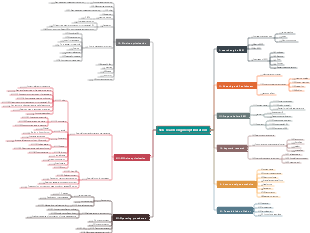
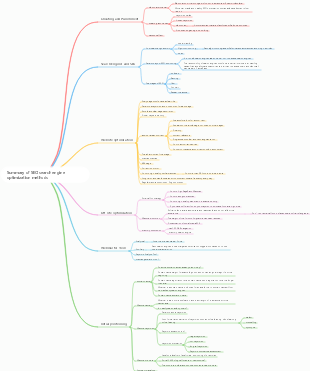
The most complete SEO search engine optimization tutorial, teaching you step by step how to learn SEO search engine optimization, suitable for novices to learn
Edited at 2020-06-24 17:41:30This is a mind map about bacteria, and its main contents include: overview, morphology, types, structure, reproduction, distribution, application, and expansion. The summary is comprehensive and meticulous, suitable as review materials.

This is a mind map about plant asexual reproduction, and its main contents include: concept, spore reproduction, vegetative reproduction, tissue culture, and buds. The summary is comprehensive and meticulous, suitable as review materials.
This is a mind map about the reproductive development of animals, and its main contents include: insects, frogs, birds, sexual reproduction, and asexual reproduction. The summary is comprehensive and meticulous, suitable as review materials.
This is a mind map about bacteria, and its main contents include: overview, morphology, types, structure, reproduction, distribution, application, and expansion. The summary is comprehensive and meticulous, suitable as review materials.
This is a mind map about plant asexual reproduction, and its main contents include: concept, spore reproduction, vegetative reproduction, tissue culture, and buds. The summary is comprehensive and meticulous, suitable as review materials.
This is a mind map about the reproductive development of animals, and its main contents include: insects, frogs, birds, sexual reproduction, and asexual reproduction. The summary is comprehensive and meticulous, suitable as review materials.
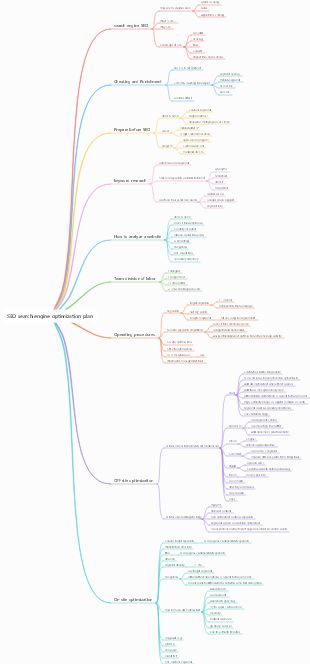
SEO search engine optimization
I. search engine SEO
I.1. How search engines work
I.1.1. spider crawling
I.1.2. index
I.1.3. Algorithmic sorting
I.2. What is SEO?
I.3. Why SEO
I.4. Five stages of SEO
I.4.1. included
I.4.2. Ranking
I.4.3. flow
I.4.4. Convert
I.4.5. Repeat the above actions
II. Cheating and Punishment
II.1. black cat and white cat
II.2. Common cheating techniques
II.2.1. keyword overlap
II.2.2. Hidden keywords
II.2.3. hacker link
II.2.4. Bulk link
II.3. sandbox effect
III. Prepare before SEO
III.1. domain name
III.1.1. Contains keywords
III.1.2. English-interval
III.1.3. Renew for multiple years at a time
III.2. server
III.2.1. Independent IP
III.2.2. Target customer location
III.3. program
III.3.1. open source program
III.3.2. Customizable URL
III.3.3. Frontend div CSS
IV. keyword research
IV.1. Determine core keywords
IV.2. Find core keywords and debate format
IV.2.1. synonyms
IV.2.2. Simplified
IV.2.3. dialect
IV.2.4. misspelled
IV.3. Use tools to expand core words
IV.3.1. related search
IV.3.2. Google/yahoo suggest
IV.3.3. keyword tool
V. How to analyze a website
V.1. domain name
V.2. Look at the website size
V.3. Quantity included
V.4. Internal and external links
V.5. Label writing
V.6. Navigation
V.7. URL annotation
V.8. Secondary directory
VI. Team division of labor
VI.1. 1 designer
VI.2. 1 programmer
VI.3. 1 article editor
VI.4. 2-3 link building specialists
VII. Operating procedures
VII.1. Key words
VII.1.1. target keywords
VII.1.1.1. 1--3 pieces
VII.1.1.2. Deployed on the homepage
VII.1.2. hot key words
VII.1.3. long tail keywords
VII.1.3.1. Make a long-tail keyword list
VII.2. Evaluate keyword competition
VII.2.1. Look at the collection volume
VII.2.2. Google trends Baidu Index
VII.2.3. Analyze the degree of optimization of home page website
VII.3. On-site optimization
VII.4. Off-site optimization
VII.5. Track maintenance
VII.5.1. GA
VII.6. Webmaster management tools
VIII. Off-site optimization
VIII.1. External link establishment and maintenance
VIII.1.1. blog
VIII.1.1.1. Content related to the website
VIII.1.1.2. Each article has three or five descriptive texts
VIII.1.1.3. Add description text when it first appears
VIII.1.1.4. Add the same keyword only once
VIII.1.1.5. Different description texts can point to the same URL
VIII.1.1.6. High-authority blogs can register multiple accounts
VIII.1.1.7. Keywords used in secondary directories
VIII.1.1.8. Links between blogs
VIII.1.2. bookmark
VIII.1.2.1. Use keywords as title
VIII.1.2.2. The more tags, the better
VIII.1.2.3. Add bookmark code to website
VIII.1.3. article
VIII.1.3.1. Original
VIII.1.3.2. Bid link in About Author
VIII.1.4. Comment
VIII.1.4.1. Use name as keyword
VIII.1.4.2. Improve efficiency with form-filling tools
VIII.1.5. digger
VIII.1.5.1. Upload avatar
VIII.1.5.2. Open the website before publishing
VIII.1.6. forum
VIII.1.6.1. Forum signature
VIII.1.7. social media
VIII.1.8. directory submission
VIII.1.9. Encyclopedia
VIII.1.10. Links
VIII.2. External link building strategy
VIII.2.1. High PR
VIII.2.2. Relevant content
VIII.2.3. Description text contains keywords
VIII.2.4. Keywords appear around description text
VIII.2.5. The export link on the import page should not exceed 50 words.
IX. On-site optimization
IX.1. Choose target keywords
IX.1.1. Each page has independent keywords
IX.2. Website tree structure
IX.3. title
IX.3.1. Each page has independent keywords
IX.4. describe
IX.5. keyword density
IX.5.1. 3--8%
IX.6. Navigation
IX.6.1. Use target keywords
IX.6.2. Different text descriptions can point to the same URL
IX.6.3. Do not point to different URLs with the same text description
IX.7. How to make description text
IX.7.1. Absolute URL
IX.7.2. Use keywords
IX.7.3. when first appearing
IX.7.4. Try to appear in the article
IX.7.5. Diversity
IX.7.6. content relevance
IX.7.7. gradually increase
IX.7.8. Link to authoritative sites
IX.8. Image Alt Tag
IX.9. sitemap
IX.10. 404 page
IX.11. robots.txt
IX.12. URL contains keywords