MindMap Gallery 2The law of conservation of machinery and the law of conservation of energy
Misunderstandings in the study of the law of conservation of machinery and the law of energy conservation lie in unclear understanding of the causes of frictional heat generation. Applying the law of energy conservation to the entire process results in an incomplete analysis of the changes in various energies of the system. The understanding and solutions to mechanical conservation are also introduced in detail. the basic idea.
Edited at 2022-05-11 09:03:30This is a mind map about bacteria, and its main contents include: overview, morphology, types, structure, reproduction, distribution, application, and expansion. The summary is comprehensive and meticulous, suitable as review materials.

This is a mind map about plant asexual reproduction, and its main contents include: concept, spore reproduction, vegetative reproduction, tissue culture, and buds. The summary is comprehensive and meticulous, suitable as review materials.
This is a mind map about the reproductive development of animals, and its main contents include: insects, frogs, birds, sexual reproduction, and asexual reproduction. The summary is comprehensive and meticulous, suitable as review materials.
This is a mind map about bacteria, and its main contents include: overview, morphology, types, structure, reproduction, distribution, application, and expansion. The summary is comprehensive and meticulous, suitable as review materials.
This is a mind map about plant asexual reproduction, and its main contents include: concept, spore reproduction, vegetative reproduction, tissue culture, and buds. The summary is comprehensive and meticulous, suitable as review materials.
This is a mind map about the reproductive development of animals, and its main contents include: insects, frogs, birds, sexual reproduction, and asexual reproduction. The summary is comprehensive and meticulous, suitable as review materials.
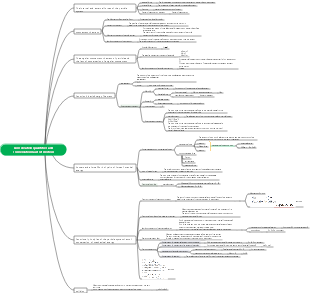
mechanical conservation law and Energy conservation law
Learning Misunderstandings
Unclear understanding of the causes of frictional heat generation
When applying the law of conservation of energy to the entire process, the changes in various energies of the system are incompletely analyzed, and the possible loss of mechanical energy at certain moments is ignored.
Confusing the law of conservation of energy (energy on both sides of the equation) with the functional relationship (work on one side of the equation and energy on the other side)
Improve knowledge and ability
The difference between the law of conservation of mechanical energy and the kinetic energy theorem
The research object of the law of conservation of mechanical energy is a system, while the research object of the kinetic energy theorem is an object (or an object system that can be regarded as a particle)
The law of conservation of mechanical energy focuses on the equality of mechanical energy in the initial and final states of the system. Both sides of the equation are energy: while the kinetic energy theorem focuses on the change in kinetic energy caused by the work of the combined external force in the process. One side of the equation is work and the other is energy.
The law of conservation of mechanical energy is conditional, that is, only gravity and elastic force are allowed to do work; while the kinetic energy theorem is established without conditional restrictions.
Problems that can be solved using the law of conservation of mechanical energy for a single object can generally be solved using the kinetic energy theorem. Moreover, it saves the trouble of determining whether the intellectual energy increase is conserved and selecting the zero potential energy surface. On the contrary, problems that can be solved by the kinetic energy theorem may not necessarily be solved by the mechanical energy conservation law. In this sense, the kinetic energy theorem is better than the kinetic energy theorem. The law of conservation of mechanical energy is more widely used and more common
The relationship between work and energy conversion
The work done by the combined external force on an object is equal to the change in kinetic energy of the object
Only gravity (or elastic force) does work, and the mechanical energy of the object is conserved
As long as gravity does work on an object, the object's gravitational potential energy will change.
The work done on an object by forces other than gravity and spring force is equal to the change in the mechanical energy of the object
The work done to overcome a pair of interacting sliding friction forces is equal to the heat generated by the friction.
Understanding of the conditions for conservation of mechanical energy
The conservation condition is never that the work done by the combined external force is equal to 0, nor that the work done by the combined external force is 0.
The work done by gravity or elastic force cannot cause the conversion of mechanical energy and other forms of energy. It can only convert the kinetic energy and potential energy in the system into each other. The work done by other forces except gravity and elastic force can cause the conversion of mechanical energy and other forms of energy.
How to determine whether mechanical energy is conserved
For an object, if only gravity does work and other forces do no work, then the mechanical energy of the object is conserved.
From the perspective of energy conversion, only kinetic energy and thermal energy within the system are converted into each other. There is no transfer of mechanical energy between the system and the outside world, nor is it converted into other forms of energy (such as internal energy). Then the mechanical energy of the system is conserved. Is energy conserved?
From the perspective of work, an object system includes internal and external forces. Only gravity or elastic force does work, other forces do no work or the sum of the work done is 0
Some ropes are suddenly tightened and objects collide. Except for gravity or elastic force, other forces do no work or the sum of the work is 0.
Steps to solve problems using the law of conservation of mechanical energy
Select the research object (object or system) according to the meaning of the question
Clearly study the movement process of the object, analyze the force received by the object during the process, clarify the work done by each force, and determine whether mechanical energy is conserved.
Appropriately select the zero potential energy surface to determine the mechanical energy of the research object's initial and final states during the research process.
Solving the equations based on the expression of the law of conservation of mechanical energy
Basic ideas for solving problems using the law of conservation of energy
When the energy of an object decreases, there must be an increase in the energy of other objects, and the amount of decrease must be equal to the amount of increase.
When some form of energy decreases, there must be other forms of energy increase, and the amount of decrease must be equal to the amount of increase.