MindMap Gallery Conservation quantities and conservation laws of motion
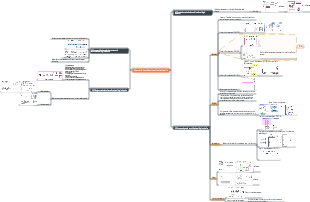
This is a mind map about the conservation of quantities and conservation laws of motion. It is a must-have review material shared so that everyone can read it when preparing for the exam and improve review efficiency. I hope it will be helpful to everyone in preparing for the exam.
Edited at 2021-06-27 21:45:43This is a mind map about bacteria, and its main contents include: overview, morphology, types, structure, reproduction, distribution, application, and expansion. The summary is comprehensive and meticulous, suitable as review materials.

This is a mind map about plant asexual reproduction, and its main contents include: concept, spore reproduction, vegetative reproduction, tissue culture, and buds. The summary is comprehensive and meticulous, suitable as review materials.
This is a mind map about the reproductive development of animals, and its main contents include: insects, frogs, birds, sexual reproduction, and asexual reproduction. The summary is comprehensive and meticulous, suitable as review materials.
This is a mind map about bacteria, and its main contents include: overview, morphology, types, structure, reproduction, distribution, application, and expansion. The summary is comprehensive and meticulous, suitable as review materials.
This is a mind map about plant asexual reproduction, and its main contents include: concept, spore reproduction, vegetative reproduction, tissue culture, and buds. The summary is comprehensive and meticulous, suitable as review materials.
This is a mind map about the reproductive development of animals, and its main contents include: insects, frogs, birds, sexual reproduction, and asexual reproduction. The summary is comprehensive and meticulous, suitable as review materials.
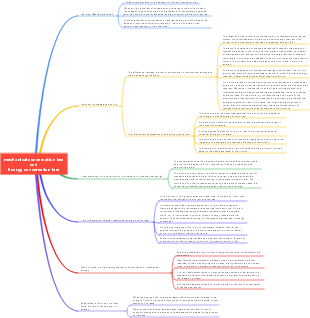
Conservation quantities and conservation laws of motion
The internal and external forces of the particle system
external force
The force exerted by objects outside the system on the particles in the system
internal force
The interaction of each particle in the particle system
Centroid
center of mass distribution of object
Center of mass motion theorem
Center of mass motion
momentum theorem
The Momentum Theorem of a Point
F=ma=mdv/dt=d(mv)/dt=dp/dt
momentum theorem
The impulse of the net external force experienced by an object during motion is equal to the increment of the momentum of the object
Momentum theorem of particle system
During a certain period of time, all external forces acting on the particle will act at the same time The vector sum of the impulses is equal to the increment of the total momentum of the particle system
law of conservation of momentum
If the vector sum of the external forces on the system is zero, then the system The total momentum of the system remains unchanged
The angular momentum theorem of particle and the law of conservation of angular momentum
Angular Momentum
L=r✖P
The angular momentum theorem of a particle
dLldt=rxF M=rxF M=dL/dt
law of conservation of angular momentum
If the external force acting on the particle exerts a moment (rx) on a given point O F) is zero, then the particle pair is. The angular momentum remains constant during motion Change
Function Kinetic Energy Theorem
achievement
The product of the projection of the force in the displacement direction and the magnitude of the displacement achievement A=Fr
power
work done by force per unit time
Kinetic energy theorem
Work W
constant force
Dot product of force and particle displacement
Variable force
Find the integral
Work is a process quantity
∫Fds
natural coordinate system
Indicator diagram
Power P
average power
Instantaneous power
dot product of force and velocity
kinetic energy
E
Kinetic energy theorem
The work done by the combined external force on the particle is equal to the increment of the kinetic energy of the particle
particle system
The algebraic sum of work done by external and internal forces
E(k)=(1/2)mv^2 A=E(kb)-E(ka) The work done by the combined external force on an object is always equal to the increment of the object's kinetic energy The form of the kinetic energy theorem has nothing to do with the choice of inertial reference frame
Conservative force Work of pairs of forces Potential energy
Conservative and non-conservative forces
conservative force
The amount of work is only related to the starting and ending positions of the object, and has nothing to do with the path it has taken.
gravity
Elastic force
gravity
conservative force doing work
potential energy
W Bao = - (Ep - Ep0)
non-conservative force
Friction
air resistance
magnetic force
work of paired forces
The total work done by a pair of action and reaction forces always has the same choice-independent invariant properties
potential energy
The work done by a pair of conservative internal forces is equal to the decrease in potential energy of the system (or the increase in potential energy potential energy
Functional principle
particle system
W external W non-conservative internal force = E - E0
Mechanical energy E = Ek Ep
Functional principles of the particle system Law of conservation of mechanical energy
Function theorem of mass point system
The sum of the work done by the external and internal forces of the system is equal to the increment of the kinetic energy of the system
Momentum P = m v
subtopic
Functional principles of the mass point system
When the system changes from state 1 to state 2, the increment of its mechanical energy, etc. The sum of the work done by external forces and the work done by non-conservative internal forces
law of conservation of mechanical energy
If only conservative forces do work in a system, other internal forces and all external forces If no force does any work, the kinetic energy and potential energy of each object in the system can interact with each other. conversion, but the total value of mechanical energy remains unchanged
conservation of mechanical energy
A outside =0 A non-guaranteed =0
in conclusion
E = E k E p = constant.
Energy conservation law
When an isolated system undergoes any change, all the energy of the system The sum is constant, energy can only be converted from one form to another formula or passed from one object to another within the system
Four conservations
Conservation of mechanical energy in point systems
Only conservative internal force can do the work
E = Ep Ek = constant
Conservation of momentum of a system of particles
Not subject to external force or the vector sum of external forces is 0
mv2 = mv1
conservation of angular momentum
mass point to reference point
Total external moment M = 0
L = constant vector
mass point system to reference point
Mout = 0
L=L0
Conservation of energy
The total amount of energy in all forms of the system remains unchanged
subtopic
collision
When two or several objects are close to or in contact with each other, in a very short time within, causing significant changes in the motion state of the object
m1v1=m2v2