MindMap Gallery physiological psychology perception
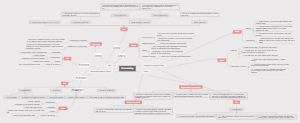
This is a mind map about physiological psychology and perception. People get information about the external world through their senses. This kind of information is processed by the mind to produce an understanding of the whole thing and understand its meaning!
Edited at 2023-12-03 14:16:34This is a mind map about bacteria, and its main contents include: overview, morphology, types, structure, reproduction, distribution, application, and expansion. The summary is comprehensive and meticulous, suitable as review materials.
This is a mind map about plant asexual reproduction, and its main contents include: concept, spore reproduction, vegetative reproduction, tissue culture, and buds. The summary is comprehensive and meticulous, suitable as review materials.
This is a mind map about the reproductive development of animals, and its main contents include: insects, frogs, birds, sexual reproduction, and asexual reproduction. The summary is comprehensive and meticulous, suitable as review materials.
This is a mind map about bacteria, and its main contents include: overview, morphology, types, structure, reproduction, distribution, application, and expansion. The summary is comprehensive and meticulous, suitable as review materials.
This is a mind map about plant asexual reproduction, and its main contents include: concept, spore reproduction, vegetative reproduction, tissue culture, and buds. The summary is comprehensive and meticulous, suitable as review materials.
This is a mind map about the reproductive development of animals, and its main contents include: insects, frogs, birds, sexual reproduction, and asexual reproduction. The summary is comprehensive and meticulous, suitable as review materials.
perception
general concept of perception
meaning
People get information about the external world through their senses. This kind of information is processed by the mind to produce an overall understanding of the thing and understand its meaning (domestic)
Perception is the process by which the brain organizes and interprets sensory information (foreign)
🌟Features
Perception is gradually formed and developed by people in the process of practical activities
The formation of perception cannot be separated from the participation of knowledge and experience
Language plays an important role in the formation and development of perception
Perception is affected and restricted by many psychological characteristics
The relationship between perception and feeling
same
Both are subjective reflections of objective things by the human brain
Both are reflections of the human brain on the current objective things that directly act on the sensory organs.
The formation and development of both are inseparable from the activities of the human brain
different
Reflect different contents
produce different properties
Different physiological mechanisms
types of perception
According to the characteristics of the senses that play a dominant role in perception
visual perception
hearing perception
touch perception
olfactory perception
taste perception
According to the characteristics of things recognized by the human brain
spatial perception
time perception
motion perception
According to the degree of conscious involvement in intuition
suprathreshold perception
subliminal perception
According to the degree of conscious participation in perception
Applications of subliminal perception
organizing principle of perception
Proximity or Adjacency Principle
similarity principle
continuity principle
closure principle
Same domain principle
information processing
Bottom up = data driven processing
information processing starting from external things Lower level processing to higher level processing
Top-down = concept-driven processing
When people are perceiving, they use their own knowledge, experience and concepts to process the current information. A process in which higher level processing constrains lower level processing
pattern recognition theory
template matching theory
prototype matching theory
feature matching theory
structural advantage description theory
🌟🌟Characteristics of perception
Selectivity
Definition: It means that people are influenced by their own needs, interests and other factors, and intentionally or unintentionally interpret certain stimulating information. Or the process of organizing and processing certain aspects as objects of perception and other things as backgrounds
Influencing factors
①Affected by the characteristics of objective stimuli
Stimuli with high intensity, obvious contrast, and bright colors can easily become objects of perception.
When stimuli are spatially close, continuous or similar in shape, they are likely to become objects of perception.
Stimuli conform to "good graphics" (conciseness, symmetry) and easily become perceptual objects
When the contour of the stimulus is closed or tends to be closed, it is easy to become the object of perception.
② Perceptual selectivity is affected by human subjective factors
Wholeness
Definition: refers to the use of existing knowledge and experience by people, which directly affects the sensory organs The process of identifying the attributes and parts of objective things into a whole
Influencing factors
① Perceptual integrity is not only related to the characteristics of the stimulus itself (proximity, continuity, similarity) but also to the relationship between the parts. Structural components are closely related and are also affected by people's subjective state, especially people's original knowledge and experience.
② Each part and various attributes of the stimulus have different effects on the overall perception of the individual.
effect
①Greatly improves people’s ability to perceive things
②Overall perception suppresses the perception of individual components (parts or details)
Global processing and local processing in autism
autism = autism
Neurodevelopmental disorders, most common before the age of 3, are pervasive neurodevelopmental disorders
Ignoring eye contact
speech disorder
Stereotypic behavior
A theory of information processing in autism
Insufficient Central Integration Hypothesis
People with autism have difficulty integrating stimuli. In cognitive processing, they focus on details and ignore the whole. This reflects the inability of the central system responsible for the integration of information resources
Inadequate central integration results in their inability to integrate dispersed information into a whole, making it difficult to integrate complex Social interaction information, exhibiting stereotyped behaviors and narrow interests
Comprehensibility
Definition: refers to the process of perception in which people interpret objective things based on their existing knowledge and experience. The organizational process of summarizing and labeling it with words to give it meaning
Influencing factors
① Perceptual understanding is the processing of information based on people’s existing knowledge and experience.
②Perceptual comprehension is significantly affected by verbal guidance
constancy
Definition: It refers to the process by which people maintain their perceptual images within a certain range without changing the objective conditions of perception.
type
size constancy
shape constancy
directional constancy
lightness constancy
color constancy
spatial perception
shape perception
size perception
🌟Depth and distance
depth perception
Definition: A person’s visual perception of judging or recognizing distant and near objects as three-dimensional
binocular perception cues
crystal adjustment
Convergence of visual axes of both eyes
binocular parallax
monocular cues
line perspective
occlusion
texture gradient
aerial perspective
Light and shade
Relative size
relative position
Motion Parallax and Motion Perspective
🌟Axis Orientation
visual orientation
People rely on visual information to determine the positional relationship between objects and themselves, and to judge up, down, left, right, front and back.
auditory orientation
① Sounds coming from the left and right ears of the human body are easiest to locate, and confusion in recognition rarely occurs
②When it is determined that the sound comes from the front, people can most accurately identify the sound on the horizontal line in front (left-front-right)
③People are easily confused by sounds coming from up and down directions
④Use the straight line connecting the ears as the axis, and the midpoint of the straight line as the vertex, draw a cone on both sides, (A, B, C, and D), Sounds on the cone of the untested ear are easily confused with each other
Time and motion perception
time perception
Definition: It refers to a person’s continuous and sequential reflection of objective things that directly act on the sensory organs.
form
Temporal perception (time resolution)
Duration perception (duration estimation)
Time point awareness (time confirmation)
time prediction
Basis for time perception
Periodic phenomena in nature
circadian rhythm
cyclical social movements
Factors affecting time perception
Accuracy of time interval judgments affected by properties of sensory channels
There are large errors and individual differences
Affected by the number and nature of events that occur within a given time period
Affected by factors such as people's emotions, motivations, interests, attitudes, etc.
motion perception
Definition: Refers to a person’s reflection of the displacement of moving objects or one’s own actions in space and time. It is also a reflection of the speed of an object’s movement. direction and its own movement characteristics. Divided into true kinesthetic perception and quasi-kinesthetic perception
kinesthetic perception
Human perception of the motion of an object that undergoes continuous displacement at a certain speed and trajectory, that is, the object moves at a certain speed or acceleration Move continuously from one position to another
kinesthetic perception
Perceiving an object that is not actually moving as moving, or seeing continuous motion where there is no continuous displacement
form
dynamic movement
When two stationary stimuli at different locations within the visual field are presented one after another at a certain time interval, Perceive them as the phenomenon of continuous movement of one stimulus toward another stimulus in space
induced movement
The movement of an object causes an adjacent stationary object to appear to be in motion.
autonomous movement
Also known as swimming motion or automatic effect, it refers to the phenomenon that occurs after a person stares at a weak, stationary photoelectric signal in a dark room for a moment. The phenomenon of feeling the light spot moving back and forth
exercise aftereffects
When an observer continues to gaze at a moving object for a while and then gazes at another non-homogeneous stationary surface, It will feel as if the surface is moving in the opposite direction
illusion
Definition: The subjective distortion of objective things when they act on the senses
type
size illusion
Müller-Leye illusion
vertical-horizontal illusion
panzo illusion
Jastrow's illusion
Dolboyev illusion
moon illusion
Shape and Orientation Illusions
Zolla Illusion
Wundt illusion
Einstein illusion
Orbison's illusion
Boggendorff illusion
Spiral and motion illusion
spiral illusion
motion illusion
The cause of the illusion
There are many explanations for the causes of illusions, but there is no single theory that can explain all illusions well. Generally speaking, when people perceive specific things, environmental background interference and human subjective factors are the main factors that form illusions. reason. Psychology believes that illusions are related to size constancy, shape constancy, and habitual eye movements in human perception. The principle of continuity is related to factors such as perceptual habits and perceptual stereotypes.