 Wondershare EdrawMind
MindMap Gallery X-ray photography technology of various parts of the human body
- 61
X-ray photography technology of various parts of the human body
This is a mind map about x-ray photography technology of various parts of the human body, including head x-ray photography, spine and pelvis x-ray photography, limb photography, etc.
Edited at 2023-12-03 12:34:10
- bacteria
This is a mind map about bacteria, and its main contents include: overview, morphology, types, structure, reproduction, distribution, application, and expansion. The summary is comprehensive and meticulous, suitable as review materials.
- Plant asexual reproduction
This is a mind map about plant asexual reproduction, and its main contents include: concept, spore reproduction, vegetative reproduction, tissue culture, and buds. The summary is comprehensive and meticulous, suitable as review materials.
- Reproductive development of animals
This is a mind map about the reproductive development of animals, and its main contents include: insects, frogs, birds, sexual reproduction, and asexual reproduction. The summary is comprehensive and meticulous, suitable as review materials.
X-ray photography technology of various parts of the human body
- bacteria
This is a mind map about bacteria, and its main contents include: overview, morphology, types, structure, reproduction, distribution, application, and expansion. The summary is comprehensive and meticulous, suitable as review materials.
- Plant asexual reproduction
This is a mind map about plant asexual reproduction, and its main contents include: concept, spore reproduction, vegetative reproduction, tissue culture, and buds. The summary is comprehensive and meticulous, suitable as review materials.
- Reproductive development of animals
This is a mind map about the reproductive development of animals, and its main contents include: insects, frogs, birds, sexual reproduction, and asexual reproduction. The summary is comprehensive and meticulous, suitable as review materials.
- Recommended to you
- Outline


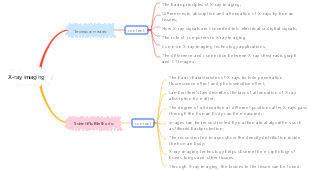

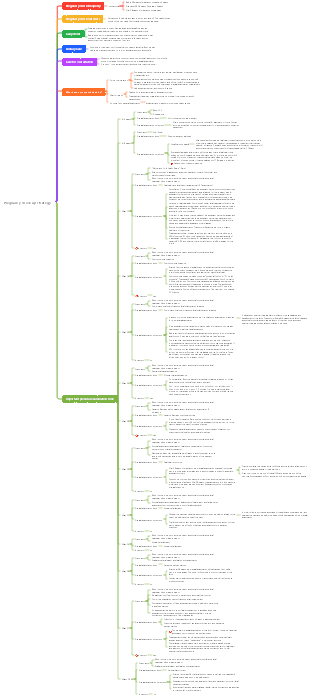

X-ray photography technology of various parts of the human body
1. head x-ray
cranial photography
posteroanterior head position
Position: ① The patient lies supine on the photography bed, with both elbows bent and arms placed on both sides of the head. The midsagittal plane of the head is perpendicular to the midline of the table. ②The mandible is retracted, the canthus line is perpendicular to the table, and the external ear holes on both sides are equidistant from the table.
Center line: Aim vertically at the external occipital protuberance, and shoot vertically into the cassette through the glabella line.
Lateral view of head
Position: ① Lying prone, with the patient's side on the photography bed, the upper limbs straightened beside the body, the contralateral hand half-clenched into a fist under the mandible or on the bed support, and the lower limbs bent naturally ②The sagittal plane of the head is parallel to the table, the interpupillary line is perpendicular to the table, the mandible is adducted, and the auditory-orbital line is perpendicular to the table edge.
Center line: Aim 2.5cm in front and above the external ear hole, and shoot vertically into the cassette.
Anterior and posterior half-axis of the head (Town position)
Position: ① The patient lies supine on the photography table, with the midsagittal plane of the head perpendicular to the midline of the table ②The mandible is retracted, the canthus line is perpendicular to the table, and the two external ear holes are equidistant from the table.
Center line: inclined at an angle of 30° toward the side of the foot, aligned 10 cm above the eyebrows, and projected from below the external occipital protuberance.
Nasal bone photography
Lateral view of nasal bone
Position: The patient lies prone, with the head in a standard side position, and 2cm below the root of the nose is located in the center of the cassette.
Center line: Aim 2cm below the nasal bone and shoot vertically into the cassette
mandible photography
Posterior-anterior position of mandible
Position: ① The patient lies prone, with the midsagittal plane of the head perpendicular to the table and coinciding with the midline of the table ②The tip of the nose and forehead are close to the table, the canthus line is perpendicular to the table, and the midpoint of the line connecting the lower edge of the upper lip and mandible is aligned with the center of the cassette
Center line: Aim at the midpoint of the line connecting the two mandibular angles, and shoot vertically
Lateral view of mandible
Position: The patient lies supine on the photography table, with the head and face turned to the side being examined, and the cassette is placed on a wooden board with the chin elevated and the head 15° lower.
Center line: tilted 25° to the side of the head, and shot into the cassette through the midpoint of the line connecting the two mandibular angles
2. Spine and pelvis x-rays
cervical spine photography
Opening position of 1st and 2nd cervical vertebrae
Position: ① The patient lies supine on the photography table, with both upper limbs placed beside the body. The midsagittal plane of the head is perpendicular to the table and coincides with the midline of the table. ②Tilt the head back so that the auditory nose line (the line connecting the occlusal surface of the maxillary incisor to the mastoid tip) is perpendicular to the table
Center line: the midpoint of the line connecting the two corners of the mouth, vertically shooting into the film box
Cervical spine normal position
Position: ① The patient stands in front of the camera stand, with the back of the neck close to the camera stand panel, and the midsagittal plane of the human body vertically coincides with the midline of the camera stand panel ②Tilt the head back so that the line connecting the occlusal surface of the maxillary incisors to the tip of the mastoid is perpendicular to the cassette
Center line: tilt 10 to 15° to the head side, aim at the bottom of the thyroid cartilage and shoot into the cassette
cervical spine lateral view
Position: ① The patient stands sideways in front of the camera stand, with his feet spread apart to keep his body steady, and the line connecting the external ear hole and the acromion is located in the center of the film box ②The head is tilted back, the mandible is extended forward, the midsagittal plane of the head and neck is parallel to the panel of the photo frame, and the line connecting the occlusal surface of the maxillary incisors and the tip of the mastoid is parallel to the horizontal plane ③Drop your shoulders as much as possible
Center line: passes through the midpoint of the neck of the thyroid cartilage plane and projects horizontally vertically into the center of the cassette.
Posterior and anterior oblique cervical spine
This position is used to examine cervical foraminal and pedicle lesions
Position: The patient is in a standing position, facing the camera stand, with the examined side close to the camera stand panel, so that the coronal plane of the human body and the camera stand panel form an angle of 55° to 65°, the mandible is slightly extended, and the upper limbs are drooped as much as possible.
Center line: Aim at the midpoint of the neck of the thyroid cartilage plane, and shoot horizontally vertically into the center of the cassette
cervical and thoracic spine photography
cervical and thoracic spine alignment
Position: ① The patient lies supine on the photography table, with the midsagittal plane of the human body perpendicular to the table and coincident with the midline of the table ② Lift your head back and place your upper limbs on both sides of your body
Center line: Aim at the 1st thoracic vertebra and shoot vertically into the cassette
Lateral view of cervical and thoracic spine
Position: ① The patient lies on his side on the photography table, with his upper limbs near the table raised and his elbows bent to hold his head. The humerus lies under the head. Push your neck and chest forward as much as possible ② Pad the head with a cotton pad to align the cervical and thoracic vertebrae in a straight line, and place it on the midline of the table
Center line: Aim at the supraclavicular fossa and shoot vertically into the cassette
Thoracic Spine Photography
Thoracic spine orthotopic
Position: ① The patient lies supine on the photography table, with the midsagittal plane of the human body perpendicular to the table and coinciding with the midline of the table ②Tilt your head back and place your upper limbs on both sides of your body ③ Straighten the lower limbs or flex the hips and knees ④The upper edge of the cassette includes the 7th cervical vertebra, and the lower edge includes the 1st lumbar vertebra.
Center line: Align with the midpoint of the line connecting the sternal angle and the xiphoid process, perpendicular to the cassette
thoracic spine lateral view
Position: ① The patient lies on his side on the photography table, with both upper limbs raised as high as possible to hold the head, both lower limbs flexed, and the knees moved upward ② Pad the waist with cotton pads so that the thoracic spine sequence is parallel to the table and placed on the midline of the table ③The upper edge of the cassette includes the 7th cervical vertebra, and the lower edge includes the 1st lumbar vertebra.
Center line: Aim at the 7th thoracic vertebra, and shoot vertically into the cassette (if there is no cotton pad on the waist, the center line should be tilted 5 to 10 degrees toward the head side)
Lumbar spine photography
Anteroposterior position of lumbar spine
Position: ① The patient lies supine on the photography table, with the midsagittal plane of the human body perpendicular to the table and coinciding with the midline of the table ②Bend the hips and knees on both sides to bring the waist close to the table to correct the physiological curvature of the lumbar spine ③Put your upper limbs on either side of your body or lift them up to hold your head ④The upper edge of the cassette includes the 12th thoracic vertebra, and the lower edge includes the 1st sacral vertebra.
Center line: Aim 3cm above the navel, shoot vertically into the cassette
Lateral view of lumbar spine
Position: ① The patient lies supine on the photography table, with both upper limbs raised naturally to hold the head, both lower limbs flexed, and the knees moved upward ② Pad the waist with cotton pads so that the lumbar spine sequence is parallel to the table and placed on the midline of the table ③The upper edge of the cassette includes the 11th thoracic vertebra, and the lower edge includes the upper sacral vertebrae
Center line: Aim at the third lumbar vertebra (3cm above the navel) and shoot vertically into the cassette.
Lumbar oblique position
Position: ① The patient lies supine on the photography table, with the hip and knee on the side near the table flexed, and the contralateral lower limb straightened ②Lean your body backward so that the coronal plane and the tabletop form an angle of approximately 45°. Align the long axis of the lumbar spine with the midline of the table ③The upper edge of the cassette includes the 11th thoracic vertebra, and the lower edge includes the upper sacral vertebrae
Center line: Aim at the third lumbar vertebra (3cm above the navel) and shoot vertically into the cassette.
Sacral spine photography
Sacrovertebral alignment
Position: ① The patient lies supine on the photography table, with the midsagittal plane of the human body perpendicular to the table and coinciding with the midline of the table ② Straighten both lower limbs and bring the two toes together ③The upper edge of the cassette includes the 4th lumbar vertebra, and the lower edge includes the coccyx vertebrae
Center line: tilt 15 to 20° to the head side, aim at 3 cm above the upper edge of the pubic symphysis, and inject into the cassette
tail vertebra photography
Caudal vertebra normal position
Position: ① The patient lies supine on the photography table with the midsagittal plane of the body perpendicular to the table. ② Straighten both lower limbs and bring the toes together ③The upper edge of the cassette includes the ridge and the lower edge exceeds the pubic symphysis
Center line: tilt 10° toward the side of the foot, align with the midpoint of the line connecting the anterior superior iliac spines on both sides, and shoot into the cassette
Sacrococcygeal spine photography
Lateral view of sacrococcygeal vertebra
Position: ① The patient lies on his side on the photography table, with both lower limbs flexed and the knees moved upward ②The posterior plane of the sacrococcygeal part is perpendicular to the table, and the waist is padded with cotton pads ③The upper edge of the cassette includes the fifth lumbar vertebra, and the lower edge includes all coccygeal vertebrae.
Center line: Aim 8cm in front of the posterior inferior iliac spine and shoot vertically into the cassette.
sacroiliac joint photography
sacroiliac joint anteroposterior view
Position: ① The patient lies supine on the photography table, with the midsagittal plane of the human body perpendicular to the table and coinciding with the midline of the table ② Straighten your lower limbs, or slightly bend your hips and knees and use cotton pads to slightly raise them ③The upper edge of the cassette includes the iliac crest, and the lower edge includes the pubic symphysis
Center line: tilt 10 to 25° to the head side, align with the midpoint of the line connecting the two anterior superior iliac spines, and shoot into the center of the cassette
sacroiliac joint anteroposterior oblique view
Position: ① The patient lies supine on the photography table, with the waist and buttocks on the side being examined raised so that the coronal plane of the body and the table form an angle of 20° to 25°. ② Align the longitudinal section 2.5 cm inside the anterior superior iliac spine on the side being examined with the midline of the table ③ The plane connecting the two anterior superior iliac spines is placed on the upper and lower midline of the cassette. ④The upper edge of the cassette includes the iliac crest, and the lower edge includes the pubic bone
Center line: Aim 2.5 cm inside the anterior superior iliac spine on the side being examined, and shoot vertically into the cassette.
pelvis photography
Anteroposterior position of pelvis
Position: ① The patient lies supine on the photography table, with the midsagittal plane of the human body perpendicular to the table and coinciding with the midline of the table ② Straighten both lower limbs, slightly pronate your feet (10° to 15°), and bring your toes together. The distance from the anterior superior iliac spine to the table on both sides is equal ③The upper edge of the cassette includes the iliac crest, and the lower edge reaches 3cm below the pubic symphysis.
Center line: Aim 3 cm below the midpoint of the line connecting the two anterior superior iliac spines, and shoot vertically into the cassette.
3. limb photography
Upper body photography
hand photography
Palm front and back position (hand upright position)
Position: ① The patient sits sideways on one end of the photography table, bending the elbow about 90° ② Spread the five fingers naturally, place the palm downwards against the cassette, and place the third metacarpal head in the center of the cassette. When taking pictures with both hands, both hands should be placed symmetrically on the film box
Center line: One hand: third metacarpal bone; both hands: center of photo
Subpalm oblique position (hand oblique position)
Position: ① The patient sits sideways in front of the photography table, with the elbow bent at about 90° ② The five fingers are evenly spaced, slightly bent, the palm is tilted inward, the fifth metacarpal bone is close to the cassette, so that the palm and the cassette are at an angle of 45°, and the third metacarpal head is placed in the center of the cassette
Center line: Aim at the 3rd metacarpal head, shoot vertically into the cassette
Thumb upright position (palm position)
Position: ① The patient sits at one end of the photography table, the back of the hand is internally rotated so that the palm is upward, and the back of the thumb is close to the film box ②The patient uses his/her unaffected hand to grasp the remaining four fingers and dorsiflex them
Centerline: Aim at the metacarpophalangeal joint of the thumb and shoot vertically into the cassette
Thumb lateral view
Position: ① The patient sits sideways on one end of the photography table, with the elbow bent at about a right angle, and the outer edge of the thumb close to the cassette, so that the back of the thumb is perpendicular to the cassette ② Make a fist with the remaining fingers ③The upper edge of the film reaches the tip of the thumb and the lower edge exceeds the wrist bone
Center line: Aim vertically at the metacarpal joint of the thumb
wrist photography
posteroanterior wrist joint
Position: ① Patient sitting position, elbow flexed approximately 90° ② Make a half fist with your hand, place your wrist joint in the center of the cassette, and place the palm of your wrist close to the cassette ③The upper edge of the film is the proximal end of the metacarpal bone, and the lower edge includes the distal end of the radius and ulna
Center line: Aim at the midpoint of the line connecting the ruler and radial styloid process, and shoot vertically into the cassette.
Lateral view of wrist joint
Position: ① The patient sits sideways in front of the photography table, with the elbow bent at about 90° ② Place the hand and forearm straight on their sides, with the ulnar side of the forearm and the fifth metacarpal bone close to the cassette, and the ulnar styloid process placed in the center of the cassette ③The upper edge of the film is the proximal end of the metacarpal bone, and the lower edge is the distal end of the radius and ulna
Center line: Aim at the radial styloid process and shoot vertically into the cassette
Wrist joint abduction position (ulnar deviation)
Position: ① The patient sits sideways in front of the photography table, with his elbows naturally bent and his palms facing downwards. ②Place your wrist flat on the cassette, and move your palm as far as possible to the ulnar side ③The upper edge of the film includes the lower end of the metacarpal bone, and the lower edge includes the distal end of the ulna and radius.
Center line: Aim at the midpoint of the line connecting the ulna and radial styloid process, and shoot vertically into the cassette
forearm photography
Forearm upright
Position: ① The patient sits facing one end of the photography table, with the forearms straight, the palms facing up, and the back close to the cassette. ②The long axis of the forearm is parallel to the long axis of the cassette ③The upper edge includes the elbow joint, and the lower edge includes the wrist joint
Centerline: Aim at the midpoint of the forearm and shoot vertically into the cassette
Forearm lateral view
Position: ① The patient sits facing one end of the photography table, with the elbow bent at about 90° ②The forearm is in a side position, with the ulnar side close to the cassette, and the shoulders moved down, as close to the height of the elbow as possible ③The upper edge includes the elbow joint, and the lower edge includes the wrist joint
Center line: Aim at the midpoint of the forearm and shoot vertically into the center of the cassette
elbow joint photography
elbow joint alignment
Position: ① The patient sits facing one end of the photography table, with the forearms straight and the palms facing up. ②The olecranon process of the ulna is placed in the center of the cassette and close to the cassette ③Including the distal end of the humerus and the proximal end of the radius and ulna
Center line: Aim at the elbow joint (midpoint of the elbow crease) and shoot vertically into the cassette. (Aim at the midpoint of the line connecting the medial epicondyle and lateral epicondyle of the humerus and shoot vertically through the cassette)
Elbow joint lateral view
Position: ① The patient sits sideways facing one end of the photography table, with the elbow bent at an angle of 90°, and the inside of the elbow joint close to the cassette. ② Face the patient with the palm of your hand, with the thumb on top and the ulnar side facing down, in a lateral position ③The upper edge includes the distal end of the humerus, and the lower edge includes the proximal ends of the ulna and radius.
Centerline: align vertical cassette injection at the lateral epicondyle of the humerus
humerus photography
Anteroposterior view of humerus
Position: ① The patient lies on his back on the photography table, with his arms straightened and slightly abducted, with his palms facing up. Elevate the opposite shoulder slightly so that the upper arm on the side being examined is as close to the cassette as possible ②The upper edge includes the shoulder joint, and the lower edge includes the elbow joint
Centerline: Aim at the midpoint of the humerus and insert the vertical cassette
humerus lateral view
Position: ① The patient lies supine on the photography table, with the contralateral shoulder slightly elevated so that the upper arm on the examined side is as close to the cassette as possible ② The upper arm on the side under examination is slightly separated from the trunk, the elbow joint is bent at an angle of 90°, and placed on the chest in a side position ③The upper edge includes the shoulder joint, and the lower edge includes the elbow joint.
Centerline: Aim at the midpoint of the humerus and insert the vertical cassette
Shoulder joint photography
Shoulder joint anteroposterior position
Position: ① The patient lies supine on the photography table, with the scapulocoracoid process of the examined side placed on the midline of the table ② Extend the upper limb on the side under examination straight downward, with the palm facing upward. The opposite side's torso is slightly elevated so that the shoulder of the subject's side is close to the table. ③The upper edge extends beyond the shoulder, and the outer edge includes the soft tissue of the shoulder
Center line: Aim at the coracoid process and shoot vertically into the cassette
Shoulder joint through chest lateral view
Position: ① The patient stands sideways in front of the photography stand, with the outer edge of the upper arm on the side being examined close to the panel of the photography stand ② The upper limb and shoulder on the side being examined should be drooped as much as possible, with the palm facing forward, and the upper limb on the contralateral side should be raised high to hold the head. ③Align the surgical neck of the humerus on the examined side to the center of the cassette
Center line: passes horizontally through the armpit of the opposite side, passes through the upper 1/3 of the upper arm on the side being examined, and shoots vertically into the cassette.
clavicle photography
Posterior and posterior clavicle position
Position: ① The patient lies prone on the photography table, with the midpoint of the clavicle on the side being examined facing the midpoint of the 1/3 horizontal line on the cassette. ② Turn the head and face to the opposite side, so that the clavicle is close to the table, and the arm on the side being examined is internally rotated with the palm facing upward. ③Drop the shoulders so that the shoulders are level with the sternoclavicular joint
Centerline: Passing through the midpoint of the clavicle, tilting 10° toward the side of the foot
Acromioclavicular joint photography
acromioclavicular joint posteroanterior view
Position: ① The patient stands upright in front of the camera stand, facing the film box, with his feet spread apart to keep his body steady. ② Both arms are drooping, the acromioclavicular joints on both sides are facing the midline of the horizontal axis of the cassette, and the midsagittal shape of the human body is facing the midline of the longitudinal axis of the cassette. ③Shoulders droop and clavicle become horizontal
Center line: Aim at the 3rd thoracic vertebra, horizontally perpendicular to the cassette (take a deep breath and hold your breath for exposure)
Lower body photography
foot photography
Front and rear foot alignment
Position: ① Patient sitting or lying down, knees bent, feet on the detector ②The sole of the foot is close to the cassette; the base of the third metatarsal is placed in the center of the irradiation field of view ③The upper edge includes the toes, and the lower edge exceeds the heel.
Center line: passes through the base of the third metatarsal bone and enters the cassette vertically (or at an angle of 15° toward the heel side).
Foot inclination
Position: ① The patient is in a sitting or lying position, with the knees bent and the soles of the feet close to the cassette. ② The inner side of the sole of the foot is close to the cassette, and the outer side is raised so that the sole of the foot and the cassette are at an angle of 30° to 50°; place the base of the third metatarsal in the center of the radiation field ③The upper edge includes the toes, and the lower edge exceeds the heel.
Center line: passes through the base of the third metatarsal bone and radiates vertically into the center of the detector
Lateral view of foot
Position: ① The patient lies on his side on the photography table, with the outer edge of the lower limb on the examined side close to the table and the knees bent ② The outer edge of the foot on the side under examination is close to the cassette, and the foot is in a side position, so that the sole plane of the foot is perpendicular to the cassette. ③The upper edge includes the toes, and the lower edge includes the calcaneus
Center line: passes through the midpoint of the foot and shoots vertically into the cassette
calcaneus lateral view
Position: ① The patient lies on his side on the photography table, with the outer edge of the lower limb on the examined side close to the table and the knees bent. ② Place the outside of the foot being examined close to the cassette so that the sole plane of the foot is vertical to the cassette ③The film includes the calcaneus
Centerline: Aim at the calcaneal joint and shoot vertically into the cassette
calcaneal axis
Position: ① The patient lies on his back or sits on the photography table, with the lower limb on the examined side straight ②The long axis of the calf is consistent with the long axis of the cassette, the ankle joint is placed in the center of the cassette, and the ankle is extremely dorsiflexed ③The upper edge of the film includes the sole of the foot, and the lower edge includes the ankle joint
Center line: tilted toward the head at an angle of 35° to 45°, passing through the base of the third metatarsal and entering the center of the cassette
ankle photography
Anteroposterior view of ankle joint
Position: ① The patient lies on his back or sits on the photography table, with the lower limb on the side under examination straightened and the ankle joint placed in the center of the cassette. ②The long axis of the calf is parallel to the midline of the cassette, the foot is slightly pronated, and the toes are tilted downward. ③The upper edge of the film includes the heel, and the lower edge includes the lower end of the tibia and fibula.
Center line: 1cm above the midpoint of the line connecting the medial and lateral ankles, vertically shot into the cassette
Lateral view of ankle joint
Position: ① The patient lies on his side on the photography table, with the examined side close to the table ② The knee joint on the side being examined is slightly flexed, the outer ankle is close to the cassette, and the heel is leveled so that the ankle joint is in a lateral position ③The long axis of the calf is parallel to the long axis of the cassette, and 1cm above the medial ankle is placed in the center of the cassette. ④The upper edge of the film includes the heel, and the lower edge includes the lower end of the tibia and fibula.
Center line: Aim 1cm above the medial malleolus and shoot vertically into the cassette
tibia and fibula photography
Anteroposterior view of tibia and fibula
Position: ① The patient lies on his back or sits on the photography table, with the lower limb on the side under examination straightened and the foot slightly pronated. ②The long axis of the calf is consistent with the long axis of the cassette, the upper edge includes the knee joint, and the lower edge includes the ankle joint
Center line: Aim at the midpoint of the tibia and fibula, shoot vertically into the cassette
Tibia and fibula lateral view
Position: ① Lie on the side of the subject on the photography table, with the outside of the lower limbs close to the table and the knee joint bent. The sagittal plane of the foot is parallel to the detector ②The outside of the calf is close to the cassette, and the midpoint of the calf is placed in the center of the irradiation field ③The upper edge of the film includes the knee joint, and the lower edge includes the ankle joint.
Center line: Aim at the midpoint of the calf, shoot vertically with the cassette
knee photography
Knee joint anteroposterior position
Position: The patient is lying on his back or sitting on the photography bed, with the lower limb on the side under examination straight, with the toes upward and slightly internally rotated at an angle of 10° to 15°.
Center line: Aim at the lower edge of the patella and shoot vertically into the cassette
Knee abduction position
Position: ① The patient lies on his side on the photography table, with the outside of the knee being examined close to the table ② The knee joint on the tested side is flexed to an angle of 120° to 135°
Center line: Aim at the upper end of the tibia and shoot vertically into the cassette
patella photography
Patellar axis
Position: ① The patient lies prone on the photography table, the knee joint on the side being examined is bent as much as possible, and the lower limb on the opposite side is straightened ②The long axis of the femur on the examined side is consistent with the midline of the cassette. The lower edge of the patella is placed 1/3 below the cassette ③The upper edge of the film includes the patella, and the lower edge includes the distal femur and proximal fibula.
Center line: tilt 15° to 20° to the head side, aim at the lower edge of the patella and shoot into the cassette
femoral photography
Anteroposterior position of femur
Position: ① The patient lies supine on the photography table, with the lower limbs straightened and the feet slightly internally rotated so that the insides of the two toes touch each other. ②The upper edge of the film includes the hip joint, and the lower edge includes the knee joint.
Centerline: Aim at the midpoint of the femur and shoot vertically into the cassette
femur lateral view
Position: ① The patient lies on his side on the photography table, with the examined side close to the table ② The lower limb on the side under examination is straightened, the knee joint is slightly bent, the cassette is placed under the lateral edge of the femur, and the long axis of the femur is consistent with the long axis of the cassette.
Centerline: Aim at the midpoint of the femur and shoot vertically into the cassette
hip photography
hip joint alignment
Position: ① The patient lies supine on the photography table, with the hip joint of the examined side placed on the midline of the table ② Straighten the lower limbs, separate the heels, and touch the insides of the toes on both sides. ③The upper edge of the film includes the ilium, and the lower edge includes the upper end of the femur.
Center line: Aim at the femoral head (2.5 cm vertically below the midpoint of the line connecting the anterior superior iliac spine and the upper edge of the pubic symphysis), and shoot vertically into the cassette.
hip joint horizontal lateral view
Position: ① The patient lies supine on the photography table, with the lower limb on the side under examination straightened and the foot slightly pronated. ② Flexion and abduction of the hip and knee joints on the unaffected side
Center line: horizontal direction, tilted toward the head, from the medial side of the femur on the side being examined to the outer and upper vertical femoral neck into the cassette
4. Chest and abdominal x-ray photography
chest photography
Chest posteroanterior
Position: ① The patient stands facing the camera stand, with his chest close to the film box and his feet apart. ② Face the midline of the cassette in the mid-sagittal position of the human body, tilt your head back, and rest your lower chin on the chest X-ray stand. The upper edge of the cassette should be 3 cm above your shoulders. ③Put the backs of your hands on your hips, bend your elbows, and move forward as far as possible. Internally rotate your shoulders, keep them as flat as possible, and keep them close to the cassette
Center line: horizontal direction, passing through the 5th and 6th thoracic vertebrae, vertically shooting into the cassette
Chest side view
Position: ① The patient stands sideways in front of the photography stand, with the chest on the side being examined close to the cassette, and the upper edge of the cassette should extend beyond the shoulder ② Align the midaxillary line of the chest with the midline of the cassette, and the projections of the anterior and posterior chest walls are equidistant from the edge of the cassette. ③ Separate your feet, raise your upper limbs, hug your head, tighten your abdomen, lift your chest and raise your head
Center line: horizontal direction, vertically injected into the cassette through the mid-axillary line and the sixth thoracic vertebra plane
Photography near the diaphragm
Anteroposterior view of ribs above diaphragm
Position: ① The patient stands in front of the photography stand, with his back close to the panel of the photography stand and his feet apart. ② The midsagittal plane of the body is vertical to the camera frame panel and aligned with the midline of the cassette. The lower jaw is slightly raised and the upper edge of the cassette is beyond both shoulders. ③Bend your elbows, put the backs of your hands on your hips, and push your elbows as far forward as possible
Center line: horizontal direction, passing through the 7th thoracic vertebra horizontally and vertically into the cassette
Anteroposterior view of subdiaphragmatic ribs
Position: ① The patient lies supine on the photography table, with the midsagittal plane of the body perpendicular to the table and facing the midline of the cassette. Place both upper limbs on both sides of the body, slightly abducted ②The upper edge of the film includes the 5th thoracic vertebra, the lower edge includes the 3rd lumbar vertebra, and both sides include the outer edges of the ventral wall
Center line: Pass through the umbilicus, tilt toward the head at an angle of 10° to 15° and shoot into the center of the film
Plain radiographs of kidneys, ureters and bladder
Position: ① The patient lies supine on the photography table, with the lower limbs straight, the midsagittal plane of the human body is perpendicular to the table and coincides with the midline of the table, and the arms are placed beside the body or raised upward ② The film extends beyond the xiphoid process of the sternum, and the lower edge includes 2.5cm below the symphysis.
Center line: Aim at the midpoint of the line connecting the xiphoid process and the upper edge of the pubic symphysis and shoot vertically into the cassette.
abdominal photography
Abdominal front-to-back position
Position: ① The patient stands in front of the photography stand, with his back close to the panel of the photography stand, and his upper limbs hanging naturally and slightly abducted. ②The midsagittal plane of the human body is perpendicular to the panel of the camera stand and coincides with the center line of the film box ③The upper edge of the film includes the transverse septum, and the lower edge includes the upper edge of the pubic symphysis.
Center line: horizontal direction, passing through the midpoint of the line connecting the xiphoid process and the pubic symphysis, vertically shooting into the cassette